
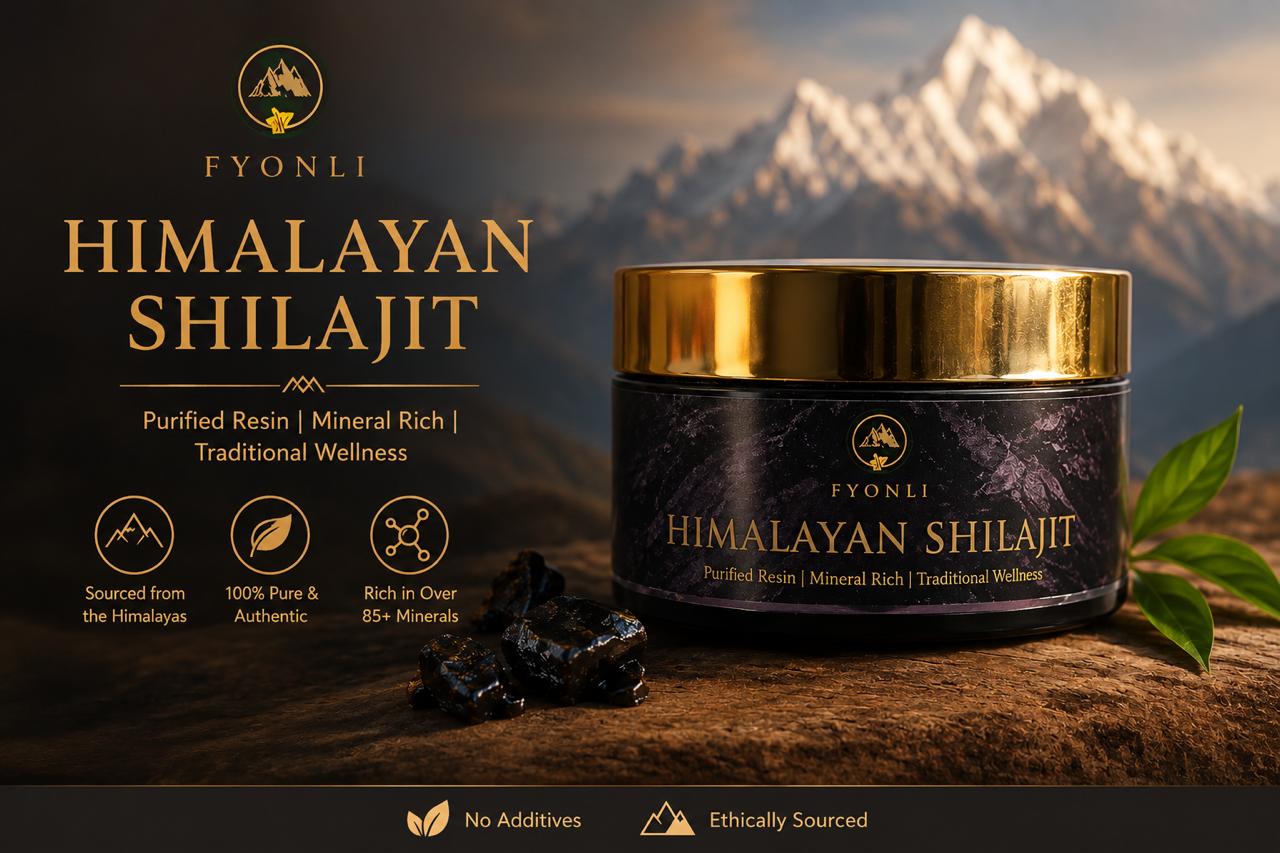
Description
A mineral-rich resin the Himalayas have taken thousands of years to make. Pure Himalayan shilajit resin seeps from cracks in rock formations above 3,000 metres. No fillers, no added extracts — just the resin, exactly as it exudes from the mountain.What Is Shilajit?
Shilajit is a mineral-rich resin that seeps from cracks in Himalayan rock formations above 3,000 metres, formed over thousands of years through the slow decomposition of plant matter under geological pressure. It is one of Ayurveda’s most revered substances — classified as a Rasayana (a rejuvenating tonic) — and has been used in traditional medicine across the Indian Himalayas, Central Asia, Tibet, and Mongolia for centuries. Fyonli sells it as raw resin, the least processed and most traditional form.Why This One Is Different
- Resin, not powder or capsule — the purest, least processed form; powder and capsule versions are more heavily processed and can contain fillers or excipients
- Rich in fulvic and humic acid — the resin’s primary organic compounds, alongside naturally occurring dibenzo-alpha-pyrones (DBPs)
- Over 85 trace minerals in chelated form — including zinc, magnesium, iron, copper, manganese, selenium and silica, bound in a naturally occurring organic form rather than a synthetic supplement blend
- A Rasayana in Ayurvedic tradition — used for centuries as a rejuvenating tonic across the Himalayan region, Tibet, Central Asia and Mongolia
- No fillers or added extracts — exactly as it exudes from the rock, nothing blended in
Shilajit Resin vs. Powder and Capsule Forms
| What You’re Buying | Powder / Capsule Shilajit | Fyonli Shilajit Resin |
|---|---|---|
| Processing | Heavily processed, often heat-dried and ground | Minimally processed raw resin |
| Additives | May contain fillers, excipients, or anti-caking agents | None — pure resin only |
| Purity verification | Difficult to verify without lab testing | Dissolves cleanly in warm water with no residue or floating particles |
| Traditional form | A modern, more processed format | The traditional Ayurvedic form, used for centuries |
| Origin | Often unstated | High-altitude Himalayan rock formations, above 3,000m |
Ingredients & Allergens
Ingredients: Pure Himalayan Shilajit resin. Nothing else — no fillers, binders, or added extracts.
Allergens: None known. As with any new supplement, those who are pregnant, breastfeeding, or managing a medical condition should consult a doctor before use.
How to Use
Take a pea-sized amount (approximately 300–500mg) and dissolve in warm water, warm milk, or ghee. Do not add to boiling liquid — heat above 70°C degrades the resin’s active compounds. Take once or twice daily, consistently. If new to shilajit, start with a rice-grain-sized amount for the first week.
How to Verify Resin Purity
Pure shilajit resin dissolves cleanly in warm water without residue or floating particles. It should be soft and pliable at room temperature, sticky rather than dry or crumbly, and carry an earthy, mineral smell rather than a sweet or artificial one.Sourcing & Story
Shilajit forms over thousands of years as plant matter decomposes under the pressure of Himalayan rock strata, eventually seeping out through cracks in the rock face at altitudes above 3,000 metres. It has been gathered from these high-altitude formations for centuries and holds a central place in Ayurvedic tradition as a Rasayana — a category of substances used to restore vitality over sustained use rather than as a quick remedy. Fyonli sources it as raw resin, sold exactly as it’s gathered, without further processing into powder or capsule form.Storage & Shelf Life
Store in a cool, dry place, tightly sealed, away from direct sunlight and moisture. Does not require refrigeration, though cooler storage keeps the resin firmer. Best used within 24 months of the packing date.
Who It’s For
- Anyone building a consistent Ayurvedic wellness routine — shilajit is traditionally taken daily over weeks or months, not as a one-off remedy
- Those who prefer the least processed form — raw resin over powder or capsule, with nothing added
- Anyone who wants to verify what they’re taking — resin purity is straightforward to check at home, unlike powder or capsule forms
Frequently Asked Questions
What is shilajit?
Shilajit is a mineral-rich resin that seeps from cracks in Himalayan rock formations above 3,000 metres, formed over thousands of years through the decomposition of plant matter under geological pressure. It’s classified in Ayurveda as a Rasayana — a rejuvenating tonic — and has been used traditionally across the Himalayan region, Tibet, Central Asia and Mongolia for centuries.
What does shilajit contain?
Shilajit’s main organic compounds are fulvic acid and humic acid, along with naturally occurring dibenzo-alpha-pyrones (DBPs) and over 85 trace minerals in chelated form, including zinc, magnesium, iron, copper, manganese, selenium and silica.
Why buy resin instead of powder or capsules?
Resin is the least processed, most traditional form of shilajit. Powder and capsule versions go through additional processing and can include fillers or excipients. Resin purity is also easier to verify at home — it should dissolve cleanly in warm water without residue.
How do I take shilajit resin?
Dissolve a pea-sized amount (roughly 300–500mg) in warm water, warm milk, or ghee — never boiling liquid, since heat above 70°C degrades the resin’s active compounds. It’s traditionally taken once or twice daily, consistently over weeks or months. First-time users should start with a rice-grain-sized amount.
How can I tell if shilajit resin is pure?
Pure shilajit dissolves cleanly in warm water with no residue or floating particles, stays soft and pliable rather than dry or crumbly at room temperature, and has an earthy, mineral smell rather than anything sweet or artificial.
Is shilajit safe for everyone?
Shilajit is a traditional Ayurvedic tonic, not a medicine, and this listing doesn’t make any claims about treating or curing a specific condition. Anyone who is pregnant, breastfeeding, or managing a medical condition should check with a doctor before starting any new supplement, including this one.
Looking for another traditional Himalayan ingredient? Try Kashmiri Saffron, GI-tagged and hand-harvested from Pampore.

