
Description
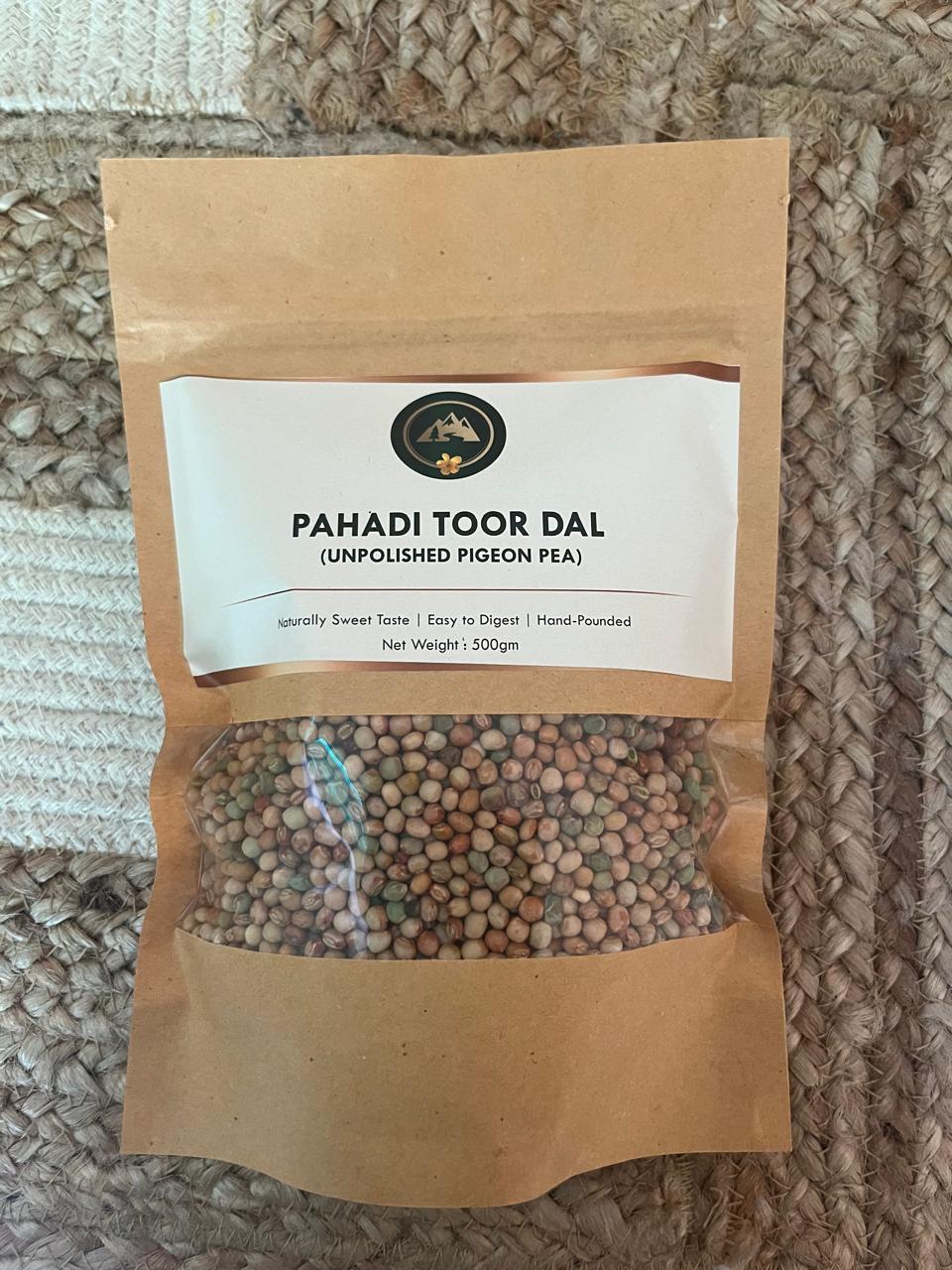
The dal you eat every day can be so much better than this. Commercial toor dal is polished until it shines — a process that removes the husk, the fibre, and most of the natural flavour. Our Pahadi Toor Dal is left exactly as it comes from the field. Grown in traditional polyculture farms in the Himalayas, it has a natural sweetness absent in standard varieties, a tender texture that cooks beautifully, and a gentle character that’s easy on the stomach.What Is Pahadi Toor Dal?
Pahadi Toor Dal is unpolished pigeon pea (Cajanus cajan, also known as arhar or tur dal) grown by small-holder farmers in the high-altitude villages of Tehri Garhwal, Uttarakhand, within a traditional polyculture farming system rather than a single-crop commercial field. Unlike the shiny, oil-polished toor dal found in most kitchens, this one is left in its natural, unpolished state — husk and fibre intact. Fyonli buys it directly from the growing families and packs it exactly as harvested.Why This One Is Different
- Unpolished, husk intact — commercial toor dal is machine-polished and often oil-coated for shine, a process that strips fibre and dulls the flavour
- Naturally sweet — the slower hill-farm growing cycle produces a rounder, sweeter flavour than flatland-grown toor dal
- Gentle on digestion — the intact husk and fibre make it easier on the gut than heavily polished dal
- Grown in polyculture fields — intercropped with other traditional hill crops rather than a single commercial monoculture, which is better for the soil
- Single origin — sourced from Tehri Garhwal’s high-altitude villages, not a pooled commodity blend
Pahadi Toor Dal vs. Commercial Toor Dal
| What You’re Buying | Commercial Toor Dal | Fyonli Pahadi Toor Dal |
|---|---|---|
| Processing | Machine-polished, often oil-coated for shine | Unpolished — husk and fibre intact |
| Origin | Usually unstated — pooled from multiple regions | Single origin — Tehri Garhwal, Uttarakhand |
| Flavour | Milder, sometimes flat | Naturally sweet |
| Growing method | Irrigated monoculture | Rain-fed polyculture, intercropped with other hill crops |
| Farmer relationship | Bought through mandi traders | Bought direct from the growing families |
Nutritional Information (per 100g, uncooked)
| Nutrient | Amount |
|---|---|
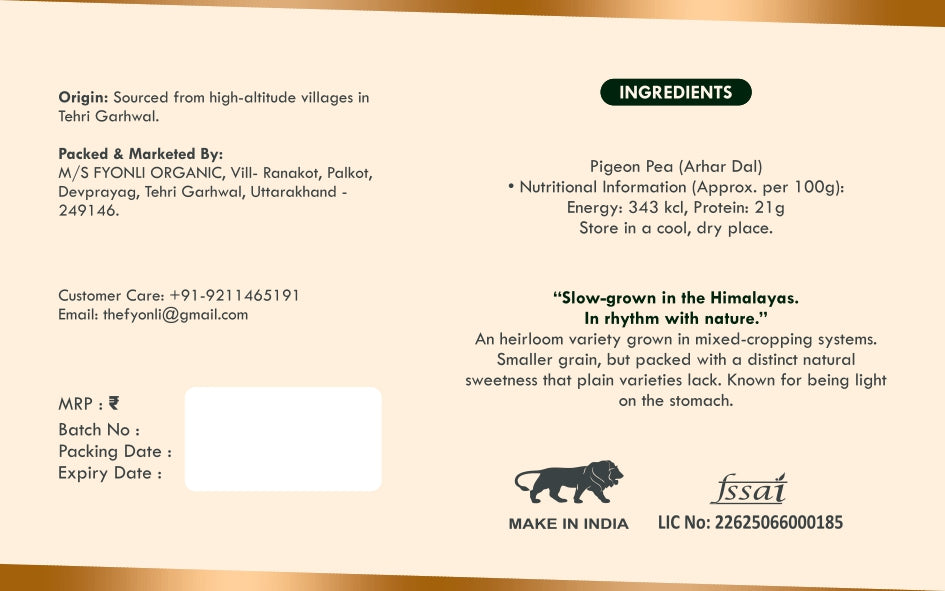
| Energy | 343 kcal |
| Protein | 22 g |
| Dietary Fibre | 15 g |
Ingredients & Allergens
Ingredients: Pigeon Pea / Arhar Dal (Cajanus cajan), unpolished. Nothing else — no added salt, oil, or preservatives.
Allergens: A natural legume. Contains no gluten, dairy, or nuts. Packed in a facility that also handles other pulses and legumes.
How to Use
Soak for 30 minutes before cooking. Pressure cook for 3–4 whistles. Temper with ghee, mustard seeds, dried red chilli, and curry leaves for a simple, deeply satisfying everyday dal. Works equally well in sambar and khichdi.
Sourcing & Story
Tehri Garhwal’s high-altitude villages have long grown toor dal within a polyculture system — intercropped with other traditional hill crops on the same terraced plots, rather than as a single commercial monoculture. It’s a kharif crop, sown in the early monsoon and harvested through autumn and early winter once the pods dry on the plant. Because it isn’t machine-polished after harvest, the dal keeps its natural husk, fibre and sweetness — the trade-off commercial processors make for a shinier, faster-cooking grain. Fyonli buys directly from the farming families who grow it.Storage & Shelf Life
Store in an airtight container in a cool, dry place, away from direct sunlight and moisture. Does not require refrigeration. Best used within 12 months of the packing date.
Who It’s For
- Everyday dal cooks — if toor dal is already a kitchen staple, this unpolished version is a straightforward upgrade in flavour and nutrition
- Anyone sensitive to digestion — the intact husk and fibre make it gentler than heavily polished commercial dal
- Cooks who want visible traceability — single origin from Tehri Garhwal, not a pooled commodity blend
Frequently Asked Questions
What does “unpolished” mean for toor dal?
Commercial toor dal is typically machine-polished and often lightly oil-coated to give it a uniform shine — a process that strips away the husk and some of the natural fibre. Pahadi Toor Dal skips this step entirely, so the dal keeps its husk, fibre and natural sweetness intact.
How much protein does Pahadi Toor Dal contain?
Dry pigeon pea contains approximately 22g of protein per 100g (USDA reference values for the species), along with around 15g of dietary fibre — both higher than in heavily polished commercial toor dal, since polishing removes some of the fibre-rich husk.
How long does unpolished toor dal take to cook?
Soak for about 30 minutes, then pressure cook for 3–4 whistles. It cooks only slightly slower than heavily polished commercial toor dal, since the husk is still intact.
What is polyculture farming, and why does it matter here?
Polyculture means growing multiple traditional crops together on the same plot rather than a single commercial monoculture. Tehri Garhwal’s hill farmers have long grown toor dal this way — it’s better for long-term soil health and spreads risk across an unpredictable mountain growing season.
Is this toor dal grown with pesticides or chemical fertiliser?
No. The farming families in Tehri Garhwal grow this dal without chemical pesticides or synthetic fertiliser, using traditional polyculture methods. It does not carry a formal organic certification, but the growing method has been chemical-free by practice for generations.
What is the shelf life of Pahadi Toor Dal?
Up to 12 months from the packing date when stored in an airtight container in a cool, dry place away from direct sunlight and moisture. Refrigeration isn’t required.
Looking for other traditional Himalayan pulses? Try the nine-coloured Naurangi Dal, or the four-pulse Garhwal Traditional Dal Mix.