Description

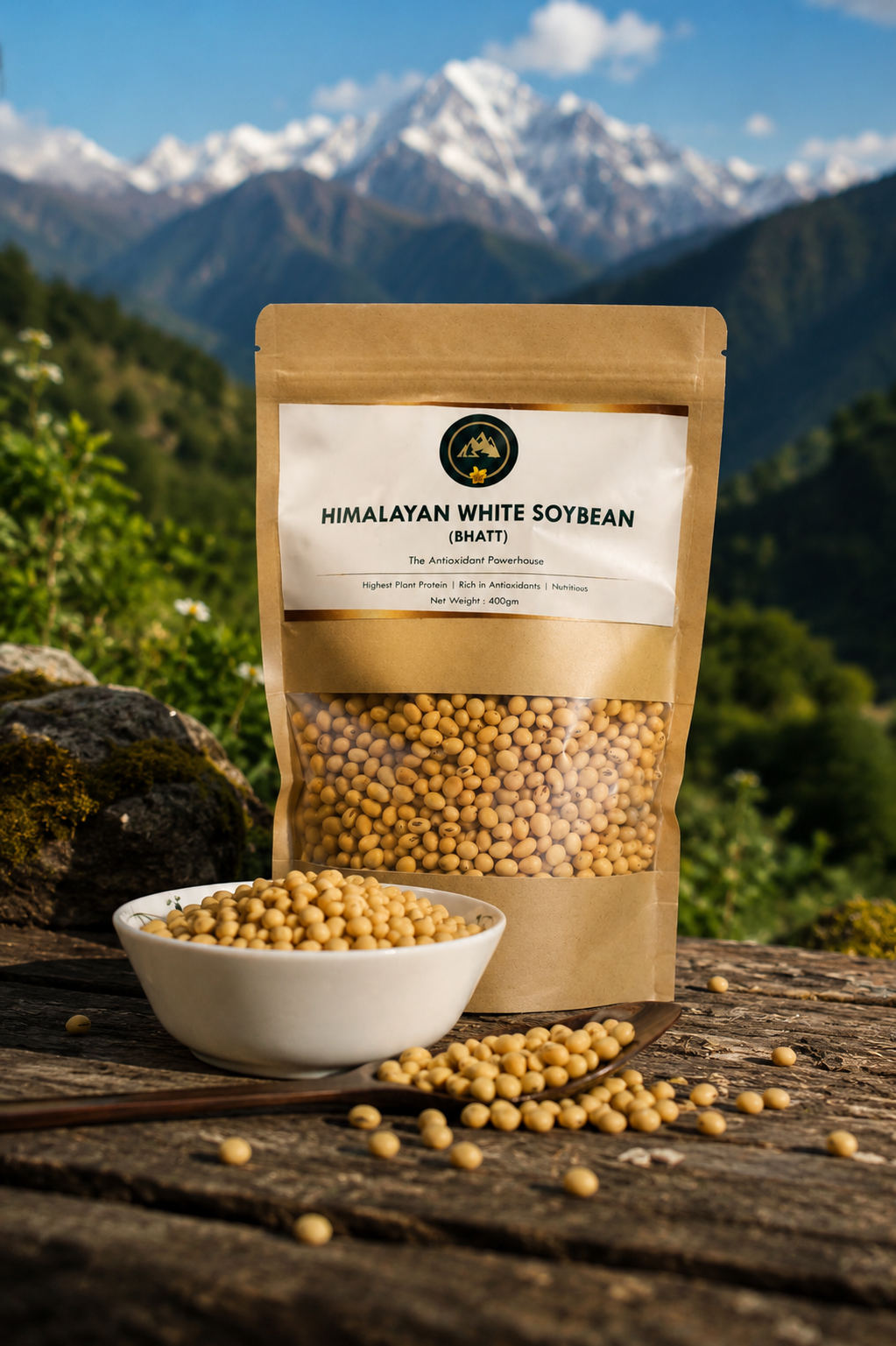
One of the highest-protein legumes grown anywhere — and most of India has never heard of it. Bhatt is the Uttarakhand name for indigenous soybean varieties grown on the terraced hillside farms of the Himalayan foothills. The white Bhatt is a pale, cream-coloured soybean grown at altitudes between 1,000 and 2,200 metres — one of the oldest cultivated soybean varieties in the Indian subcontinent, predating large-scale commercial soybean cultivation.

What Is White Soybean (Bhatt)?

White Soybean, known locally as Bhatt, is a traditional Himalayan soybean variety (Glycine max) grown by small-holder farmers on rain-fed terraced plots in the Uttarakhand hills, between roughly 1,000 and 2,200 metres altitude. It’s one of the oldest cultivated legumes in the region, traditionally grown within the Barahnaja mixed-cropping system alongside rajma, millets and other hill crops. Fyonli sources it directly from those farming families and packs it exactly as harvested.

Why This One Is Different

  • Exceptionally high protein — soybean carries one of the highest plant-protein concentrations of any legume, and white Bhatt sits at the higher end of that range
  • A complete protein — soybean contains all nine essential amino acids, including lysine, which is rare among plant foods
  • Milder, creamier than black soybean — makes it more versatile in everyday cooking than its darker cousin
  • Grown at altitude, rain-fed — cold nights and mineral-rich mountain soil, without synthetic fertiliser or irrigation
  • A traditional Barahnaja crop — grown within the Himalaya’s centuries-old mixed-cropping system, not a commercial monoculture

White Soybean (Bhatt) vs. Commercial Soybean

What You’re BuyingCommercial SoybeanFyonli White Soybean (Bhatt)
Growing methodFlat, irrigated land, heavy chemical inputsRain-fed hill terraces, no synthetic inputs
OriginUsually unstated — large-scale commercial farmsTraditional Uttarakhand hill farms, 1,000–2,200m altitude
VarietyModern high-yield commercial cultivarsTraditional Bhatt landrace, one of the oldest cultivated in the region
FlavourVariable, often blandMilder, creamier — more versatile in everyday cooking
Farmer relationshipBought through commodity tradersBought direct from Uttarakhand hill farming families

Nutritional Information (per 100g, uncooked)

NutrientAmount
Energy416 kcal
Protein36.5 g
Total Fat19.9 g
Dietary Fibre9.3 g
Iron15.7 mg
Calcium277 mg
Typical composition for dry soybean (USDA FoodData Central reference values for the species). Values are for the uncooked bean.

Ingredients & Allergens

Ingredients: White Soybean / Bhatt (Glycine max). Nothing else — no added salt, oil, or preservatives. Allergens: Contains soy. A natural legume; contains no gluten, dairy, or nuts. Packed in a facility that also handles other pulses and legumes.

How to Use

Soak overnight (8–12 hours) in plenty of cold water. Pressure cook for 4–5 whistles until fully soft. Use exactly like rajma: in a thick tomato-onion gravy, mixed into salads when cooled, or dry-fried as a protein-rich snack. Pairs well with simple Pahadi tadkas — ghee, cumin, dried red chilli, and a pinch of asafoetida.

Sourcing & Story

Bhatt has been grown on Uttarakhand’s terraced hill farms for generations, long before large-scale commercial soybean cultivation reached India — it’s traditionally sown as part of Barahnaja, the region’s centuries-old mixed-cropping system, alongside rajma, millets and other hill crops. Like other Himalayan legumes, it’s a kharif crop, sown in early summer and harvested in autumn once the pods dry. The cold nights and slow growing season at this altitude are part of why the protein content sits at the higher end of the soybean range. Fyonli buys it directly from the hill farming families who grow it.

Storage & Shelf Life

Store in an airtight container in a cool, dry place, away from direct sunlight and moisture. Does not require refrigeration. Best used within 12 months of the packing date.

Who It’s For

  • Anyone building a high-protein vegetarian or vegan plate — at over 36g protein per 100g, this is one of the most concentrated plant proteins available
  • Cooks who find black soybean too strong — white Bhatt is milder and creamier, easier to use in everyday dishes
  • Shoppers who want a traceable, traditional legume — a heritage Himalayan crop, not a modern commercial cultivar
Not the right fit if you have a soy allergy — like all soybean, Bhatt contains soy protein and isn’t suitable for anyone with that allergy.

Frequently Asked Questions

What is Bhatt (white soybean)?

Bhatt is the Uttarakhand name for a traditional Himalayan soybean variety (Glycine max), grown on rain-fed terraced hill farms between roughly 1,000 and 2,200 metres altitude. White Bhatt is a pale, cream-coloured landrace, one of the oldest cultivated soybean varieties in the region, and milder and creamier in flavour than black soybean.

How much protein does White Soybean (Bhatt) contain?

Dry soybean contains approximately 36.5g of protein per 100g (USDA reference values for the species), one of the highest concentrations of any legume, and it’s a complete protein containing all nine essential amino acids, including lysine.

How is Bhatt different from regular commercial soybean?

Commercial soybean is typically grown at scale on flat, irrigated land with heavy chemical inputs. Bhatt is a traditional landrace grown on rain-fed Himalayan hill terraces without synthetic fertiliser, at altitudes that favour slower growth and nutrient accumulation, with a milder, creamier flavour than commercial varieties.

How do I cook White Soybean (Bhatt)?

Soak overnight for 8–12 hours in plenty of cold water, then pressure cook for 4–5 whistles until fully soft. It can be used exactly like rajma — in a thick tomato-onion gravy, mixed into salads once cooled, or dry-fried as a protein-rich snack.

Is White Soybean (Bhatt) suitable for people with a soy allergy?

No. Bhatt is a soybean variety and contains soy protein, so it is not suitable for anyone with a soy allergy, even though it’s grown and processed differently from commercial soybean.

What is the shelf life of White Soybean (Bhatt)?

Up to 12 months from the packing date when stored in an airtight container in a cool, dry place away from direct sunlight and moisture. Refrigeration isn’t required.

Curious about other traditional Himalayan legumes? Explore the nine-coloured Naurangi Dal, or read about the difference between mountain-grown and commodity legumes.

Origin
Uttarakhand hill farms, 1,000-2,200m altitude
Net Quantity
0.4 kg
Ingredients
White Soybean / Bhatt (Glycine max)
Shelf Life
12 months from packing
Storage
Store in a cool, dry place in an airtight container
FSSAI Licence
22625066000185

Thanks for your review!

Your feedback helps us improve our service.

error

Please Insert Review Title

Please Insert Review Feedback

6000+ ft altitude

Grown at Altitude. Harvested by Hand.

Sourced directly from small-scale farmers in the Himalayan highlands — where clean mountain air, glacier-fed streams, and untouched soil create produce of unmatched purity. No middlemen. No chemicals. Every batch follows generations of traditional farming wisdom.

🌿 Organic Practice 🤝 Fair Trade 🏔 Single Origin

Frequently Bought Together