
Himalayan Rajma
Single-origin Himalayan rajma from Chakrata, Joshimath, Bageshwar and Shopian, plus mixed heirloom rajma blends from Uttarakhand’s mountain terraces.
Showing all 6 results
-

Bageshwar White Rajma (The Pearl of Bageshwar) – Single Origin | Hand-Picked | Naturally Grown
₹295.00 Add to Bag -
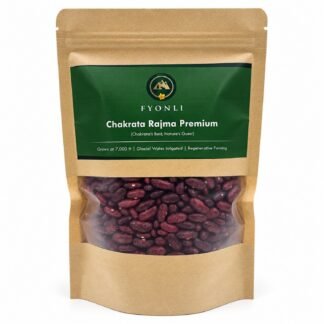
Chakrata Rajma Premium
₹340.00 Add to Bag -
Himalayan Mix Rajma (The Colorful Mountain Blend)
Price range: ₹199.00 through ₹359.00 Add to Bag This product has multiple variants. The options may be chosen on the product page -
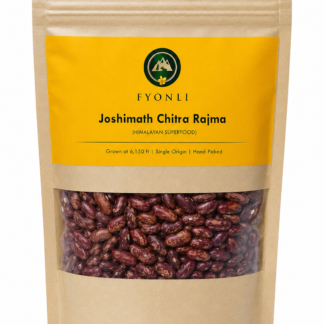
Joshimath Chitra Rajma (Himalayan Superfood)
Price range: ₹319.00 through ₹589.00 Add to Bag This product has multiple variants. The options may be chosen on the product page -
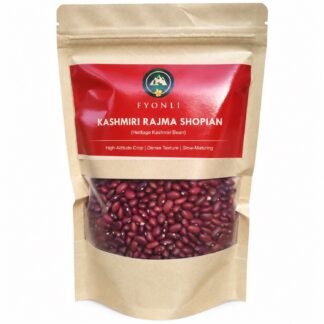
Kashmiri Rajma Shopian
₹299.00 Add to Bag -
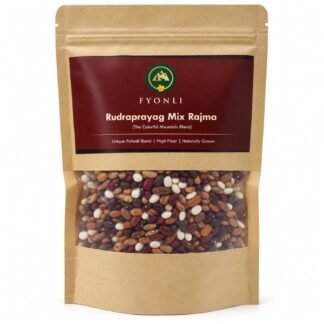
Rudraprayag Mix Rajma (The Colorful Mountain Blend)
₹300.00 Add to Bag

Showing all 6 results
What makes pahadi rajma different?
Pahadi rajma is kidney beans grown on hill terraces in Uttarakhand and Kashmir, where each valley produces its own variety with its own size, colour and cooking time. Fyonli sells them by origin rather than as one generic rajma, so you can choose the bean for the dish.
Which rajma should you choose?
- Chakrata Rajma — grown around 7,000 ft in the Jaunsar-Bawar hills of Dehradun district; naturally sweet with a soft bite.
- Joshimath Chitra Rajma — speckled rajma from about 6,150 ft in Chamoli district, with a tender skin that cooks faster.
- Bageshwar White Rajma — creamy white beans from the Saryu valley.
- Kashmiri Rajma Shopian — dense red beans for a thick, slow-simmered gravy.
- Himalayan Mix Rajma and Rudraprayag Mix Rajma — several heirloom varieties in one pack.
How do you cook pahadi rajma?
Soak overnight (8–10 hours), discard the water, then pressure-cook: around 4–5 whistles for Joshimath, 6 or more for denser beans like Shopian. Always boil kidney beans thoroughly; undercooked rajma is not safe to eat.
Is pahadi rajma worth the price?
It is smaller-batch and slower-grown than market rajma. Our pahadi rajma vs regular rajma comparison covers the differences in taste, texture and cooking time.