

Description
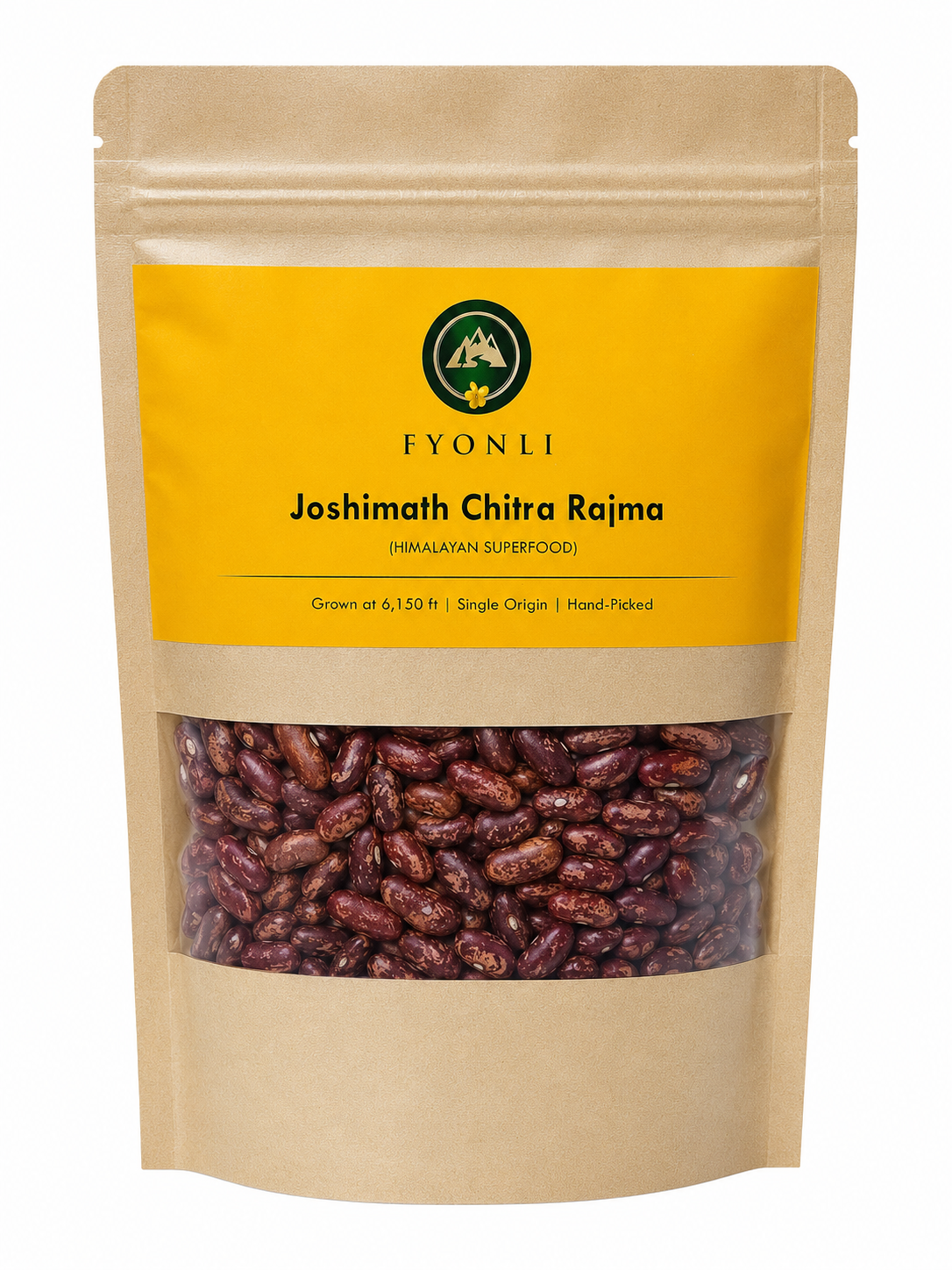
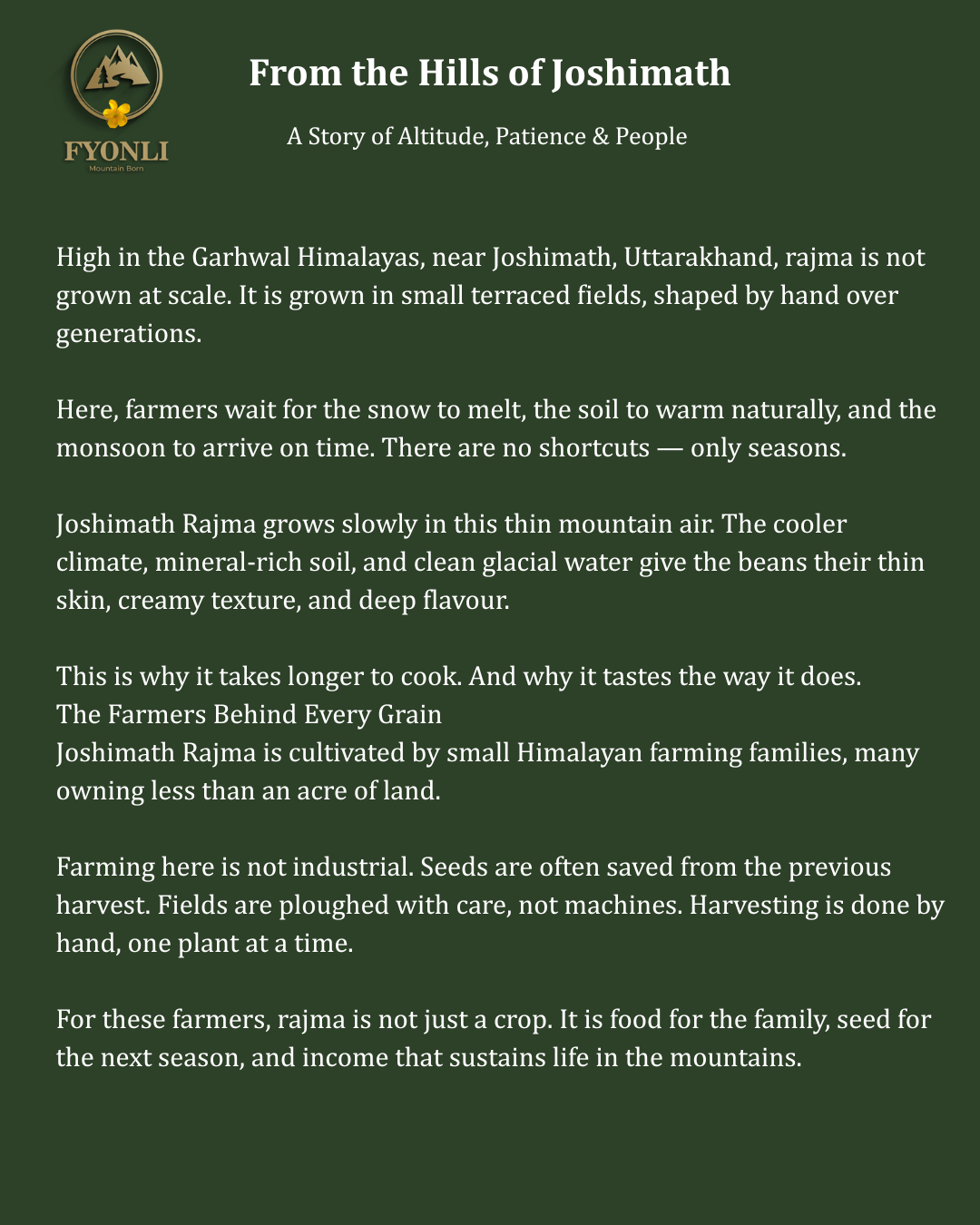
You can copy the seed. You can’t copy the altitude. Joshimath Rajma grows slowly — very slowly — on narrow terraces carved into the Himalayan mountains at 6,150 feet. The thin mountain air, the short growing season, the ice-cold glacial water — all of it conspires to concentrate flavour into each small bean. The result is a tender skin, a naturally creamy interior, and a depth of taste that commercial varieties grown in flatlands simply cannot achieve. This is what real rajma tastes like.What Is Joshimath Chitra Rajma?
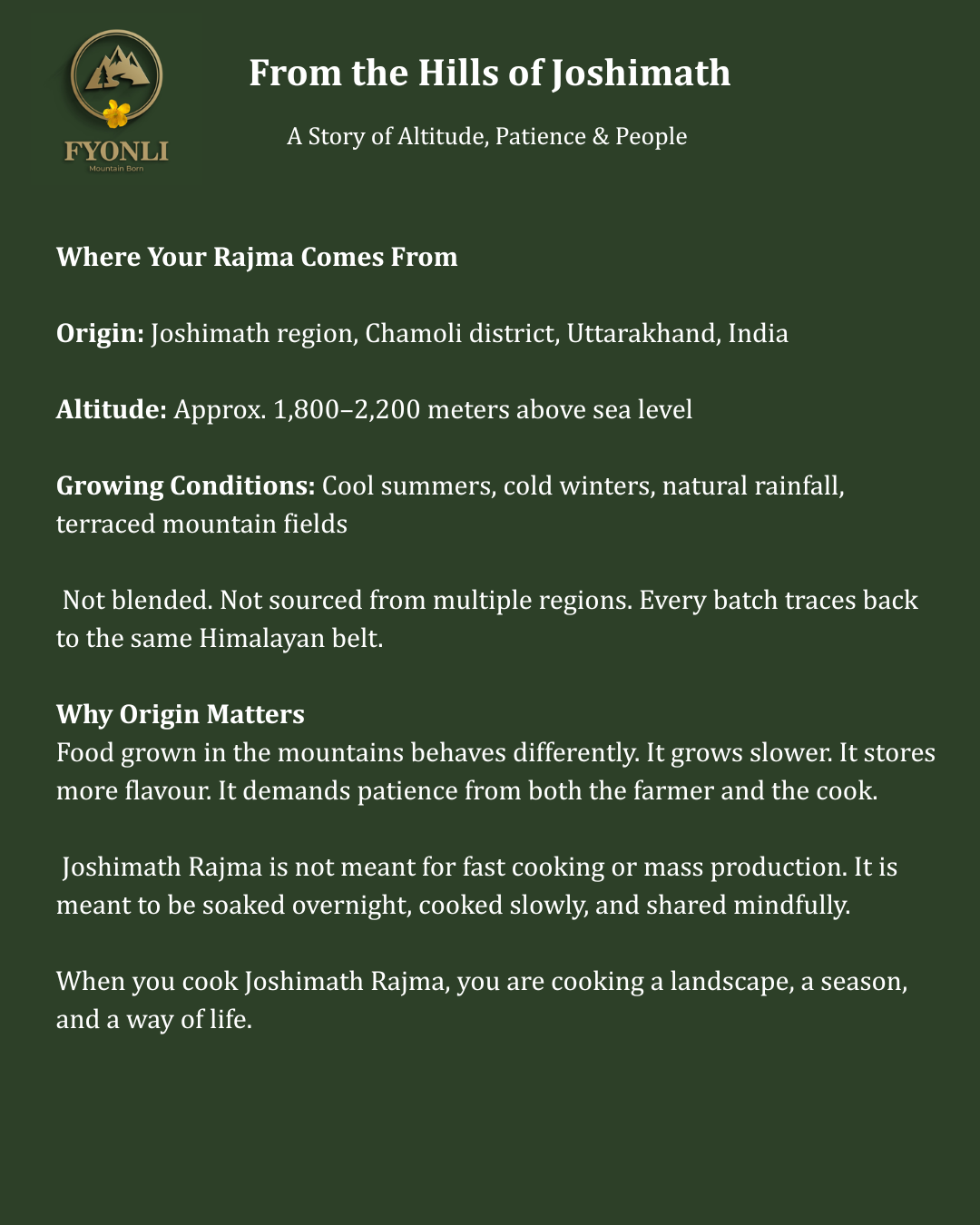
Joshimath Chitra Rajma is a single-origin Himalayan kidney bean grown by small-holder farmers on the terraced slopes above Joshimath, in Chamoli district, Uttarakhand, at roughly 6,150 ft — one of the higher-altitude rajma varieties Fyonli sources. “Chitra” refers to the bean’s mottled, speckled seed coat, a visible mark of the traditional landrace rather than a uniform commercial hybrid. Fyonli buys it directly from the farming families who grow it, in small batches limited by what each season’s terraces produce. Available in 400g and 800g packs.Why This One Is Different
- Tender skin, faster cook — cooks through in fewer whistles than standard rajma, without the toughness thicker-skinned commercial beans can have
- Naturally creamy interior — rich, thick gravy without needing cream or extra fat
- One of the highest-altitude rajmas Fyonli sources — grown at roughly 6,150 ft, where the growing season is short and the nights are cold
- Distinct mottled seed coat — a visible sign of the traditional Chitra landrace, not a uniform commercial hybrid
- Small-batch by nature — limited to what the terraces at Joshimath actually produce each season, not scaled to demand
Joshimath Chitra Rajma vs. Supermarket Rajma
| What You’re Buying | Supermarket Rajma | Fyonli Joshimath Chitra Rajma |
|---|---|---|
| Origin | Usually unstated — pooled from multiple growing regions | Single origin — Joshimath, Chamoli district, Uttarakhand |
| Growing altitude | Typically plains or low-hill grown | ~6,150 ft, Himalayan highlands |
| Skin & cook time | Thicker skin, longer pressure-cook | Tender skin, cooks through faster |
| Interior texture | Often needs added cream for richness | Naturally creamy interior |
| Seed variety | Uniform commercial hybrid | Traditional mottled Chitra landrace |
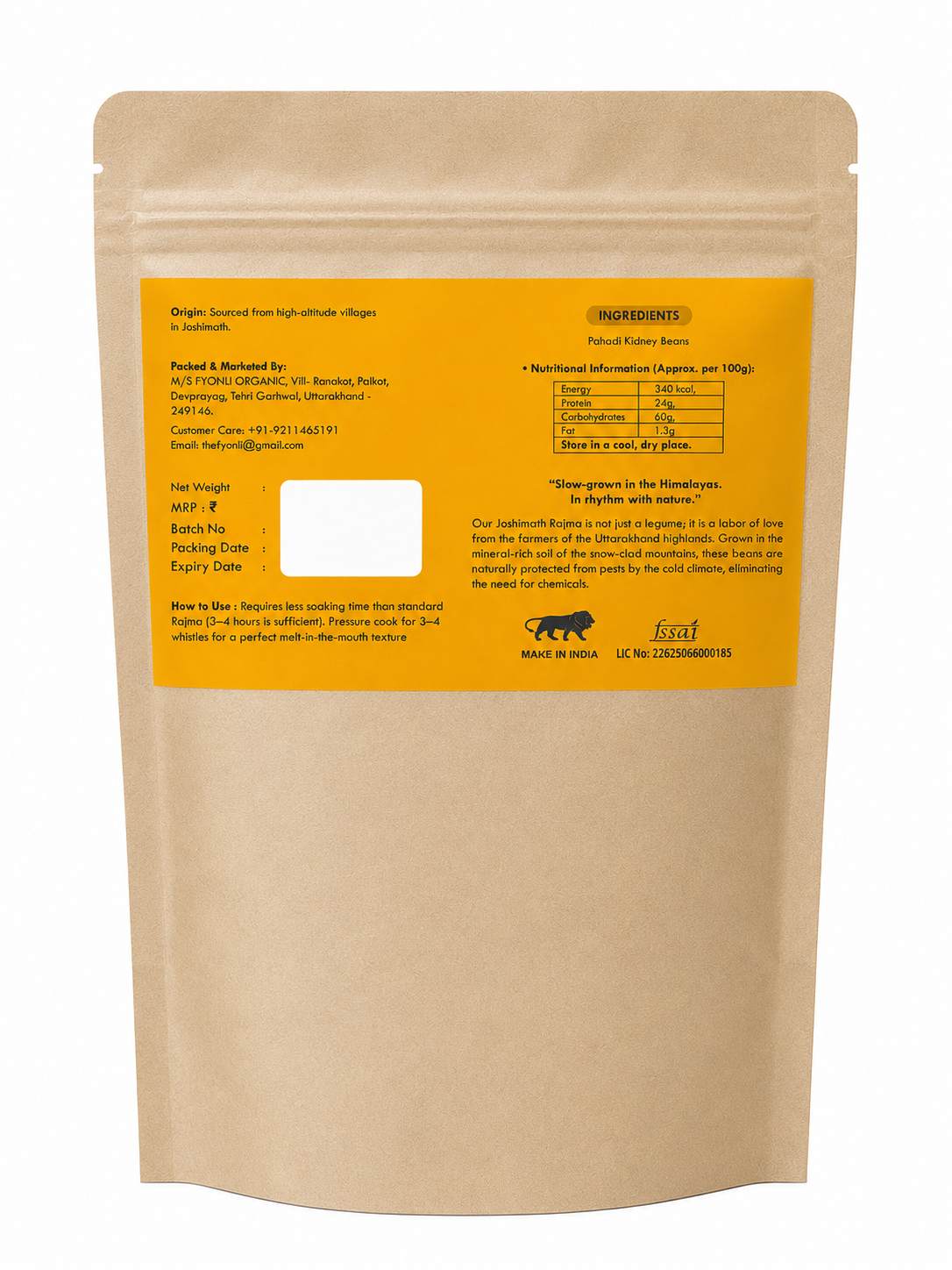
Nutritional Information (per 100g, uncooked)
| Nutrient | Amount |
|---|---|
| Energy | 333 kcal |
| Protein | 23.6 g |
| Total Fat | 0.8 g |
| Carbohydrate | 60 g |
| Dietary Fibre | 24.9 g |
Ingredients & Allergens
Ingredients: Joshimath Chitra Rajma (kidney beans, Phaseolus vulgaris). Nothing else — no added salt, oil, or preservatives.
Allergens: A natural legume. Contains no gluten, dairy, or nuts. Packed in a facility that also handles other pulses and legumes.
How to Use
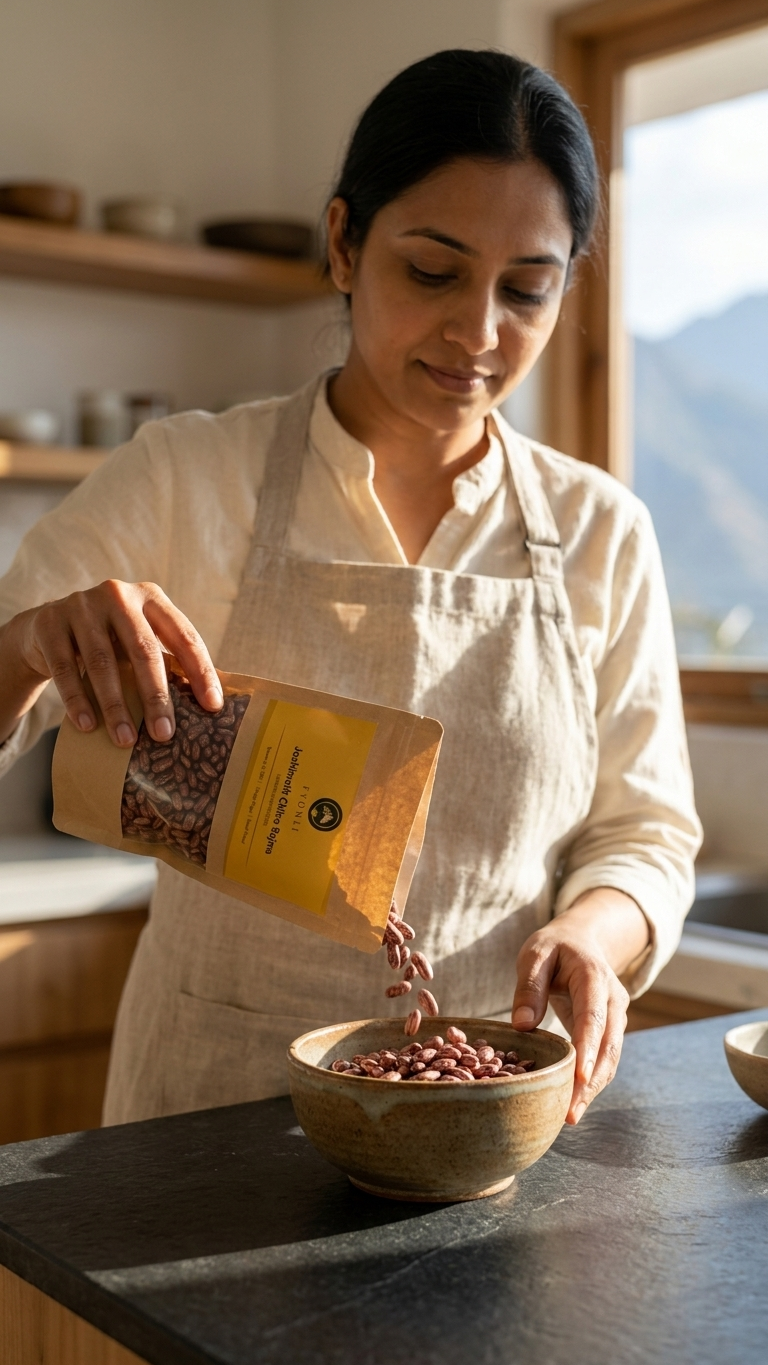
Soak for 6–8 hours. Pressure cook for 4–5 whistles — the tender skin means it cooks faster than standard rajma. Simmer with onion, tomato and mountain spices. Add a generous spoon of Bilona ghee before serving.
Sourcing & Story
Joshimath sits above the Alaknanda valley in Chamoli district, at the gateway to some of Uttarakhand’s highest inhabited farmland. Rajma here is grown on narrow, hand-tended terraces at around 6,150 ft — a kharif crop sown in May and June and harvested in September and October, once the pods dry on the vine. The short growing season and cold nights at this altitude are what concentrate the bean’s flavour; farming families here have grown the mottled Chitra variety on these same terraces for generations. Fyonli buys the harvest directly from those families each season.Storage & Shelf Life
Store in an airtight container in a cool, dry place, away from direct sunlight and moisture. Does not require refrigeration. Best used within 12 months of the packing date.
Who It’s For
- Cooks who want a rich rajma without added cream — the naturally creamy interior does the work a flatland bean needs help to do
- Anyone building a high-protein vegetarian plate — around 24g protein per 100g dry weight, a serious plant-protein staple
- Collectors of India’s regional rajma varieties — the mottled Chitra landrace is a distinct high-altitude variety, not the standard commercial bean
Frequently Asked Questions
What does “Chitra” mean in Joshimath Chitra Rajma?
Chitra refers to the bean’s mottled, speckled seed coat — a visible mark of the traditional Himalayan landrace grown at Joshimath, as opposed to a uniform, unmarked commercial hybrid. The name describes the bean’s appearance, not an added ingredient or flavour.
Why does Joshimath Rajma cook faster than regular rajma?
Joshimath Chitra Rajma has a naturally tender skin, which means it typically cooks through in about 4–5 pressure-cooker whistles rather than the 6 or more some thicker-skinned commercial varieties need. It still benefits from a 6–8 hour soak beforehand for the most even texture.
How much protein does Joshimath Chitra Rajma contain?
Dry kidney beans contain approximately 23.6g of protein per 100g (USDA reference values for the species). A typical 50g dry serving provides roughly 12g of protein before cooking.
What sizes is Joshimath Chitra Rajma available in?
It’s available in 400g and 800g packs. Both are drawn from the same small-batch, single-origin harvest from the terraces above Joshimath.
Is Joshimath Chitra Rajma grown with pesticides or chemical fertiliser?
No. The farming families in Joshimath grow this rajma without chemical pesticides or synthetic fertiliser. It does not carry a formal organic certification, but the growing method has been chemical-free by practice for generations.
What is the shelf life of Joshimath Chitra Rajma?
Up to 12 months from the packing date when stored in an airtight container in a cool, dry place away from direct sunlight and moisture. Refrigeration isn’t required.
How is this different from Bageshwar or Chakrata rajma?
All three are single-origin Himalayan kidney beans from different valleys. Joshimath, at around 6,150 ft in Chamoli district, is grown for its tender skin, creamy interior and distinctive mottled Chitra seed coat; Bageshwar’s Saryu Valley beans are a buttery white bean, and Chakrata’s are prized for natural sweetness. Fyonli sells each as a distinct single-origin product rather than blending them.
Wondering if it is worth the premium? Here is an honest look at pahadi rajma vs regular rajma and what really sets mountain kidney beans apart. Prefer natural sweetness instead? Try Chakrata Rajma Premium, or a buttery white bean with Bageshwar White Rajma.