
Description
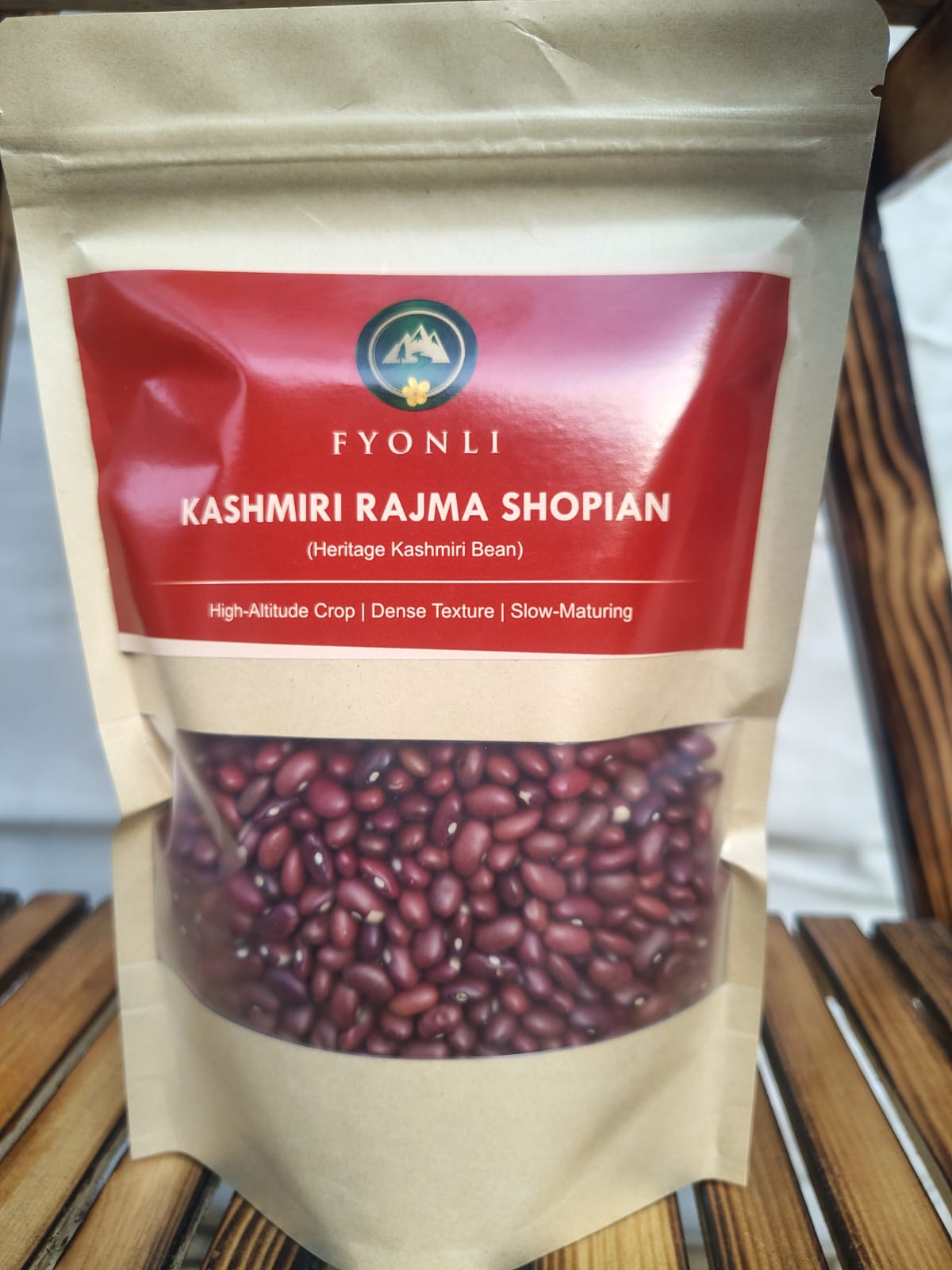
Some rajma is good. Shopian Rajma makes you stop mid-bite. Grown in the high-altitude farmlands of Shopian, Kashmir, this dense, thick-skinned bean is built for slow cooking. Its firm body slowly releases starch as it cooks — building a naturally rich, almost velvety gravy without any added thickening. The flavour is deep and earthy, the bite is satisfying, and the experience feels like a proper Kashmiri-style meal no matter where you make it.What Is Kashmiri Rajma Shopian?
Kashmiri Rajma Shopian is a single-origin kidney bean grown by farming families around Shopian, in the Pir Panjal foothills of Jammu & Kashmir, at an average elevation of roughly 6,700 ft. It’s a dense, thick-skinned bean bred for slow cooking rather than quick weeknight meals — the kind Kashmiri households build a proper rajma-chawal around. Fyonli buys it directly from Shopian’s growing families and packs it unblended.Why This One Is Different
- Naturally thick gravy — the bean’s dense body slowly releases starch as it cooks, thickening the dish without any added cream or flour
- Firm, satisfying bite — holds its shape through a long simmer instead of breaking down into mush
- Built for slow cooking — flavour deepens the longer it simmers, unlike thinner-skinned beans that are best cooked fast
- High-altitude Kashmiri origin — grown around Shopian at roughly 6,700 ft in the Pir Panjal foothills
- Single origin, unpolished — no artificial colour, no polishing for uniform shine
Kashmiri Rajma Shopian vs. Supermarket Rajma
| What You’re Buying | Supermarket Rajma | Fyonli Kashmiri Rajma Shopian |
|---|---|---|
| Origin | Usually unstated — pooled from multiple growing regions | Single origin — Shopian, Kashmir |
| Growing altitude | Typically plains or low-hill grown | ~6,700 ft, Pir Panjal foothills |
| Gravy texture | Often needs added thickener | Naturally thick from the bean’s own starch |
| Body after cooking | Can break down into mush on long simmer | Holds its shape, firm bite |
| Processing | Machine-polished for uniform colour | Unpolished, natural skin |
Nutritional Information (per 100g, uncooked)
| Nutrient | Amount |
|---|---|
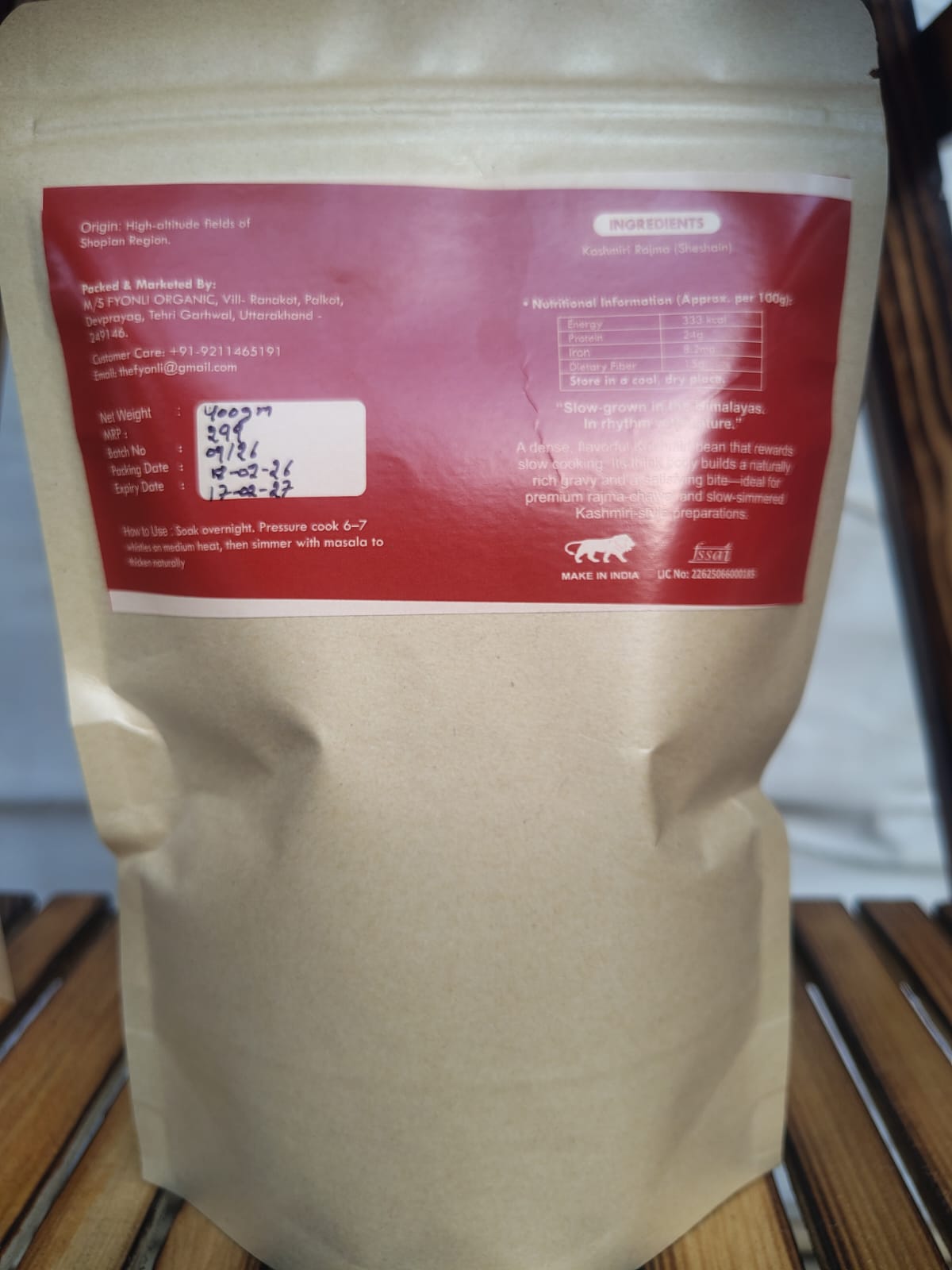
| Energy | 333 kcal |
| Protein | 23.6 g |
| Total Fat | 0.8 g |
| Carbohydrate | 60 g |
| Dietary Fibre | 24.9 g |
Ingredients & Allergens
Ingredients: Kashmiri Rajma Shopian (kidney beans, Phaseolus vulgaris). Nothing else — no added salt, oil, or preservatives.
Allergens: A natural legume. Contains no gluten, dairy, or nuts. Packed in a facility that also handles other pulses and legumes.
How to Use
Soak overnight (8–10 hours) — this bean rewards patience. Pressure cook for 6–7 whistles on medium heat, then open-simmer with masala for at least 20 minutes to let the gravy thicken naturally. Serve hot with steamed rice and a side of pickled onion.
Sourcing & Story
Shopian sits in the Pir Panjal foothills of Jammu & Kashmir, at an average elevation of around 6,700 ft — better known for its apple orchards, but its higher farmland has long grown a dense, thick-skinned rajma alongside them. Like other Himalayan rajma, it’s a kharif crop, sown in late spring and harvested after the monsoon once the pods dry on the vine. The cooler, high-altitude growing conditions are what give the bean its firm body and slow-release starch. Fyonli buys directly from the farming families around Shopian who grow it each season.Storage & Shelf Life
Store in an airtight container in a cool, dry place, away from direct sunlight and moisture. Does not require refrigeration. Best used within 12 months of the packing date.
Who It’s For
- Cooks who slow-cook their rajma — this bean is built for a long simmer, not a rushed weeknight pot
- Anyone who wants a naturally thick gravy — no cream, flour or added thickener needed
- Fans of classic Kashmiri-style rajma-chawal — this is the bean that dish was built around
Frequently Asked Questions
What makes Kashmiri Rajma Shopian different from other rajma?
It’s a dense, thick-skinned kidney bean grown around Shopian in the Pir Panjal foothills of Kashmir, at an average elevation of roughly 6,700 ft. Its firm body slowly releases starch as it cooks, building a naturally thick gravy without any added thickener — a texture suited to slow-cooked, classic Kashmiri-style rajma-chawal.
How long should I soak and cook this rajma?
Soak for 8–10 hours, ideally overnight — this dense bean rewards patience. Pressure cook for 6–7 whistles on medium heat, then open-simmer with masala for at least 20 minutes to let the gravy thicken naturally.
How much protein does Kashmiri Rajma Shopian contain?
Dry kidney beans contain approximately 23.6g of protein per 100g (USDA reference values for the species). A typical 50g dry serving provides roughly 12g of protein before cooking.
Is this rajma grown with pesticides or chemical fertiliser?
No. The farming families around Shopian grow this rajma without chemical pesticides or synthetic fertiliser. It does not carry a formal organic certification, but the growing method has been chemical-free by practice for generations.
What is the shelf life of Kashmiri Rajma Shopian?
Up to 12 months from the packing date when stored in an airtight container in a cool, dry place away from direct sunlight and moisture. Refrigeration isn’t required.
How is Kashmiri Rajma Shopian different from Uttarakhand rajma varieties like Bageshwar or Chakrata?
All are single-origin Himalayan-region kidney beans, but Kashmiri Rajma Shopian comes from a different range entirely — the Pir Panjal foothills of Jammu & Kashmir rather than Uttarakhand — and has a denser body and thicker skin suited to a long, slow simmer. Bageshwar and Chakrata rajma, from Uttarakhand’s Kumaon and Jaunsar Bawar regions, cook faster and have a softer, buttery or sweet character.
Curious what makes mountain rajma different from regular kidney beans? Prefer an Uttarakhand-grown bean instead? Try Chakrata Rajma Premium or Bageshwar White Rajma.