
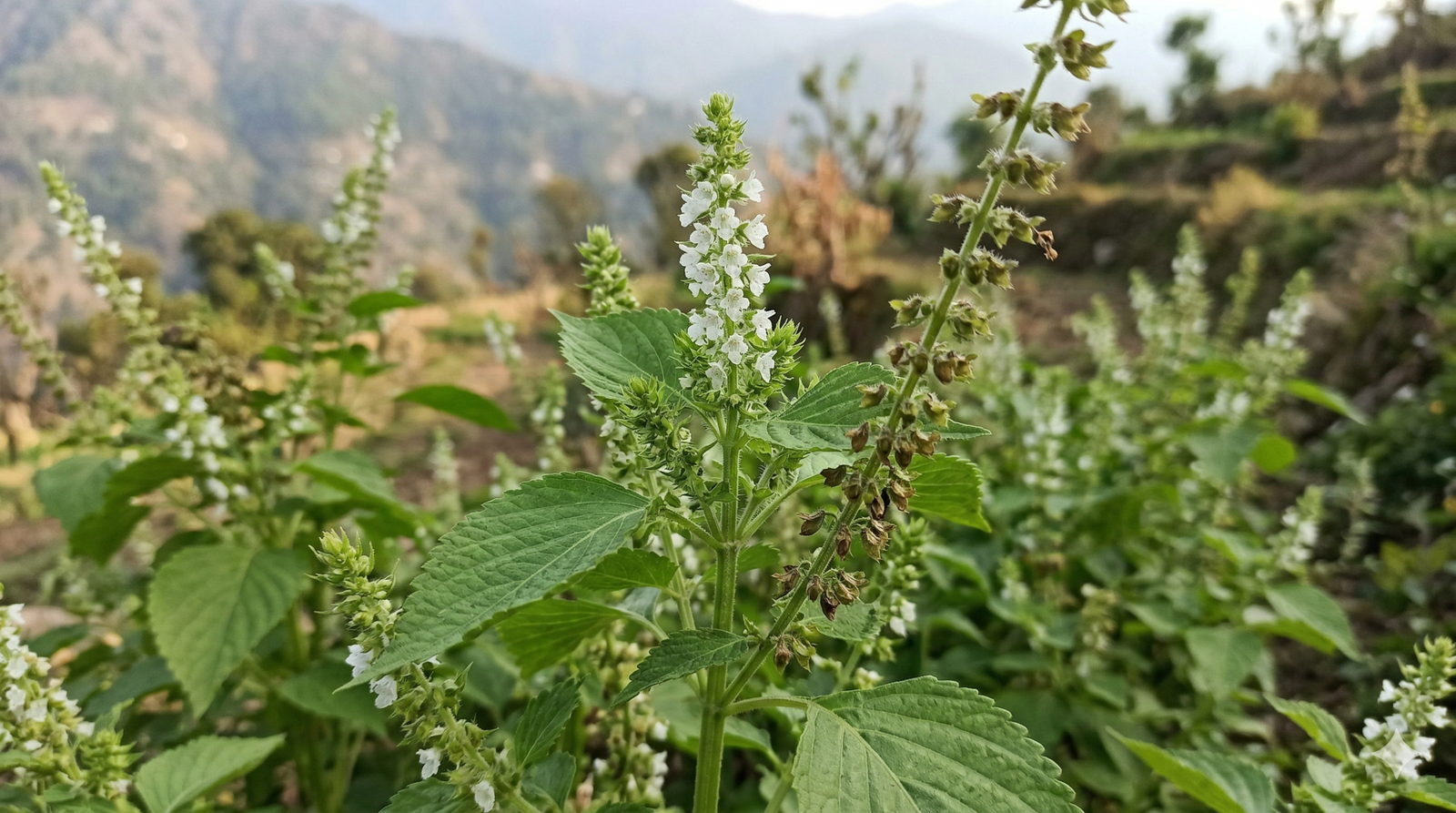
Bhangjeera — the wild perilla seed from the Himalayas — is one of India’s most nutritionally exceptional foods, and almost nobody outside Uttarakhand has heard of it. Known internationally as perilla seeds and used extensively in Korean and Japanese cooking, bhangjeera has grown wild in the Garhwal Himalayan belt for centuries, feeding mountain communities long before it became a global wellness trend.
This article covers everything you need to know — what bhangjeera perilla seeds are, why they are nutritionally extraordinary, how Pahadi kitchens have always used them, and how to start using them in your own cooking.
In This Article
- What Are Bhangjeera Perilla Seeds?
- Bhangjeera vs Flaxseeds — Which Has More Omega-3?
- Why Bhangjeera Perilla Seeds Are Nutritionally Exceptional
- How Bhangjeera Is Used in Traditional Pahadi Cooking
- How to Use Bhangjeera Perilla Seeds at Home
- Where Fyonli’s Bhangjeera Comes From
- Where to Buy Authentic Bhangjeera Online
What Are Bhangjeera Perilla Seeds?
Bhangjeera is the Garhwali name for perilla seeds — small, oval, greyish-brown seeds from the Perilla frutescens plant, a wild herb that belongs to the mint family and grows naturally across the mid-Himalayan belt of Uttarakhand.
If you have come across perilla seeds in Korean or Japanese cooking — where they are called egoma or shiso — you are looking at the same plant. What the global wellness world has recently discovered, Pahadi kitchens in Uttarakhand have been using for generations.
Bhangjeera perilla seeds grow wild on hillsides and forest edges across Garhwal and Kumaon — particularly in districts like Devprayag, Chamoli, and Pauri. They are not farmed commercially. Local communities harvest them by hand during the autumn months when the plant is fully ripe, then sun-dry and clean them before use. This entirely manual process is why genuine Himalayan bhangjeera is rare outside the mountains.
The seed is small with a distinctive nutty, slightly minty aroma — noticeably different from anything else in a typical Indian spice collection.
Bhangjeera vs Flaxseeds — Which Has More Omega-3?
This is the comparison most health-conscious buyers want to know. Both bhangjeera perilla seeds and flaxseeds are promoted as excellent plant-based omega-3 sources — but they are not equal.
Research from the Centre for Aromatic Plants, Uttarakhand found that bhangjeera seed oil contains omega-3 and omega-6 fatty acids in abundance, consistently ranking among the highest of any plant source — making it a superior choice to cod liver oil for plant-based omega-3 intake. naturessoulshop
Specifically, perilla seed oil contains one of the highest proportions of omega-3 ALA fatty acids of any plant oil, at 54–64%, with omega-6 linoleic acid at around 14% also present. Amazon
Flaxseeds contain approximately 22–23% ALA omega-3 by weight. Bhangjeera perilla seeds, particularly the oil fraction, significantly exceed this.
The practical difference for your kitchen: bhangjeera delivers more omega-3 per gram than flaxseeds, with a more pleasant flavour profile — nutty and aromatic rather than the slightly bitter, earthy taste of flax. It also doubles as a cooking spice rather than just a supplement, meaning it integrates into meals naturally rather than being something you force yourself to consume.
Why Bhangjeera Perilla Seeds Are Nutritionally Exceptional
Beyond omega-3, bhangjeera perilla seeds offer a genuinely impressive nutritional profile:
- Omega-3 fatty acids (ALA) — among the highest of any plant food, supporting heart health, brain function, and inflammation reduction
- Rosmarinic acid — a powerful antioxidant and anti-inflammatory compound also found in rosemary and basil
- Dietary fibre — supports gut health, digestion, and sustained fullness
- Calcium, iron, and phosphorus — essential minerals often deficient in vegetarian diets
- Vitamin A, E, and K — fat-soluble vitamins that support skin, vision, and bone health
- Antioxidant flavonoids — compounds that protect cells from oxidative damage
Traditional Pahadi medicine has long used bhangjeera as a digestive aid and respiratory support — a small handful chewed after heavy meals. Modern nutritional research is now validating what mountain communities have always known empirically.
How Bhangjeera Is Used in Traditional Pahadi Cooking
In Uttarakhand, bhangjeera perilla seeds are not an occasional health supplement — they are a kitchen staple used multiple ways throughout the week.
Bhangjeera Chutney — The Essential Pahadi Condiment
The most traditional use of bhangjeera perilla seeds is the chutney — dry-roasted seeds ground with green chillies, garlic, coriander, and lemon juice into a coarse, intensely flavoured paste. This is the Pahadi equivalent of coconut chutney in South India — present at almost every meal, paired with dal, rice, rotis, and boiled vegetables.
Once you make bhangjeera chutney, you will understand immediately why it has anchored Pahadi cooking for generations. The flavour is unlike anything else — nutty, garlicky, slightly hot, with a mineral depth that comes from the seed itself.
As a Tempering Spice
Whole bhangjeera perilla seeds added to hot ghee at the start of cooking a dal release a warm, nutty fragrance that becomes the entire flavour base of the dish. They crackle like mustard seeds and work particularly well in simple Toor Dal or Gahat Dal preparations — much like jakhya, the other wild Himalayan seed Uttarakhand kitchens reach for instead of rai.
Pressed Into Oil
Cold-pressed bhangjeera oil — extracted from the seeds — is used in parts of Uttarakhand as both a cooking medium and a finishing oil. Its omega-3 content makes it one of the most nutritionally dense cooking oils available from any Indian source.
How to Use Bhangjeera Perilla Seeds at Home
If you are using bhangjeera perilla seeds for the first time, start with the chutney. It is the entry point that makes everything else obvious.
Classic Bhangjeera Chutney:
- Dry roast 2 tablespoons of bhangjeera seeds in a pan on low heat for 3–4 minutes until fragrant — do not let them burn
- Remove from heat and cool completely — this step is essential
- Grind with 2 green chillies, 3–4 garlic cloves, a small bunch of fresh coriander, salt, and the juice of half a lemon
- Add 1–2 tablespoons of water to get a coarse paste consistency — do not over-blend
- Taste and adjust salt and lemon
- Serve with dal chawal, parathas, or as a dip alongside any meal
This chutney keeps in the refrigerator for 3–4 days and develops more depth as it sits.
As a Dal Tempering: Add one teaspoon of whole bhangjeera perilla seeds to hot ghee before adding onions when making any dal. Works exceptionally well with Gahat Dal, Toor Dal, or a simple moong.
Mixed Into Yoghurt: Lightly roasted and coarsely crushed bhangjeera stirred into plain curd with salt and a pinch of chilli makes a simple raita that pairs beautifully with rice dishes.
As a Finishing Sprinkle: Dry-roasted whole bhangjeera seeds scattered over a finished dal or sabzi just before serving — exactly as you might use sesame seeds on a stir fry. Adds texture, aroma, and nutrition simultaneously.
Where Fyonli’s Bhangjeera Comes From
Our bhangjeera is wild-harvested from the Devprayag region of Uttarakhand — where the Alaknanda and Bhagirathi rivers meet to form the Ganga.
The surrounding hillsides are rich in wild bhangjeera perilla plants that grow without any human intervention, fertiliser, or pesticide. Local farming families collect them by hand during the autumn harvest window, sun-dry them on the hillside, and clean them manually before packing.
Each 50g pack is a single-harvest, single-origin product. There is no blending with other batches, no additives, and no industrial processing. When a batch sells out, the next one comes from the following season’s harvest.
Where to Buy Authentic Bhangjeera Online
Most bhangjeera and perilla seeds sold online in India are not traceable to a specific Himalayan region. Some are sourced from Meghalaya, some from commercial farms, some from undisclosed origins — and labelled generically as “Himalayan.”
Genuine wild-harvested Devprayag bhangjeera, hand-collected by mountain farming communities, is a different product. The flavour is more complex, the omega-3 content is higher from the wild growing environment, and the provenance is real rather than marketing language.
Shop Devprayag Bhangjeera Perilla Seeds →
Frequently Asked Questions
What is bhangjeera used for?
Traditionally it’s ground into a chutney (dry-roasted seeds with green chilli, garlic, coriander and lemon) served alongside dal, rice and rotis — the Pahadi equivalent of coconut chutney. It’s also used whole as a tempering spice in hot ghee before making dal, stirred into curd as a simple raita, or dry-roasted and sprinkled over a finished dish for texture.
Is bhangjeera actually better than flaxseed for omega-3?
By ALA content, yes. Perilla seed oil runs 54–66% omega-3 ALA, compared to roughly 22–23% in flaxseed — meaning bhangjeera delivers more omega-3 per gram, with a nuttier, less bitter flavour than flax.
Where does Fyonli’s bhangjeera come from?
Wild-harvested from the Devprayag region of Uttarakhand, where the Alaknanda and Bhagirathi rivers meet the Ganga. Local farming families hand-collect it during the autumn harvest with no fertiliser or pesticide involved, and each 50g pack is single-harvest, single-origin — no blending across batches.
How do I cook with bhangjeera the first time?
Start with the chutney: dry-roast 2 tbsp of seeds on low heat for 3–4 minutes until fragrant, cool completely, then grind with 2 green chillies, 3–4 garlic cloves, coriander, salt and the juice of half a lemon into a coarse paste. Keeps refrigerated for 3–4 days.
You might also like:
- Pahadi Rajma vs Regular Rajma — Why Mountain Kidney Beans Are Different
- Wild Mountain Honey — Why It Bears No Resemblance to Supermarket Honey
- Gahat Dal — The Himalayan Horse Gram Ayurveda Recommends for Kidney Stones
- Jakhya vs Rai (Mustard Seeds) — The Himalayan Tempering Seed Most Kitchens Have Never Tried
- Shop Spices, Nuts & Seeds →
Really enjoyed reading this detailed post on bhangjeera (perilla seeds). It’s amazing how such a small Himalayan seed carries such powerful nutrition especially being one of the richest plant based sources of omega-3.
Traditional ingredients like these truly highlight the depth of Indian food heritage especially from regions like Uttarakhand where natural and sustainable practices are still followed.
At Indian Farm Organics we strongly believe in promoting pure, natural, and traceable organic products sourced directly from trusted farmers across India. If anyone is looking for high-quality organic food products including seeds, spices and pulses in bulk, you can explore:
https://www.indianfarmorganics.com/
Great article! It was wonderful to learn about Bhangjeera and its nutritional benefits. Thanks for sharing such informative content.