
In This Article
- Jhangora vs Rice — 5 Reasons Barnyard Millet Wins
- Why Jhangora Is Exceptional for Diabetics
- 4 Traditional Jhangora Recipes from Uttarakhand Kitchens
- How to Cook Jhangora at Home — The Basics
- Jhangora Nutrition — Quick Reference
- Where to Buy Authentic Devprayag Jhangora
- Frequently Asked Questions
Jhangora vs Rice — 5 Reasons Barnyard Millet Wins
When comparing jhangora barnyard millet to white rice directly, five differences stand out consistently — and all five favour jhangora.
1. Glycaemic Index — Jhangora Is Significantly Lower
White rice has a glycaemic index of approximately 72 — meaning it causes a rapid spike in blood sugar after eating. Jhangora barnyard millet has a glycaemic index of around 50 — releasing energy slowly and steadily without the spike and crash that rice causes.
For diabetics, those managing weight, or anyone trying to reduce energy crashes after meals, this difference is significant and measurable.
2. Fibre — Jhangora Has Nearly 4× More
White rice contains approximately 0.4g of dietary fibre per 100g. Jhangora barnyard millet contains approximately 9.8g per 100g — nearly four times more. This fibre supports digestion, gut health, sustained fullness, and cholesterol management in ways that white rice simply cannot.
3. Iron — Jhangora Beats Rice Substantially
White rice is a poor source of iron. Jhangora barnyard millet contains approximately 2.9mg of iron per 100g — meaningful for vegetarians managing iron levels, women with high iron requirements, and anyone dealing with fatigue linked to low haemoglobin.
4. Protein — More Per Gram Than Rice
Jhangora barnyard millet contains approximately 6.2g of protein per 100g compared to 2.7g in white rice. For a vegetarian household where dal-rice is the staple meal, switching the rice component to jhangora meaningfully increases the protein content of every meal without changing what you eat alongside it.
5. Gluten-Free — Naturally, Without Processing
Jhangora barnyard millet is naturally gluten-free — not processed to remove gluten, but genuinely free of it by nature. For those with gluten sensitivity or coeliac disease, it is a safe, nutritious, and filling alternative to both wheat and processed gluten-free products.
Why Jhangora Is Exceptional for Diabetics
The combination of low glycaemic index, high dietary fibre, and complex carbohydrates makes jhangora barnyard millet one of the most suitable grains available for people managing Type 2 diabetes or insulin resistance. Unlike white rice — which rapidly converts to glucose in the bloodstream — jhangora releases energy gradually, helping maintain stable blood sugar levels throughout the day.
Traditional Uttarakhand families who have eaten jhangora daily for generations have always experienced it as a grain that sustains rather than spikes — often without knowing the biochemical reason why. The nutritional science now confirms what the food tradition already knew.
The practical implication: substituting jhangora for rice at even one meal a day delivers a meaningful reduction in the glycaemic load of your diet. The recipes below make that substitution straightforward.
4 Traditional Jhangora Recipes from Uttarakhand Kitchens
In Uttarakhand, jhangora is not a health food — it is simply food. A daily staple present at meals throughout the week in multiple forms. These four preparations cover everyday cooking, celebration desserts, fasting meals, and weekday breakfasts.
1. Jhangora as a Rice Substitute
The simplest and most direct use: cook jhangora exactly as you would rice and serve it alongside any dal, sabzi, or curry. The texture is slightly lighter and more granular than rice — mildly nutty, with a pleasant chew that holds up well under thick gravies. It pairs particularly well with Gahat Dal (the traditional Pahadi horse gram preparation) and with any simple Toor Dal tadka.
Method: Rinse 1 cup jhangora under cold water. Add to a pot with 2 cups of water and a pinch of salt. Bring to a boil, reduce heat, cover, and simmer for 12–15 minutes. Turn off heat, rest covered for 5 minutes, then fluff with a fork and serve. That is it — faster than rice, with none of the sticking.
2. Jhangore ki Kheer — Uttarakhand’s Most Celebrated Dessert
The most beloved jhangora dish across Garhwal and a staple at Pahadi festivals, celebrations, and family gatherings. Lighter than rice kheer but equally comforting — the millet gives the milk a delicate, slightly nutty sweetness that rice cannot replicate. If you make one jhangora recipe, make this one.
Ingredients (serves 4): ½ cup jhangora, 1 litre full-fat milk, 3–4 tablespoons sugar (adjust to taste), ¼ tsp cardamom powder, a small handful of raisins, chopped cashews or almonds to garnish.
- Rinse jhangora and soak in cold water for 30 minutes, then drain
- Bring milk to a gentle boil in a heavy-bottomed pan, stirring to prevent scorching
- Add the soaked jhangora and stir well to combine
- Cook on medium-low heat for 20–25 minutes, stirring every few minutes
- When the millet is completely soft and the milk has thickened, add sugar and cardamom
- Stir for 2 more minutes, add raisins, remove from heat
- Serve warm or chilled — both are excellent, though most Pahadi families serve it warm at celebrations
3. Jhangora Khichdi — The Mountain Comfort Meal
Jhangora cooked with moong dal, ghee, and gentle spices into a soft, warming one-pot meal. The Pahadi version of the ultimate Indian comfort dish — and arguably better than the standard because the grain holds its texture without going mushy. Particularly popular during Navratri, when jhangora is the accepted fasting grain across Uttarakhand.
Ingredients (serves 2–3): ½ cup jhangora, ¼ cup yellow moong dal (soaked 20 minutes), 2 tsp ghee, ¼ tsp cumin seeds, a pinch of asafoetida (skip during fasting), rock salt (sendha namak for fasting), ½ tsp ginger paste, 2 cups water.
- Heat ghee in a pressure cooker over medium heat
- Add cumin seeds and let them sizzle for 30 seconds, then add ginger paste and stir 30 seconds more
- Add rinsed jhangora and drained moong dal, stir to coat in ghee for 1 minute
- Add 2 cups water and rock salt, stir once
- Pressure cook for 2 whistles on medium heat, then remove from heat
- Let pressure release naturally. Open, stir gently, and serve hot with an extra drizzle of ghee
4. Jhangora Upma — A Nutritious Breakfast in 20 Minutes
Roasted jhangora prepared exactly like semolina upma — tempered in mustard seeds, curry leaves, and green chilli, then cooked through with vegetables. Ready in 20 minutes, genuinely filling, and nutritionally far superior to the semolina original. An excellent weekday breakfast for anyone managing blood sugar.
Ingredients (serves 2): 1 cup jhangora, 2 tsp oil, ½ tsp mustard seeds, 8–10 curry leaves, 1 green chilli (slit), 1 small onion (finely chopped), ¼ cup mixed vegetables (carrot, peas, beans), salt to taste, juice of half a lemon, fresh coriander to garnish.
- Dry-roast jhangora in a pan on medium heat for 3–4 minutes until it turns slightly golden and aromatic — this step is not optional; it prevents the upma from going sticky
- Set aside. Heat oil in the same pan, add mustard seeds and wait for them to splutter
- Add curry leaves, green chilli, and onion — sauté 3 minutes until the onion softens
- Add vegetables and sauté 2 more minutes
- Add the roasted jhangora, stir well to combine everything
- Add 1¾ cups water and salt, stir, cover and cook on low heat for 10 minutes
- Check that water is absorbed and jhangora is cooked through. Finish with lemon juice and fresh coriander
Pahadi variation: for a more traditionally Uttarakhand tempering, swap the mustard seeds for jakhya — the wild Himalayan seed Garhwali kitchens use instead of rai, for a nuttier, crunchier tadka.
How to Cook Jhangora at Home — The Basics
Do You Need to Soak Jhangora Before Cooking?
For most everyday uses — rice substitute, khichdi — no. Rinse under cold water and cook directly. Soaking for 20–30 minutes improves texture for kheer, helping the grain cook more evenly in milk and produce a creamier result. For upma, skip the soak entirely and dry-roast instead — soaking makes upma sticky.
Water Ratios at a Glance
- Rice substitute (firm texture): 1 cup jhangora : 2 cups water, simmer 12–15 minutes covered
- Softer, porridge-style: 1 cup jhangora : 2½ cups water, simmer 18 minutes
- Khichdi (pressure cooker): 1 cup grain+dal combined : 2 cups water, 2 whistles medium
- Upma: 1 cup dry-roasted jhangora : 1¾ cups water, low heat 10 minutes
- Kheer: ½ cup soaked jhangora : 1 litre milk, medium-low heat 20–25 minutes stirring often
Jhangora Nutrition — Quick Reference
Per 100g of jhangora barnyard millet: 307 kcal, 6.2g protein, 65.5g carbohydrates (complex, slow-release), 9.8g dietary fibre, 2.2g fat, 2.9mg iron, 20mg calcium, 280mg phosphorus. Glycaemic index approximately 50. Naturally gluten-free.
The standout numbers for a rice comparison: 9.8g fibre (vs 0.4g in rice), GI of ~50 (vs rice’s ~72), 6.2g protein (vs 2.7g in rice). For the full millet-by-millet breakdown, Navratri fasting context, and Ayurvedic profile, see the complete Jhangora guide.
Where to Buy Authentic Devprayag Jhangora Online
Most barnyard millet sold online in India is commercially grown in the plains — nutritionally adequate but without the flavour character that altitude, mineral-rich Himalayan soil, and traditional farming methods produce.
Authentic Pahadi jhangora from Uttarakhand — grown at elevation by mountain farming families — is a noticeably different product. Our jhangora comes directly from Devprayag farming communities, harvested by hand each autumn season, and packed in small batches without industrial processing or blending.
According to FSSAI’s millet promotion guidelines, traditional millet varieties grown using indigenous farming methods retain higher micronutrient profiles compared to commercially cultivated equivalents — a finding consistent with what Pahadi communities have always experienced eating Devprayag jhangora.
Shop Devprayag Jhangora Barnyard Millet →
Frequently Asked Questions About Cooking Jhangora
How long do you soak jhangora before cooking?
For everyday cooking as a rice substitute or in khichdi, no soaking is needed — just rinse well under cold water and cook directly. For kheer and soft porridge preparations, soak for 20–30 minutes first; this helps the grain cook more evenly in milk and produces a creamier texture. For upma, skip soaking entirely and dry-roast instead — soaking makes upma sticky.
What is the correct water ratio for jhangora?
For a firm, rice-like texture: 1 cup jhangora to 2 cups water, simmered for 12–15 minutes covered. For a softer porridge consistency: 1 cup to 2½ cups water for 18 minutes. For upma, use 1 cup dry-roasted jhangora to 1¾ cups water on low heat. For kheer, cook ½ cup soaked jhangora in 1 litre milk on medium-low heat for 20–25 minutes with frequent stirring.
Can you cook jhangora without soaking?
Yes — for most preparations, rinsing is sufficient. Jhangora cooks faster than rice and does not require soaking to become palatable. Soaking is optional and only improves texture for certain dishes. Upma specifically should not be soaked — dry-roasting before adding water gives a far better result.
Is jhangore ki kheer different from rice kheer?
Yes, noticeably. Jhangore ki kheer is lighter in texture than rice kheer — the millet gives the milk a more delicate, slightly grainy body rather than the starchy thickness of rice kheer. The flavour has a mild nuttiness that rice lacks entirely. It is also significantly more nutritious: more fibre, more iron, and a lower glycaemic load — a dessert that tastes genuinely good and does less damage to your blood sugar.
Is jhangora the same as sama or sanwa used during vrat fasting?
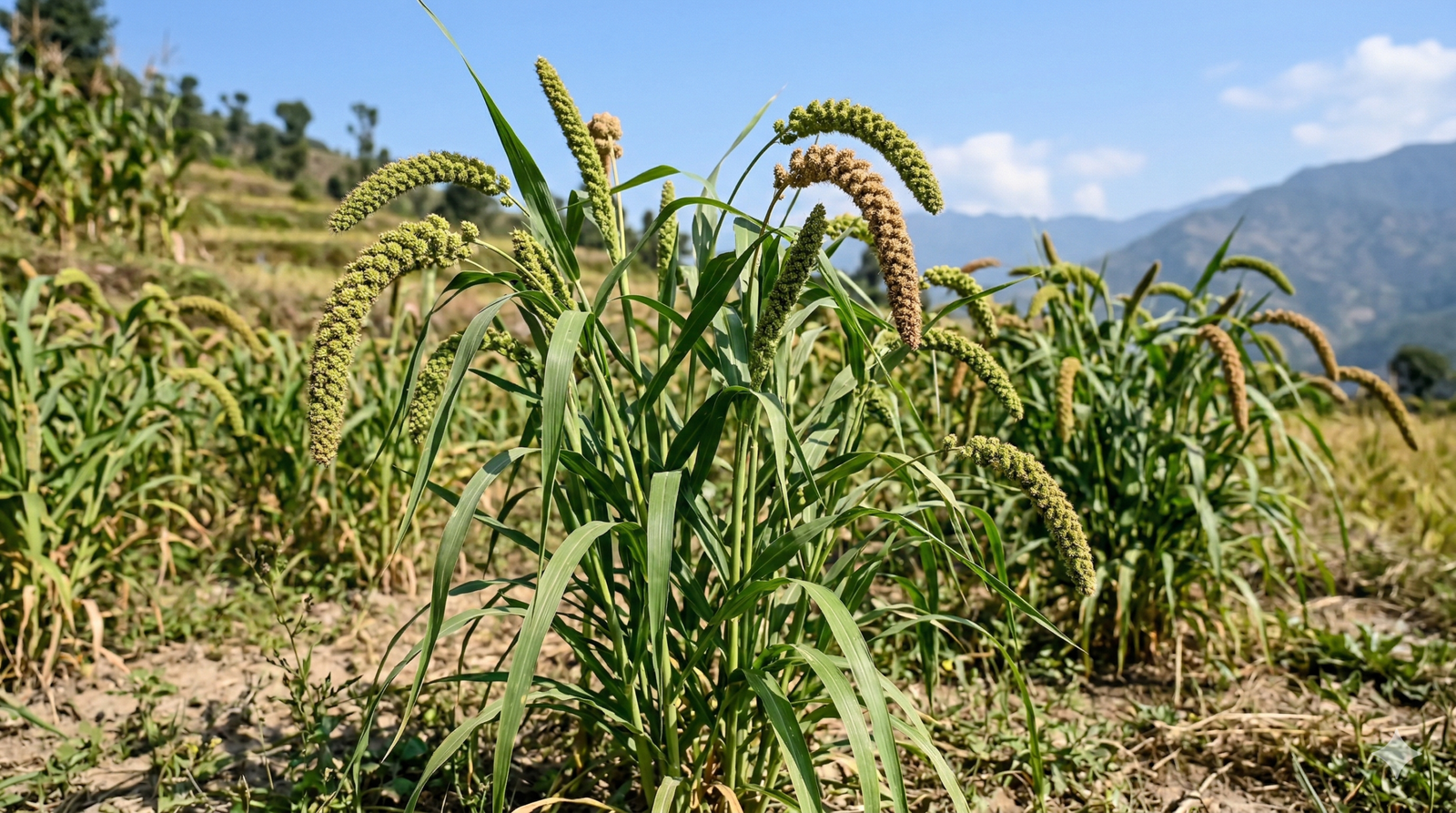
Jhangora (barnyard millet, Echinochloa frumentacea) and sama (little millet, Panicum sumatrense) are related but botanically distinct grains. Both are used as fasting grains during Navratri and Ekadashi across different regions of India — jhangora is the primary fasting millet in Uttarakhand, while sama is more common in Maharashtra and Gujarat. In Uttarakhand, jhangora khichdi and jhangore ki kheer are the traditional fasting preparations for both Navratri and Ekadashi.
Does jhangora need to be washed before cooking?
Yes — rinse jhangora under cold running water until the water runs mostly clear before cooking. Like all small grains, it may carry dust or surface starch from processing and packing. Rinsing takes 30 seconds and improves both texture and flavour.
You might also like:
- Jhangora — Full Guide: What It Is, Health Benefits, and Millet Comparison
- Gahat Dal for Kidney Stones — What Ayurveda and the Evidence Say
- Bhangjeera (Perilla Seeds) — Wild Himalayan Seed Richer in Omega-3 Than Flaxseeds
- Jakhya vs Rai (Mustard Seeds) — The Himalayan Tempering Seed Most Kitchens Have Never Tried
- Shop Millets & Grains →
[…] jowar bhakri, and millets like ragi, foxtail, and jhangora (barnyard millet) are clean grains. Jhangora in particular — Uttarakhand’s ancient barnyard millet with the highest dietary fibre of any […]