Posted on Leave a comment

Kashmiri Kahwa: Traditional Recipe, Health Benefits, and How It’s Different From Regular Chai

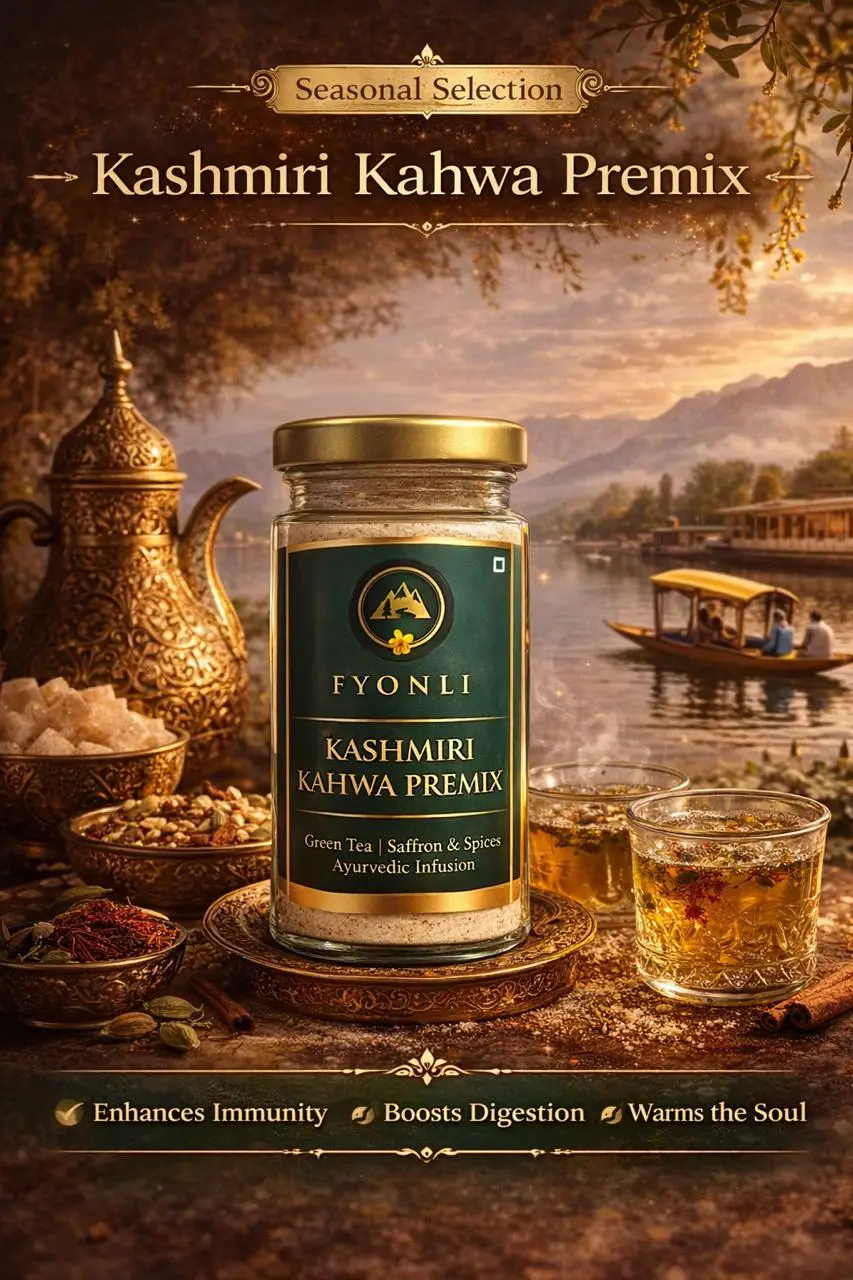
Kashmiri Kahwa Premix

Kahwa — sometimes spelled qahwa or kehwa — is Kashmir’s traditional spiced green tea, simmered with cardamom, cinnamon, cloves, and a few strands of saffron, and served without milk. It is not the same drink as regular Indian chai, and the differences go well beyond taste. This guide gives you the authentic Kashmiri recipe exactly as it is made in the Valley, the quick premix method for when you want it in minutes, a side-by-side comparison with regular chai, and what the research actually says about kahwa’s health benefits.

Key Takeaways

  • Kahwa is a Kashmiri green tea simmered with whole spices (cardamom, cinnamon, cloves) and finished with saffron — it is never made with milk.
  • Kahwa vs chai, in one line: kahwa is green tea, water, spices, and saffron; regular chai is black tea, milk, and sugar. The base leaf, the liquid, and the brewing method are all different.
  • Kahwa has less caffeine than milk chai and no dairy, which is why it’s often recommended as a lighter, gut-friendlier alternative.
  • The traditional method simmers whole spices in water for 10–15 minutes in a samovar or saucepan; a good premix gets you the same flavour in under 3 minutes.
  • Real saffron, not colouring, is what separates authentic kahwa from the instant sachets sold as “Kashmiri tea” in supermarkets.

In This Article


What Is Kashmiri Kahwa?

Kahwa is a traditional green-tea preparation from the Kashmir Valley, where it has been the centrepiece of hospitality for over a thousand years — historically linked to trade routes that carried tea, saffron, and spices between Central Asia and the subcontinent. Unlike a quick tea-bag steep, kahwa is slow-simmered: whole green tea leaves are cooked gently with cardamom, cinnamon, and cloves, then finished with a pinch of saffron and often a few slivers of almond or walnut.

The name itself comes from qahwa, the Arabic root shared with “coffee,” a nod to the drink’s origins as a warming, ceremonial infusion rather than an everyday thirst-quencher. In Kashmiri households it is traditionally brewed in a samovar — a tall, ornate copper or brass urn with a central fire chamber — and served in small cups (kesar cups) at weddings, during winter gatherings, and alongside every guest who walks through the door.

What makes kahwa distinct from every other Indian tea is what it deliberately leaves out: no milk, ever. The clarity of the green tea and the saffron’s colour and aroma would be lost under dairy, which is why kahwa is always a clear, amber-gold brew.


Kahwa vs Regular Chai: What’s Actually Different

“Kahwa” and “chai” both mean tea, which is why people use them loosely — but the two drinks are built differently from the base leaf up. Here is the direct comparison.

Kashmiri KahwaRegular Indian Chai
Base teaGreen teaBlack tea (CTC/Assam)
LiquidWater onlyWater + milk (often mostly milk)
SpicesCardamom, cinnamon, cloves, saffronUsually ginger, sometimes cardamom or a masala blend
SweetenerLight, or noneUsually generous sugar
Brewing methodSlow-simmered, 10–15 minutesBoiled briskly, 3–5 minutes
Caffeine (per cup)Lower — green tea baseHigher — black tea + longer boil
ColourClear amber-goldOpaque milky brown
DairyNoneYes, typically

The practical difference shows up in how each drink sits with you. Chai’s black tea base plus milk fat and sugar makes it heavier and higher in caffeine — comforting, but more likely to cause a mid-morning crash or sit uneasily with a sensitive stomach. Kahwa’s green tea base is naturally lower in caffeine and carries L-theanine, an amino acid that produces calmer, steadier alertness rather than a spike. Without milk, it is also naturally lactose-free and lighter on digestion, which is part of why it is traditionally served after heavy Kashmiri meals (wazwan) rather than as an all-day beverage.

None of this makes kahwa “better” than chai — they serve different moods. But if you are cutting back on dairy, watching caffeine, or just want a lighter everyday tea, kahwa is the more natural swap than trying to make a “diet” version of milk chai.


Health Benefits of Kashmiri Kahwa

Kahwa’s reputation as a “healthy tea” isn’t just marketing — each core ingredient has a reasonably well-studied role, though it’s worth being precise about what’s established science versus traditional use.

  • Rich in antioxidants: Green tea is one of the best-studied dietary sources of catechins, particularly EGCG, which help counter oxidative stress at the cellular level.
  • Gentler, steadier energy: Green tea’s caffeine is moderated by L-theanine, producing focused calm rather than the jitteriness associated with coffee or strong black tea.
  • Digestive support: Cardamom and ginger (when used) are long-standing Ayurvedic digestives, traditionally used to ease bloating and support gut motility after meals.
  • Saffron’s mood and cognition research: Saffron’s active compounds, crocin and safranal, have been studied for their association with improved mood and mental alertness — a promising but still-developing area of research, not a substitute for treatment of clinical conditions.
  • Metabolic support: Green tea and cinnamon are both widely studied for a supportive role in healthy blood-sugar regulation, though neither replaces medical management of diabetes.
  • Warming and immune-supportive: Cloves and cinnamon carry natural antimicrobial and anti-inflammatory compounds, which is part of why kahwa is culturally treated as a cold-weather, cold-and-flu-season drink.

Taken together, a daily cup of properly made kahwa is a reasonable, low-sugar, low-caffeine alternative to sweetened milk tea or coffee — not a cure for anything, but a genuinely better everyday default. For the fuller picture on why less-processed, regionally sourced foods tend to carry more of these benefits intact, see our guide to clean eating for Indian kitchens.


Traditional Kashmiri Kahwa Recipe (From Scratch)

This is kahwa made the way Kashmiri households make it — slow-simmered, not steeped. The technique that matters most is heat control: a gentle simmer draws out the spices without turning the green tea bitter.

Ingredients (serves 4)

  • 4 cups water
  • 2 teaspoons loose Kashmiri green tea leaves
  • 4–5 green cardamom pods, lightly crushed
  • 1 small cinnamon stick
  • 3–4 whole cloves
  • A generous pinch of saffron strands (8–10 strands)
  • 1 teaspoon sugar, or to taste (optional)
  • A few slivered almonds or pistachios, to garnish

Method

  1. Bloom the saffron. Soak the saffron strands in a tablespoon of warm water for 5–10 minutes while you prepare everything else. This coaxes out the colour and aroma before it hits the pot.
  2. Simmer the spices. Bring the water to a boil in a saucepan, then add the cardamom, cinnamon, and cloves. Reduce to a low simmer and let the spices infuse for 8–10 minutes, uncovered.
  3. Add the tea. Take the pan off direct high heat, add the green tea leaves, and let it steep in the hot spiced water for 2–3 minutes. Do not let it come back to a rolling boil once the tea is in — it turns bitter.
  4. Add the saffron and sugar. Stir in the bloomed saffron (with its soaking water) and sugar, if using. Let it sit for another minute.
  5. Strain and serve. Strain into small cups, discarding the whole spices and leaves. Garnish with slivered almonds or pistachios and serve hot.

Total time: ~20 minutes. Kahwa is meant to be drunk fresh and hot — it doesn’t keep well once brewed, so make only what you’ll finish in one sitting.


The 3-Minute Shortcut: Kahwa from a Premix

Sourcing real saffron and getting the spice ratios right is where most home attempts at kahwa go wrong — too little saffron and it’s just spiced green tea; too much cardamom and it turns medicinal. A well-made Kashmiri kahwa premix solves this by pre-blending hand-picked green tea, real saffron strands, and the four warming spices in the right proportion, so all you add is hot water.

Fyonli’s Kashmiri Kahwa Premix is sourced from Kashmir and blended in small batches in the Himalayas, with real saffron strands (not colouring) and no artificial flavours or preservatives. To brew:

  1. Heat water to just below boiling (85–90°C) — a rolling boil makes green tea bitter.
  2. Stir in 1.5–2 teaspoons (roughly 3–4g) of premix per 150–180ml cup.
  3. Steep for 2–3 minutes, stir once, and strain into a cup.

A 100g pack makes approximately 25–30 cups. It’s the same flavour as the simmered version above, at a fraction of the time — useful for a weekday cup, but keep the traditional method for when you’re serving guests and want the full ceremony.


Best Time to Drink Kahwa & Who Should Be Careful

Kahwa works at several points in the day, for different reasons:

  • Morning: A calmer, lower-caffeine start than coffee or strong chai — no cortisol spike, no crash.
  • After meals: Traditionally served after Kashmiri feasts (wazwan) — the digestive spices genuinely help with post-meal heaviness.
  • Mid-afternoon: The gentle caffeine and saffron make it a better 3pm pick-me-up than a second cup of coffee.
  • Winter evenings: Its warming spice profile makes it a natural cold-weather comfort drink, without the late-night caffeine hit of black tea.

A few groups should be more careful: pregnant women, since kahwa contains caffeine and spices including cloves, should check with their doctor on quantity; anyone on blood-thinning medication should be aware that cinnamon (in large amounts) and green tea can interact with certain medications; and children should stick to small, weak servings given the caffeine content, even though it’s lower than black tea.


Where to Buy Authentic Kashmiri Kahwa Online in India

A lot of what’s sold online as “Kashmiri kahwa” or “Kashmiri tea” is really just green tea with cardamom flavouring and artificial saffron colouring — cheaper to produce, but not the real thing. When buying kahwa online, look for three markers of authenticity:

  • Real saffron strands, not “saffron flavour” or colouring — the ingredient list should say saffron, not natural/artificial flavouring or FD&C colours.
  • Named sourcing — ingredients traceable to Kashmir, not a generic imported tea blend repackaged with a Kashmiri label.
  • A clean ingredient list — green tea, whole spices, saffron, and little else. No artificial colours or preservatives.

Fyonli’s Kashmiri Kahwa Premix meets all three — sourced from Kashmir, blended in small batches in the Himalayas, with real saffron strands and no artificial colours, flavours, or preservatives. It’s ready in under 3 minutes and makes roughly 25–30 cups per 100g pack.

Buy Fyonli Kashmiri Kahwa Premix →


Frequently Asked Questions

Is Kashmiri kahwa the same as green tea?

No. Green tea is kahwa’s base, but kahwa is a spiced infusion — simmered with cardamom, cinnamon, and cloves, and finished with saffron. Plain green tea doesn’t have this warming, aromatic profile or saffron’s mood-supporting compounds.

What is the difference between kahwa and chai?

Kahwa is green tea simmered in water with whole spices and saffron, served without milk. Regular chai is black tea boiled with milk and sugar. Kahwa has less caffeine, no dairy, and a clear amber colour; chai is stronger, sweeter, and opaque from the milk.

Does kahwa contain caffeine?

Yes, kahwa contains the natural caffeine present in green tea, but at a lower level than black tea or coffee. The L-theanine in green tea moderates the effect, producing calmer, steadier energy rather than a sharp spike or crash.

Can kahwa be made with milk?

Traditional Kashmiri kahwa is always made with water, never milk. Milk masks the saffron and spice notes that define the drink. If you add milk, you’ve essentially made a spiced green tea latte, not kahwa.

Is kahwa good for weight loss?

Kahwa is low-calorie (especially without sugar) and its green tea base is associated with modest support for metabolism, which is why it’s often included in weight-conscious diets. It isn’t a weight-loss drink on its own — it works best as a lower-sugar, lower-calorie swap for sweetened milk chai or flavoured lattes.

How many cups of kahwa can I drink in a day?

Two to three cups a day is a reasonable amount for most healthy adults, given its moderate caffeine content. As with any caffeinated drink, pregnant women, those sensitive to caffeine, and anyone on relevant medication should check with a doctor on quantity.

Where can I buy authentic Kashmiri kahwa online?

You can buy authentic Kashmiri kahwa as a ready premix from Fyonli’s Kashmiri Kahwa Premix — made with real saffron strands, sourced from Kashmir, and blended in small batches with no artificial colours or flavours. Look for products that list saffron as an ingredient, not “saffron flavour” or added colour.


You might also like:
Posted on Leave a comment

7 Traditional Himalayan Wellness Foods You Should Add to Your Daily Routine

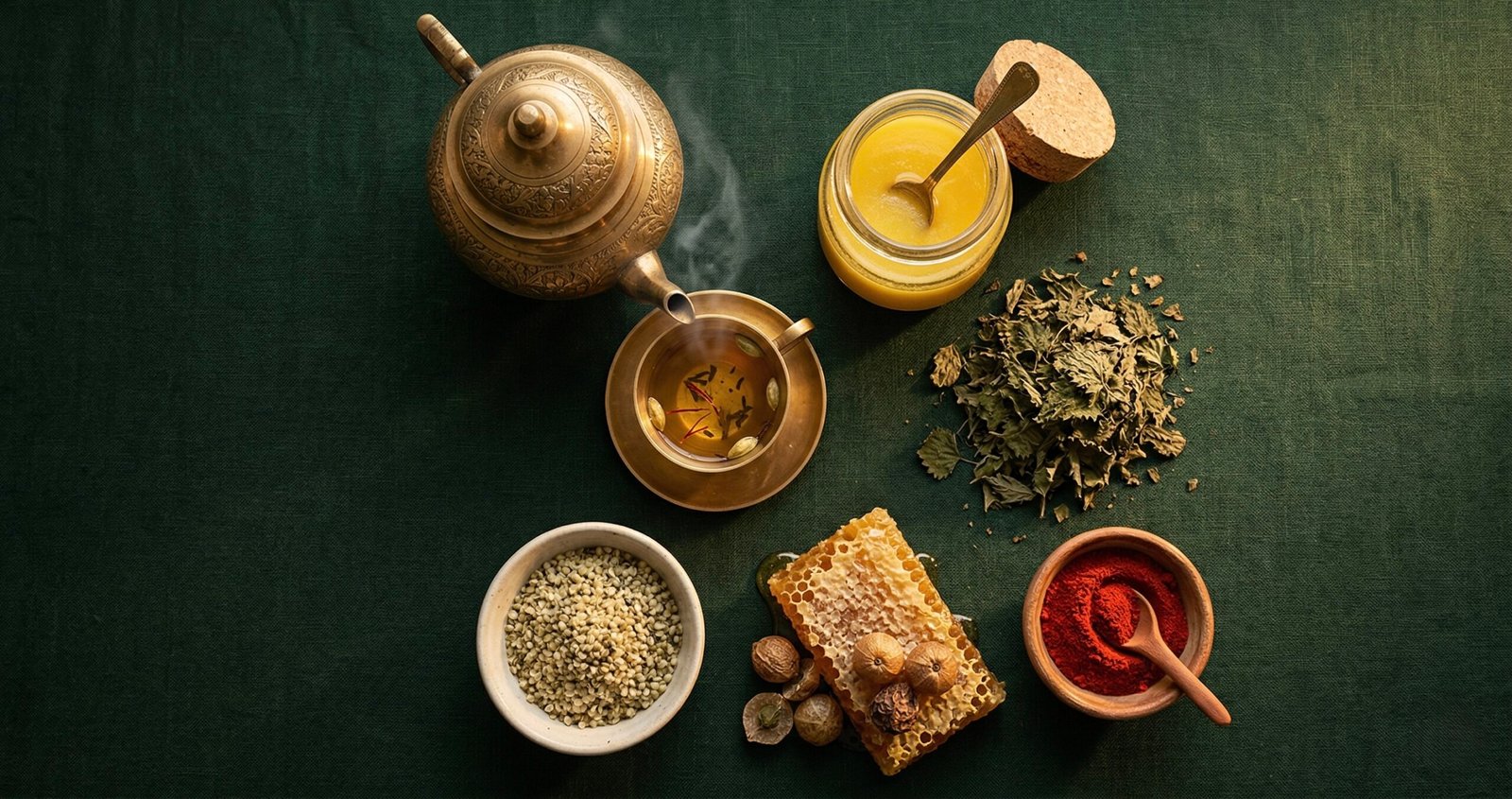
Traditional Himalayan wellness foods by Fyonli — Kashmiri Kahwa, bilona ghee, wild nettle tea, hemp protein and more

Modern wellness has a short memory. Collagen powders, adaptogens, cold plunges — trends arrive fast and fade faster. But across the villages of Uttarakhand, Kashmir and Himachal Pradesh, the same foods have been part of daily life for centuries. Not as superfoods. Not as supplements. Just as food — grown slowly, prepared simply, eaten with intention.

What we’ve found is that many of the most powerful wellness foods aren’t new discoveries. They’re old habits that got forgotten somewhere along the way to convenience.

These are seven traditional Himalayan wellness foods that have been part of daily life in these villages for centuries — long before anyone called them superfoods.


1. Kashmiri Kahwa — The Morning Ritual That Does More Than Wake You Up

Kahwa has been served in Kashmiri homes for centuries — traditionally brewed in a brass samovar called a samovar, and offered to every guest as a gesture of warmth. It isn’t just tea. It’s a blend of green tea, saffron, cardamom, cinnamon, cloves and ginger — each ingredient earning its place not by flavour alone but by function.

Saffron is rich in antioxidants and has been associated with improved mood. Green tea provides polyphenols that support metabolism and fat oxidation. Cardamom and cinnamon have natural anti-inflammatory and digestive properties. Together, they make Kahwa a genuinely useful morning drink — warming in winter, calming in any season, and far more interesting than plain green tea.

How to use it: Stir a spoonful into hot water, steep for two minutes, and drink before or after meals.

👉 Fyonli Kashmiri Kahwa Premix →


2. Wild Himalayan Nettle Tea — The Mineral Infusion Your Body Has Been Missing

In the Garhwal hills, wild nettle — locally called bichhu ghaas (stinging nettle) — grows on untouched slopes, and has been used in traditional wellness for generations. It’s foraged by hand, shade-dried to preserve its natural mineral content, and brewed simply: one teaspoon, hot water, five minutes.

What you get is a clean, slightly earthy infusion that is genuinely mineral-dense — iron, calcium, magnesium — in a form your body recognises. For anyone who pays attention to gut health, inflammation or simply wants to reduce their supplement intake and eat more real food, nettle tea is one of the most underrated additions to a daily routine.

No flavouring, no blending, no additives. Just leaves from a wild Himalayan hillside.

The same wild-foraged nettle also goes into our Himalayan Nettle Mineral Salt — a mineral-rich seasoning blend that makes nettle part of your everyday cooking, not just your morning cup.

How to use it: Add 1 tsp to hot water, steep 5–7 minutes, strain and drink. Works morning or evening.

👉 Fyonli Wild Himalayan Nettle Tea →


3. Raw Honey Amla Bites — After-Meal Digestive the Old Way

Every traditional Indian household had some version of a post-meal digestive. Mukhwas, paan, a piece of jaggery — something to signal the end of eating and help the body process what it just received. Raw Honey Amla Bites are Fyonli’s version of this tradition, made the way it was always made in the hills: fresh amla coated in raw mountain honey, then balanced with warming spices — black salt, roasted cumin, dry ginger, black pepper, ajwain, hing and cardamom.

Amla (Indian gooseberry) is one of the richest natural sources of Vitamin C. Raw honey adds enzymes. The spice blend is a textbook Ayurvedic digestive formula. And because there’s no refined sugar, no stabilisers and no preservatives, what you’re eating is just food — the kind your grandmother would have made without thinking twice.

How to use it: Eat 2–4 pieces after lunch or dinner. Consider it your dessert replacement.

👉 Fyonli Raw Honey Amla Bites →


4. Mountain Cow Bilona Ghee — The Kitchen Essential That Was Never Meant to Be Optional

Ghee fell out of fashion for a generation when fat was blamed for everything. It’s back now, but not all ghee is equal. What makes a real difference is the method: Bilona ghee is made by first culturing milk into curd, churning that curd into butter, and then slow-cooking the butter into ghee. It’s slower, costlier and produces less yield — but the result is a grainy, aromatic ghee with a depth of flavour that clarified-from-cream ghee simply doesn’t have.

Fyonli’s Mountain Cow Ghee is made from the milk of desi cows that graze freely on mountain grasses and medicinal herbs across Kashmir and Uttarakhand. The origin matters here — what the cow eats changes the fat profile of the milk, and therefore the ghee. 885 kcal and 98g fat per 100g, of which 62g is saturated — numbers that look alarming until you understand that traditional fat sources eaten in moderation are very different from refined oils eaten in volume.

How to use it: A teaspoon on dal, rotis or khichdi. Or stirred into warm milk before bed.

👉 Fyonli Mountain Cow Ghee →


5. Hemp Seed Chutney Premix — A Garhwali Condiment Worth Rediscovering

Hemp seeds (bhanga beej) have been part of Garhwali cooking for centuries — well before anyone called them a superfood. The traditional chutney made from roasted hemp seeds, sesame, perilla seeds (bhangjeera), dry red chilli, cumin, mustard and rock salt is a village kitchen staple in Devprayag. Rich, nutty, mildly spiced — it goes with everything.

Fyonli’s Hemp Seed Chutney Premix is crafted by women self-help groups using the same slow-roasting methods that have been passed down for generations. At 18g protein per 100g and a complete amino acid profile from the hemp seeds, it’s more nutritious than most condiments you’ll find. But more importantly, it tastes like something with a story — because it does.

How to use it: Mix with warm water for a quick chutney, or grind with garlic and lemon for a fuller, richer version. Excellent with rotis, rice or as a dip.

👉 Fyonli Hemp Seed Chutney Premix →


6. Pahadi Lyoon — The Herb Salt That Replaces Three Condiments at Once

Every pahadi kitchen has a version of lyoon — a blend of mountain garlic, ginger, chilli, cumin, ajwain and rock salt that goes on everything. It’s not a recipe so much as a habit: sprinkle it on dal-chawal, rotis, fresh fruit, raita, salads. It adds heat, depth and the particular warmth of mountain garlic (lahsun) that flat-land garlic doesn’t quite replicate.

Made in Tehri Garhwal by hand, Fyonli’s Pahadi Lyoon is artisanal in the original sense of the word — made by hand, in small batches, with no preservatives and no fillers. For anyone trying to reduce processed sauces and condiments, this is one of the simplest and most effective swaps.

If you want the mineral-rich version of this same idea, see how our Himalayan Nettle Salt compares to regular table salt — same principle of one seasoning replacing several, with wild nettle added in.

How to use it: Sprinkle over any meal. Use a dry spoon to preserve shelf life.

👉 Fyonli Pahadi Lyoon →


7. Himalayan Hemp Protein — Plant Protein That Tastes Like Food, Not a Supplement

The plant protein market is full of products that require a lot of willpower to consume. Chalky textures, artificial sweeteners, flavour systems built in a lab. Himalayan Hemp Protein is a different kind of product: hemp seed powder, pumpkin seed powder, almond powder, date powder, cinnamon and cardamom. Six ingredients. No additives. No refined sugar. No preservatives.

At 22g protein per 100g, it holds its own nutritionally. But the point isn’t the number — it’s the fact that you can stir it into milk, blend it into a smoothie, or mix it into a breakfast bowl and it tastes like something you’d actually want to eat. Because the ingredients are real, the taste is real.

How to use it: 1–2 tablespoons (10–15g) in milk, water or a smoothie. Best in the morning or after a workout.

👉 Fyonli Himalayan Hemp Protein →


Why Traditional Himalayan Wellness Foods Belong in Your Daily Routine

None of these seven foods are recent inventions. They come from communities that didn’t have supermarkets, supplement aisles or nutritional labels. They ate what was available, prepared it with care, and were remarkably well-nourished as a result.

Each of these traditional Himalayan wellness foods carries a story of place, community and slow craft.

The Himalayan tradition isn’t about perfection or restriction. It’s about rhythm — eating foods that are close to their source, prepared with intention, and used consistently enough to actually make a difference.

That’s what Fyonli is about too. Slow-crafted in the Himalayas, in rhythm with nature.

Posted on 1 Comment

How to Cook Jhangora: 4 Traditional Recipes + Jhangora vs Rice

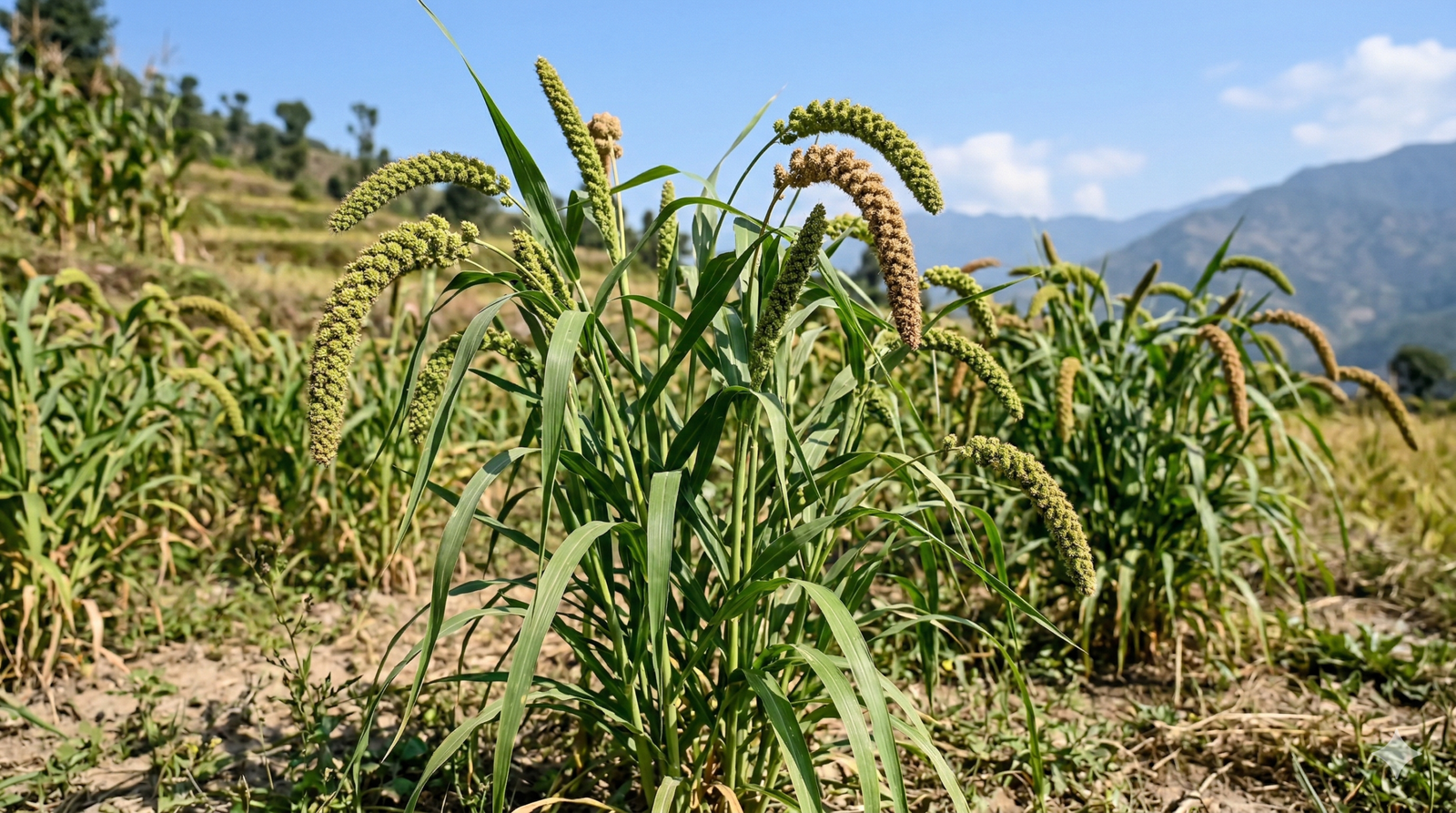
jhangora barnyard millet Uttarakhand

Jhangora is Uttarakhand’s ancient barnyard millet — a gluten-free, low-GI grain grown on Himalayan terraced farms at altitudes between 400 and 2,100 metres for over 2,000 years. For the full nutritional breakdown, millet-by-millet comparison, and Ayurvedic context, see the complete Jhangora guide. This page covers the cooking side: how jhangora compares to rice on every key metric, four traditional Uttarakhand recipes with step-by-step method, and the exact ratios and timing that make the difference.


In This Article


Jhangora vs Rice — 5 Reasons Barnyard Millet Wins

When comparing jhangora barnyard millet to white rice directly, five differences stand out consistently — and all five favour jhangora.

1. Glycaemic Index — Jhangora Is Significantly Lower

White rice has a glycaemic index of approximately 72 — meaning it causes a rapid spike in blood sugar after eating. Jhangora barnyard millet has a glycaemic index of around 50 — releasing energy slowly and steadily without the spike and crash that rice causes.

For diabetics, those managing weight, or anyone trying to reduce energy crashes after meals, this difference is significant and measurable.

2. Fibre — Jhangora Has Nearly 4× More

White rice contains approximately 0.4g of dietary fibre per 100g. Jhangora barnyard millet contains approximately 9.8g per 100g — nearly four times more. This fibre supports digestion, gut health, sustained fullness, and cholesterol management in ways that white rice simply cannot.

3. Iron — Jhangora Beats Rice Substantially

White rice is a poor source of iron. Jhangora barnyard millet contains approximately 2.9mg of iron per 100g — meaningful for vegetarians managing iron levels, women with high iron requirements, and anyone dealing with fatigue linked to low haemoglobin.

4. Protein — More Per Gram Than Rice

Jhangora barnyard millet contains approximately 6.2g of protein per 100g compared to 2.7g in white rice. For a vegetarian household where dal-rice is the staple meal, switching the rice component to jhangora meaningfully increases the protein content of every meal without changing what you eat alongside it.

5. Gluten-Free — Naturally, Without Processing

Jhangora barnyard millet is naturally gluten-free — not processed to remove gluten, but genuinely free of it by nature. For those with gluten sensitivity or coeliac disease, it is a safe, nutritious, and filling alternative to both wheat and processed gluten-free products.


Why Jhangora Is Exceptional for Diabetics

The combination of low glycaemic index, high dietary fibre, and complex carbohydrates makes jhangora barnyard millet one of the most suitable grains available for people managing Type 2 diabetes or insulin resistance. Unlike white rice — which rapidly converts to glucose in the bloodstream — jhangora releases energy gradually, helping maintain stable blood sugar levels throughout the day.

Traditional Uttarakhand families who have eaten jhangora daily for generations have always experienced it as a grain that sustains rather than spikes — often without knowing the biochemical reason why. The nutritional science now confirms what the food tradition already knew.

The practical implication: substituting jhangora for rice at even one meal a day delivers a meaningful reduction in the glycaemic load of your diet. The recipes below make that substitution straightforward.


4 Traditional Jhangora Recipes from Uttarakhand Kitchens

In Uttarakhand, jhangora is not a health food — it is simply food. A daily staple present at meals throughout the week in multiple forms. These four preparations cover everyday cooking, celebration desserts, fasting meals, and weekday breakfasts.

1. Jhangora as a Rice Substitute

The simplest and most direct use: cook jhangora exactly as you would rice and serve it alongside any dal, sabzi, or curry. The texture is slightly lighter and more granular than rice — mildly nutty, with a pleasant chew that holds up well under thick gravies. It pairs particularly well with Gahat Dal (the traditional Pahadi horse gram preparation) and with any simple Toor Dal tadka.

Method: Rinse 1 cup jhangora under cold water. Add to a pot with 2 cups of water and a pinch of salt. Bring to a boil, reduce heat, cover, and simmer for 12–15 minutes. Turn off heat, rest covered for 5 minutes, then fluff with a fork and serve. That is it — faster than rice, with none of the sticking.

2. Jhangore ki Kheer — Uttarakhand’s Most Celebrated Dessert

The most beloved jhangora dish across Garhwal and a staple at Pahadi festivals, celebrations, and family gatherings. Lighter than rice kheer but equally comforting — the millet gives the milk a delicate, slightly nutty sweetness that rice cannot replicate. If you make one jhangora recipe, make this one.

Ingredients (serves 4): ½ cup jhangora, 1 litre full-fat milk, 3–4 tablespoons sugar (adjust to taste), ¼ tsp cardamom powder, a small handful of raisins, chopped cashews or almonds to garnish.

  1. Rinse jhangora and soak in cold water for 30 minutes, then drain
  2. Bring milk to a gentle boil in a heavy-bottomed pan, stirring to prevent scorching
  3. Add the soaked jhangora and stir well to combine
  4. Cook on medium-low heat for 20–25 minutes, stirring every few minutes
  5. When the millet is completely soft and the milk has thickened, add sugar and cardamom
  6. Stir for 2 more minutes, add raisins, remove from heat
  7. Serve warm or chilled — both are excellent, though most Pahadi families serve it warm at celebrations

3. Jhangora Khichdi — The Mountain Comfort Meal

Jhangora cooked with moong dal, ghee, and gentle spices into a soft, warming one-pot meal. The Pahadi version of the ultimate Indian comfort dish — and arguably better than the standard because the grain holds its texture without going mushy. Particularly popular during Navratri, when jhangora is the accepted fasting grain across Uttarakhand.

Ingredients (serves 2–3): ½ cup jhangora, ¼ cup yellow moong dal (soaked 20 minutes), 2 tsp ghee, ¼ tsp cumin seeds, a pinch of asafoetida (skip during fasting), rock salt (sendha namak for fasting), ½ tsp ginger paste, 2 cups water.

  1. Heat ghee in a pressure cooker over medium heat
  2. Add cumin seeds and let them sizzle for 30 seconds, then add ginger paste and stir 30 seconds more
  3. Add rinsed jhangora and drained moong dal, stir to coat in ghee for 1 minute
  4. Add 2 cups water and rock salt, stir once
  5. Pressure cook for 2 whistles on medium heat, then remove from heat
  6. Let pressure release naturally. Open, stir gently, and serve hot with an extra drizzle of ghee

4. Jhangora Upma — A Nutritious Breakfast in 20 Minutes

Roasted jhangora prepared exactly like semolina upma — tempered in mustard seeds, curry leaves, and green chilli, then cooked through with vegetables. Ready in 20 minutes, genuinely filling, and nutritionally far superior to the semolina original. An excellent weekday breakfast for anyone managing blood sugar.

Ingredients (serves 2): 1 cup jhangora, 2 tsp oil, ½ tsp mustard seeds, 8–10 curry leaves, 1 green chilli (slit), 1 small onion (finely chopped), ¼ cup mixed vegetables (carrot, peas, beans), salt to taste, juice of half a lemon, fresh coriander to garnish.

  1. Dry-roast jhangora in a pan on medium heat for 3–4 minutes until it turns slightly golden and aromatic — this step is not optional; it prevents the upma from going sticky
  2. Set aside. Heat oil in the same pan, add mustard seeds and wait for them to splutter
  3. Add curry leaves, green chilli, and onion — sauté 3 minutes until the onion softens
  4. Add vegetables and sauté 2 more minutes
  5. Add the roasted jhangora, stir well to combine everything
  6. Add 1¾ cups water and salt, stir, cover and cook on low heat for 10 minutes
  7. Check that water is absorbed and jhangora is cooked through. Finish with lemon juice and fresh coriander

How to Cook Jhangora at Home — The Basics

Do You Need to Soak Jhangora Before Cooking?

For most everyday uses — rice substitute, khichdi — no. Rinse under cold water and cook directly. Soaking for 20–30 minutes improves texture for kheer, helping the grain cook more evenly in milk and produce a creamier result. For upma, skip the soak entirely and dry-roast instead — soaking makes upma sticky.

Water Ratios at a Glance

  • Rice substitute (firm texture): 1 cup jhangora : 2 cups water, simmer 12–15 minutes covered
  • Softer, porridge-style: 1 cup jhangora : 2½ cups water, simmer 18 minutes
  • Khichdi (pressure cooker): 1 cup grain+dal combined : 2 cups water, 2 whistles medium
  • Upma: 1 cup dry-roasted jhangora : 1¾ cups water, low heat 10 minutes
  • Kheer: ½ cup soaked jhangora : 1 litre milk, medium-low heat 20–25 minutes stirring often

Jhangora Nutrition — Quick Reference

Per 100g of jhangora barnyard millet: 307 kcal, 6.2g protein, 65.5g carbohydrates (complex, slow-release), 9.8g dietary fibre, 2.2g fat, 2.9mg iron, 20mg calcium, 280mg phosphorus. Glycaemic index approximately 50. Naturally gluten-free.

The standout numbers for a rice comparison: 9.8g fibre (vs 0.4g in rice), GI of ~50 (vs rice’s ~72), 6.2g protein (vs 2.7g in rice). For the full millet-by-millet breakdown, Navratri fasting context, and Ayurvedic profile, see the complete Jhangora guide.


Where to Buy Authentic Devprayag Jhangora Online

Most barnyard millet sold online in India is commercially grown in the plains — nutritionally adequate but without the flavour character that altitude, mineral-rich Himalayan soil, and traditional farming methods produce.

Authentic Pahadi jhangora from Uttarakhand — grown at elevation by mountain farming families — is a noticeably different product. Our jhangora comes directly from Devprayag farming communities, harvested by hand each autumn season, and packed in small batches without industrial processing or blending.

According to FSSAI’s millet promotion guidelines, traditional millet varieties grown using indigenous farming methods retain higher micronutrient profiles compared to commercially cultivated equivalents — a finding consistent with what Pahadi communities have always experienced eating Devprayag jhangora.

Shop Devprayag Jhangora Barnyard Millet →


Frequently Asked Questions About Cooking Jhangora

How long do you soak jhangora before cooking?

For everyday cooking as a rice substitute or in khichdi, no soaking is needed — just rinse well under cold water and cook directly. For kheer and soft porridge preparations, soak for 20–30 minutes first; this helps the grain cook more evenly in milk and produces a creamier texture. For upma, skip soaking entirely and dry-roast instead — soaking makes upma sticky.

What is the correct water ratio for jhangora?

For a firm, rice-like texture: 1 cup jhangora to 2 cups water, simmered for 12–15 minutes covered. For a softer porridge consistency: 1 cup to 2½ cups water for 18 minutes. For upma, use 1 cup dry-roasted jhangora to 1¾ cups water on low heat. For kheer, cook ½ cup soaked jhangora in 1 litre milk on medium-low heat for 20–25 minutes with frequent stirring.

Can you cook jhangora without soaking?

Yes — for most preparations, rinsing is sufficient. Jhangora cooks faster than rice and does not require soaking to become palatable. Soaking is optional and only improves texture for certain dishes. Upma specifically should not be soaked — dry-roasting before adding water gives a far better result.

Is jhangore ki kheer different from rice kheer?

Yes, noticeably. Jhangore ki kheer is lighter in texture than rice kheer — the millet gives the milk a more delicate, slightly grainy body rather than the starchy thickness of rice kheer. The flavour has a mild nuttiness that rice lacks entirely. It is also significantly more nutritious: more fibre, more iron, and a lower glycaemic load — a dessert that tastes genuinely good and does less damage to your blood sugar.

Is jhangora the same as sama or sanwa used during vrat fasting?

Jhangora (barnyard millet, Echinochloa frumentacea) and sama (little millet, Panicum sumatrense) are related but botanically distinct grains. Both are used as fasting grains during Navratri and Ekadashi across different regions of India — jhangora is the primary fasting millet in Uttarakhand, while sama is more common in Maharashtra and Gujarat. In Uttarakhand, jhangora khichdi and jhangore ki kheer are the traditional fasting preparations for both Navratri and Ekadashi.

Does jhangora need to be washed before cooking?

Yes — rinse jhangora under cold running water until the water runs mostly clear before cooking. Like all small grains, it may carry dust or surface starch from processing and packing. Rinsing takes 30 seconds and improves both texture and flavour.


You might also like: