
Description
Sesame you’ve used before was probably grown in a hurry. This wasn’t. Pahadi Til grows slowly in the rain-fed fields of the Garhwal Hills — no artificial irrigation, no chemical inputs, just natural rainfall and mountain soil. This unhurried growing cycle allows the seeds to develop their full flavour complexity. The result is sesame with a richer, more distinct character than anything commercially farmed. A small ingredient that deserves serious respect.What Is Pahadi Til?
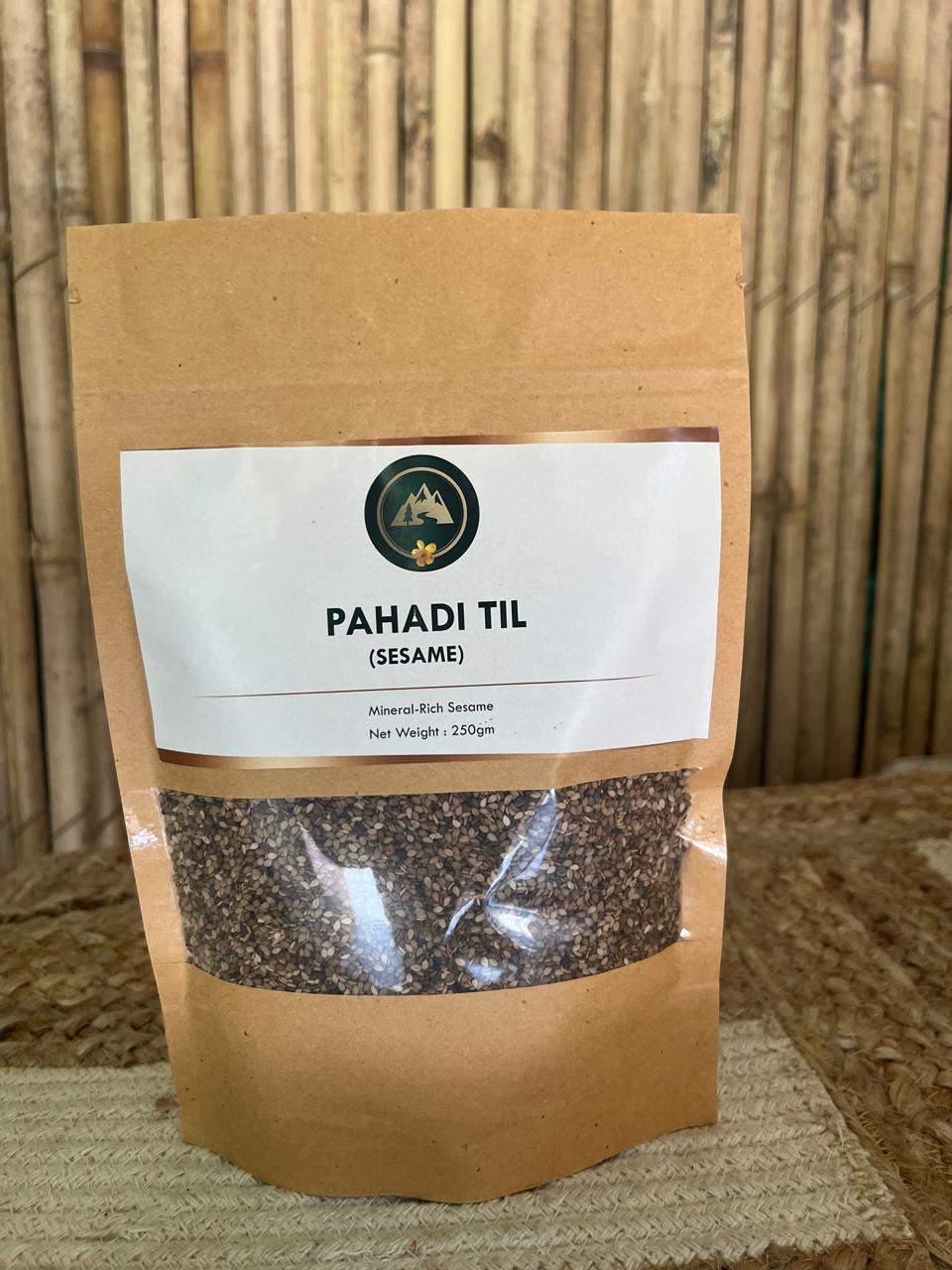
Pahadi Til is white sesame seed grown by small-holder farmers in the high-altitude villages of Tehri Garhwal, Uttarakhand, on rain-fed plots without artificial irrigation. Sesame is naturally one of the most calcium- and mineral-dense seeds in the Indian diet, and the slower hill growing cycle gives this variety a fuller flavour than fast-grown commercial sesame. Fyonli sources it directly from those farming families and packs it exactly as harvested, unwashed and untreated.Why This One Is Different
- Rain-fed, not irrigated — grown entirely on natural rainfall, which concentrates flavour over a slower growing cycle
- Exceptionally calcium-rich — sesame is naturally one of the most calcium-dense seeds available, far ahead of most other seeds and grains
- Single origin — sourced from Tehri Garhwal, not a pooled commodity blend
- No processing — unwashed, unhulled as harvested, nothing added
- Grown without chemical inputs — no pesticides or synthetic fertiliser on these mountain smallholdings
Pahadi Til vs. Commercial Sesame Seed
| What You’re Buying | Commercial Sesame Seed | Fyonli Pahadi Til |
|---|---|---|
| Growing method | Irrigated, commercial-scale | Rain-fed, small-holder hill farms |
| Origin | Usually unstated — pooled from multiple regions | Single origin — Tehri Garhwal, Uttarakhand |
| Growing cycle | Fast, yield-optimised | Slower, natural rain-fed cycle |
| Processing | Often washed and polished | Unwashed, natural state |
| Farmer relationship | Bought through mandi traders | Bought direct from Garhwal farming families |
Nutritional Information (per 100g)
| Nutrient | Amount |
|---|---|
| Energy | 563 kcal |
| Protein | 17 g |
| Total Fat | 50 g |
| Dietary Fibre | 11.8 g |
| Calcium | 975 mg |
| Magnesium | 351 mg |
Ingredients & Allergens
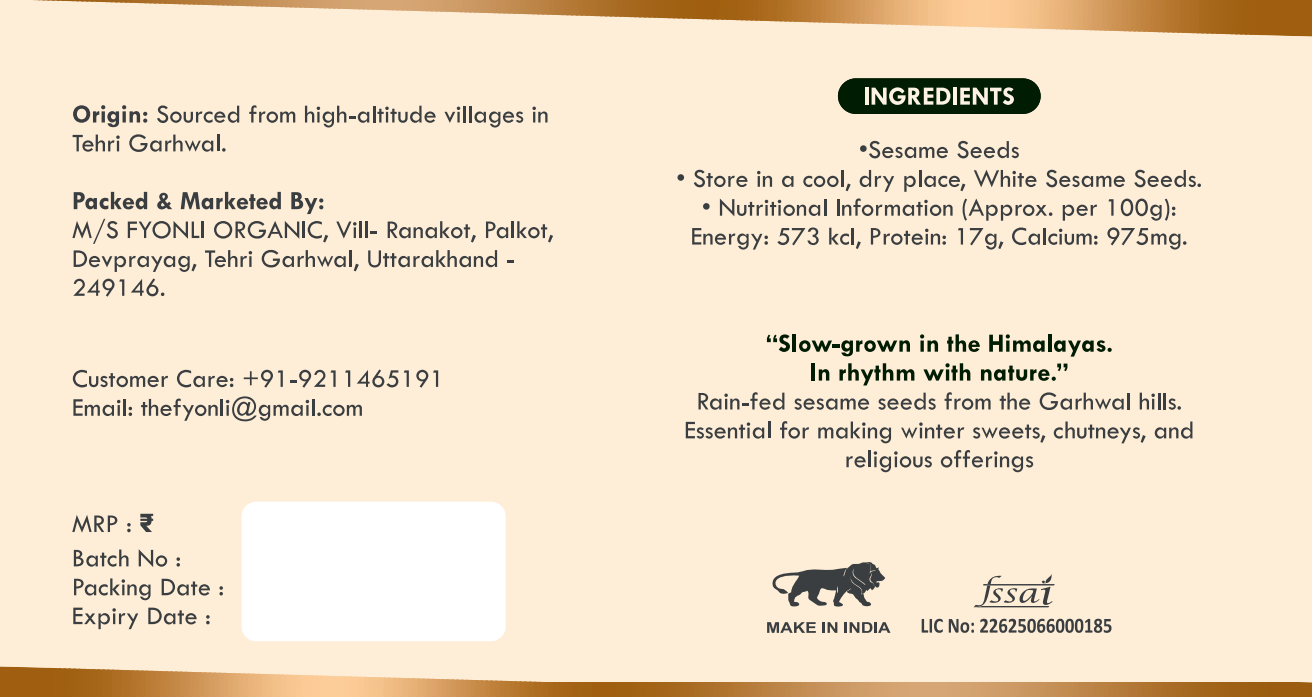
Ingredients: Pahadi Til (white sesame seeds). Nothing else — no added salt, oil, or preservatives.
Allergens: Contains sesame. Not suitable for anyone with a sesame allergy.
How to Use
Dry roast on a low flame until golden and fragrant. Sprinkle on rice, salads, stir-fries, or rotis. Grind into a paste (tahini) for dips and dressings. A key ingredient in traditional tilgul (sesame and jaggery sweets) and chikki.
Sourcing & Story
Sesame has long been grown as a rain-fed crop on Tehri Garhwal’s hill farms, requiring no irrigation and thriving on the natural monsoon cycle alone. It’s typically sown after the first monsoon rains and harvested in autumn once the seed pods dry and begin to split. Because it’s grown without artificial irrigation or chemical inputs, the crop depends entirely on the season’s natural rainfall — a slower, less predictable but more traditional way to farm it than irrigated commercial sesame. Fyonli buys the harvest directly from the farming families who grow it.Storage & Shelf Life
Store in an airtight container in a cool, dry place, away from direct sunlight and moisture. Does not require refrigeration. Best used within 12 months of the packing date.
Who It’s For
- Anyone building calcium intake without dairy — sesame is one of the most calcium-dense plant foods available
- Cooks who want fuller-flavoured sesame — the slower rain-fed growing cycle gives a more distinct taste than fast-grown commercial sesame
- Traditional sweet-makers — a genuine ingredient for tilgul, chikki, and other classic sesame preparations
Frequently Asked Questions
What makes Pahadi Til different from regular sesame seed?
It’s grown on rain-fed hill farms in Tehri Garhwal, Uttarakhand, without artificial irrigation or chemical inputs. The slower, natural growing cycle is what gives it a fuller flavour than fast-grown, irrigated commercial sesame.
How much calcium does Pahadi Til contain?
Sesame seed contains approximately 975mg of calcium per 100g (USDA reference values for the species), making it one of the most calcium-dense seeds commonly used in Indian cooking — well ahead of most dairy products by weight.
How do I use Pahadi Til in cooking?
Dry roast on a low flame until golden and fragrant, then sprinkle over rice, salads, stir-fries or rotis. It can also be ground into a paste for dips and dressings, or used in traditional sweets like tilgul and chikki.
Is Pahadi Til suitable for someone with a sesame allergy?
No. Pahadi Til is sesame seed and contains sesame protein, so it is not suitable for anyone with a sesame allergy.
Is this sesame grown with pesticides or chemical fertiliser?
No. The farming families in Tehri Garhwal grow this sesame without chemical pesticides or synthetic fertiliser, relying entirely on rain-fed cultivation. It does not carry a formal organic certification, but the growing method has been chemical-free by practice for generations.
What is the shelf life of Pahadi Til?
Up to 12 months from the packing date when stored in an airtight container in a cool, dry place away from direct sunlight and moisture. Refrigeration isn’t required.
Looking for other single-origin Himalayan spices? Try Pahadi Haldi Powder, or the wild-foraged Devprayag Bhangjeera.