Description
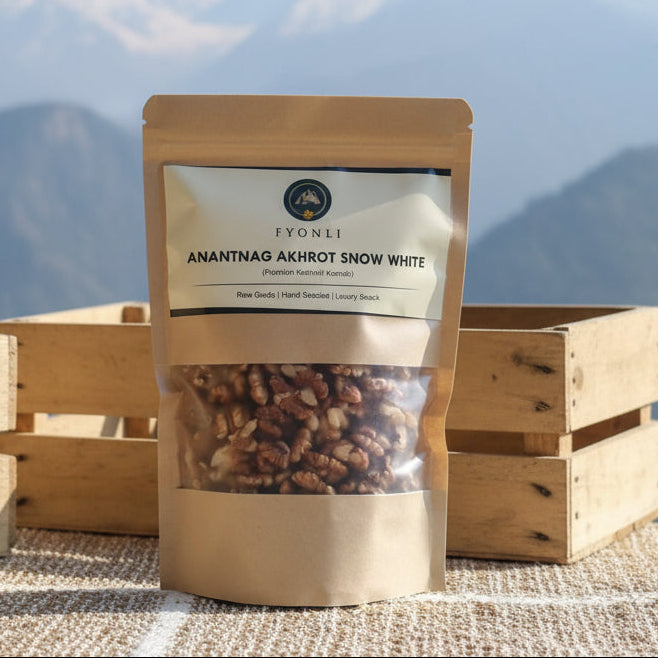
You’ve eaten walnuts. But you’ve never tasted one quite like this. Most commercial walnuts are bitter — grown fast, processed with chemicals, and graded for quantity, not quality. Snow White Akhrot is the opposite. Grown slowly in the cold valleys of Anantnag, these are the rarest pale kernels — selected by hand for their mild, buttery flavour and smooth mouthfeel.What Is Anantnag Akhrot Snow White?
Anantnag Akhrot Snow White is a pale-kernel grade of Kagzi walnut, a thin-shelled Kashmiri variety prized for its large size and buttery flavour, grown at 5,000–8,000 ft in the orchards around Anantnag district, Kashmir. Kashmiri walnut cultivation is largely organic by tradition — chemical sprays and fertilisers aren’t part of how these orchards are farmed. Fyonli hand-selects the palest, mildest kernels from this harvest rather than selling the mixed-grade nut most commercial buyers take.Why This One Is Different
- Rare pale-kernel grade — hand-selected for colour and mildness, not the standard mixed-grade walnut most buyers get
- Kagzi variety — a thin-shelled, large-kerneled Kashmiri walnut known for its buttery taste, distinct from thicker-shelled commercial varieties
- Zero bitterness — mild, buttery flavour even eaten raw, unlike the sharper bitterness common in fast-graded commercial walnuts
- Grown at altitude — the cold-night, mild-day temperature swing at 5,000–8,000 ft is what concentrates healthy fats and flavour in Kashmiri walnuts
- Organic by tradition — Kashmiri walnut orchards are typically grown without chemical sprays or fertiliser, a long-standing regional practice
Snow White Akhrot vs. Commercial Walnuts
| What You’re Buying | Commercial Walnuts | Fyonli Snow White Akhrot |
|---|---|---|
| Kernel grade | Mixed grade, unsorted for colour | Hand-selected pale kernels only |
| Variety | Often unstated commercial cultivar | Kagzi — thin-shelled, large-kerneled Kashmiri variety |
| Flavour | Can carry noticeable bitterness | Mild and buttery |
| Growing altitude | Variable, often lower altitude | 5,000–8,000 ft, Anantnag district, Kashmir |
| Growing method | May involve chemical sprays | Organic by long-standing regional tradition |
Nutritional Information (per 100g)
| Nutrient | Amount |
|---|---|
| Energy | 654 kcal |
| Protein | 15.2 g |
| Total Fat | 65.2 g |
| Omega-3 (ALA) | 9 g |
Ingredients & Allergens
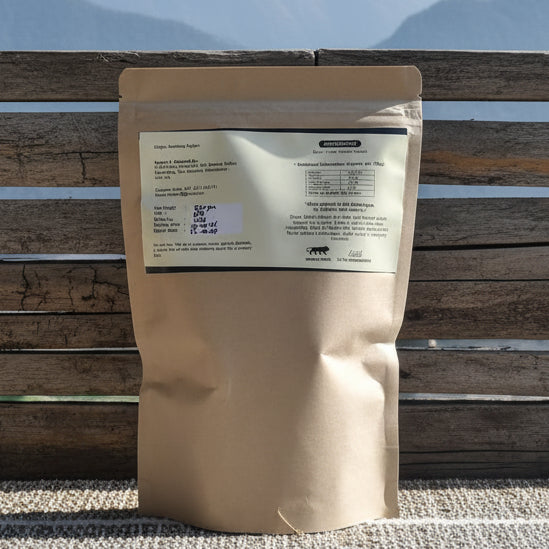
Ingredients: Anantnag Akhrot Snow White (walnut kernel). Nothing else — no added salt, oil, or preservatives.
Allergens: Contains tree nuts (walnut). Not suitable for anyone with a tree nut allergy. Packed in a facility that also handles other nuts and seeds.
How to Use
Eat a small handful as a daily snack. Add to warm milk before bed. Toss into salads, cereals, or baked goods for a nutty richness without bitterness.
Sourcing & Story
Anantnag is one of Kashmir’s principal walnut-growing districts, where orchards sit at 5,000–8,000 ft — high enough that the swing between cold nights and mild days forces the trees to concentrate healthy fats and flavour compounds in the kernel. Kashmiri walnut cultivation has long been organic by tradition, without chemical sprays or synthetic fertiliser. Fyonli buys the harvest and hand-selects for the palest, mildest-flavoured kernels — the Snow White grade — rather than selling the full mixed-colour harvest most buyers take as-is.Storage & Shelf Life
Store in an airtight container in a cool, dry place, away from direct sunlight and moisture. Refrigeration extends freshness further, since walnut oils can turn rancid faster than dry grains. Best used within 6 months of the packing date for peak flavour.
Who It’s For
- Anyone who finds regular walnuts too bitter — the pale-kernel selection is genuinely milder and buttery, not just marketed that way
- Gift buyers — a genuinely premium grade, distinct from the mixed-quality walnuts sold as a commodity
- Anyone building plant-based omega-3 intake — walnuts are one of the richest plant sources of ALA omega-3
Frequently Asked Questions
What makes Snow White Akhrot different from regular walnuts?
It’s a hand-selected pale-kernel grade of Kagzi walnut, a thin-shelled Kashmiri variety, grown at 5,000–8,000 ft in Anantnag district. Only the palest, mildest kernels are selected, rather than selling the full mixed-colour harvest most commercial buyers take as-is.
Why are some walnuts bitter and others mild?
Bitterness in walnuts often comes from the kernel’s skin and from lower-grade nuts that aren’t sorted by colour or quality. The pale-kernel Snow White grade is hand-selected specifically for a mild, buttery flavour with minimal bitterness.
How much omega-3 do these walnuts contain?
Walnuts provide approximately 9g of omega-3 (ALA) per 100g (USDA reference values for the species), making them one of the richest plant-based sources of omega-3 fatty acids.
Are these walnuts grown organically?
Kashmiri walnut cultivation, including in Anantnag, is organic by long-standing regional tradition — chemical sprays and synthetic fertiliser aren’t part of how these orchards are typically farmed. There is no formal organic certification on this product.
How should I store walnuts to keep them fresh?
Store in an airtight container in a cool, dry place, away from direct sunlight. Refrigeration helps further, since walnut oils can turn rancid faster than dry grains or legumes. Best used within 6 months of the packing date for peak flavour.
Are these walnuts suitable for someone with a nut allergy?
No. Walnuts are a tree nut, so this product is not suitable for anyone with a tree nut allergy. It’s packed in a facility that also handles other nuts and seeds.
Looking for other Himalayan superfoods? Try the exceptionally high-protein White Soybean (Bhatt).