Posted on Leave a comment

Pahadi Til vs Regular Sesame Seeds: Nutrition Comparison and Winter Uses

Pahadi til vs regular sesame seeds — if you have only ever bought the small glass jar of sesame from a supermarket shelf, you have likely never tasted the difference hulling and growing method actually make. Til (Sesamum indicum) is one of India’s oldest cultivated oilseeds, and most of what is sold commercially today has been mechanically dehusked for a lighter colour and smoother tahini texture — a process that quietly strips away most of the seed’s standout nutrient: calcium.

Pahadi Til, grown rain-fed in the Garhwal hills and left whole and unhulled, is the same species but a genuinely different product on the plate. This article breaks down what separates the two, compares them nutrient-for-nutrient, and covers why til earns its place in Indian kitchens specifically as the weather turns cold — from tilgul and chikki at Makar Sankranti to everyday winter tempering.

Quick answer: Til and sesame are the same seed — til is simply the Hindi/Sanskrit name for Sesamum indicum. The real difference is processing: most commercial sesame is hulled (decorticated) to look uniform and pale, a step that removes the seed coat and, with it, most of its calcium — whole, unhulled sesame carries roughly 975mg of calcium per 100g, while hulled sesame typically drops to around 60–70mg. Pahadi Til is grown rain-fed without chemical inputs and left whole and unhulled, so it retains that full mineral profile, along with more fibre, iron and magnesium than the commercial hulled sesame most Indian households actually use.

In This Article


What Is Til? Is It the Same as Sesame?

Til is the Hindi and Sanskrit name for sesame — the tiny, oil-rich seed of the Sesamum indicum plant, one of the oldest oilseed crops cultivated by humans, with evidence of use in the Indian subcontinent going back over 5,000 years. “Til” and “sesame” are not two different foods; they are the same seed under two different names, the way “toor” and “arhar” are the same pulse and “mandua” and “ragi” are the same millet.

The plant produces small pods that burst open at maturity, releasing flat, oval seeds that range in colour from pale ivory to reddish-brown to black, depending on the variety. India is one of the world’s largest producers and consumers of sesame, and til shows up across the country’s food culture in forms as varied as South Indian ellu podi, Bengali til-er naru, Maharashtrian tilgul, and North Indian gajak and chikki.

So when someone asks “is Pahadi til different from sesame,” the honest short answer is: not botanically. The real difference — the one that actually changes what ends up in your kitchen — is where and how the seed was grown and processed after harvest.


Til’s Regional Names Across India

Like most staples this old, sesame carries a different name in nearly every Indian language:

Region / LanguageLocal Name for Sesame
Hindi / Uttarakhand (Garhwali, Kumaoni)Til
Tamil Nadu (Tamil)Ellu
Karnataka (Kannada)Yellu
Andhra Pradesh / Telangana (Telugu)Nuvvulu
West Bengal (Bengali)Til
Maharashtra (Marathi)Til
Gujarat (Gujarati)Til
Punjab (Punjabi)Til
English (common)Sesame, Gingelly, Benniseed
Scientific nameSesamum indicum

Unlike toor dal and arhar dal, where two names split India roughly east-west, “til” is the name that travelled furthest across regional languages, with only South India using a genuinely different word family (ellu/yellu/nuvvulu). If you searched “til in English,” the answer is simply sesame — no further translation needed.


What Makes Pahadi Til Different From Commercial Sesame?

Two things separate Pahadi Til from the sesame in a typical supermarket packet: how it is grown, and whether it is hulled after harvest.

Growing Conditions

Pahadi Til is grown rain-fed in the Garhwal hills of Uttarakhand, without irrigation and without chemical fertiliser or pesticide, on a slower growing cycle than the large-scale, irrigated sesame cultivation of Gujarat, Rajasthan, Madhya Pradesh and West Bengal — the states that supply most of India’s commercial sesame. That unhurried cycle gives the seed more time to develop oil content and flavour complexity, a pattern consistent with other slow-grown Himalayan crops.

Processing — the Bigger Difference

This is the difference that matters most nutritionally. A large share of commercially sold sesame — especially the pale, uniform seed used for bakery toppings, tahini and packaged “sesame seeds” jars — is hulled (decorticated): the outer seed coat is mechanically removed to produce a lighter colour, smoother texture and milder flavour. That seed coat is also where most of sesame’s calcium, along with a meaningful share of its fibre and iron, is concentrated. Hulling makes the seed more visually appealing and easier to grind into tahini, but it also removes the bulk of what makes sesame nutritionally exceptional in the first place.

Pahadi Til, sourced directly from small hill farms, is left whole and unhulled — no dehusking, no bleaching, no processing beyond cleaning and drying. It looks less uniform than the pale sesame in a supermarket jar, with natural colour variation across the seeds, and that is exactly the point: the whole seed coat, and everything in it, is still there.


Pahadi Til vs Regular Sesame Seeds: Nutrition Comparison

The clearest way to see the difference is side by side. These figures reflect the typical, widely documented nutritional profile of whole/unhulled sesame — the category Pahadi Til falls into — versus hulled, commercially processed sesame, per 100g of dry seed:

Nutrient (per 100g)Whole, Unhulled Sesame (Pahadi Til)Hulled, Commercial Sesame
Calcium~975mg~60–70mg
Iron~14.6mg~2.5–3mg
Magnesium~350mg~90–100mg
Dietary fibre~11–12g~4–6g
Protein~18g~17–18g
Fat (mostly healthy unsaturated)~49–50g~48–50g

Protein and fat content stay broadly similar either way, since hulling removes the seed coat, not the oil-rich kernel. Calcium, iron, magnesium and fibre are where the gap opens up — and it is a large gap, not a marginal one. A tablespoon of whole, unhulled til can meaningfully contribute to daily calcium intake in a way that the equivalent spoon of hulled sesame simply cannot.


Why Hulling Strips Away Sesame’s Calcium

Sesame’s calcium is not spread evenly through the seed — it is concentrated in the thin outer seed coat, in the form of calcium oxalate crystals. Decortication (hulling) is a mechanical process that abrades or dissolves away that outer layer to leave a smoother, paler kernel behind. It is done for appearance and functionality, not nutrition: hulled sesame grinds into smoother tahini, looks more uniform on bakery toppings, and has a milder flavour that is easier to standardise commercially.

The trade-off is that the same layer being removed for cosmetic and textural reasons happens to carry most of the seed’s calcium, along with meaningful iron and fibre. This is the same processing logic seen in polished dal and refined salt — a step that makes the product look more “finished” while quietly removing the part of the food that made it nutritionally distinctive. Neither hulled nor unhulled sesame is unsafe; the difference is closer to brown rice versus white rice, or whole atta versus refined maida.


Health Benefits Worth Knowing

  • One of the richest plant sources of calcium — whole sesame’s calcium content rivals or exceeds many dairy foods gram-for-gram, relevant for lactose-intolerant and plant-forward households.
  • Meaningful plant-based iron — whole til contributes real iron per serving, useful alongside a vitamin C source (like citrus or amla) to improve absorption.
  • Healthy unsaturated fats — sesame oil is predominantly monounsaturated and polyunsaturated fat, with naturally occurring lignans (sesamin, sesamolin) that have been studied for antioxidant properties.
  • Supports bone and joint health — the combination of calcium, magnesium and zinc in whole sesame is traditionally associated with bone strength in Ayurvedic and folk nutrition practice.
  • Warming, energy-dense food for cold weather — sesame’s high fat and mineral density is a traditional reason it is eaten more heavily in Indian winters than in summer.

This is general nutritional information based on the known composition of whole sesame, not a medical claim. Sesame is a common allergen for some individuals, and anyone managing a specific health condition should speak to a doctor or dietitian before making significant dietary changes.


Winter Uses: Til at Makar Sankranti and Beyond

Til’s biggest moment on the Indian food calendar is Makar Sankranti (mid-January), when it is eaten across the country specifically because of its warming, energy-dense qualities — a piece of food wisdom that lines up with what the nutrition actually shows: sesame’s fat and mineral density make it a genuinely useful cold-weather food, not just a symbolic one.

  • Til-gud laddoo — the classic Maharashtrian and North Indian Makar Sankranti sweet, sesame and jaggery bound together, eaten with the phrase “til-gul ghya, god god bola” (accept this sweet, speak sweetly).
  • Chikki and gajak — sesame-jaggery brittle, a North Indian winter staple sold on roadside stalls from November through February.
  • Tilkut — the Bihar and eastern UP specialty of pounded sesame and jaggery, traditionally made fresh through the winter months.
  • Til-er naru — the Bengali sesame-jaggery ladoo made through the Poush Sankranti season.
  • Everyday winter tempering — a spoon of roasted til stirred into warm dal, sabzi or chutney adds both flavour and a meaningful mineral boost through the colder months, well beyond the festival window.
  • Sesame oil for winter skin — traditionally used in Ayurvedic practice for winter oil massage (abhyanga), valued for its warming quality and skin-nourishing fatty acid profile.

Whole, unhulled Pahadi Til works in every one of these recipes exactly as regular sesame does — the nutritional advantage does not require any recipe adjustment, only a slightly heavier hand when grinding for laddoo, since the intact seed coat gives it a touch more bite than hulled sesame.


How to Roast, Store and Cook With Pahadi Til

  • Dry roast before use — toast on a low flame, stirring constantly, until the seeds turn a shade darker and release a nutty aroma and a faint popping sound. Roasting improves both flavour and digestibility.
  • Sprinkle on finished dishes — rice, salads, stir-fries, rotis and raita all take roasted til well as a finishing touch.
  • Grind for chutneys and tahini-style pastes — whole til grinds into a slightly coarser, more mineral-forward paste than hulled sesame; blend with roasted peanuts, garlic and chilli for a Maharashtrian-style til chutney.
  • Make tilgul, chikki or gajak — combine roasted til with melted jaggery, set, and cut into pieces.
  • Store cool and dry — because unhulled til retains its natural oils and outer layer, keep it in an airtight container away from direct heat and sunlight, and use within a few months of opening for best flavour, since whole seeds with intact oils can turn rancid faster than heavily processed ones if stored carelessly.

Where to Buy Authentic Pahadi Til Online

Most sesame sold in Indian supermarkets and online is hulled, uniformly pale, and sourced from large-scale, irrigated commercial farming. There is nothing wrong with that seed, but it is a different product from hill-grown, unhulled til — and very little of what is labelled “Himalayan” online is actually traceable to a real hill farm.

Fyonli’s Pahadi Til is grown rain-fed and chemical-free in the Garhwal hills and left exactly as it comes off the plant — whole, unhulled, with no bleaching or processing beyond cleaning. It carries a deeper flavour and richer mineral content than commercially grown sesame, sourced directly from small Himalayan farms in small batches.

If you are building a winter Himalayan pantry, our wild Bhangjeera (perilla seeds) pairs naturally with til in traditional Garhwali chutneys, and our Raw Mountain Honey is a natural partner for a til-based winter sweet in place of refined sugar.

Shop Pahadi Til → Shop All Spices, Nuts & Seeds →


You might also like:

  1. Is til the same as sesame seeds?

    Yes. Til is simply the Hindi and Sanskrit name for sesame — the seed of the Sesamum indicum plant. There is no botanical difference between “til” and “sesame”; the words describe the same seed in different languages, the way toor and arhar describe the same pulse.

  2. What is the actual difference between Pahadi til and regular sesame seeds?

    They are the same species, but Pahadi til is grown rain-fed and chemical-free in the Garhwal hills and left whole and unhulled after harvest. Most regular commercial sesame is grown on large, irrigated farms and mechanically hulled (decorticated) to produce a paler, more uniform seed — a process that removes most of the seed coat and, with it, most of the seed’s calcium, iron and fibre.

  3. Why does unhulled sesame have so much more calcium than hulled sesame?

    Sesame’s calcium is concentrated in its thin outer seed coat as calcium oxalate crystals. Hulling (decortication) mechanically removes that seed coat to create a smoother, paler kernel for bakery use and tahini production. Whole, unhulled sesame retains roughly 975mg of calcium per 100g, while hulled sesame typically drops to around 60–70mg — a difference driven entirely by processing, not variety.

  4. Is Pahadi til good for winter and Makar Sankranti recipes?

    Yes, and it works in any recipe that calls for regular sesame — til-gud laddoo, chikki, gajak, tilkut and til-er naru all use the same technique regardless of which sesame is used. Because Pahadi til is unhulled, expect a slightly more textured bite and a nuttier flavour than the smoother, paler sesame most recipes are written around.

  5. Is sesame (til) good for bone health?

    Whole, unhulled sesame is one of the richest plant sources of calcium, along with magnesium and zinc, all of which support bone health. This benefit is significantly reduced in hulled commercial sesame, since most of the calcium is concentrated in the outer seed coat that hulling removes.

  6. How should I store and roast Pahadi til?

    Dry roast on a low flame, stirring constantly, until the seeds darken slightly and release a nutty aroma. Store roasted or raw til in an airtight container away from heat and direct sunlight, and use within a few months of opening — whole seeds with intact natural oils can turn rancid faster than heavily processed, oil-stripped sesame if left exposed to air and warmth.

  7. Can people with a sesame allergy eat Pahadi til?

    No. Sesame is a recognised allergen regardless of whether it is hulled or unhulled, whole or ground into oil or tahini. Anyone with a known sesame allergy should avoid til and Pahadi til in every form, and check packaged foods for cross-contamination.

Posted on Leave a comment

7 Traditional Himalayan Wellness Foods You Should Add to Your Daily Routine

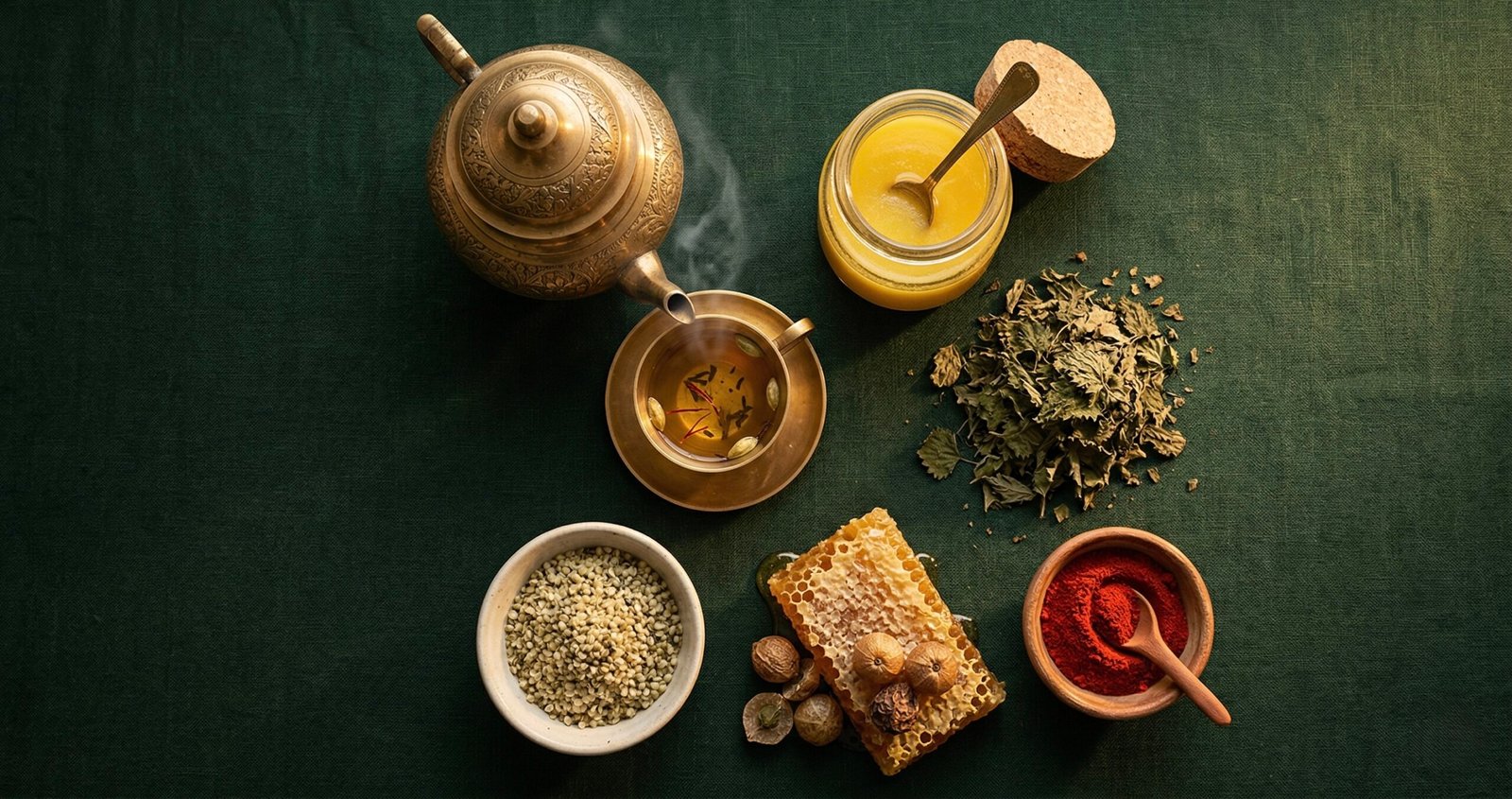
Traditional Himalayan wellness foods by Fyonli — Kashmiri Kahwa, bilona ghee, wild nettle tea, hemp protein and more

Modern wellness has a short memory. Collagen powders, adaptogens, cold plunges — trends arrive fast and fade faster. But across the villages of Uttarakhand, Kashmir and Himachal Pradesh, the same foods have been part of daily life for centuries. Not as superfoods. Not as supplements. Just as food — grown slowly, prepared simply, eaten with intention.

What we’ve found is that many of the most powerful wellness foods aren’t new discoveries. They’re old habits that got forgotten somewhere along the way to convenience.

These are seven traditional Himalayan wellness foods that have been part of daily life in these villages for centuries — long before anyone called them superfoods.


1. Kashmiri Kahwa — The Morning Ritual That Does More Than Wake You Up

Kahwa has been served in Kashmiri homes for centuries — traditionally brewed in a brass samovar called a samovar, and offered to every guest as a gesture of warmth. It isn’t just tea. It’s a blend of green tea, saffron, cardamom, cinnamon, cloves and ginger — each ingredient earning its place not by flavour alone but by function.

Saffron is rich in antioxidants and has been associated with improved mood. Green tea provides polyphenols that support metabolism and fat oxidation. Cardamom and cinnamon have natural anti-inflammatory and digestive properties. Together, they make Kahwa a genuinely useful morning drink — warming in winter, calming in any season, and far more interesting than plain green tea.

How to use it: Stir a spoonful into hot water, steep for two minutes, and drink before or after meals.

👉 Fyonli Kashmiri Kahwa Premix →


2. Wild Himalayan Nettle Tea — The Mineral Infusion Your Body Has Been Missing

In the Garhwal hills, wild nettle — locally called bichhu ghaas (stinging nettle) — grows on untouched slopes, and has been used in traditional wellness for generations. It’s foraged by hand, shade-dried to preserve its natural mineral content, and brewed simply: one teaspoon, hot water, five minutes.

What you get is a clean, slightly earthy infusion that is genuinely mineral-dense — iron, calcium, magnesium — in a form your body recognises. For anyone who pays attention to gut health, inflammation or simply wants to reduce their supplement intake and eat more real food, nettle tea is one of the most underrated additions to a daily routine.

No flavouring, no blending, no additives. Just leaves from a wild Himalayan hillside.

The same wild-foraged nettle also goes into our Himalayan Nettle Mineral Salt — a mineral-rich seasoning blend that makes nettle part of your everyday cooking, not just your morning cup.

How to use it: Add 1 tsp to hot water, steep 5–7 minutes, strain and drink. Works morning or evening.

👉 Fyonli Wild Himalayan Nettle Tea →


3. Raw Honey Amla Bites — After-Meal Digestive the Old Way

Every traditional Indian household had some version of a post-meal digestive. Mukhwas, paan, a piece of jaggery — something to signal the end of eating and help the body process what it just received. Raw Honey Amla Bites are Fyonli’s version of this tradition, made the way it was always made in the hills: fresh amla coated in raw mountain honey, then balanced with warming spices — black salt, roasted cumin, dry ginger, black pepper, ajwain, hing and cardamom.

Amla (Indian gooseberry) is one of the richest natural sources of Vitamin C. Raw honey adds enzymes. The spice blend is a textbook Ayurvedic digestive formula. And because there’s no refined sugar, no stabilisers and no preservatives, what you’re eating is just food — the kind your grandmother would have made without thinking twice.

How to use it: Eat 2–4 pieces after lunch or dinner. Consider it your dessert replacement.

👉 Fyonli Raw Honey Amla Bites →


4. Mountain Cow Bilona Ghee — The Kitchen Essential That Was Never Meant to Be Optional

Ghee fell out of fashion for a generation when fat was blamed for everything. It’s back now, but not all ghee is equal. What makes a real difference is the method: Bilona ghee is made by first culturing milk into curd, churning that curd into butter, and then slow-cooking the butter into ghee. It’s slower, costlier and produces less yield — but the result is a grainy, aromatic ghee with a depth of flavour that clarified-from-cream ghee simply doesn’t have.

Fyonli’s Mountain Cow Ghee is made from the milk of desi cows that graze freely on mountain grasses and medicinal herbs across Kashmir and Uttarakhand. The origin matters here — what the cow eats changes the fat profile of the milk, and therefore the ghee. 885 kcal and 98g fat per 100g, of which 62g is saturated — numbers that look alarming until you understand that traditional fat sources eaten in moderation are very different from refined oils eaten in volume.

How to use it: A teaspoon on dal, rotis or khichdi. Or stirred into warm milk before bed.

👉 Fyonli Mountain Cow Ghee →


5. Hemp Seed Chutney Premix — A Garhwali Condiment Worth Rediscovering

Hemp seeds (bhanga beej) have been part of Garhwali cooking for centuries — well before anyone called them a superfood. The traditional chutney made from roasted hemp seeds, sesame, perilla seeds (bhangjeera), dry red chilli, cumin, mustard and rock salt is a village kitchen staple in Devprayag. Rich, nutty, mildly spiced — it goes with everything.

Fyonli’s Hemp Seed Chutney Premix is crafted by women self-help groups using the same slow-roasting methods that have been passed down for generations. At 18g protein per 100g and a complete amino acid profile from the hemp seeds, it’s more nutritious than most condiments you’ll find. But more importantly, it tastes like something with a story — because it does.

How to use it: Mix with warm water for a quick chutney, or grind with garlic and lemon for a fuller, richer version. Excellent with rotis, rice or as a dip.

👉 Fyonli Hemp Seed Chutney Premix →


6. Pahadi Lyoon — The Herb Salt That Replaces Three Condiments at Once

Every pahadi kitchen has a version of lyoon — a blend of mountain garlic, ginger, chilli, cumin, ajwain and rock salt that goes on everything. It’s not a recipe so much as a habit: sprinkle it on dal-chawal, rotis, fresh fruit, raita, salads. It adds heat, depth and the particular warmth of mountain garlic (lahsun) that flat-land garlic doesn’t quite replicate.

Made in Tehri Garhwal by hand, Fyonli’s Pahadi Lyoon is artisanal in the original sense of the word — made by hand, in small batches, with no preservatives and no fillers. For anyone trying to reduce processed sauces and condiments, this is one of the simplest and most effective swaps.

If you want the mineral-rich version of this same idea, see how our Himalayan Nettle Salt compares to regular table salt — same principle of one seasoning replacing several, with wild nettle added in.

How to use it: Sprinkle over any meal. Use a dry spoon to preserve shelf life.

👉 Fyonli Pahadi Lyoon →


7. Himalayan Hemp Protein — Plant Protein That Tastes Like Food, Not a Supplement

The plant protein market is full of products that require a lot of willpower to consume. Chalky textures, artificial sweeteners, flavour systems built in a lab. Himalayan Hemp Protein is a different kind of product: hemp seed powder, pumpkin seed powder, almond powder, date powder, cinnamon and cardamom. Six ingredients. No additives. No refined sugar. No preservatives.

At 22g protein per 100g, it holds its own nutritionally. But the point isn’t the number — it’s the fact that you can stir it into milk, blend it into a smoothie, or mix it into a breakfast bowl and it tastes like something you’d actually want to eat. Because the ingredients are real, the taste is real.

How to use it: 1–2 tablespoons (10–15g) in milk, water or a smoothie. Best in the morning or after a workout.

👉 Fyonli Himalayan Hemp Protein →


Why Traditional Himalayan Wellness Foods Belong in Your Daily Routine

None of these seven foods are recent inventions. They come from communities that didn’t have supermarkets, supplement aisles or nutritional labels. They ate what was available, prepared it with care, and were remarkably well-nourished as a result.

Each of these traditional Himalayan wellness foods carries a story of place, community and slow craft.

The Himalayan tradition isn’t about perfection or restriction. It’s about rhythm — eating foods that are close to their source, prepared with intention, and used consistently enough to actually make a difference.

That’s what Fyonli is about too. Slow-crafted in the Himalayas, in rhythm with nature.

Posted on 2 Comments

Bhangjeera (Perilla Seeds): The Wild Himalayan Seed That Beats Flaxseeds on Omega-3

bhangjeera perilla seeds

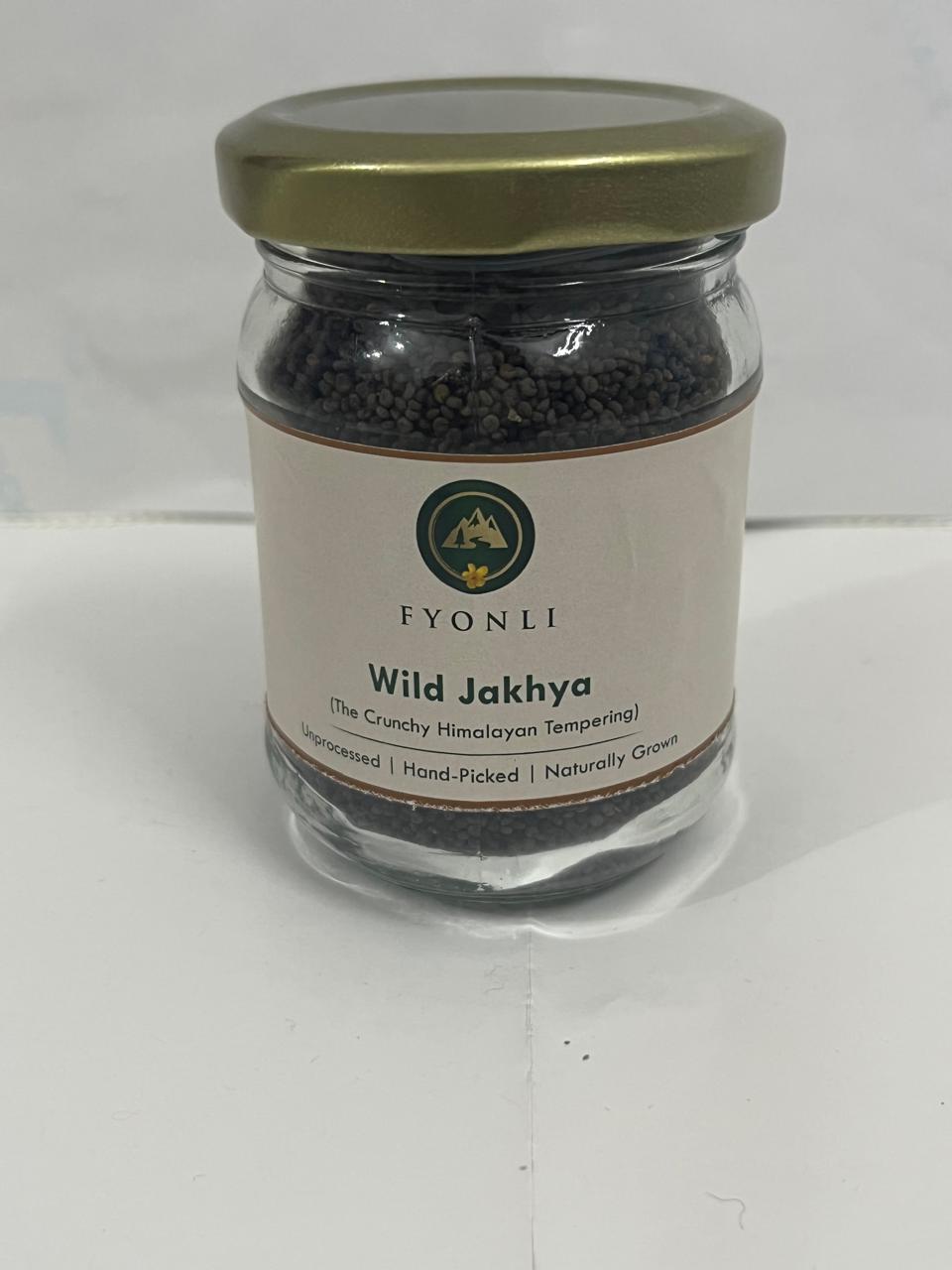
Bhangjeera — the wild perilla seed from the Himalayas — is one of India’s most nutritionally exceptional foods, and almost nobody outside Uttarakhand has heard of it. Known internationally as perilla seeds and used extensively in Korean and Japanese cooking, bhangjeera has grown wild in the Garhwal Himalayan belt for centuries, feeding mountain communities long before it became a global wellness trend.

This article covers everything you need to know — what bhangjeera perilla seeds are, why they are nutritionally extraordinary, how Pahadi kitchens have always used them, and how to start using them in your own cooking.

In This Article


What Are Bhangjeera Perilla Seeds?

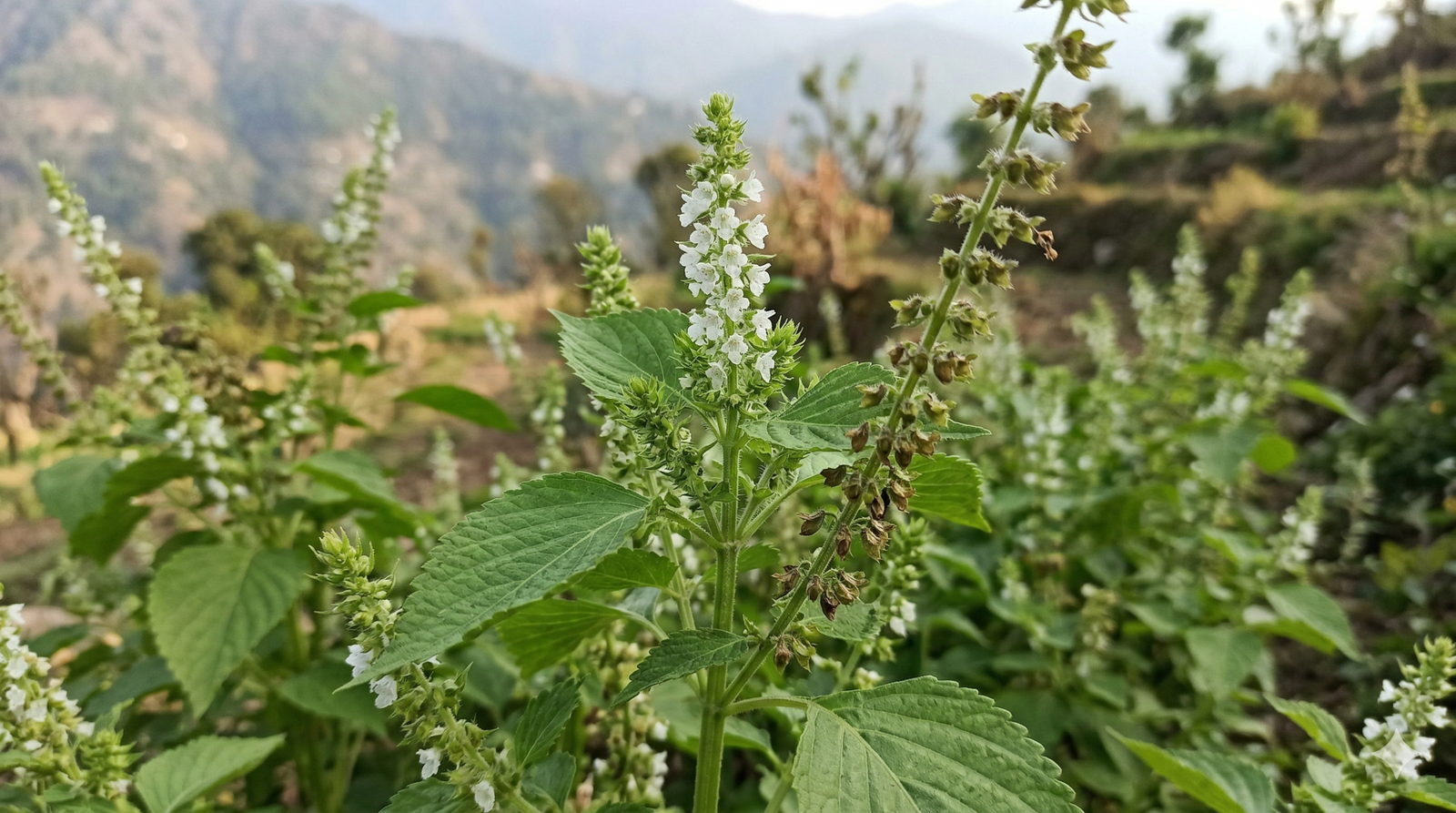
Bhangjeera is the Garhwali name for perilla seeds — small, oval, greyish-brown seeds from the Perilla frutescens plant, a wild herb that belongs to the mint family and grows naturally across the mid-Himalayan belt of Uttarakhand.

If you have come across perilla seeds in Korean or Japanese cooking — where they are called egoma or shiso — you are looking at the same plant. What the global wellness world has recently discovered, Pahadi kitchens in Uttarakhand have been using for generations.

Bhangjeera perilla seeds grow wild on hillsides and forest edges across Garhwal and Kumaon — particularly in districts like Devprayag, Chamoli, and Pauri. They are not farmed commercially. Local communities harvest them by hand during the autumn months when the plant is fully ripe, then sun-dry and clean them before use. This entirely manual process is why genuine Himalayan bhangjeera is rare outside the mountains.

The seed is small with a distinctive nutty, slightly minty aroma — noticeably different from anything else in a typical Indian spice collection.


Bhangjeera vs Flaxseeds — Which Has More Omega-3?

This is the comparison most health-conscious buyers want to know. Both bhangjeera perilla seeds and flaxseeds are promoted as excellent plant-based omega-3 sources — but they are not equal.

Research from the Centre for Aromatic Plants, Uttarakhand found that bhangjeera seed oil contains omega-3 and omega-6 fatty acids in abundance, consistently ranking among the highest of any plant source — making it a superior choice to cod liver oil for plant-based omega-3 intake. naturessoulshop

Specifically, perilla seed oil contains one of the highest proportions of omega-3 ALA fatty acids of any plant oil, at 54–64%, with omega-6 linoleic acid at around 14% also present. Amazon

Flaxseeds contain approximately 22–23% ALA omega-3 by weight. Bhangjeera perilla seeds, particularly the oil fraction, significantly exceed this.

The practical difference for your kitchen: bhangjeera delivers more omega-3 per gram than flaxseeds, with a more pleasant flavour profile — nutty and aromatic rather than the slightly bitter, earthy taste of flax. It also doubles as a cooking spice rather than just a supplement, meaning it integrates into meals naturally rather than being something you force yourself to consume.


Why Bhangjeera Perilla Seeds Are Nutritionally Exceptional

Beyond omega-3, bhangjeera perilla seeds offer a genuinely impressive nutritional profile:

  • Omega-3 fatty acids (ALA) — among the highest of any plant food, supporting heart health, brain function, and inflammation reduction
  • Rosmarinic acid — a powerful antioxidant and anti-inflammatory compound also found in rosemary and basil
  • Dietary fibre — supports gut health, digestion, and sustained fullness
  • Calcium, iron, and phosphorus — essential minerals often deficient in vegetarian diets
  • Vitamin A, E, and K — fat-soluble vitamins that support skin, vision, and bone health
  • Antioxidant flavonoids — compounds that protect cells from oxidative damage

Traditional Pahadi medicine has long used bhangjeera as a digestive aid and respiratory support — a small handful chewed after heavy meals. Modern nutritional research is now validating what mountain communities have always known empirically.


How Bhangjeera Is Used in Traditional Pahadi Cooking

In Uttarakhand, bhangjeera perilla seeds are not an occasional health supplement — they are a kitchen staple used multiple ways throughout the week.

Bhangjeera Chutney — The Essential Pahadi Condiment

The most traditional use of bhangjeera perilla seeds is the chutney — dry-roasted seeds ground with green chillies, garlic, coriander, and lemon juice into a coarse, intensely flavoured paste. This is the Pahadi equivalent of coconut chutney in South India — present at almost every meal, paired with dal, rice, rotis, and boiled vegetables.

Once you make bhangjeera chutney, you will understand immediately why it has anchored Pahadi cooking for generations. The flavour is unlike anything else — nutty, garlicky, slightly hot, with a mineral depth that comes from the seed itself.

As a Tempering Spice

Whole bhangjeera perilla seeds added to hot ghee at the start of cooking a dal release a warm, nutty fragrance that becomes the entire flavour base of the dish. They crackle like mustard seeds and work particularly well in simple Toor Dal or Gahat Dal preparations.

Pressed Into Oil

Cold-pressed bhangjeera oil — extracted from the seeds — is used in parts of Uttarakhand as both a cooking medium and a finishing oil. Its omega-3 content makes it one of the most nutritionally dense cooking oils available from any Indian source.


How to Use Bhangjeera Perilla Seeds at Home

If you are using bhangjeera perilla seeds for the first time, start with the chutney. It is the entry point that makes everything else obvious.

Classic Bhangjeera Chutney:

  1. Dry roast 2 tablespoons of bhangjeera seeds in a pan on low heat for 3–4 minutes until fragrant — do not let them burn
  2. Remove from heat and cool completely — this step is essential
  3. Grind with 2 green chillies, 3–4 garlic cloves, a small bunch of fresh coriander, salt, and the juice of half a lemon
  4. Add 1–2 tablespoons of water to get a coarse paste consistency — do not over-blend
  5. Taste and adjust salt and lemon
  6. Serve with dal chawal, parathas, or as a dip alongside any meal

This chutney keeps in the refrigerator for 3–4 days and develops more depth as it sits.

As a Dal Tempering: Add one teaspoon of whole bhangjeera perilla seeds to hot ghee before adding onions when making any dal. Works exceptionally well with Gahat Dal, Toor Dal, or a simple moong.

Mixed Into Yoghurt: Lightly roasted and coarsely crushed bhangjeera stirred into plain curd with salt and a pinch of chilli makes a simple raita that pairs beautifully with rice dishes.

As a Finishing Sprinkle: Dry-roasted whole bhangjeera seeds scattered over a finished dal or sabzi just before serving — exactly as you might use sesame seeds on a stir fry. Adds texture, aroma, and nutrition simultaneously.


Where Fyonli’s Bhangjeera Comes From

Our bhangjeera is wild-harvested from the Devprayag region of Uttarakhand — where the Alaknanda and Bhagirathi rivers meet to form the Ganga.

The surrounding hillsides are rich in wild bhangjeera perilla plants that grow without any human intervention, fertiliser, or pesticide. Local farming families collect them by hand during the autumn harvest window, sun-dry them on the hillside, and clean them manually before packing.

Each 50g pack is a single-harvest, single-origin product. There is no blending with other batches, no additives, and no industrial processing. When a batch sells out, the next one comes from the following season’s harvest.


Where to Buy Authentic Bhangjeera Online

Most bhangjeera and perilla seeds sold online in India are not traceable to a specific Himalayan region. Some are sourced from Meghalaya, some from commercial farms, some from undisclosed origins — and labelled generically as “Himalayan.”

Genuine wild-harvested Devprayag bhangjeera, hand-collected by mountain farming communities, is a different product. The flavour is more complex, the omega-3 content is higher from the wild growing environment, and the provenance is real rather than marketing language.

Shop Devprayag Bhangjeera Perilla Seeds →


You might also like: