Description

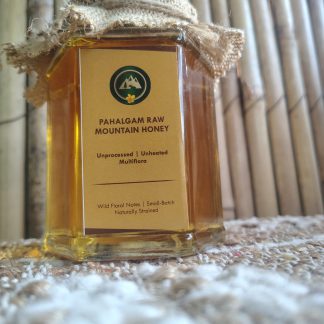
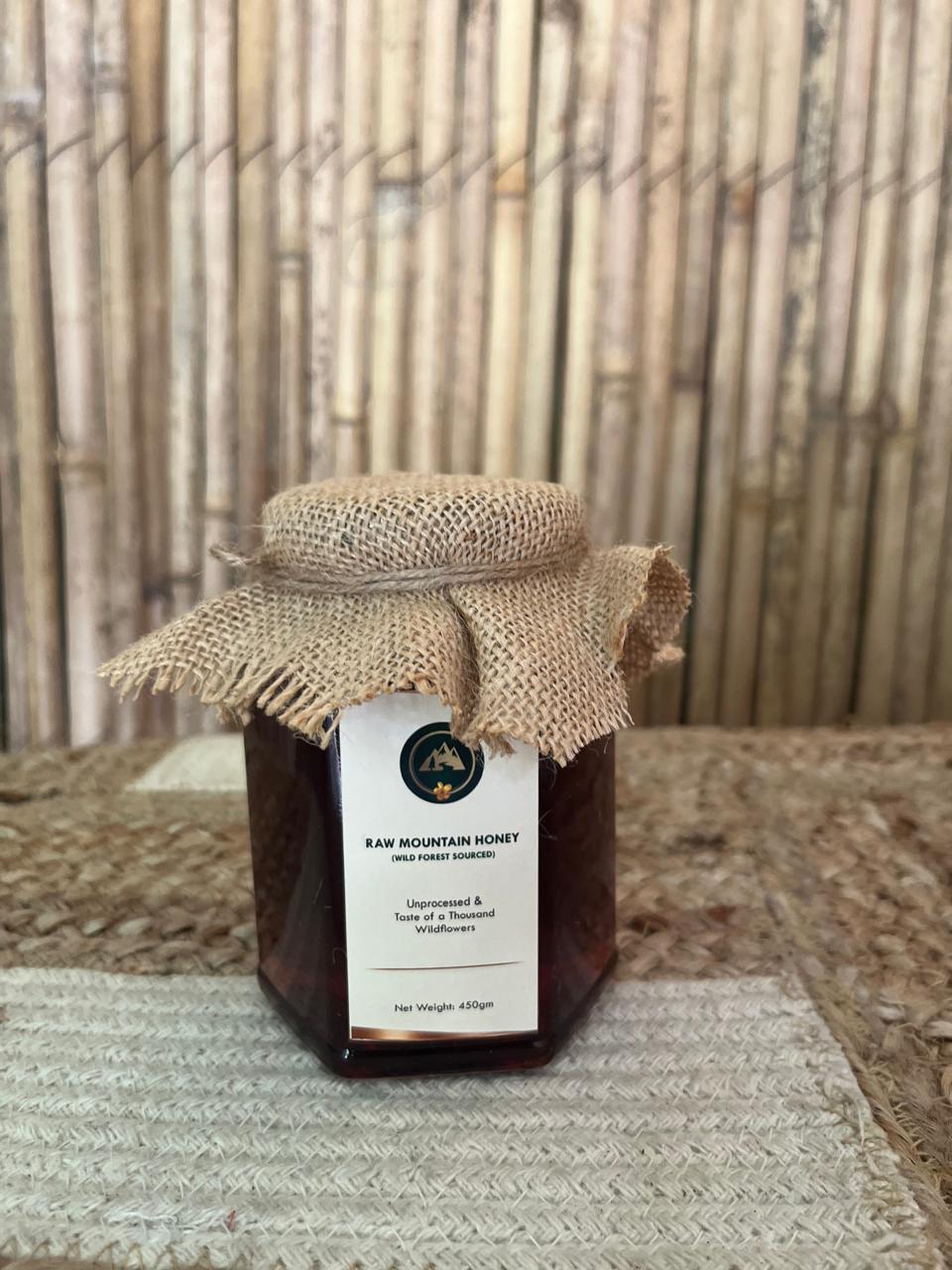
Raw Mountain Honey — Wild Forest Sourced, Unheated & Unfiltered

Real honey doesn’t pour in a perfect stream. It’s thick, cloudy, and alive.

Most honey on Indian shelves is heated past 60°C, micro-filtered and often cut with syrup — a process that strips out the pollen, enzymes and aroma that made it honey in the first place. Ours never sees a heater. It’s harvested once a year from wild forest apiaries above Tehri Garhwal, where bees forage freely on Burans (rhododendron), wild Tulsi and seasonal berry blossom, then bottled exactly as they made it — raw, unheated, naturally strained.

What Is Raw Mountain Honey?

Raw honey is honey the way bees actually make it — extracted, lightly strained and bottled without pasteurisation or fine filtration. Because it’s never heated, it keeps its natural enzymes, pollen and antioxidants intact. Ours is single-region forest honey from Tehri Garhwal, Uttarakhand — not a blend of imported syrups standing in for the real thing.

Why Fyonli Raw Mountain Honey Is Different

  • Truly unheated — enzymes, pollen and aroma stay intact, not cooked away.
  • Wild forest forage — Burans, wild Tulsi and seasonal berry blossom, not a sugar-fed apiary.
  • Single-origin — one region, one annual harvest, small-batch.
  • Naturally strained, never micro-filtered — nothing removed but wax and debris. It also tends to stay liquid rather than set solid, simply because of its floral sugar profile — not a purity marker either way.
  • No added sugar or syrup, ever.

Raw Honey vs. Supermarket Honey — What Actually Changes

Supermarket Honey Fyonli Raw Mountain Honey
Heated to 60–70°C for shelf stabilityNever heated — bottled at room temperature
Micro-filtered — pollen and fine particles removedNaturally strained only — pollen and enzymes intact
Often a blend of honey from multiple countriesSingle-origin — one region, one annual harvest
No sourcing or harvest information on the labelRegion, harvest season and FSSAI licence number disclosed

Who Should Choose Raw Mountain Honey

  • Anyone replacing refined sugar with a natural sweetener that still carries its original enzymes and pollen.
  • Buyers who want a single-origin, traceable jar rather than a blended commercial one.
  • Households already moving away from processed and adulterated pantry staples.
  • Not intended as a substitute for medical treatment, and not suitable for infants under 12 months.

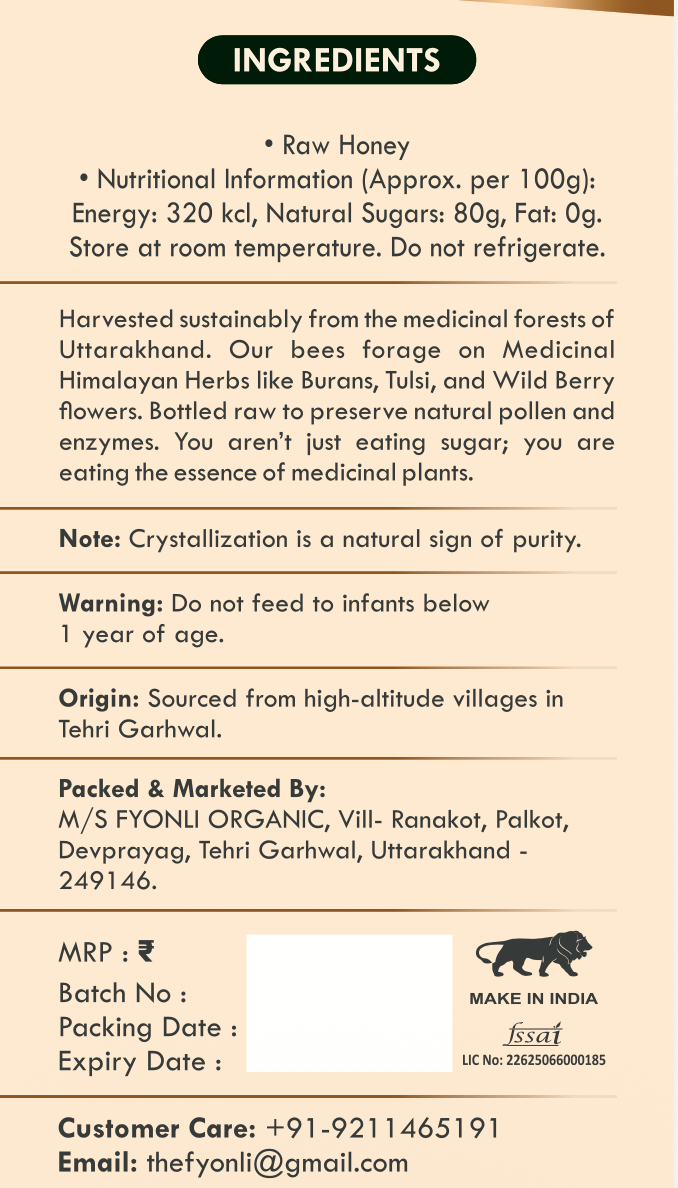
Nutrition (per 100 g)

Nutrient Per 100 g
Energy304 kcal
Protein0.3 g
Fat0 g
Fibre0.2 g
Net quantity350 g / 450 g
Harvest seasonOnce a year, around December
FSSAI Lic. No.22625066000185

Honey is mostly natural sugar and water, with only trace amounts of protein, fat and fibre — which is why it’s calorie-dense in small servings rather than a meal component. What varies from batch to batch is everything else: the ratio of natural sugars, the trace minerals, and the aroma compounds the bees carry in from whatever they were foraging on that season. That’s also what decides texture — some honeys set firm within weeks, others (like this one) tend to stay pourable for a long time.

How to Use

A teaspoon neat each morning. Stirred into warm — never hot — water with lemon. Drizzled over yoghurt, oats or fresh fruit. Heat is honey’s enemy: it destroys the very enzymes you’re paying for, so never cook with it or stir it into anything boiling.

Sourcing & Story

This batch comes from wild forest apiaries above Tehri Garhwal, Uttarakhand, where colonies forage across the oak, rhododendron and medicinal-herb forest typical of the Garhwal Himalaya. Harvest happens once a year, around December — the season’s forage is combined into a single batch rather than pulled repeatedly through the year, which is why flavour and colour can shift slightly batch to batch. Because it’s collected once annually rather than extracted continuously, each batch is closer to a vintage than a standardised commercial product — the trade-off for that is a honey that tastes a little different depending on what the forest offered that year. Produced under FSSAI Lic. No. 22625066000185.

Storage & Shelf Life

Store in a cool, dry place away from direct sunlight — no refrigeration needed. This honey tends to stay liquid rather than crystallise; that comes down to its natural sugar composition, not anything about purity. No need to warm or re-liquefy it. Not recommended for infants under 12 months.

Frequently Asked Questions

Is Fyonli Raw Mountain Honey pasteurised?

No — it’s raw and unheated, so the natural enzymes, pollen and aroma remain exactly as the bees made them.

Why doesn’t your honey crystallise like some others?

Whether honey sets solid or stays liquid comes down to its ratio of natural sugars (fructose to glucose), which is set by the flowers bees forage on — not by purity. Some floral sources crystallise within weeks; ours tends to stay liquid for a long time. Neither state is a purity test on its own.

Is raw honey safe for diabetics?

It still contains natural sugars, so eat it in moderation and check with your doctor before adding it to a diabetic diet.

Where is this honey from?

Wild forest apiaries above Tehri Garhwal, Uttarakhand, harvested once a year around December.

What do the bees forage on?

Mainly Burans (rhododendron), wild Tulsi and seasonal berry blossom across the Garhwal forest belt.

How do I know it’s real honey, not adulterated?

Real raw honey is often faintly cloudy from natural pollen and wax particles and pours slowly rather than like water; its flavour and colour can shift subtly by batch and season. Whether it crystallises isn’t the test — that’s floral chemistry, not purity. We publish our region, harvest season and FSSAI licence number so you can check the source directly instead of relying on folk tests.

Can I give this to my child?

Not for infants under 12 months (standard honey safety guidance on infant botulism risk). Fine for older children and adults.

One forest. One harvest a year. Nothing added, nothing taken away.

Curious what actually separates raw honey from the bottled stuff on supermarket shelves? Read Raw Mountain Honey from Garhwal: 5 Essential Differences From Every Jar on a Supermarket Shelf.

Thanks for your review!

Your feedback helps us improve our service.

error

Please Insert Review Title

Please Insert Review Feedback

6000+ ft altitude

Grown at Altitude. Harvested by Hand.

Sourced directly from small-scale farmers in the Himalayan highlands — where clean mountain air, glacier-fed streams, and untouched soil create produce of unmatched purity. No middlemen. No chemicals. Every batch follows generations of traditional farming wisdom.

🌿 Organic Practice 🤝 Fair Trade 🏔 Single Origin

Frequently Bought Together

What customers say

★★★★★

“I've been buying honey from three different "raw" brands for years, but this is the first one that actually tastes different with every single jar. That’s absolute proof…”

Garvit R July 20, 2026