
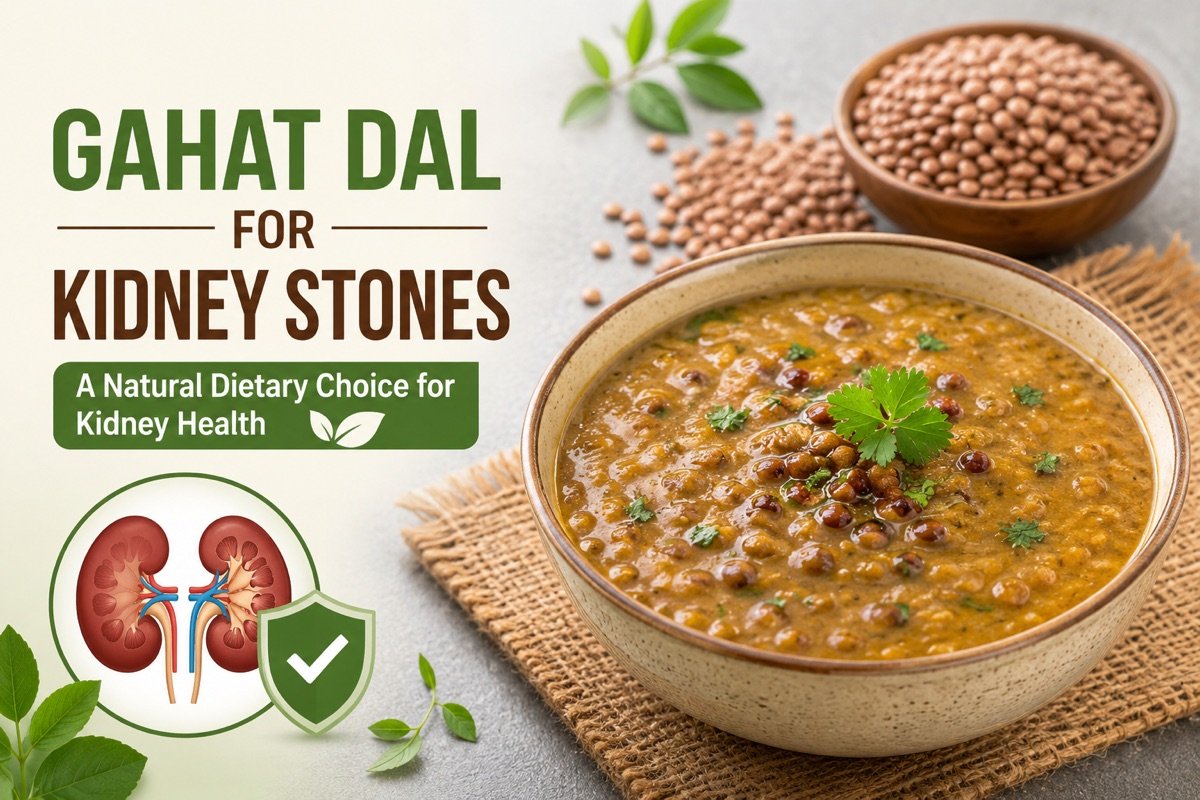
Gahat dal for kidney stones is the best-documented traditional use of Uttarakhand’s most medicinally regarded pulse — known in English as horse gram, and across much of India as kulthi. This page covers that specific angle in depth: what Ayurveda says, what the evidence shows, the traditional gahat broth preparation, and how to use it safely alongside regular cooking. For a full overview of gahat dal’s nutrition, taste, and everyday cooking, see the complete gahat dal guide.
Short answer: Gahat dal (horse gram, or kulthi) is one of Ayurveda’s most-used dietary remedies for kidney stones. Its natural diuretic effect increases urine flow and its polyphenols help inhibit calcium-oxalate crystal formation — the most common stone type. The traditional method is to drink gahat broth or its overnight soaking water twice daily for 3–4 weeks. It is most useful for preventing stones and helping pass small ones (under ~5mm); stones above 6–7mm need medical treatment. Gahat dal is a dietary support, not a substitute for medical care.
In This Article
- Gahat Dal for Kidney Stones — The Ayurvedic and Scientific Case
- Gahat Broth — The Traditional Medicinal Preparation
- Supporting Benefits Relevant to Kidney Health
- Gahat Dal Nutrition — Quick Reference
- Who Should Be Careful
- Where to Buy Authentic Gahat Dal Online
- Frequently Asked Questions
Gahat Dal for Kidney Stones — The Ayurvedic and Scientific Case
What Ayurveda Has Always Said
In Ayurveda, gahat dal (horse gram) is classified as having Mutral properties — meaning it acts as a natural diuretic, promoting increased urine flow. This is the mechanism at the centre of its traditional use for kidney stones. Classical Ayurvedic texts and centuries of practice across Garhwal and Kumaon describe gahat dal as one of the most reliable foods for preventing the formation of urinary stones and assisting in the passing of existing ones.
The traditional preparation is not eating gahat dal as a cooked dish — it is drinking the water in which gahat dal has been soaked overnight, or consuming a slow-cooked gahat broth twice daily over a sustained period of weeks. In hilly regions of Garhwal and Kumaon, gahat dal has long been regarded as a remarkable traditional remedy for kidney stones. Down To Earth
What the Evidence Shows
Modern research supports this traditional understanding in two specific ways.
First, gahat dal’s diuretic effect is real and documented. Increased urine flow creates mechanical pressure on deposited stones and reduces the concentration of stone-forming minerals in the urine — both of which contribute to stone prevention and, in the case of smaller deposits, expulsion. Due to its diuretic properties, horse gram is effective in assisting in the removal of kidney stones. Isha Foundation
Second, gahat dal contains polyphenols and flavonoids that inhibit the formation of calcium oxalate crystals — the most common type of kidney stone, responsible for approximately 80% of cases. Horse gram contains certain compounds that make kidney stones more soluble, and regular consumption aids in avoiding the formation of new stones. Down To Earth
Why It Works — The Proposed Mechanism
The combination of three properties is what makes gahat dal specifically useful for kidney health — rather than any single compound in isolation:
- Diuretic effect: increases urine volume, flushing the urinary system and reducing mineral concentration
- Polyphenol content: inhibits crystal formation, particularly calcium oxalate
- Alkalising action: Ayurveda describes gahat as having an alkaline post-digestive effect, which reduces the acidity in which uric acid stones form most readily
The traditional recommendation of consuming gahat soup twice a day for about a month aligns with what the science would predict: sustained dietary intervention works better than a single dose, and consistency over weeks allows the diuretic and anti-crystallisation effects to accumulate.
Gahat Broth — The Traditional Medicinal Preparation
This is the preparation that Uttarakhand families actually use for kidney health — not gahat dal eaten as a meal, but the liquid itself, consumed as a warm broth. It is simpler to prepare than it sounds and produces nothing if you are already cooking gahat dal regularly.
Method 1 — The Overnight Soaking Water (Simplest)
- Measure 3–4 tablespoons of gahat dal into a glass or steel container
- Cover with 400–500ml of clean water and leave to soak overnight (8–12 hours)
- In the morning, strain the soaking water through a fine mesh into a glass
- Drink on an empty stomach, warm if preferred (gently heat without boiling)
- Use the soaked dal normally for cooking that day — nothing is wasted
This is the most widely used traditional practice. The soaking water contains leached polyphenols, flavonoids, and soluble compounds from the grain in their most concentrated, bioavailable form — before heat denatures any part of them.
Method 2 — Slow-Cooked Gahat Broth (Traditional Uttarakhand)
Ingredients: ½ cup gahat dal (soaked overnight and drained), 1 litre water, 1 small piece of ginger (bruised), ½ tsp cumin seeds, a pinch of rock salt.
- Add soaked gahat dal and all ingredients to a heavy pot
- Bring to a boil, then reduce to a very low simmer
- Cook uncovered for 45–60 minutes until the liquid has reduced by roughly a third and turned a deep reddish-brown
- Strain the liquid, discard the spent dal (or add to compost), and drink the broth warm
- Take twice daily — morning on an empty stomach, and again in the evening before dinner
This slow-cooked broth is the more potent preparation and the one referenced in traditional Ayurvedic practice. The colour change to deep reddish-brown is a reliable indicator that sufficient polyphenols have been extracted. It tastes earthy and slightly astringent — add a squeeze of lemon and a little raw honey to make it more palatable without reducing its properties.
Duration: Traditional practice recommends consistency over a minimum of 3–4 weeks for kidney stone support. Gahat soup consumed twice a day for about a month is the traditional approach, with ongoing regular gahat dal consumption helping avoid formation of new stones.
Supporting Benefits Relevant to Kidney Health
Three of gahat dal’s broader nutritional properties are specifically relevant to urinary and kidney health, beyond the direct stone-prevention mechanism.
Blood Sugar Management Reduces Stone Risk
Gahat dal has a low glycaemic index and is high in soluble fibre — both of which help maintain stable blood sugar. This matters for kidney health specifically because chronically elevated blood sugar damages the kidney’s filtering function over time and increases calcium excretion in the urine, one of the key contributors to calcium oxalate stone formation. For diabetics managing kidney health, gahat dal addresses both concerns simultaneously.
High Protein Supports Recovery Without Excess Animal Protein
Gahat dal contains 22–24g of protein per 100g — among the highest of any Indian pulse. High animal protein intake is a known risk factor for kidney stones because it increases uric acid production and urinary calcium excretion. For people managing kidney stones who need to maintain protein intake, gahat dal as a plant protein source avoids these risks while delivering meaningful nutritional value.
Iron Without the Oxalate Load of Leafy Greens
People managing calcium oxalate kidney stones are often advised to moderate high-oxalate foods — which includes spinach, beetroot, and many other iron-rich vegetables. Gahat dal provides approximately 7mg of iron per 100g (around 39% of daily recommended intake for men) without the high oxalate content of leafy greens, making it one of the most useful iron sources for someone managing both anaemia and kidney stone risk.
Gahat Dal Nutrition — Quick Reference
Per 100g of raw gahat dal: 22–24g protein, ~7mg iron, 287mg calcium, 5–8g dietary fibre, complex slow-release carbohydrates, low fat, low glycaemic index. Rich in polyphenols and flavonoids. Gluten-free.
For the full nutrition breakdown, dal-by-dal comparison, and everyday cooking guide, see the complete gahat dal guide.
Who Should Be Careful
Gahat dal is a traditional dietary food — not a medical treatment. These caveats matter and should not be glossed over.
Not a Substitute for Medical Treatment
Kidney stones above a certain size (typically above 6–7mm) cannot pass naturally regardless of diet and require medical intervention — ureteroscopy, lithotripsy, or surgery depending on type and location. If you are experiencing kidney stone symptoms (severe flank pain, blood in urine, difficulty urinating), see a doctor. Gahat dal is a dietary support and preventative tool, not an emergency treatment.
Who Should Exercise Particular Caution
- Pregnant women: gahat dal is traditionally considered a “heating” food in Ayurveda and is generally avoided during pregnancy. Consult a doctor before using it medicinally during pregnancy.
- Advanced chronic kidney disease (CKD): people with significantly reduced kidney function may need to limit high-potassium and high-phosphorus foods, including some pulses. Check with a nephrologist before adding gahat dal regularly if you have diagnosed CKD.
- Gout: gahat dal is high in purines. For people managing gout or very high uric acid, high-purine pulses may worsen symptoms. Moderate intake and consult a doctor.
- Digestive sensitivity: gahat dal is a harder-to-digest pulse than most. Always soak for a minimum of 8–12 hours and cook thoroughly. Starting with smaller quantities (1–2 tablespoons of broth rather than a full serving of dal) allows the digestive system to adapt.
Where to Buy Authentic Gahat Dal Online
Most gahat dal — sold online as horse gram or kulthi — does not specify a growing region and is sourced from commercial suppliers. The nutritional profile may be broadly similar, but the story — and often the flavour — is not. If you are specifically seeking kulthi for kidney stones, growing region and minimal processing matter more than for everyday cooking.
Authentic Pahadi gahat dal from Tehri Garhwal farming families, grown at altitude without chemical inputs, is unpolished — retaining its natural outer layer where the highest concentration of polyphenols and flavonoids are found. This matters specifically for medicinal use: polished or over-processed gahat dal will have lower levels of the compounds most relevant to kidney health.
Our gahat dal comes directly from Tehri Garhwal farming communities. It is unpolished, unsorted for cosmetic appearance, and packed in small seasonal batches without blending or additives. It looks as gahat dal should — rustic, dark, and real.
Shop Tehri Garhwal Gahat Dal →
Frequently Asked Questions — Gahat Dal and Kidney Stones
Does gahat dal dissolve kidney stones?
Not in the way a chemical solvent does — but it does make certain types of kidney stones more soluble and harder to form. The polyphenols in gahat dal inhibit the crystallisation of calcium oxalate (the most common stone type), and its diuretic effect increases urine flow which helps flush smaller deposits. For existing stones large enough to cause symptoms, gahat dal supports the process but is not a standalone cure — medical advice is essential alongside any dietary intervention.
How much gahat dal broth should I drink for kidney stones?
Traditional practice recommends one glass (200–250ml) of gahat broth or soaking water twice daily — once in the morning on an empty stomach, once in the evening before dinner. Starting with once a day for the first week is sensible if your digestive system is not used to gahat dal, then building to twice daily. Consistency over 3–4 weeks is more important than quantity at any single sitting.
How long does gahat dal take to help with kidney stones?
Traditional Ayurvedic guidance suggests a minimum of one month of twice-daily consumption before expecting results. This aligns with what the research on dietary interventions for kidney stones generally shows — changes in urinary chemistry take weeks to accumulate, and stone prevention is a sustained process rather than an acute one. Some people report noticing reduced discomfort within 2–3 weeks; others see results only after a full month of consistency.
Can I take gahat dal every day for kidney stone prevention?
Yes — for most healthy adults, regular gahat dal consumption (as a cooked dal 2–3 times per week, or broth daily) is safe and appropriate for preventative use. In Uttarakhand, gahat dal is simply a weekly kitchen staple for many families — the kidney health benefits are a byproduct of ordinary eating rather than a separate medicinal protocol. People with the conditions listed in the “Who Should Be Careful” section above should check with a doctor first.
Is gahat dal safe during pregnancy?
Gahat dal is classified as a “heating” food in Ayurveda and is traditionally avoided in pregnancy, particularly in the first trimester. As a cooked dal eaten occasionally in normal food quantities it is generally considered safe, but using it medicinally — drinking broth twice daily — during pregnancy is not recommended without specific medical guidance. Consult an obstetrician or Ayurvedic practitioner familiar with pregnancy nutrition before using gahat dal therapeutically.
What size of kidney stones can gahat dal help with?
Gahat dal’s dietary support is most relevant for small stones (typically under 5mm) that are still within the range where natural passage is possible, and for prevention of new stone formation in people with a history of kidney stones. Stones above 6–7mm generally require medical intervention regardless of diet. Gahat dal is most valuable as a preventative measure and as a support alongside conventional treatment — not as a primary treatment for large or symptomatic stones.
You might also like: