
Description
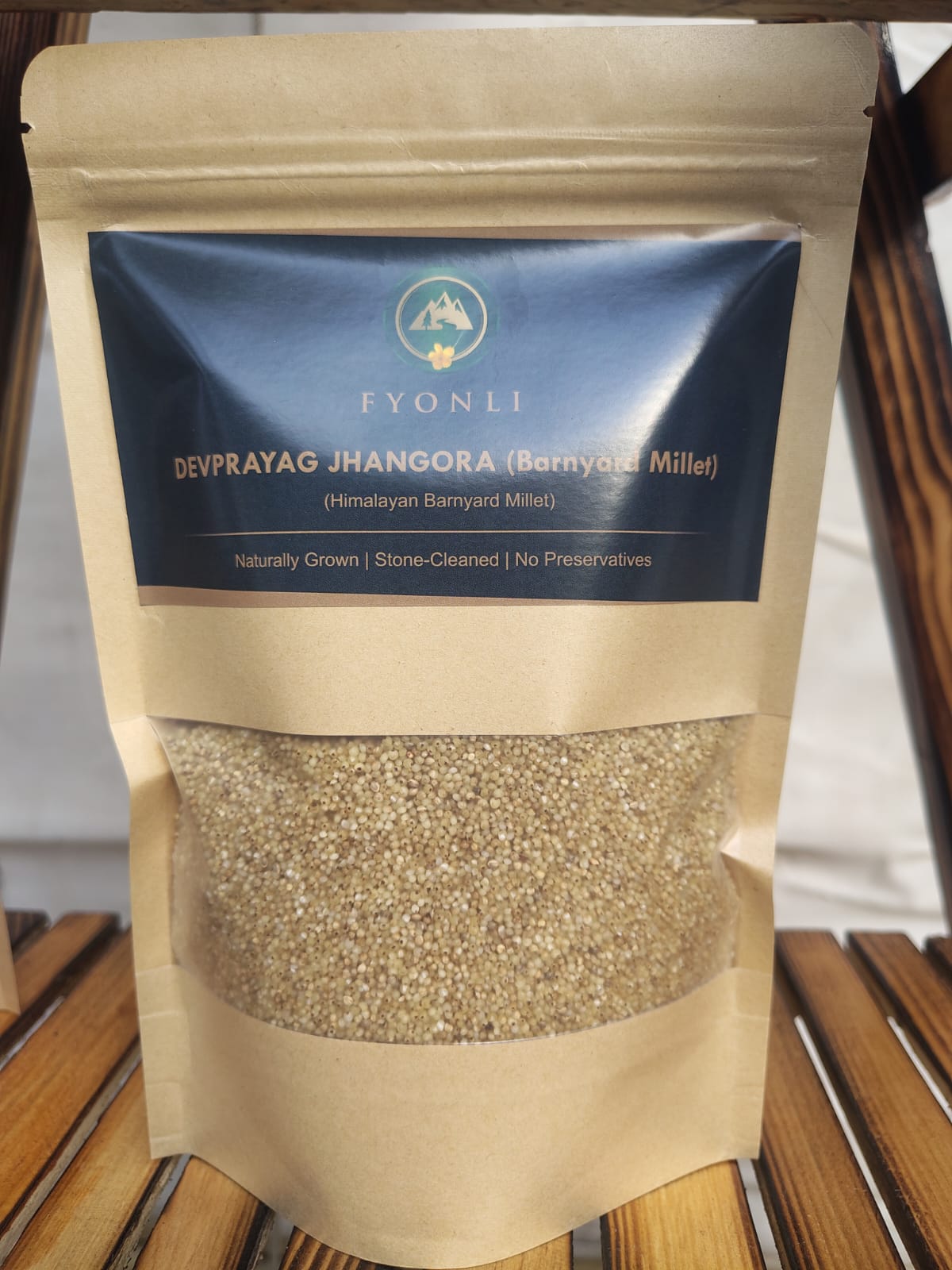
The Himalayas had superfoods long before the word existed. Jhangora — barnyard millet — has nourished generations of mountain families in Devprayag and the Garhwal highlands. Light on the stomach, rich in fibre, and naturally gluten-free, it’s a grain that modern diets are only now catching up with. Ours is grown without preservatives, stone-cleaned, and brought to you just as nature made it.What Is Devprayag Jhangora?
Devprayag Jhangora is barnyard millet (Echinochloa frumentacea), a traditional Himalayan grain grown by small-holder farmers around Devprayag, Tehri Garhwal, Uttarakhand. Long before millets became a mainstream health-food trend, mountain households relied on Jhangora as an everyday grain — light, easy to digest, and naturally free of gluten. Fyonli sources it directly from those farming families and stone-cleans it without polishing away its natural character.Why This One Is Different
- Naturally gluten-free — a genuine alternative for anyone avoiding gluten, not a processed substitute
- High in dietary fibre — supports digestion and keeps you fuller for longer than refined grains
- Light and easy to digest — traditionally eaten during fasts and by those recovering from illness
- Stone-cleaned, not polished — the grain keeps its natural bran and character, unlike commercially polished millet
- Single origin — sourced from Devprayag and the surrounding Garhwal highlands, not a pooled commodity blend
Devprayag Jhangora vs. Commercial Barnyard Millet
| What You’re Buying | Commercial Barnyard Millet | Fyonli Devprayag Jhangora |
|---|---|---|
| Processing | Machine-polished for uniform appearance | Stone-cleaned, natural bran intact |
| Origin | Usually unstated — pooled from multiple regions | Single origin — Devprayag, Tehri Garhwal |
| Growing method | Often irrigated, commercial-scale | Rain-fed, small-holder hill farms |
| Additives | May include anti-caking or preservative treatment | None — just the grain |
| Farmer relationship | Bought through mandi traders | Bought direct from Garhwal farming families |
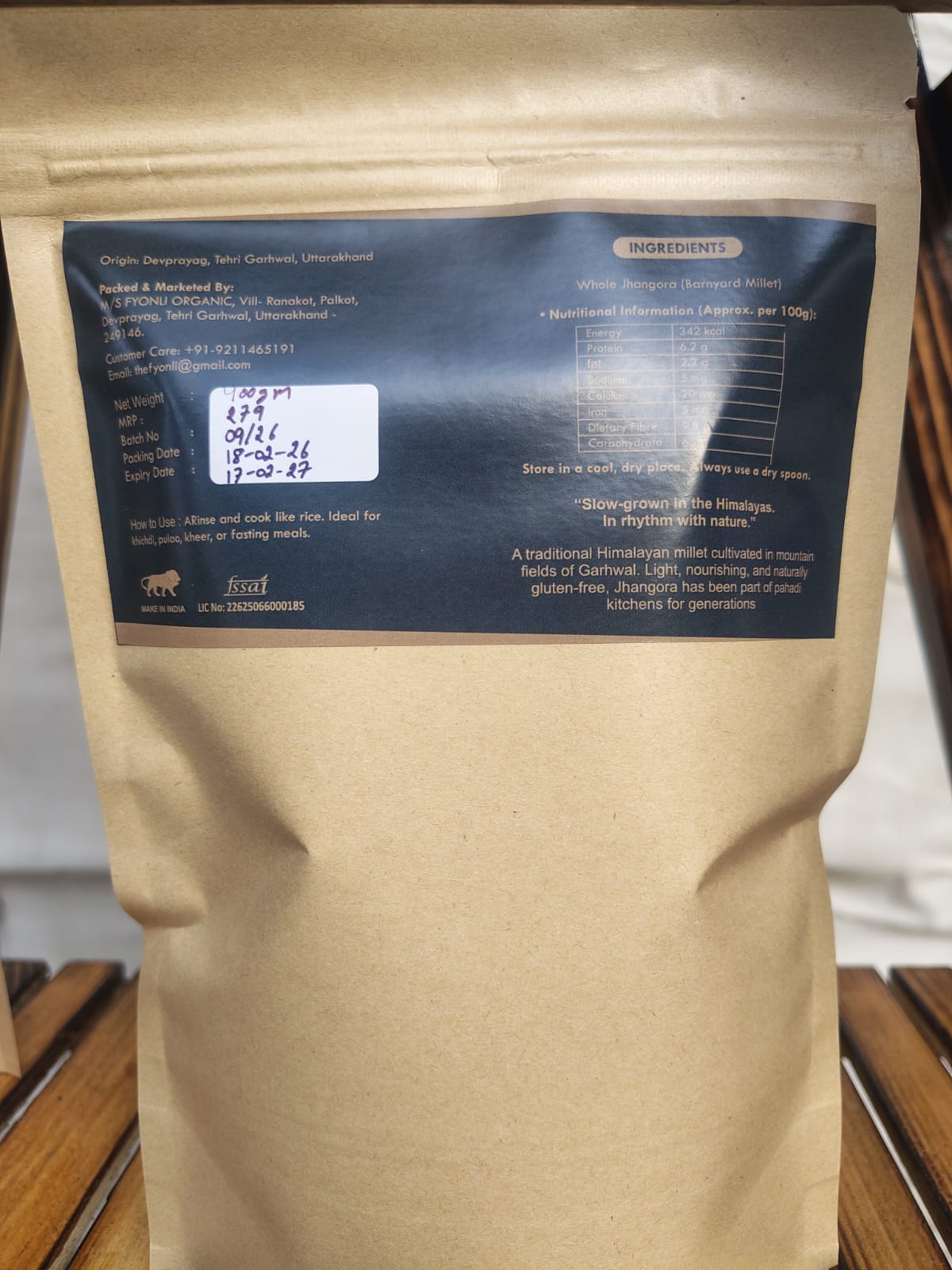
Nutritional Information (per 100g, uncooked)
| Nutrient | Amount |
|---|---|
| Energy | 398 kcal |
| Protein | 10.5 g |
| Total Fat | 3.6 g |
| Carbohydrate | 68.8 g |
| Dietary Fibre | 12.6 g |
Ingredients & Allergens
Ingredients: Devprayag Jhangora (barnyard millet). Nothing else — no added salt, oil, or preservatives.
Allergens: Naturally gluten-free. Packed in a facility that also handles wheat and other grains.
How to Use
Cook like rice — use 1 cup Jhangora to 2 cups water. Perfect in khichdi with lentils and ghee. Also makes a warming, nourishing porridge for breakfast. A comforting, wholesome meal any time of day.
Sourcing & Story
Devprayag, at the confluence of the Alaknanda and Bhagirathi rivers in Tehri Garhwal, sits at the heart of Fyonli’s own sourcing region. Jhangora has long been grown here as a kharif crop — sown with the early monsoon and harvested in autumn once the grain heads dry on the stalk — often alongside other traditional Barahnaja crops on the same terraced plots. Mountain households have relied on it as an everyday staple, valued for being light on the stomach and quick to cook. Fyonli buys it directly from the farming families who grow it.Storage & Shelf Life
Store in an airtight container in a cool, dry place, away from direct sunlight and moisture. Does not require refrigeration. Best used within 12 months of the packing date.
Who It’s For
- Anyone avoiding gluten — a genuinely traditional gluten-free grain, not a modern substitute product
- Cooks who want a lighter alternative to rice — easy to digest, quick to cook, similarly versatile
- Households returning to traditional millets — the same grain Himalayan families have relied on for generations
Frequently Asked Questions
What is Jhangora?
Jhangora is barnyard millet (Echinochloa frumentacea), a traditional Himalayan grain grown by small-holder farmers around Devprayag, Tehri Garhwal, Uttarakhand. It has been an everyday staple in mountain households for generations, valued for being light, easy to digest, and naturally gluten-free.
Is Jhangora gluten-free?
Yes, barnyard millet is naturally gluten-free. This product is packed in a facility that also handles wheat and other grains, so anyone with celiac disease or severe gluten sensitivity should factor in that cross-contact risk.
How do I cook Jhangora?
Cook it like rice, using 1 cup of Jhangora to 2 cups of water. It works well in a khichdi with lentils and ghee, or as a warming breakfast porridge.
What is the nutritional value of Jhangora?
Barnyard millet provides approximately 398 kcal, 10.5g protein, 12.6g dietary fibre and 3.6g fat per 100g (uncooked), based on published reference values for the grain.
Is Jhangora grown with pesticides or chemical fertiliser?
No. The farming families around Devprayag grow it without chemical pesticides or synthetic fertiliser, on rain-fed hill terraces. It does not carry a formal organic certification, but the growing method has been chemical-free by practice for generations.
What is the shelf life of Devprayag Jhangora?
Up to 12 months from the packing date when stored in an airtight container in a cool, dry place away from direct sunlight and moisture. Refrigeration isn’t required.
Looking for other traditional Himalayan grains? Try the calcium-rich Mandua Flour (Ragi), or the earthy Pahadi Makki Atta.