
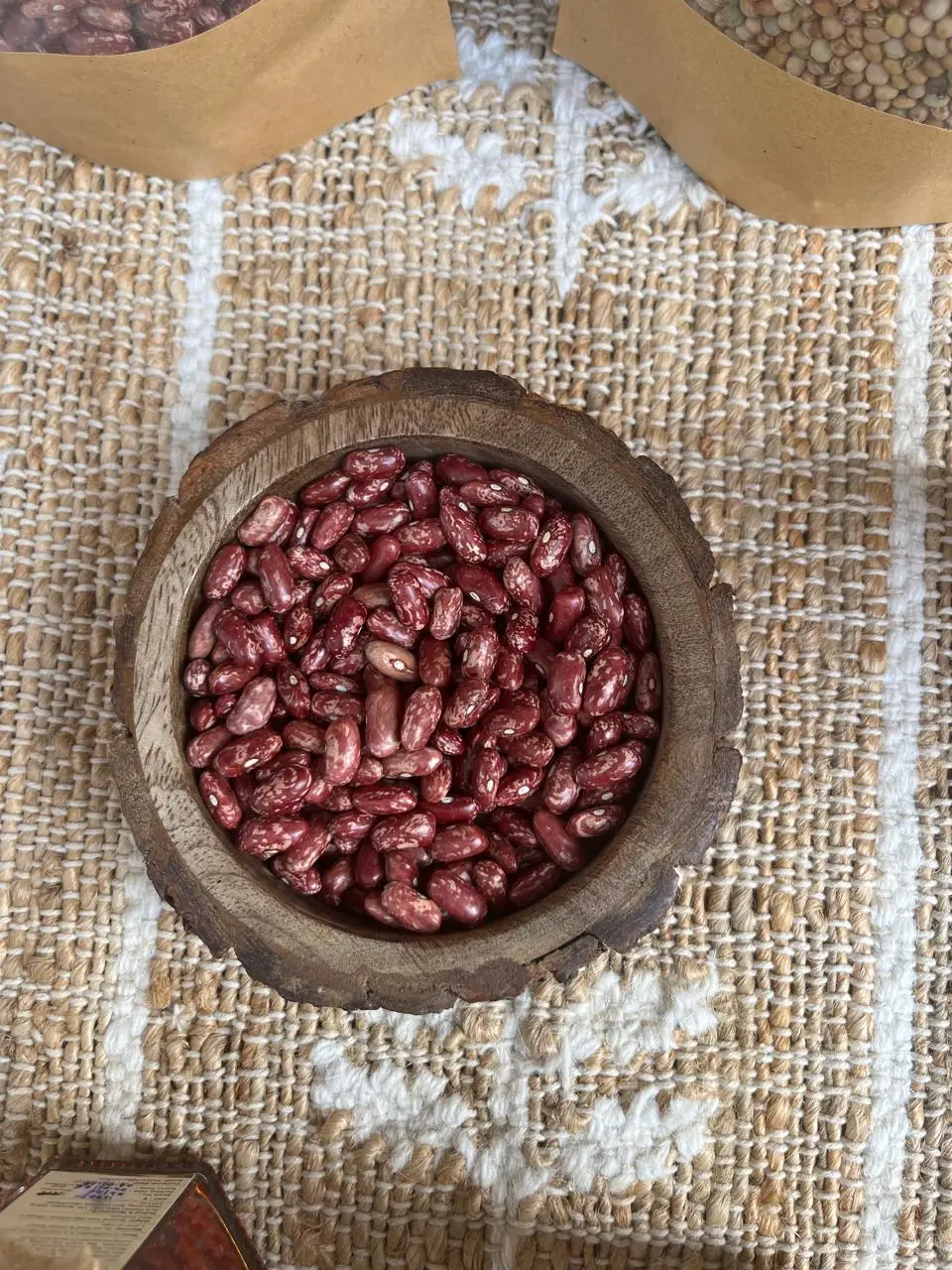
Pahadi rajma vs regular rajma — if you have cooked both, you already know the difference without needing anyone to explain it. The colour is deeper. The aroma while cooking fills the kitchen differently. And the texture — creamy inside, holding its shape outside — is simply not the same thing as what comes in a supermarket packet.
But what actually creates this difference? And is the price premium worth it?
Here is an honest comparison.
In This Article
- What Is Pahadi Rajma?
- What Is Regular Rajma?
- Pahadi Rajma vs Regular Rajma — 5 Key Differences
- Why This Matters for Your Kitchen
- How to Cook Pahadi Rajma
- Where to Buy Authentic Pahadi Rajma Online
What Is Pahadi Rajma?
Pahadi rajma refers to kidney beans grown in the Himalayan belt — primarily across Uttarakhand districts like Chakrata, Bageshwar, Joshimath, Rudraprayag, and Munsyari, as well as parts of Kashmir.
These beans have been cultivated for generations by mountain farming communities using traditional methods — no synthetic fertilisers, no chemical pesticides, and no machine harvesting. Every batch is hand-picked at the right stage of ripeness, which is something large-scale commercial farming simply cannot do.
Altitude matters enormously here. Most pahadi rajma grows between 1,500 and 2,500 metres above sea level. At this elevation, the growing season is slower, the temperature swings between day and night are wider, and the soil is mineral-rich from centuries of organic matter and glacial deposits. These conditions concentrate flavour and nutrition in ways that flat-land farming cannot replicate.
What Is Regular Rajma?
The rajma you find in most supermarkets, kirana stores, and quick commerce platforms is typically grown in the plains — Punjab, Madhya Pradesh, or imported from Canada and Myanmar. It is grown at scale, often with chemical inputs, and harvested mechanically.
This is not inherently bad — it is affordable, widely available, and perfectly functional for everyday cooking. But it is a commodity product optimised for yield and shelf life, not for flavour or nutritional depth.
Pahadi Rajma vs Regular Rajma — 5 Key Differences
When comparing pahadi rajma vs regular rajma, five differences stand out consistently across every variety.
1. Flavour and Aroma
Pahadi rajma has a distinctly earthy, slightly nutty aroma that fills the kitchen while cooking. The flavour of the final dish is deeper and more complex — you need fewer spices to make a good gravy because the beans themselves contribute more.
Regular rajma tends to be milder and more neutral. It absorbs whatever spices you add but contributes little of its own character.
2. Cooking Time
This surprises most people — pahadi rajma actually cooks faster than regular rajma, despite being more flavourful. The reason is the thinner skin. Mountain varieties have a more delicate outer layer that softens quickly, even with shorter soaking times.
Regular commercial rajma often has a tougher skin that requires longer soaking — typically 8 hours or overnight — and more pressure cooking cycles.
3. Texture After Cooking
Pahadi rajma becomes creamy on the inside while holding its shape on the outside. This is the texture that makes a genuinely great rajma chawal — each bean is intact but melts slightly when you press it.
Commercial rajma can become either too firm or too mushy depending on cooking time, and it rarely achieves that balance naturally.
4. Nutrition
Because pahadi rajma grows slowly at high altitude in mineral-rich soil without chemical inputs, it retains higher levels of protein, iron, and dietary fibre. The slower growth cycle allows the bean to fully develop its nutritional profile in a way that a 6-month commercial crop cannot.
5. Variety and Origin
Pahadi rajma is not one thing — it is a family of distinct heirloom varieties, each with its own character:
- Chakrata Rajma — deep red, bold flavour, grown in the Chakrata hills of Uttarakhand
- Bageshwar White Rajma — creamy white, mild and buttery, known as the Pearl of Bageshwar
- Joshimath Chitra Rajma — speckled, grown at high altitude, considered a superfood variety
- Kashmiri Rajma Shopian — darker and earthier, from the Kashmir valley
Each variety tastes different because each valley has different soil, water, and climate. This is the same reason a Darjeeling tea tastes nothing like an Assam tea — terroir matters.
Regular supermarket rajma, by contrast, has no stated origin. It is a blend sourced from wherever is cheapest that season.
Why This Matters for Your Kitchen
If you cook rajma occasionally as a convenience meal, regular rajma does the job.
But if rajma is something you cook with care — for Sunday lunch, for guests, or simply because you take your food seriously — pahadi rajma makes a noticeable difference in every aspect of the dish.
The price difference — typically ₹50 to ₹150 more per 400g — works out to a few rupees per serving. For a dish that feeds four people, that is a negligible cost for a meaningfully better meal.
According to ICAR’s research on high-altitude legumes, pulse crops grown above 1500m consistently show higher protein and micronutrient content compared to plains varieties — a finding that aligns with what Pahadi communities have always known empirically.
How to Cook Pahadi Rajma
The difference between pahadi rajma and regular rajma extends to the kitchen process too:
- Soak for 4–6 hours — shorter than regular rajma thanks to the thinner skin
- Pressure cook for 3–4 whistles — less than you might expect
- The beans should be tender but holding their shape
- Use a simple masala — the beans do the work, so you do not need to overcomplicate the gravy
- Finish with a spoonful of ghee and serve with steamed rice
Where to Buy Authentic Pahadi Rajma Online
The challenge with buying pahadi rajma vs regular rajma online is that many sellers label ordinary commercial rajma as “pahadi” or “Himalayan” without any traceability. Look for sellers who can tell you the specific region of origin — Chakrata, Bageshwar, Joshimath — not just a generic Himalayan claim.
At Fyonli, every pahadi rajma variety is single-origin and traceable to a named growing region in Uttarakhand or Kashmir. We source directly from the farming communities who grow them, in small batches each season.
Shop our Himalayan Rajma collection →
Related products: