
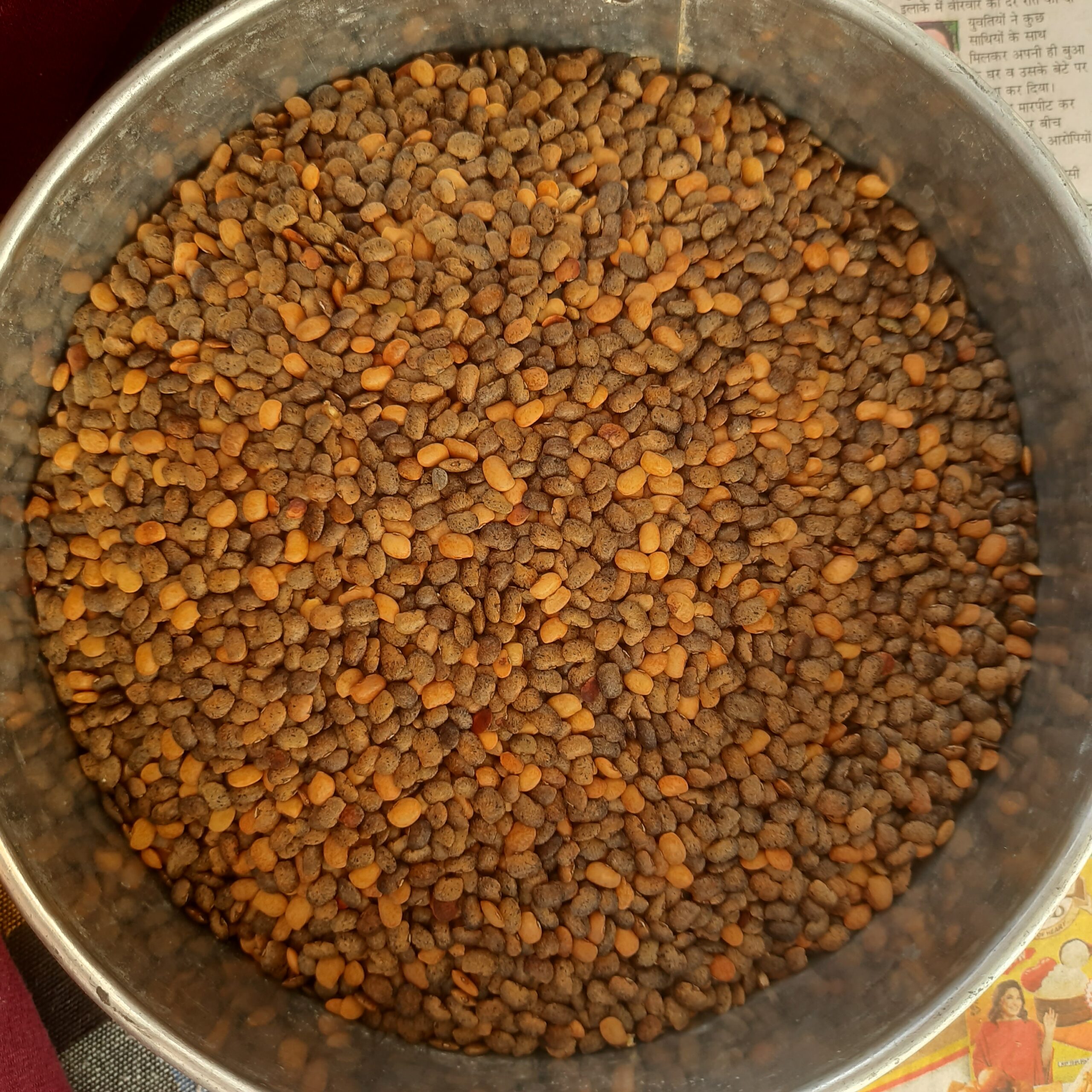
This article is the complete guide to gahat dal in English — what the plant is, where it comes from, why it is nutritionally exceptional, how Ayurveda has used it for centuries, and how to cook it simply at home.
In This Article
- What Is Gahat Dal Called in English?
- How Gahat Dal Compares to Other Common Dals
- 5 Reasons You Should Add Gahat Dal to Your Diet
- Gahat Dal Nutrition — What 100g Actually Gives You
- Where Gahat Dal Comes From — The Uttarakhand Story
- How to Cook Gahat Dal at Home
- Who Should Be Eating Gahat Dal?
- Frequently Asked Questions
What Is Gahat Dal Called in English?
Gahat dal is called horse gram in English. The name “horse gram” comes from its historical use as livestock fodder across the Indian subcontinent — but do not let that mislead you. Horse gram is an exceptional human food with a nutritional profile that most widely consumed pulses cannot match.
Its full scientific name is Macrotyloma uniflorum. It belongs to the legume family (Fabaceae) and is one of the few pulses that grows reliably in poor, rocky, rain-fed soil — including the terraced hillside farms of the Himalayan belt where few other crops survive without irrigation.
It is known by different names across India:
- Gahat — Garhwal and Kumaon, Uttarakhand
- Kulthi — North India (general Hindi)
- Kollu — Tamil Nadu
- Ulavalu — Andhra Pradesh and Telangana
- Hurali — Karnataka
- Horse gram — English (the universal reference)
Same pulse, many names — but gahat from Uttarakhand carries a specific identity: grown at altitude, in Himalayan mineral-rich soil, by Pahadi farmers who have tended these hillside fields without synthetic inputs for generations.
How Gahat Dal Compares to Other Common Dals
Most Indian kitchens rotate through 4 or 5 dals — masoor, moong, arhar, chana, rajma. Gahat dal sits outside this rotation for most urban households. That is a nutritional gap worth closing. Here is how it compares:
| Dal | Protein (per 100g) | Iron | Fibre | Glycaemic Index |
|---|---|---|---|---|
| Gahat Dal (Horse Gram) | 22–24g | ~7mg | ~5g | Low |
| Masoor Dal | ~25g | ~7mg | ~11g | Low–Med |
| Moong Dal | ~24g | ~6mg | ~16g | Low |
| Arhar (Toor) Dal | ~22g | ~5mg | ~15g | Medium |
| Chana Dal | ~20g | ~5mg | ~17g | Low |
Where gahat dal truly stands apart is not just in its numbers — it is in its specific therapeutic properties. No other common Indian dal has the same Ayurvedic and clinical evidence behind kidney health, blood sugar management, and diuretic function. That combination is unique to horse gram.
5 Reasons You Should Add Gahat Dal to Your Diet
1. It Is the Best Pulse for Kidney Stone Prevention
This is gahat dal’s most well-documented traditional use — and where modern science most directly supports traditional practice. Gahat contains polyphenols that inhibit the formation of calcium oxalate crystals (the most common kidney stone type) and exerts a strong diuretic effect that increases urine flow. The traditional Uttarakhand practice of drinking overnight soaking water from gahat on an empty stomach each morning is a folk remedy that Ayurveda formalised and research has since validated.
2. It Manages Blood Sugar Better Than Most Dals
Gahat dal has a genuinely low glycaemic index — it releases energy slowly, avoids blood sugar spikes, and keeps you full for longer after meals. The combination of high protein, dietary fibre, and complex carbohydrates makes the post-meal glucose response from gahat significantly more stable than from most other pulses. For people managing Type 2 diabetes or insulin resistance, it is one of the most suitable dals available.
3. It Delivers 22–24g of Protein Per 100g
At 22–24g of protein per 100g, gahat dal horse gram is among the highest-protein pulses available in India. For vegetarians relying on dal as their primary protein source, this is meaningful — you get more protein per gram from gahat than from many of the dals currently in your kitchen.
4. It Is One of the Richest Vegetarian Sources of Iron
Gahat dal contains approximately 7mg of iron per 100g — among the highest iron values of any commonly available Indian pulse. For women with high iron requirements, vegetarians managing low haemoglobin, or anyone experiencing fatigue linked to iron deficiency, gahat is a genuinely useful food rather than just an interesting regional ingredient.
5. It Supports Weight Management Through Sustained Fullness
The high fibre and protein in gahat dal creates prolonged satiety — you feel full for longer without eating more. Ayurvedic texts describe gahat as having Medohara properties — the ability to help reduce excess body fat. In practical terms, replacing a lighter dal with gahat in your weekly rotation is a simple way to reduce hunger between meals without any other dietary change.
For the complete breakdown of all 7 health benefits and the full Ayurvedic case for kidney stone support, see: Gahat Dal Horse Gram — 7 Proven Benefits Including Kidney Stone Relief.
Gahat Dal Nutrition — What 100g Actually Gives You
Per 100g of raw gahat dal (horse gram):
- Calories: 321 kcal
- Protein: 22–24g
- Carbohydrates: 57g (complex, slow-release)
- Dietary Fibre: ~5g
- Fat: 0.5g
- Iron: ~7mg (approximately 39% of daily requirement)
- Calcium: ~287mg
- Phosphorus: ~311mg
- Vitamin C: present (rare for a dried pulse)
- Glycaemic Index: Low
Three things stand out: protein is among the highest of any Indian dal; iron at ~7mg per 100g puts it above most other pulses; and calcium at ~287mg per 100g is exceptionally high for a dried legume. You get all three in one food — which is uncommon in the plant world.
Where Gahat Dal Comes From — The Uttarakhand Story
Gahat has been grown in Uttarakhand for over 2,000 years. In the hill districts of Tehri Garhwal, Chamoli, Pauri Garhwal, and across Kumaon, it grows on rain-fed terraced farms at altitudes between 600 and 2,000 metres — without irrigation, without synthetic fertiliser, and often without any external inputs at all.
This growing environment matters. Crops grown at altitude in cold, rocky Himalayan soil develop differently from the same crop grown on flat, irrigated plains. Lower temperatures, higher UV exposure, mineral-rich mountain soil, and slow maturation produce a denser grain with a more concentrated nutritional profile. The mountain conditions are not incidental to the nutrition — they are the reason for it.
In traditional Pahadi households, gahat dal was the winter pulse — cooked into thick, slow-simmered curries during the coldest months when warming, sustaining food was the priority. The thick gravy of gahat dal served with rice or roti was not a dish of poverty. It was Himalayan food intelligence: a pulse that thrives in the hardest conditions and rewards the people who eat it.
How to Cook Gahat Dal at Home (Simple and Digestible)
The most common thing people say about gahat dal the first time they cook it: it needs proper soaking. That is true. But done correctly, it produces one of the most flavourful, hearty dals you will make.
Step 1 — Soak Overnight (This Step Is Not Optional)
Soak gahat dal in plenty of cold water for 8–12 hours. The grains will absorb water and soften significantly. If you have been told gahat is difficult to cook, insufficient soaking is almost certainly the reason. A properly soaked gahat dal cooks as easily as rajma.
Step 2 — Pressure Cook
Drain and rinse the soaked dal. Add to a pressure cooker with fresh water (1:3 ratio). Cook on medium heat for 4–5 whistles. The dal is ready when the grains are fully soft and the liquid has thickened slightly.
Step 3 — Make the Tadka
Heat ghee in a heavy pan. Add cumin seeds, dried red chillies, crushed garlic, and thinly sliced onion. Fry until golden. Add a tomato and cook until it breaks down. Add turmeric, coriander powder, and a pinch of asafoetida (hing). Combine with the cooked dal, salt to taste, and simmer on low heat for 10–12 minutes. Finish with garam masala and fresh coriander.
The result is a thick, earthy, deeply satisfying dal — nothing like the mild, watery versions that come from lighter pulses. This is a dal with real character.
Traditional Uttarakhand variation: Pahadi cooking uses minimal water, generous ghee, and slow cooking over low heat. The tadka uses jakhiya seeds — often called wild Himalayan mustard seeds, though botanically unrelated to mustard — alongside or instead of cumin, giving the finished dish its distinctly Garhwali flavour and aroma.
Who Should Be Eating Gahat Dal?
- Anyone with a history of kidney stones — the most evidence-backed dietary support from a pulse, used in Uttarakhand for this purpose for centuries
- People managing Type 2 diabetes — low-glycaemic, high-protein, high-fibre; one of the most diabetes-appropriate dals in the Indian pantry
- Vegetarians looking for high protein — 22–24g per 100g, among the highest of any Indian pulse
- Women and anyone managing low iron — approximately 7mg iron per 100g, one of the richest plant sources available
- Those managing weight — high fibre and protein sustain fullness; Ayurveda identifies Medohara (fat-reducing) properties
- Anyone eating for long-term health — a 2,000-year-old food with an unbroken track record of nourishing Himalayan communities
Frequently Asked Questions About Gahat Dal
What is gahat dal called in English?
Gahat dal is called horse gram in English. Its scientific name is Macrotyloma uniflorum. It is the same pulse known as Kulthi in Hindi, Kollu in Tamil, Ulavalu in Telugu, and Hurali in Kannada.
Is gahat dal the same as kulthi?
Yes. Gahat and Kulthi are the same pulse — horse gram. Gahat is the name used in Uttarakhand’s Garhwali and Kumaoni dialects; Kulthi is the general Hindi name. The grain, its nutritional properties, and its Ayurvedic uses are identical.
Does gahat dal really help with kidney stones?
Yes — gahat dal has the strongest traditional and scientific evidence of any pulse for kidney stone support. Its diuretic properties increase urine flow; its polyphenols inhibit calcium oxalate crystal formation. The traditional practice of drinking overnight soaking water on an empty stomach is well-documented in Ayurvedic texts and supported by modern research. It is a dietary support, not a substitute for medical treatment.
How long should I soak gahat dal before cooking?
Soak gahat dal for 8–12 hours before cooking — overnight is the standard. It is a dense grain that does not soften adequately without sufficient soaking. After soaking, it cooks in a pressure cooker in 4–5 whistles. Do not try to cook it without soaking first.
Who should avoid gahat dal?
Gahat dal is safe for most people. It is relatively high in purines — a consideration for people with gout. It is iron-rich, so those with haemochromatosis (iron overload) should monitor intake. People with advanced chronic kidney disease (as distinct from kidney stones) should consult a doctor before significantly increasing their pulse intake.
Want the kidney stone deep-dive? See Gahat Dal for Kidney Stones — What Ayurveda and the Evidence Say for the traditional broth preparation, proposed mechanisms, and safety guidance.
Looking for the same guide on another Himalayan pulse? See Toor Dal vs Arhar Dal vs Pahadi Toor Dal for the naming confusion around pigeon pea, and what actually separates hill-grown, unpolished toor dal from standard commercial dal.
Curious about the tadka itself? See Jakhya vs Rai (Mustard Seeds) for why Garhwali kitchens temper their dal with jakhiya instead of mustard seeds — and why the two are not the same spice at all, despite the name.