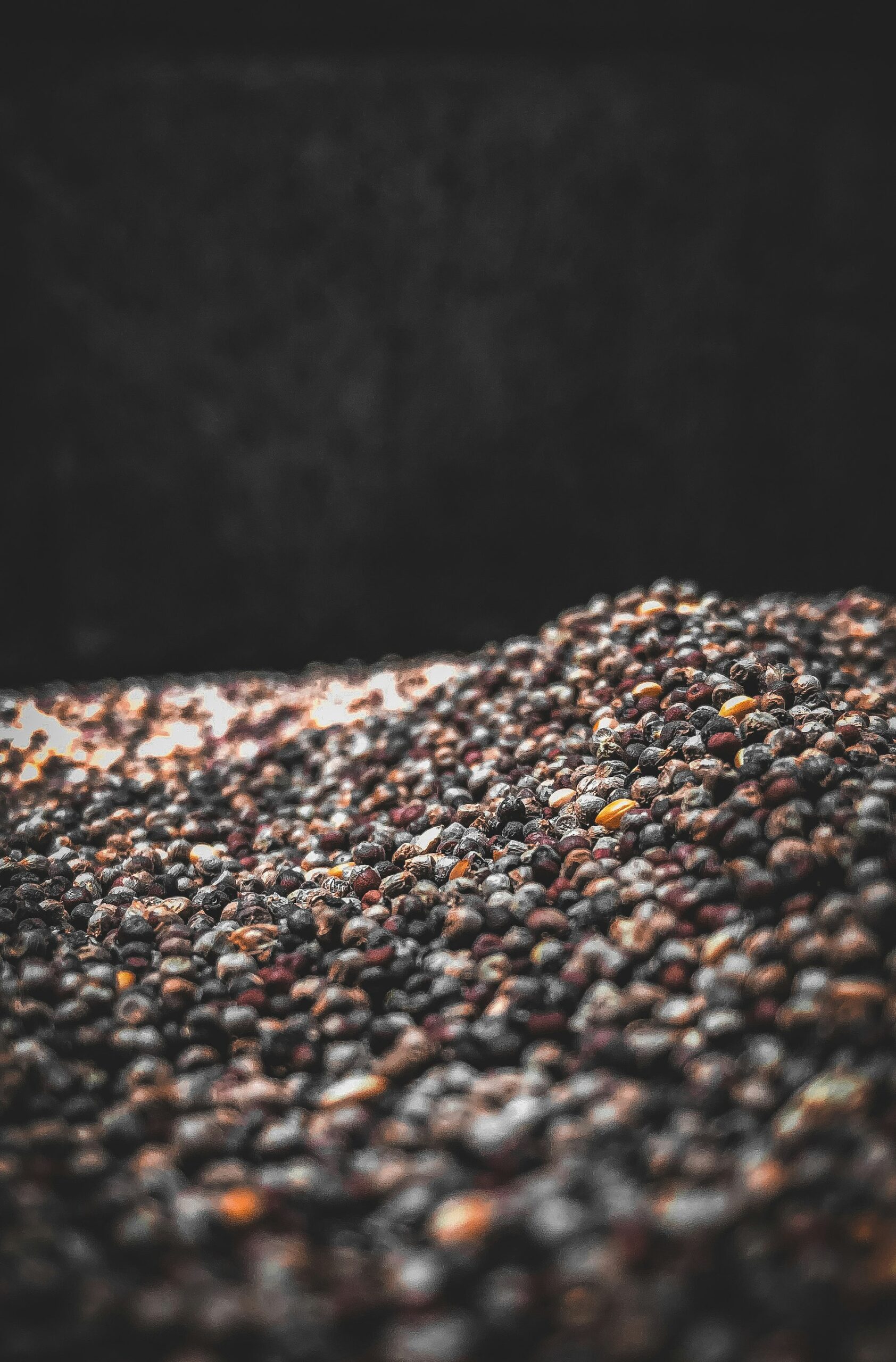
If you have searched “mandua vs ragi” or “is mandua the same as ragi,” you are asking the right question — and the confusion is completely understandable. These two names appear constantly across Indian food writing, nutrition articles, and product labels, often in a way that implies they are different grains. They are not.
Mandua and ragi are the same grain. Both are regional names for finger millet — Eleusine coracana — a single cereal species that goes by different names depending on where in India you are standing. The name “mandua” is used across the Himalayan belt of Uttarakhand and Himachal Pradesh. The name “ragi” is used across Karnataka, Tamil Nadu, and Andhra Pradesh. Same grain, different geography, different vocabulary.
That said, there are some real, meaningful differences between Uttarakhand mandua and South Indian ragi — not in species, but in terroir: altitude, soil, growing cycle, flavour, and nutritional density. This article explains exactly what those differences are, why the naming confusion exists, and what you should look for if you want the highest-quality finger millet available in India.
In This Article
- The Short Answer: Mandua and Ragi Are the Same Grain
- What Is Finger Millet (Eleusine coracana)?
- Where Does the Name Mandua Come From?
- Where Does the Name Ragi Come From?
- Finger Millet Names Across India — A Complete Regional Map
- Mandua in English: What Is the Correct Translation?
- Are Mandua and Ragi Actually Different? The Terroir Argument
- Can You Use Mandua Flour and Ragi Flour Interchangeably?
- Where to Buy Authentic Uttarakhand Mandua Flour
- Frequently Asked Questions
The Short Answer: Mandua and Ragi Are the Same Grain
Mandua and ragi are two regional names for the same cereal grain: finger millet, scientifically classified as Eleusine coracana. There is no botanical distinction between them. A bag labelled “mandua flour” and a bag labelled “ragi flour” contain flour ground from the same species of grain — provided both are whole, unadulterated finger millet.
The confusion arises because India is a linguistically diverse country with dozens of distinct regional food vocabularies, and finger millet has accumulated a different name in almost every language it has been part of for centuries. When a South Indian health article says “ragi” and a Pahadi food brand says “mandua,” they are talking about the same thing. The disconnect is purely geographical and linguistic, not botanical.
Where genuine differences do exist — and they are worth understanding — they relate to growing conditions, not species. Finger millet grown at altitude in the Himalayas and finger millet grown on flatlands in Karnataka are the same plant in different environments. That environment produces measurable differences in the grain’s density, flavour, colour, and mineral content. These are terroir differences, exactly as you might find between wine grapes grown in two different regions.
What Is Finger Millet (Eleusine coracana)?
Finger millet is a cereal grain in the grass family (Poaceae), domesticated in the highlands of East Africa — likely in the Ethiopian and Ugandan region — approximately 5,000 years ago. From Africa, it travelled along ancient trade routes into South Asia, reaching the Indian subcontinent at least 3,000 years ago, possibly earlier.
The name “finger millet” comes from the shape of its mature seed head. The grain head branches into five to six long, curved spikes radiating outward from a central point — resembling the outstretched fingers of a hand. Each spike is dense with tiny seeds, typically 1–2mm in diameter, ranging in colour from pale cream through reddish-brown to nearly black-purple depending on the variety and growing conditions.
Nutritionally, finger millet is one of the most exceptional cereal grains in existence. It contains more calcium than any other cereal grain — approximately 344mg per 100g, compared to milk’s 120mg per 100ml. It has significant iron content (3.9mg per 100g), a low glycaemic index (approximately 54), and a good dietary fibre profile. In Uttarakhand, it has been the nutritional backbone of mountain communities for millennia — given to children for bone development, to pregnant women for iron and calcium, and to elders for sustained energy.
Today, finger millet is grown across Africa, South Asia, and parts of Southeast Asia. In India, the two primary cultivation zones are the Himalayan hill belt (producing mandua) and the Deccan plateau and southern states (producing ragi). Same species, different latitudes, different altitudes, different terroir.
Where Does the Name Mandua Come From?
Mandua (sometimes spelled mandwa, madua, or marua) is the name for finger millet used across the Himalayan hill states of Uttarakhand and Himachal Pradesh. The word is rooted in Garhwali and Kumaoni — the two major dialect groups of Uttarakhand — and is one of the oldest food vocabulary words in the mountain region. Similar forms of the name appear in Nepali (where the grain is called kodo or marwa) and in certain eastern Himalayan dialects.
In Uttarakhand, mandua is one of the three foundational crops of the traditional Pahadi farming system, alongside jhangora (barnyard millet) and gahat (horse gram). It grows on rain-fed terraced fields at altitudes between 1,000 and 2,500 metres, sown in June after the first monsoon rains break and harvested between October and November. The grain has been central to Uttarakhand’s food culture for as long as the region has been farmed — appearing as mandua roti, mandua kheer, and mandua sattu across generations of Pahadi cooking.
Uttarakhand mandua is typically darker in colour than flatland ragi — a deep reddish-brown to near-purple — which reflects both the variety grown and the higher mineral absorption possible in mountain soils. The flavour is earthier and slightly more complex than commercially grown South Indian ragi, a difference most people who have cooked with both notice immediately.
Where Does the Name Ragi Come From?
Ragi is the name for finger millet dominant across Karnataka, Tamil Nadu, Andhra Pradesh, and Telangana. It comes from the Kannada word ರಾಗಿ (rāgi), which has become the grain’s default name in South Indian cooking and, increasingly, in pan-India health food marketing.
South India is India’s largest finger millet producing zone. Karnataka alone accounts for approximately 58% of the country’s total finger millet production, with Tamil Nadu and Andhra Pradesh contributing significant additional volumes. The grain is grown on the Deccan plateau at elevations generally below 800 metres — a fundamentally different growing environment from the Himalayan belt.
In South Indian cooking, ragi appears as ragi mudde (steamed balls eaten with sambar), ragi dosa, ragi porridge (kanji), ragi malt, and ragi idli. The grain is so deeply embedded in South Indian food culture that “ragi” has become the default term used in most national health food brands, nutritional databases, and English-language nutrition content produced in India — which is part of why northern consumers searching for mandua encounter ragi terminology and vice versa.
Because South Indian production volumes are so much larger than Himalayan production, most “ragi flour” sold in Indian supermarkets and online marketplaces comes from Karnataka or Tamil Nadu flatland cultivation — not from mountain-grown sources.
Finger Millet Names Across India — A Complete Regional Map
Finger millet has been cultivated across the subcontinent for long enough to accumulate a different name in almost every regional language. Here is a complete reference:
| Region / Language | Local Name for Finger Millet |
|---|---|
| Uttarakhand (Garhwali / Kumaoni) | Mandua, Madua, Mandwa, Marua |
| Himachal Pradesh | Mandua, Marua |
| Karnataka (Kannada) | Ragi, Raagi |
| Tamil Nadu (Tamil) | Kezhvaragu, Keppai |
| Andhra Pradesh / Telangana (Telugu) | Ragi, Ragulu |
| Maharashtra (Marathi) | Nachni, Nagali |
| Gujarat (Gujarati) | Nagli, Bavto |
| Odisha (Odia) | Mandia, Mandal |
| Bihar / Jharkhand | Marua, Manduwa |
| West Bengal (Bengali) | Marua |
| Nepal (Nepali) | Kodo, Marwa |
| Hindi (general) | Ragi, Mandua |
| English | Finger Millet |
| Scientific name | Eleusine coracana |
The diversity of names reflects how widely — and independently — this grain was integrated into regional food cultures across the subcontinent. Each region named it in its own language; no single name became dominant nationally the way “wheat” or “rice” did in English. The result is a grain with one identity and many names, creating confusion for anyone who encounters it across regional contexts.
Mandua in English: What Is the Correct Translation?
The correct English term for mandua is finger millet. This is the standard scientific and commercial English name used internationally, and it applies equally to mandua, ragi, nachni, and every other regional name for Eleusine coracana.
Some sources use the term “African millet” — which reflects the grain’s East African origin — but this term is not standard and is rarely used in Indian nutritional or food contexts. “Finger millet” is the correct, widely understood English translation for mandua.
If you search “mandua in English” and reach a result that says “finger millet,” that is accurate. If you then search “ragi in English” and get the same answer, that is also accurate — because mandua and ragi are the same grain.
A note on common alternate spellings: mandua appears in health food writing as mandwa, mandua, madua, and marua. All refer to the same grain. The variation reflects the transliteration of Garhwali and Kumaoni into the Roman alphabet, where no single standardised spelling exists.
Are Mandua and Ragi Actually Different? The Terroir Argument
This is the most important nuance in the mandua vs ragi question — and the part most food writing gets wrong by treating it as binary.
Mandua and ragi are botanically identical. They are the same species, Eleusine coracana. You cannot look at a plant and determine whether it is “mandua” or “ragi” — the distinction is entirely in where it was grown.
But where it was grown matters in ways that are real, measurable, and significant for the quality of what you eat. This is the same principle that makes Darjeeling tea different from Assam tea, or Coorg coffee different from Chikmagalur coffee. Same species, different terroir — and terroir produces genuinely different products.
Altitude and Growing Cycle
Uttarakhand mandua grows between 1,000 and 2,500 metres above sea level on rain-fed terraced fields. At this altitude, temperatures are cooler, growing seasons are shorter, and the grain matures more slowly than in lowland cultivation. South Indian ragi grows primarily at elevations below 800 metres on the Deccan plateau, where warmer temperatures allow faster crop cycles.
Slower maturation at altitude means the grain spends more time absorbing minerals from the soil. This extended mineral uptake period — combined with the higher mineral concentration in Himalayan soils, which receive glacial mineral input — produces a denser, more mineral-rich grain than fast-cycle flatland cultivation.
Colour and Flavour
Uttarakhand mandua is typically darker in colour — a deep reddish-brown to near-purple — compared to commercially grown South Indian ragi, which tends toward a lighter reddish-tan. The darker colour in Himalayan mandua is associated with higher polyphenol content in the seed coat, which contributes to both the colour and the grain’s antioxidant properties.
The flavour difference is noticeable to anyone who cooks with both. Uttarakhand mandua has a distinctly earthier, slightly more robust flavour compared to standard commercial ragi flour, which tends to be milder and more neutral. Pahadi cooks describe mandua as having a natural depth that doesn’t require additional seasoning to carry a flatbread.
Nutritional Density
The nutritional difference between mountain-grown mandua and flatland ragi is not dramatic, but it is consistent with what the altitude and soil research on mountain-grown crops generally shows: higher mineral density, slightly higher polyphenol concentration, and more complex micronutrient profiles in mountain-grown grain compared to commercially produced flatland equivalents.
This is not a vendor claim — it reflects the well-documented relationship between altitude, mineral bioavailability in soil, and crop nutritional density that applies across mountain-grown cereals globally. Uttarakhand mandua is nutritionally superior to generic supermarket ragi flour for the same reason that mountain-grown produce is generally more nutritious than commercially farmed equivalents: the growing environment genuinely produces a better product.
What This Means Practically
If you buy generic “ragi flour” from a large Indian FMCG brand, you are almost certainly getting flatland-grown South Indian finger millet. If you buy mandua flour from a Uttarakhand-specific food brand sourcing directly from hill farmers, you are getting mountain-grown finger millet with meaningful terroir differences in colour, flavour, and nutritional density.
The grain is the same species. But the quality difference is real, and it matters if you care about what you are eating.
Can You Use Mandua Flour and Ragi Flour Interchangeably?
Yes — for all cooking purposes, mandua flour and ragi flour are completely interchangeable. Any recipe that calls for ragi flour will work identically with mandua flour, and vice versa. The same proportions, the same preparation methods, the same cooking times.
The flavour difference between high-quality Uttarakhand mandua flour and generic commercial ragi flour is real but subtle — more noticeable in simple preparations (a plain mandua roti, a thin porridge) than in complex recipes where other ingredients dominate. If you switch to mountain-grown mandua flour in your ragi dosa, ragi porridge, or ragi ladoo recipes, the recipes will work exactly as written. You will likely notice a slightly earthier, fuller flavour and a darker colour in the finished product.
The only adjustment sometimes worth making is in water ratio: stone-ground mandua flour from whole grain tends to absorb slightly more water than industrially processed ragi flour. Start with the amount your recipe specifies and add small amounts as needed.
Where to Buy Authentic Uttarakhand Mandua Flour
If the distinction between mountain-grown mandua and generic flatland ragi matters to you — for flavour, nutritional density, or supporting Himalayan farming communities — source matters significantly. Most “ragi flour” available in Indian supermarkets and major e-commerce platforms comes from bulk South Indian production, not from Himalayan hill farmers.
Fyonli’s Mandua Flour is sourced directly from small-holder farmers in the hill districts of Uttarakhand — grown at altitude on rain-fed terraced fields, harvested by hand, and stone-ground to preserve the full nutrition of the whole grain. It is darker than commercial ragi flour, earthier in flavour, and grown in a way that supports the farming communities who have maintained this grain for over three thousand years.
If you want to explore the broader range of traditional Himalayan grains, Devprayag Jhangora — barnyard millet from the Devprayag region — is one of the natural companions to mandua in Uttarakhand’s traditional grain system. The two are often eaten together across seasons and pair well in modern mixed-grain cooking.
Frequently Asked Questions
Is mandua and ragi the same thing?
Yes. Mandua and ragi are two regional names for the same grain — finger millet (Eleusine coracana). Mandua is the name used in Uttarakhand and Himachal Pradesh; ragi is the name used in Karnataka, Tamil Nadu, and Andhra Pradesh. They are botanically identical.
What is mandua called in English?
Mandua is called finger millet in English. The scientific name is Eleusine coracana. “Ragi” is also widely understood in Indian English contexts, though it is technically a regional name rather than an English translation.
Is Uttarakhand mandua better than South Indian ragi?
They are the same species, but Uttarakhand mandua grown at altitude on mineral-rich mountain soil — and slow-matured over a full growing season — produces a measurably denser, more flavourful grain compared to commercially farmed flatland ragi. The difference is terroir, not taxonomy. For raw nutritional density and flavour quality, mountain-grown mandua from reputable Himalayan sources is generally superior to generic commercial ragi flour.
Can I use mandua flour instead of ragi flour in recipes?
Yes, completely interchangeably. Mandua flour and ragi flour are the same product from the same grain. Any recipe using one will work identically with the other. You may notice slightly more flavour depth and a darker colour with high-quality mountain-grown mandua flour compared to generic commercial ragi flour.
What are the other names for finger millet in India?
Finger millet is known as mandua or madua (Uttarakhand), ragi or raagi (Karnataka, Andhra Pradesh, Telangana), nachni or nagali (Maharashtra), kezhvaragu or keppai (Tamil Nadu), nagli or bavto (Gujarat), mandia (Odisha), and marua (Bihar, West Bengal, Nepal). All names refer to Eleusine coracana — the same grain.
Is mandua gluten-free?
Yes. Finger millet — whether called mandua, ragi, or nachni — is naturally gluten-free. It is one of the most nutritious gluten-free grain options available in India, with significantly higher calcium and iron content than most gluten-free alternatives such as rice flour or tapioca starch.
Is mandua good for diabetes?
Yes. Finger millet has a glycaemic index of approximately 54, classifying it as a low-GI food. It releases glucose slowly into the bloodstream, helping to avoid sharp post-meal blood sugar spikes. Multiple studies have confirmed finger millet’s benefit for blood sugar management in people with Type 2 diabetes and pre-diabetes. The polyphenols naturally present in the grain’s seed coat are believed to contribute additional anti-diabetic effects. See the full mandua millet benefits guide for more detail on the evidence behind this.
Curious about this same naming pattern in pulses? See Toor Dal vs Arhar Dal vs Pahadi Toor Dal for how the same regional-name confusion plays out with pigeon pea — and why unpolished, hill-grown toor dal is a genuinely different product from what most Indian kitchens buy.