
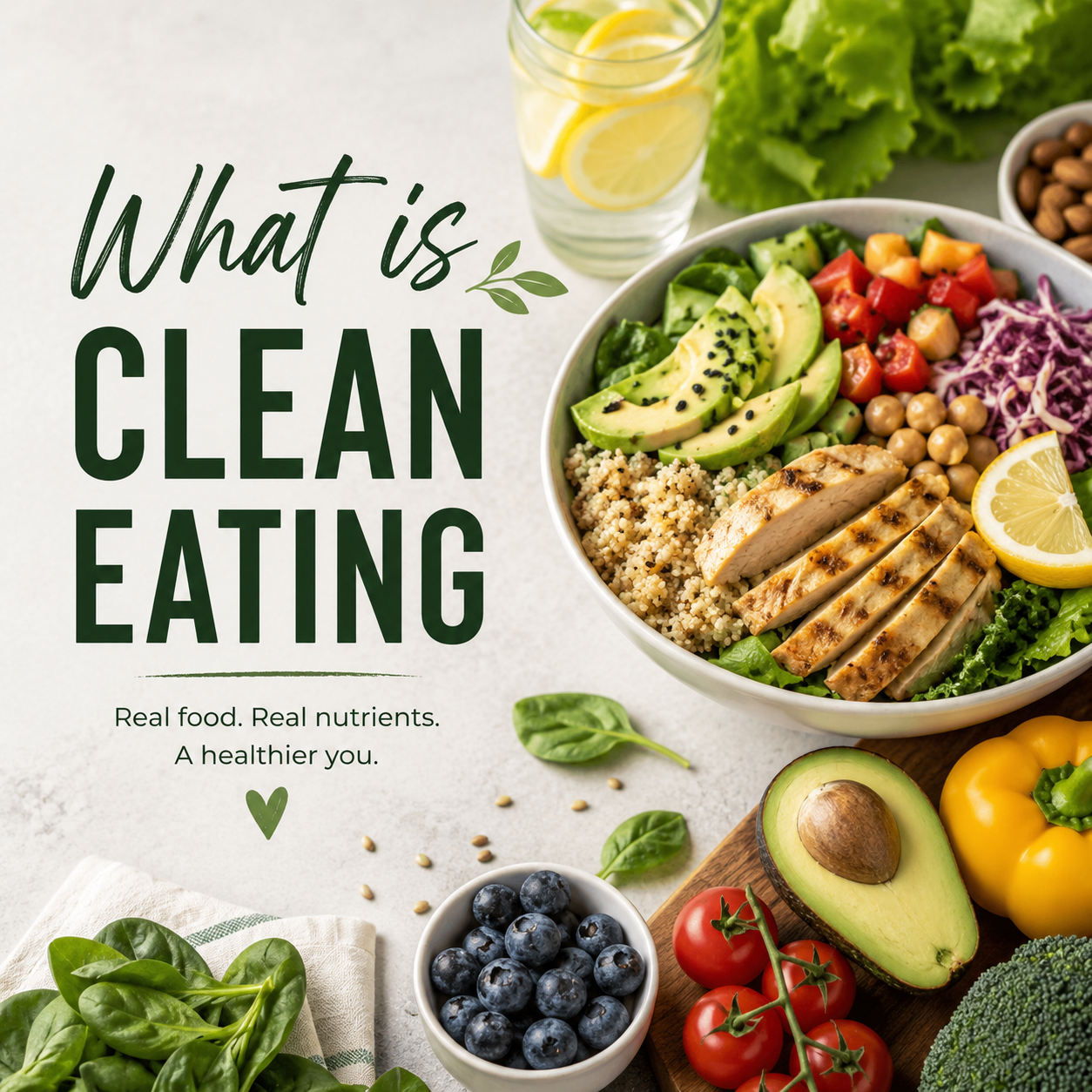
Clean eating is not a diet. It has no rules about carbohydrates, no banned food groups, and no requirement to eat anything that does not grow in India. At its simplest, clean eating means choosing food that is as close to its natural state as possible — minimally processed, without unnecessary additives, and grown or made in ways that do not leave a chemical residue on your plate. By that definition, a bowl of dal and rice with ghee is clean eating. Most of what your grandmother cooked every day was clean eating. The concept is not new. The name is.
In This Article
- What “Clean Eating” Actually Means (Without the Western Wellness Jargon)
- Indian Foods That Are Already Clean
- The 5 Biggest Sources of Unclean Food in an Indian Diet
- Simple Swaps: From Processed to Clean Without Overhauling Your Kitchen
- How to Read an Indian Food Label for Clean Eating
- Why Traditional Himalayan Ingredients Are Some of India’s Cleanest Foods
- Frequently Asked Questions
What “Clean Eating” Actually Means (Without the Western Wellness Jargon)
The Western wellness world has made clean eating more complicated than it needs to be. You will find definitions that require organic certification, that ban entire food groups, that insist on raw food or specific macronutrient ratios. Ignore all of that for the Indian context.
A practical working definition for an Indian kitchen:
- Clean food is food with a short, recognisable ingredient list — ideally ingredients you could buy separately and combine yourself
- Clean food is food that has not been stripped of its natural nutrition through heavy processing (refining, bleaching, extracting)
- Clean food is food grown or produced without excessive chemical inputs — pesticides, synthetic preservatives, artificial colours, flavour enhancers
- Clean food is food that comes from a supply chain short enough that it does not need wax coatings, extended cold storage, or artificial ripening agents to reach you looking fresh
This is not a radical or difficult standard. It simply describes how most Indian households ate before the mass arrival of packaged convenience food. The shift required is not towards a new way of eating — it is a return to a more deliberate version of the old one.
Indian Foods That Are Already Clean
Before focusing on what to change, it helps to recognise what is already working. If you are eating any of the following regularly, you are already practising clean eating without calling it that.
Whole Pulses and Dals
Whole masoor, moong, toor, chana, rajma, and regional dals cooked from scratch at home are clean foods. One ingredient. High protein, high fibre, no processing. Gahat dal (horse gram) from Uttarakhand, with its 22–24g of protein per 100g and traditional Ayurvedic history, is one of the cleanest and most nutritionally dense pulses available — here is a complete guide to gahat dal if you have not cooked with it before.
Whole Grains Cooked from Scratch
Brown rice, whole wheat roti, bajra roti, jowar bhakri, and millets like ragi, foxtail, and jhangora (barnyard millet) are clean grains. Jhangora in particular — Uttarakhand’s ancient barnyard millet with the highest dietary fibre of any commonly eaten millet — is a clean grain that most Indian households have simply never encountered because it never made it to the supermarket shelf.
Fresh Sabzi Cooked with Whole Spices
A simple sabzi made with vegetables, mustard seeds, cumin, turmeric, and coriander powder is clean food. Whole spices, a small amount of cold-pressed oil or ghee, and a fresh vegetable. No additives, no preservatives, no hidden ingredients. This is how most Indian home cooking already works — and it is nutritionally sophisticated in ways that Western clean eating guides have only recently begun to articulate.
Curd Made at Home
Home-set curd from whole milk contains billions of live probiotic bacteria, no thickeners, no added sugar, no preservatives. Two ingredients: milk and a spoonful of previous curd as a starter. It is one of the most nutritionally complete fermented foods in any cuisine. The commercial “dahi” in foil containers from the supermarket fridge is a distant, thickener-laden cousin of the real thing.
Khichdi
Khichdi — rice and dal cooked together with minimal spices — is regularly cited by nutritionists as one of the most nutritionally balanced single-dish meals in existence. It is a complete protein (rice amino acids complement dal amino acids), easy to digest, warming, and made from two whole ingredients. India’s ancient food science got this right long before modern nutrition had the vocabulary to explain why.
The 5 Biggest Sources of Unclean Food in an Indian Diet
1. Packaged Snacks and Namkeen
Biscuits, chakli, bhujia, instant noodles, packaged chips, and ready-to-eat snacks form a significant portion of the unclean food in most Indian households. A typical biscuit ingredient list includes refined flour (maida), hydrogenated vegetable fat, high-fructose corn syrup or invert syrup, artificial flavouring, and multiple E-number emulsifiers. Each ingredient individually is considered safe at regulatory limits; consumed daily across years, the cumulative additives profile of a biscuit-heavy diet is meaningfully different from food made from whole ingredients.
2. Refined Grains — Maida and Polished White Rice
Maida (refined wheat flour) has had the bran and germ stripped away — removing most of the fibre, B-vitamins, iron, and the slow-release carbohydrate structure that makes whole wheat a clean food. What remains is a high-GI starchy white powder that raises blood sugar rapidly. Heavily polished white rice has a similar profile. Neither is a poison — but neither is clean food. Replacing maida with whole wheat atta and switching from heavily polished white rice to hand-pounded or semi-processed varieties is one of the highest-impact single changes you can make.
3. Refined Cooking Oils and Vanaspati
Refined vegetable oils — soybean, sunflower, palm, cotton seed — undergo extraction with chemical solvents, deodorisation at high temperatures, and bleaching before reaching your kitchen. The refining process removes natural antioxidants and creates minor quantities of oxidised fatty acids. Vanaspati (partially hydrogenated vegetable fat, still widely used in commercial cooking and pastry) contains trans fats at levels that are associated with cardiovascular risk. Cold-pressed oils (groundnut, sesame, mustard, coconut) and ghee from quality milk retain their natural fatty acid profiles and antioxidants without the refining treatment.
4. Pesticide Residues in Fresh Produce
This is the unclean food source that most people do not think of when they hear “clean eating” — because the food looks fresh and natural. FSSAI surveillance data consistently shows that a significant proportion of Indian market vegetables and fruits carry pesticide residues, with some exceeding Maximum Residue Limits. Okra (bhindi), brinjal, chilli, tomato, grapes, and leafy greens are the highest-risk categories. We have covered this in detail in our piece on India’s Dirty Dozen — the highest-residue fruits and vegetables. Cleaning up this part of your diet requires either sourcing differently or washing more effectively — and cold water rinsing is not enough.
5. “Healthy” Packaged Products With Hidden Ingredients
This category is the most deceptive. Products marketed as healthy — packaged fruit juices, flavoured yoghurt, commercial protein bars, granola, multigrain biscuits, fortified breakfast cereals — often have ingredient lists that include high levels of added sugar, maltodextrin (a fast-digesting refined starch), artificial flavouring, and synthetic vitamins to compensate for the natural nutrition destroyed during processing. A carton of packaged fruit juice has more sugar and less fibre than the whole fruit. A flavoured yoghurt has more added sugar than a small dessert. Reading the ingredient list — not the marketing claim on the front of the pack — is the only way to assess what you are actually buying.
Simple Swaps: From Processed to Clean Without Overhauling Your Kitchen
| Instead of this | Choose this | What you gain |
|---|---|---|
| Maida-based biscuits / namkeen | Roasted makhana, peanuts, handful of dried fruit and nuts | No additives; natural fats, protein, fibre |
| Refined sunflower or soybean oil | Cold-pressed groundnut, mustard, or sesame oil; ghee | Natural antioxidants, unaltered fatty acid profile |
| Polished white rice daily | Hand-pounded rice 3–4 days/week + millet 1–2 days/week | Higher fibre, slower blood sugar release, more micronutrients |
| Packaged dal powder or instant dal | Whole dal soaked and cooked from scratch | Full nutrition intact; no preservatives or added starch |
| Commercial fruit juice in a carton | Whole fruit, or fresh-squeezed juice with no added sugar | Fibre retained; no sugar spike; no preservatives |
| Flavoured commercial yoghurt | Home-set curd with fresh fruit or a drop of honey | Live probiotics; no thickeners; no added sugar |
| Store-bought supermarket apple (waxed) | Local orchard variety in season; or wash properly with baking soda | No wax coating; no post-harvest fungicide treatment |
| Instant breakfast cereal | Whole grain porridge: daliya, ragi kanji, jhangora, or oats | No added sugar; natural fibre and micronutrients |
None of these swaps require a dramatically different cooking approach. They require a slightly different shopping list and the habit of reading ingredient labels. Most of them also cost less than the processed versions they replace.
How to Read an Indian Food Label for Clean Eating
FSSAI-regulated food labels in India contain a surprising amount of useful information once you know what to look for. Here is a practical filter for clean eating decisions at the supermarket:
Step 1 — Count the Ingredients
A clean food typically has 5 or fewer ingredients. A packaged biscuit might have 20. This is not an absolute rule — a good quality pickle might have 10 ingredients that are all whole and recognisable — but ingredient count is a useful quick filter. If the list requires two lines of small print, investigate further.
Step 2 — Identify Any Hidden Sugar
Added sugar on Indian food labels appears under many names: sucrose, invert syrup, glucose syrup, high-fructose corn syrup, maltose, dextrose, maltodextrin. If any of these appear in the first five ingredients, the product has a significant sugar load regardless of what the front-of-pack claim says. “No added sugar” on a product that contains invert syrup means exactly nothing.
Step 3 — Check for Refined Flour and Starch Bases
“Refined wheat flour” (maida) as the first ingredient means the product is built on a high-GI refined starch base regardless of any nutritional claims on the label. “Modified starch”, “corn starch”, and “maltodextrin” serve the same function — they are cheap, fast-digesting carbohydrates that extend shelf life and add texture without nutritional value.
Step 4 — Look for E-Numbers You Cannot Identify
Not all E-numbers are problematic — E300 is vitamin C; E330 is citric acid. But a label with multiple E-numbers you cannot identify or pronounce is a signal that the product requires significant chemistry to hold together, stay stable, or taste the way it does. Clean food does not need this. If you are buying something with E621 (monosodium glutamate), E110 (sunset yellow dye), or E102 (tartrazine), those are ingredients worth being aware of regardless of their regulatory status.
Why Traditional Himalayan Ingredients Are Some of India’s Cleanest Foods
There is a category of Indian ingredients that does not appear in supermarkets, does not require processing, does not need certification, and has been clean by default for thousands of years: traditional Himalayan mountain foods.
The grains, pulses, and spices grown on the terraced hillside farms of Uttarakhand are clean foods by structural necessity. Steep mountain terrain, rain-fed irrigation, and traditional farming knowledge have produced agricultural systems where synthetic chemical inputs were never the norm. The result is food with a different nutritional profile — denser, more mineral-rich, more slowly grown — and a different residue profile: close to none.
As we explain in detail in our piece on how altitude affects nutrition, the mountain growing conditions produce demonstrably different food at a biochemical level — higher in antioxidants, more mineral-dense, lower in the inflammatory compounds that accumulate in intensively farmed crops.
A few of the most nutritionally significant:
- Gahat Dal (Horse Gram) — 22–24g protein per 100g; used in Ayurveda for kidney stones and blood sugar; grown in Uttarakhand without synthetic inputs for over 2,000 years
- Jhangora (Barnyard Millet) — highest dietary fibre of any commonly eaten millet; low glycaemic index; gluten-free; fasting-approved; a natural rice substitute with a better nutritional profile
- Bhatt (Black Soybean) — approximately 40g of plant protein per 100g; one of the highest plant protein sources available in India; nearly unknown outside the Himalayan hills
- Mandua (Finger Millet) — 344mg of calcium per 100g, the most calcium-dense grain in the Indian diet; a direct, natural alternative to dairy for calcium supplementation
- Pahadi Haldi — mountain-grown turmeric with higher curcumin content than plains-grown commercial varieties; no processing, no adulterants
These are not specialty foods for people with unusual dietary needs. They are the everyday staples of Himalayan farming communities — foods that have nourished mountain villages for centuries. Their absence from modern urban Indian diets is a supply chain gap, not a cultural one.
Frequently Asked Questions
Is Indian food clean eating?
Traditional Indian home cooking is already clean eating by any reasonable definition. Dal, sabzi, roti, khichdi, curd, whole spices, ghee — these are whole, minimally processed ingredients with no additives. The problem is not Indian food. The problem is the modern Indian diet, which has incorporated significant packaged convenience food, refined flour products, and commercially processed snacks that sit well outside the tradition. Returning to home-cooked Indian food made from whole ingredients is one of the most effective clean eating approaches available.
What to avoid in clean eating for an Indian diet?
The five highest-impact things to reduce: refined wheat flour (maida) products; packaged snacks and biscuits with long ingredient lists; refined vegetable oils and vanaspati; packaged fruit juice and flavoured dairy products; and fresh produce from the high-residue categories — bhindi, brinjal, chilli, tomato, grapes (see our guide to India’s highest-pesticide produce). None of these require eating differently — they require buying differently.
Is ghee allowed in clean eating?
Yes — good quality ghee is a clean food. Made from a single ingredient (butter, clarified by slow heating), ghee contains no additives, no preservatives, and a stable fatty acid profile that does not degrade at Indian cooking temperatures the way refined polyunsaturated oils do. The concern about ghee in Indian diets is about quantity, not quality. Moderate use of real ghee in traditional cooking is nutritionally sound. The problem was never the ghee — it was the refined vegetable oils and vanaspati that displaced it.
Do I need to buy organic to eat clean in India?
Not necessarily. A more practical approach: use the Dirty Dozen list to identify the specific produce where organic or sourcing differently makes the most difference, and buy the Clean Fifteen conventionally. For staple grains and pulses, traditionally farmed mountain varieties from short supply chains offer a practical alternative to supermarket organic certification at a much lower cost.
Is clean eating expensive in India?
Clean eating from whole ingredients is almost always cheaper than the packaged convenience food it replaces. A kilogram of whole masoor dal cooked from scratch costs a fraction of the packaged “protein supplement” or flavoured dal mix that supermarkets sell. A bottle of cold-pressed groundnut oil costs more per litre than refined soybean oil, but most households use far less because its flavour is richer. The misconception that clean eating is expensive comes from conflating it with premium organic certification and Western superfoods — neither of which is necessary for an Indian kitchen.
Where to Start — Whole Himalayan Staples, Sourced Directly
The fastest way to eat clean without overhauling your kitchen is to replace one processed staple at a time with a whole, traceable equivalent. Fyonli sources dals, millets, and pulses directly from small-holder farming communities in Uttarakhand — single-ingredient, unpolished, and free of the additives and blending that packaged versions rely on.
Shop Whole Himalayan Staples →
Related: Ajwa Dates vs Medjool Dates: Which Is Actually Better for Daily Eating in India