
Description
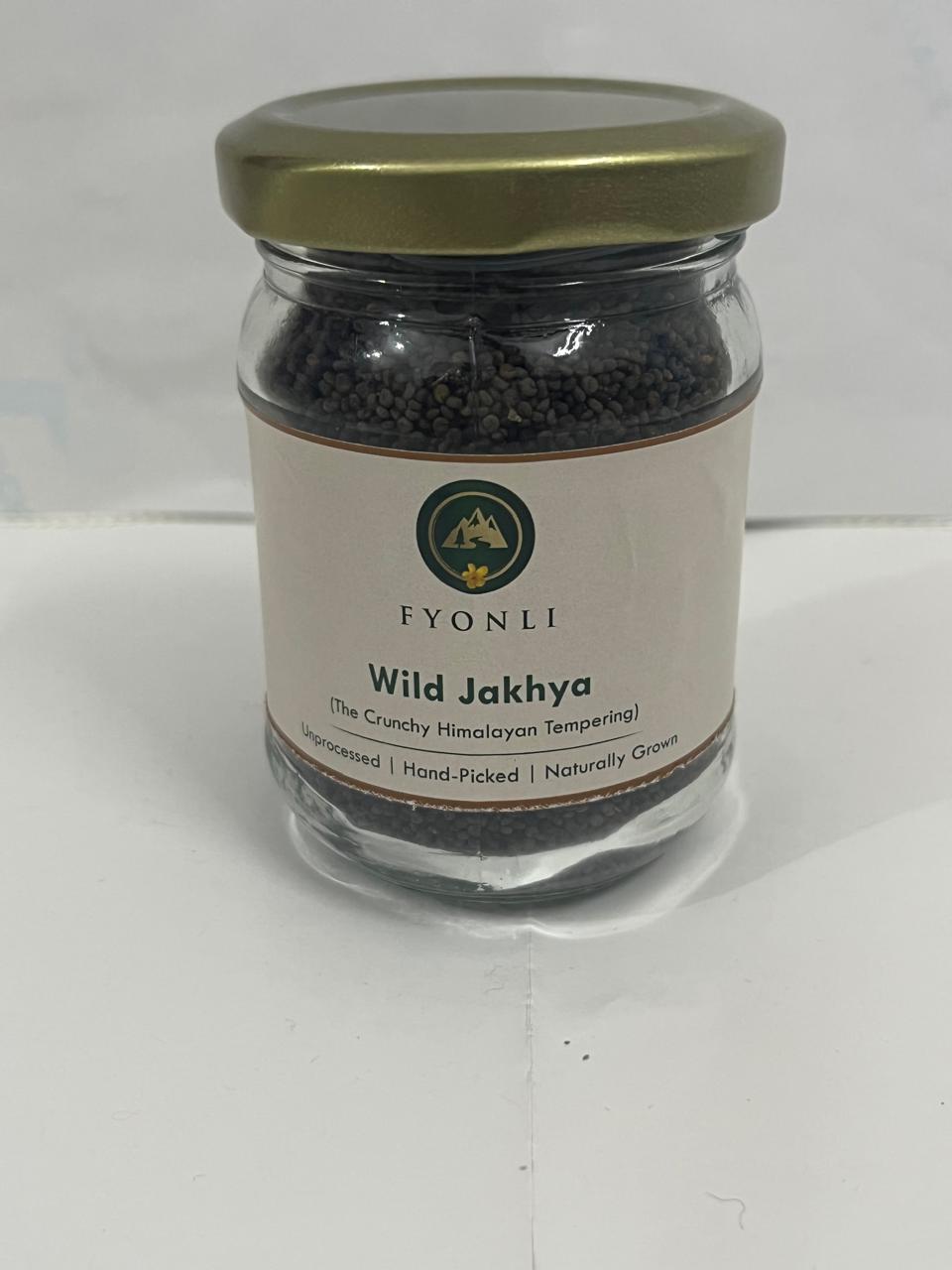
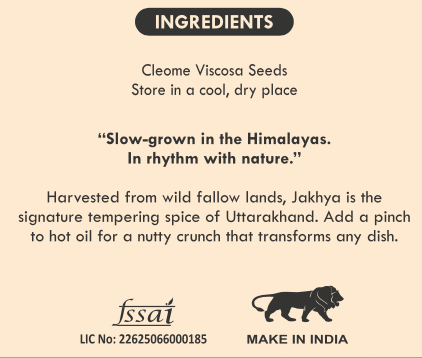
Slow grown in the Himalayas, in rhythm with nature. Harvested from wild fallow lands, Jakhya is the signature tempering spice of Uttarakhand. Add a pinch to hot oil for a nutty crunch that transforms any dish.What Is Wild Jakhya?
Wild Jakhya is the seed of Cleome viscosa, also known as wild mustard, foraged rather than farmed from fallow and abandoned fields across the Garhwal and Kumaon regions of Uttarakhand, at elevations between roughly 500 and 1,500 metres. It’s a signature tempering spice in Pahadi cooking — small, dark brown seeds that crackle and release a nutty, pungent aroma when tempered in hot oil, the same way mustard seeds are used elsewhere in India, but with a distinct flavour of its own. Fyonli sources it from local foragers in the region rather than a cultivated farm.Why This One Is Different
- Wild-foraged, not cultivated — grows naturally on fallow land rather than being farmed, so there’s no irrigation or chemical input at all
- A genuinely regional ingredient — Jakhya is rarely found outside Uttarakhand and the adjoining Terai region, unlike mass-market mustard seed
- Distinctive nutty crunch — the signature texture and aroma of authentic Garhwali and Kumaoni tempering
- No processing — cleaned and packed as harvested, nothing added
- Supports local foraging livelihoods — buying it directly keeps a genuinely traditional practice economically viable
Wild Jakhya vs. Regular Mustard Seed
| What You’re Buying | Regular Mustard Seed | Fyonli Wild Jakhya |
|---|---|---|
| Species | Cultivated mustard (Brassica species) | Cleome viscosa — a distinct, wild-foraged species |
| Origin | Widely cultivated nationwide | Foraged from fallow land, Garhwal/Kumaon, Uttarakhand |
| Growing method | Farmed, often with irrigation and inputs | Wild — no farming, no chemical inputs |
| Flavour | Sharp, pungent, familiar | Nutty, pungent, distinctly regional |
| Availability | Sold everywhere | Rare outside Uttarakhand and the Terai region |
Ingredients & Allergens
Ingredients: Wild Jakhya (Cleome Viscosa seeds). Nothing else — no added salt, oil, or preservatives.
Allergens: None known. Packed in a facility that also handles other seeds and spices.
How to Use
Temper a pinch in hot oil for a nutty crackle — perfect in potato stir-fries (Pahadi Aloo ke Gutke). Or dry-roast and grind into a coarse powder for raita, salads, and chutneys. A small amount goes a long way.
Sourcing & Story
Jakhya grows wild on fallow and abandoned agricultural land across the Garhwal and Kumaon hills of Uttarakhand, thriving without any deliberate cultivation. Local foragers gather the seed pods by hand once the plant matures through the monsoon and post-monsoon months. Because it’s wild rather than farmed, supply follows what the land actually produces each season rather than a planted, predictable harvest. Fyonli sources it through those local foragers rather than a commercial grower.Storage & Shelf Life
Store in an airtight container in a cool, dry place, away from direct sunlight and moisture. Does not require refrigeration. Best used within 12 months of the packing date.
Who It’s For
- Cooks chasing authentic Pahadi flavour — Jakhya is the real tempering spice behind classic Garhwali and Kumaoni dishes
- Anyone curious about regional Indian spices — a genuinely rare ingredient most of India has never cooked with
- Home cooks who want to recreate Pahadi Aloo ke Gutke properly — this is the seed that dish is built around
Frequently Asked Questions
What is Jakhya?
Jakhya is the seed of Cleome viscosa, also called wild mustard, foraged from fallow land across the Garhwal and Kumaon regions of Uttarakhand. It’s the signature tempering spice in Pahadi cooking, prized for the nutty crunch and aroma it releases when tempered in hot oil.
Is Jakhya the same as regular mustard seed?
No. Jakhya is Cleome viscosa, a different plant species from cultivated mustard (Brassica species). It’s wild-foraged rather than farmed, and has its own distinct nutty, pungent flavour — not a direct substitute for mustard seed in recipes.
How do I use Jakhya in cooking?
Temper a pinch in hot oil until it crackles — this is the classic base for Pahadi Aloo ke Gutke (potato stir-fry). It can also be dry-roasted and ground into a coarse powder for raita, salads and chutneys.
Is Jakhya cultivated or wild-harvested?
Wild-harvested. Jakhya grows naturally on fallow and abandoned agricultural land in the Garhwal and Kumaon hills — it isn’t planted or irrigated. Local foragers hand-harvest the seed pods once the plant matures.
What is the shelf life of Wild Jakhya?
Up to 12 months from the packing date when stored in an airtight container in a cool, dry place away from direct sunlight and moisture. Refrigeration isn’t required.
Curious about other rare Himalayan spices? Try Devprayag Bhangjeera, wild-foraged perilla seeds with the same regional heritage.