
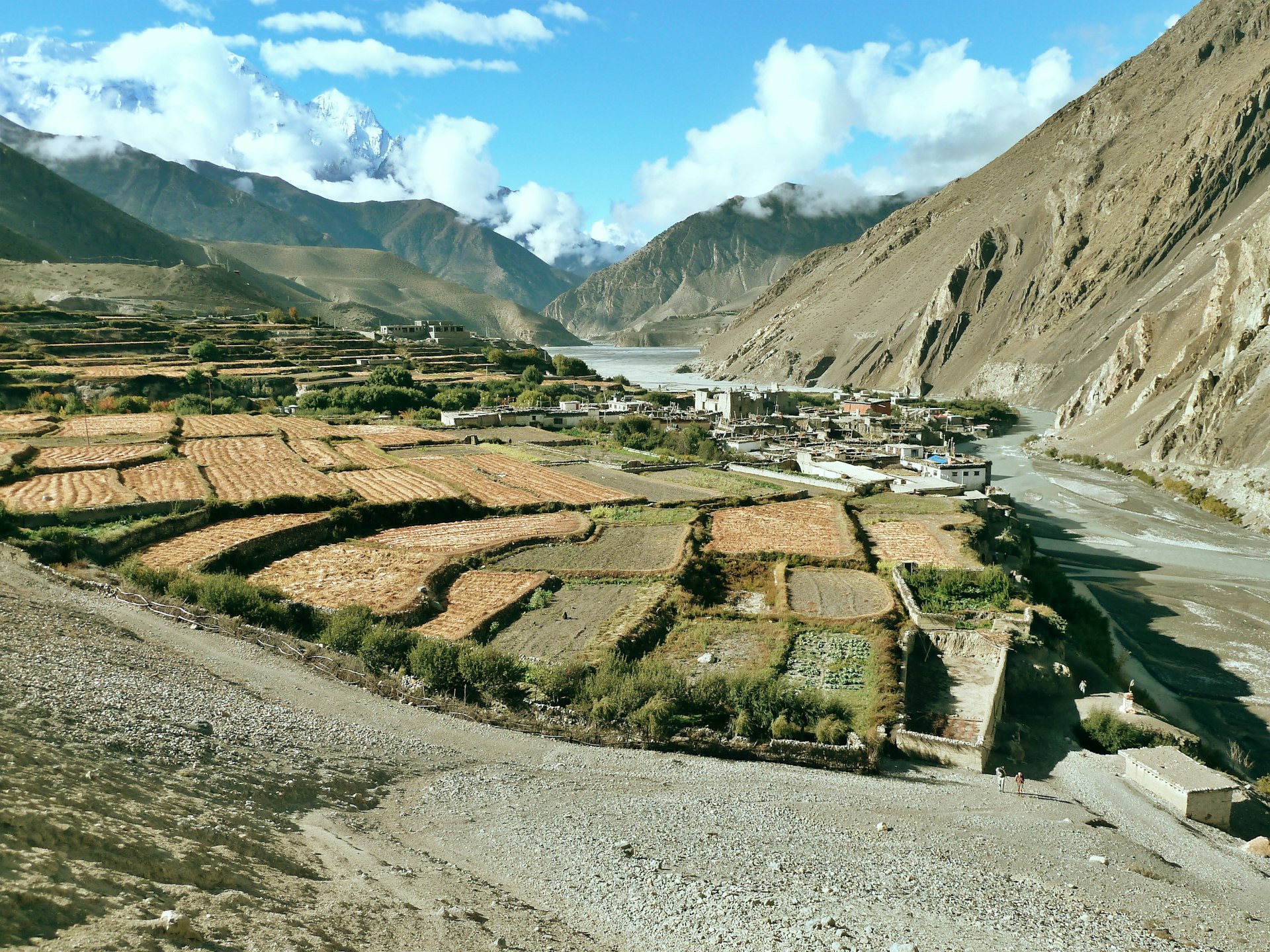
Ask any Pahadi farmer why mountain food tastes different from what you buy in the city, and they will not give you a scientific answer. They will just shrug and say: “Yahan ki mitti alag hai.” The soil here is different. They are not wrong — but the full story goes well beyond soil. How altitude affects nutrition is now one of the more studied areas in food and agricultural science, and the findings consistently support what mountain communities have always known instinctively: crops grown higher up are chemically richer, more complex, and more nutritious than the same crops grown at sea level.
This matters for Fyonli because every ingredient we source — bhatt black soybean, mandua finger millet, jhangora barnyard millet, bhangjeera perilla seeds, raw mountain honey — comes from farms between 1,000 and 2,400 metres above sea level in Tehri Garhwal and the surrounding hill districts. The altitude is not incidental. It is the mechanism. This article explains the five ways how altitude affects nutrition in the crops that grow there, what the research actually shows, and why provenance is not just a marketing word — it is a nutritional fact.
In This Article
- The Science: What Changes at High Altitude
- UV Radiation and Antioxidant Production
- Slow Growth and Nutrient Concentration
- Glacial Soil — Minerals at the Source
- Diurnal Temperature Range — Cold Nights, Warm Days
- Fewer Pests, Cleaner Chemistry
- The Himalayan Evidence: Five Crops and What the Data Shows
- A Balanced View: When Altitude Helps and When It Does Not
- What This Means When You Choose Food
- Frequently Asked Questions
The Science: What Changes at High Altitude
To understand how altitude affects nutrition, you first need to understand what changes in the environment as you climb. The answer is: almost everything that matters to a plant.
- UV-B radiation increases by approximately 4–10% for every 1,000 metres of altitude gained
- Temperature drops by roughly 6°C per 1,000 metres on average — but the swing between day and night temperatures widens dramatically
- Growing seasons shorten — crops take longer to mature and do so under more intense environmental stress
- Atmospheric pressure falls — reducing available carbon dioxide and increasing the plant’s metabolic workload
- Soil composition changes — mountain soils shaped by glacial erosion carry a different mineral profile than alluvial plains soils
- Pest pressure drops sharply — cold temperatures suppress insect populations and fungal pathogens
Each of these factors influences what a plant produces inside its cells — not just its size or yield, but its actual biochemical composition. How altitude affects nutrition operates through each of these five pathways simultaneously. The result is not a small marginal difference. In some cases — anthocyanin content, mineral density, protein concentration — the difference between altitude-grown and plains-grown versions of the same crop is 30–100%.
UV Radiation: More Stress, More Antioxidants
This is the most directly documented mechanism through which how altitude affects nutrition becomes a measurable advantage. Plants cannot move away from intense UV light. Instead, they produce UV-absorbing compounds in their leaves, skin and seeds — essentially a biological sunscreen. These compounds include flavonoids, anthocyanins, polyphenols and carotenoids: the exact same molecules that human nutrition research consistently links to anti-inflammatory, antioxidant and anti-cancer activity.
The higher the altitude, the more UV-B the plant is exposed to. The more UV-B, the more of these protective compounds the plant produces. This is not a conjecture — it is a well-replicated finding across dozens of crop types. A search of published studies on altitude and polyphenol content returns consistent findings: mountain-grown samples of the same species outperform lowland-grown samples on antioxidant activity across the board.
The clearest commercial example of how altitude affects nutrition through UV exposure is tea. Darjeeling tea — grown at 600–2,000 metres in the Himalayan foothills — is consistently higher in catechins and polyphenols than Assam tea grown near sea level. The same plant, the same species, grown in the same country — but the flavour, the antioxidant profile and the biochemical complexity are measurably different. Altitude is the single variable that best explains the difference.
The same principle applies to every crop grown at altitude in Uttarakhand. The black skin of bhatt black soybean — rich in anthocyanins — is a direct response to UV stress. The dark colour of Himalayan mandua (finger millet) compared to plains-grown ragi reflects the same mechanism. Plants under UV stress are, nutritionally speaking, trying to protect themselves. And in doing so, they produce exactly the compounds that protect us.
Slow Growth and Nutrient Concentration
How altitude affects nutrition through growth rate is less dramatic to look at but equally significant. At 2,000 metres, average growing temperatures are 10–12°C lower than at sea level. Photosynthesis and cell division slow down. A crop that takes 90 days to mature on the plains takes 120–130 days in the hills. This extended growth period changes the internal chemistry of the seed or grain in a specific and important way: nutrients accumulate over a longer period, producing a denser final product.
Think of it as slow cooking versus fast cooking. A dal simmered for three hours has deeper flavour than one pressure-cooked in fifteen minutes — the longer process allows more complex reactions to complete. Mountain crops undergo something analogous at the cellular level. Mineral uptake from the soil continues over a longer period. Secondary metabolite synthesis — the plant’s production of protective compounds — has more time to run. The result is a grain, seed or pulse that contains more per gram than its faster-grown lowland equivalent.
This is why jhangora barnyard millet grown in Devprayag has a noticeably different nutritional profile and flavour depth compared to commercially grown sanwa millet from the plains — even though they are the same botanical species. The grain grown slowly in cold mountain conditions simply has more time to become what it is meant to be.
Glacial Soil — Minerals at the Source
A significant part of how altitude affects nutrition operates through the soil itself. Mountain soils in the Garhwal and Kumaon Himalayas are formed from the physical weathering of ancient rock — a process accelerated by glaciers, freeze-thaw cycles and the mechanical action of glacier-fed rivers. This glacial weathering produces very fine rock particles with high surface area, releasing minerals that have been locked inside bedrock for millions of years.
The result is a soil composition measurably higher in minerals like calcium, magnesium, zinc, iron and phosphorus than the alluvial plains soils that most of India’s commercial agriculture depends on. When crops are grown in mineral-rich mountain soil without chemical inputs that disrupt microbial activity, those minerals move up through the food chain — into the plant, into the seed, and eventually into you.
This is a direct explanation for why Uttarakhand mandua (finger millet) has a calcium content of 344mg per 100g — roughly three times the calcium in whole milk. Mandua grown in the same latitude at lower altitude does not consistently achieve this mineral density. The mountain soil is doing real nutritional work that flatland soil simply cannot replicate.
The FAO Mountain Partnership has documented this mineral advantage in mountain food systems across the world — noting that mountain-sourced foods tend to be higher in micronutrients than their lowland equivalents, a finding that has significant implications for food security and nutritional policy in highland regions.
Diurnal Temperature Range — Cold Nights, Warm Days
Another mechanism through which how altitude affects nutrition plays out is the diurnal temperature range — the difference between the highest and lowest temperature within a single 24-hour period. At sea level in India’s agricultural belt, this swing might be 8–12°C. At 2,000 metres in Uttarakhand, it is typically 18–25°C — sometimes more.
This matters because of how plants manage sugars. During warm days, photosynthesis runs at full speed, producing glucose and complex carbohydrates. During cold nights, the plant’s respiration — the process of consuming those sugars for energy — slows dramatically. The net result is that more sugars and complex metabolites accumulate in the plant tissue over time. This explains several well-known quality differences in mountain produce:
- Mountain honey is sweeter and more aromatic than plains honey — partly because mountain flowers themselves are richer in nectar compounds produced in response to temperature stress
- Himalayan apples (Himachal Pradesh, Kashmir) are crunchier, denser and higher in sugar than lowland apples — wide diurnal swings are the primary reason
- High-altitude grains tend to have harder, denser seed coats — which means more fibre, more protective outer layer, and more concentrated nutrition per gram
- Mountain spices — Himalayan turmeric, for example — consistently test higher in active compounds (curcumin) than plains-grown equivalents, with some varieties from Meghalaya and Uttarakhand reaching 5–7% curcumin versus the commercial average of 2–3%
Wide diurnal temperature range is also a key factor in why wine grapes grown at altitude produce more complex, higher-quality wine — a connection the global wine industry has understood for decades. How altitude affects nutrition through temperature swings is not unique to the Himalayas. It is a consistent pattern across mountain food systems worldwide.
Fewer Pests, Cleaner Chemistry
Cold mountain temperatures suppress insect pest populations dramatically. At 1,500–2,400 metres, the range of pests, fungi and pathogens that devastate lowland crops simply cannot survive consistently. This has two important consequences for how altitude affects nutrition in the food chain.
First, it means mountain farmers can — and traditionally do — grow their crops without pesticides. Not because they are following an organic certification programme, but because pests are not there in the same numbers. This is a structural feature of mountain agriculture, not a practice choice. The result is food that carries no synthetic pesticide residues — a benefit that no amount of washing or processing can replicate in a plains-grown crop that has been repeatedly sprayed.
Second, reduced pest pressure means the plant produces its own protective chemistry differently. When a plant is under constant attack from insects, it produces large amounts of certain anti-nutritional compounds as a defence mechanism. Mountain crops face less of this pressure. Their chemistry is cleaner, less defensive, and often more bioavailable — the nutrients are less locked up behind defensive plant structures.
Research by India’s own CSIR Institute of Himalayan Bioresource Technology has documented this in Himalayan medicinal plants — finding that altitude-grown samples consistently show higher concentrations of beneficial compounds and lower concentrations of anti-nutritional factors compared to lowland-cultivated equivalents.
The Himalayan Evidence: Five Crops and What the Data Shows
The clearest way to see how altitude affects nutrition is to look at specific crops grown in Uttarakhand’s hill districts and compare them with their commercial lowland equivalents. Here are five examples from Fyonli’s own ingredient range where the altitude advantage is backed by data:
1. Mandua (Finger Millet) — 344mg Calcium per 100g
Mandua grown in Uttarakhand’s hill districts at 1,000–2,500 metres consistently measures 344mg of calcium per 100g — approximately three times the calcium in whole milk and significantly higher than commercial ragi grown at lower altitudes in Karnataka or Andhra Pradesh. The mountain soil and slow growth cycle are the primary explanatory factors. This is the same grain, grown on the same continent, but at altitude it delivers a nutritional profile that flatland cultivation simply does not match.
2. Bhatt Black Soybean — Anthocyanins and ~40g Protein
Bhatt, Uttarakhand’s traditional black soybean, contains approximately 40g of protein per 100g — significantly higher than commercial yellow soybean (~36g). More importantly, its black skin is rich in anthocyanins: compounds entirely absent from yellow soybean. This anthocyanin production is a direct response to high UV exposure at altitude. The same UV stress mechanism that makes bhatt’s skin dark also makes it nutritionally superior to the commercial variety grown on the plains.
3. Bhangjeera (Perilla Seeds) — Omega-3 in the Wild
Bhangjeera (wild perilla seeds) grow naturally on the hillsides of Garhwal and Kumaon at altitudes between 1,200 and 2,200 metres. Wild mountain-growing perilla consistently tests higher in alpha-linolenic acid (ALA omega-3) than cultivated lowland perilla — a finding consistent with the general principle that stress-grown plants produce more protective lipid compounds. The wild-growing Himalayan variety delivers a higher omega-3 density per gram than commercially cultivated versions.
4. Raw Mountain Honey — Enzyme Richness and Polyphenol Diversity
Mountain honey from Garhwal draws nectar from dozens of wild mountain flowers, many of which produce nectar unusually rich in polyphenols and aromatic compounds — precisely because those flowers are themselves growing under UV stress at altitude. The diversity of altitude-adapted flowering plants available to mountain bees creates a honey with a far more complex polyphenol profile than monofloral or plains honey. How altitude affects nutrition is not limited to field crops — it runs through the entire mountain food ecosystem.
5. Gahat Dal (Horse Gram) — Protein and Phytochemical Density
Gahat (Himalayan horse gram) grown in Uttarakhand’s hill districts delivers approximately 22–24g of protein per 100g along with a range of phytochemicals — including flavonoids and tannins — at concentrations higher than plains-grown horse gram. Traditional Ayurvedic use of horse gram for kidney stone prevention and urinary health may reflect these elevated phytochemical concentrations, which are directly connected to the mountain growing environment.
A Balanced View: When Altitude Helps and When It Does Not
It is worth being honest about what the science does and does not say about how altitude affects nutrition, because the picture is not uniformly positive for every crop and every situation.
Where altitude clearly helps: Polyphenol and antioxidant content (via UV response), mineral density (via glacial soil and slower growth), essential oil and aromatic compound concentration (via temperature stress), protein density (via slower nitrogen metabolism), and pesticide-free production (via natural pest suppression).
Where the picture is more nuanced: At very high altitudes, thin soils and short growing seasons can reduce yield and even reduce certain macronutrient levels if growing conditions are extreme. Altitude alone is not sufficient — soil health, farming practice and crop variety also matter. A mountain farm that has been degraded by overuse or chemical inputs will not automatically produce nutritionally superior food just because it sits at 2,000 metres.
The key variable is therefore not altitude alone, but altitude in combination with traditional low-input farming on healthy mountain soil. This is why sourcing matters — and why understanding how altitude affects nutrition only tells half the story. The other half is how the land has been treated over time. Small-holder mountain farmers who have worked the same terraces for generations, with minimal external inputs, represent the best combination of these factors.
What This Means When You Choose Food
Understanding how altitude affects nutrition changes the framework for how to think about food provenance — not just for Himalayan products, but for food sourcing in general. Origin is not a premium marketing story layered on top of nutritional facts. In many cases, origin is the nutritional fact.
When you choose between supermarket ragi and Uttarakhand mandua, you are not choosing between two versions of the same product at different prices. You may be choosing between a product with 200mg of calcium per 100g and one with 344mg. When you choose between commercial yellow soybean and pahadi bhatt, you are choosing between a crop with no anthocyanins and one with a measurable black-skin antioxidant load. These differences are not claims — they are verifiable through standard laboratory analysis.
None of this means that lowland-grown food is valueless — it clearly is not. But it does mean that when a brand makes specific nutritional claims based on where their food comes from, that claim has a scientific basis. How altitude affects nutrition is not a vague wellness idea. It is a set of documented biochemical mechanisms that operate consistently and measurably in mountain food systems around the world.
If this is the food philosophy you want to shop by, Fyonli’s full range of mountain-sourced ingredients is available online — sourced directly from small-holder farmers in Tehri Garhwal and the surrounding Himalayan hill districts.
The same mineral-rich mountain sourcing applies to what we put in the salt shaker, too — see how Himalayan nettle salt compares to regular refined table salt for a closer look at what altitude and wild foraging change in a seasoning, not just a crop.
Frequently Asked Questions
Does altitude actually affect the nutritional content of food?
Yes — and the effect is measurable, not just theoretical. How altitude affects nutrition operates through five primary mechanisms: increased UV radiation driving antioxidant production, slower growth concentrating nutrients, glacial mineral soil enriching mineral content, wide diurnal temperature swings building flavour and chemical complexity, and reduced pest pressure keeping the plant’s chemistry clean. These are well-documented in plant science and food research literature, and the effects show up in laboratory analysis of altitude-grown versus lowland-grown versions of the same crops.
Why do mountain crops have more antioxidants?
Because UV-B radiation increases by approximately 4–10% per 1,000 metres of altitude, and plants respond to UV stress by producing UV-absorbing compounds — anthocyanins, flavonoids, polyphenols. These are precisely the compounds that function as antioxidants in the human body. Mountain plants produce more of them because they need more protection from intense high-altitude UV. When you eat those plants, you get that antioxidant protection too.
Is Himalayan food really more nutritious, or is that just marketing?
The science supports the claim for specific nutrients in specific crops — particularly antioxidant compounds (anthocyanins, polyphenols, flavonoids), mineral content (calcium, iron, magnesium, zinc), and essential oil / aromatic compound concentration. The mechanisms behind how altitude affects nutrition are real and documented. That said, altitude alone is not a guarantee — soil health, farming practice and crop variety also matter. Mountain food from well-maintained, low-input traditional farms is where the combination of these factors is most likely to deliver measurable nutritional advantage.
Which Himalayan foods benefit most from altitude?
Foods with coloured skins or pigments benefit most directly from the UV-antioxidant mechanism — dark grains, black-skinned pulses (bhatt), coloured spices and wild-growing seeds. Foods with high mineral content (mandua finger millet, gahat horse gram) benefit from the glacial soil effect. Aromatic foods — mountain honey, Himalayan herbs, altitude-grown spices — benefit from both the UV stress response and the diurnal temperature effect. In general, any traditionally grown crop from Uttarakhand’s hill districts at 1,000–2,400 metres benefits from some combination of these altitude mechanisms.
Can the same crops be grown at sea level with the same nutrition?
Not easily, no. You can grow the same botanical species at sea level, but you cannot replicate the UV exposure, temperature swing, mineral soil composition and slow cold-season growth that altitude provides. These are environmental conditions, not techniques. Some of the differences — antioxidant content, mineral density — are directly tied to environmental stressors that only occur naturally at altitude. How altitude affects nutrition is not something that can be reproduced by adding minerals to plains soil or growing under UV lamps. The mountain environment is the origin of the nutritional advantage, and it cannot be separated from the food without losing what makes it different.