
Description
Real makki atta doesn’t taste sweet. It tastes like the mountains. The maize of the Himalayas is nothing like the sweet corn sold in supermarkets. It’s robust, hearty, and full of character — grown slowly in mountain fields, stone-ground to a coarse texture that holds its shape in a proper Rotla. Pahadi Makki Atta is for those who want to cook traditional flatbreads the right way — with a flour that has real flavour, real fibre, and real mountain heritage.What Is Pahadi Makki Atta?
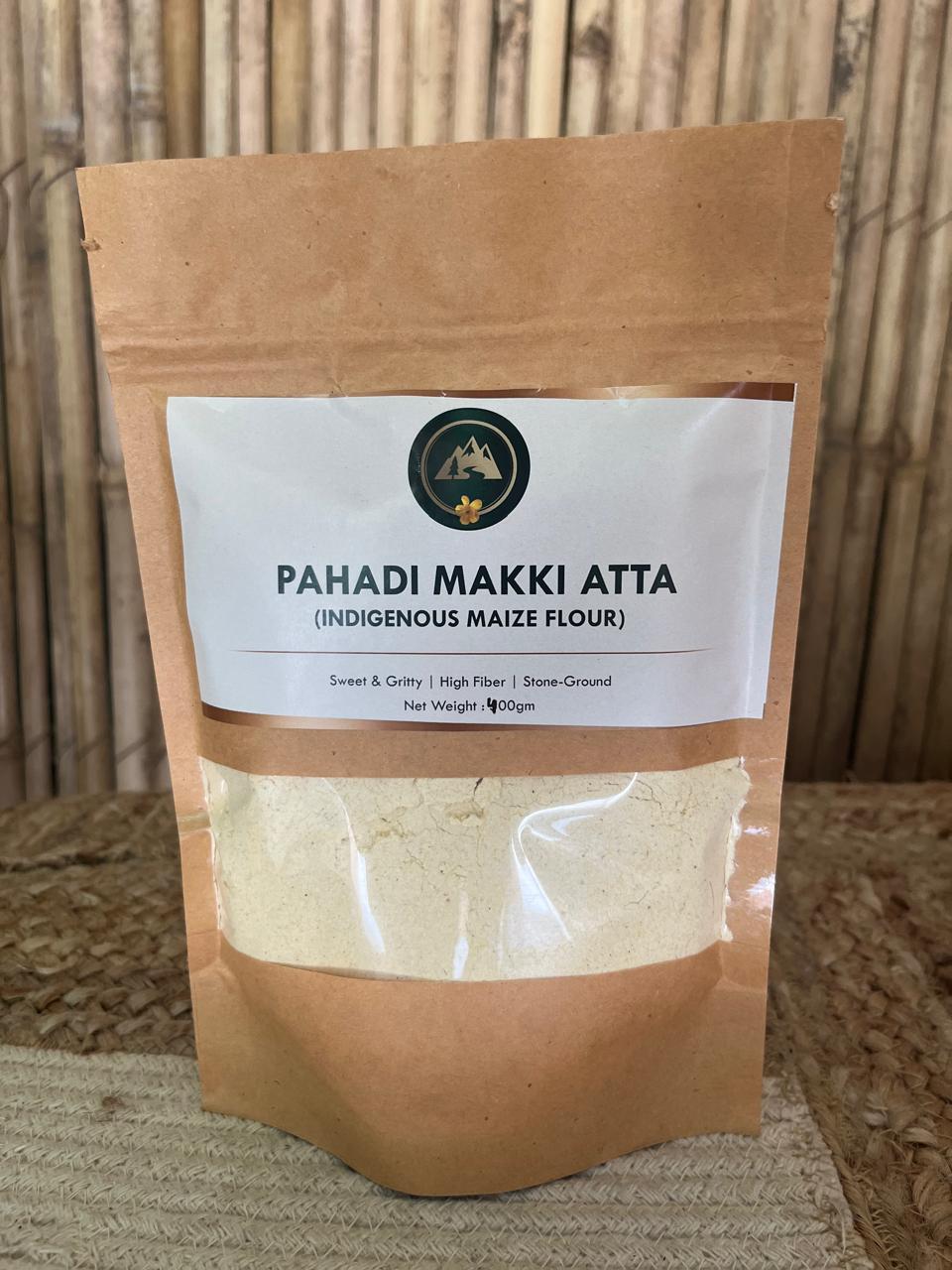
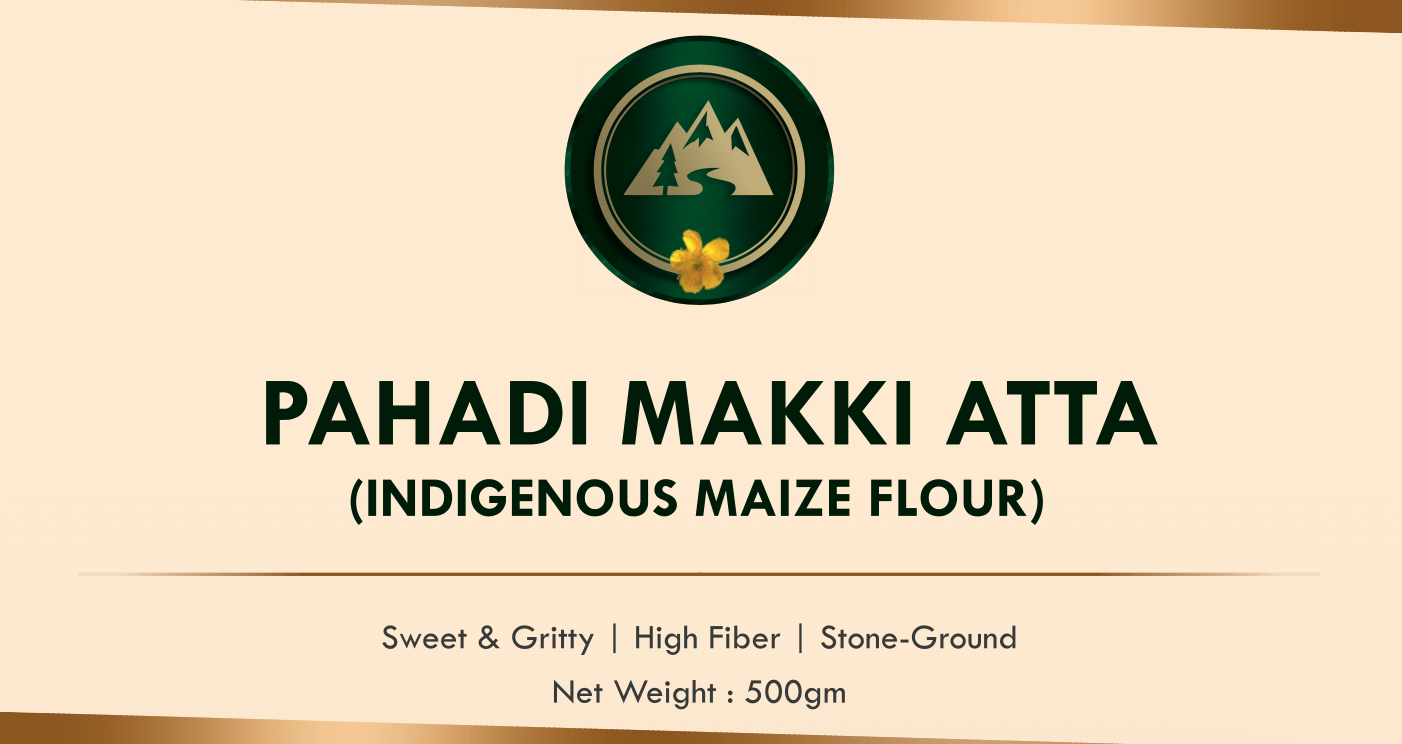
Pahadi Makki Atta is stone-ground flour from indigenous Himalayan maize, grown by small-holder farmers in the high-altitude villages of Tehri Garhwal, Uttarakhand. This isn’t the sweet, tender corn sold as a vegetable — it’s a hardy, traditional maize variety grown specifically for grain, with a robust, earthy flavour and coarse texture built for flatbreads like rotla and makki di roti. Fyonli sources it directly from those farming families and stone-grinds it in small batches.Why This One Is Different
- Indigenous mountain variety, not sweet corn — grown for grain, not eating fresh; the flavour is earthy and robust, not sweet
- Coarse stone-ground texture — holds together in a thick rotla the way finely milled commercial corn flour can’t
- High in fibre — the coarser grind retains more of the grain’s natural bran
- Stone-ground, not machine-milled — no processing heat to degrade flavour or nutrients
- Grown without chemical inputs — traditional hill farming, no pesticides or synthetic fertiliser
Pahadi Makki Atta vs. Commercial Corn Flour
| What You’re Buying | Commercial Corn Flour | Fyonli Pahadi Makki Atta |
|---|---|---|
| Maize variety | Hybrid sweet corn or commodity maize | Indigenous Himalayan grain maize |
| Texture | Fine, machine-milled | Coarse, stone-ground — holds its shape in a rotla |
| Flavour | Often sweet or neutral | Earthy, robust, distinctly maize |
| Origin | Usually unstated — pooled from multiple regions | High-altitude villages, Tehri Garhwal |
| Farmer relationship | Bought through mandi traders | Bought direct from Garhwal farming families |
Nutritional Information (per 100g)
| Nutrient | Amount |
|---|---|
| Energy | 365 kcal |
| Protein | 9.4 g |
| Total Fat | 4.7 g |
| Carbohydrate | 74.3 g |
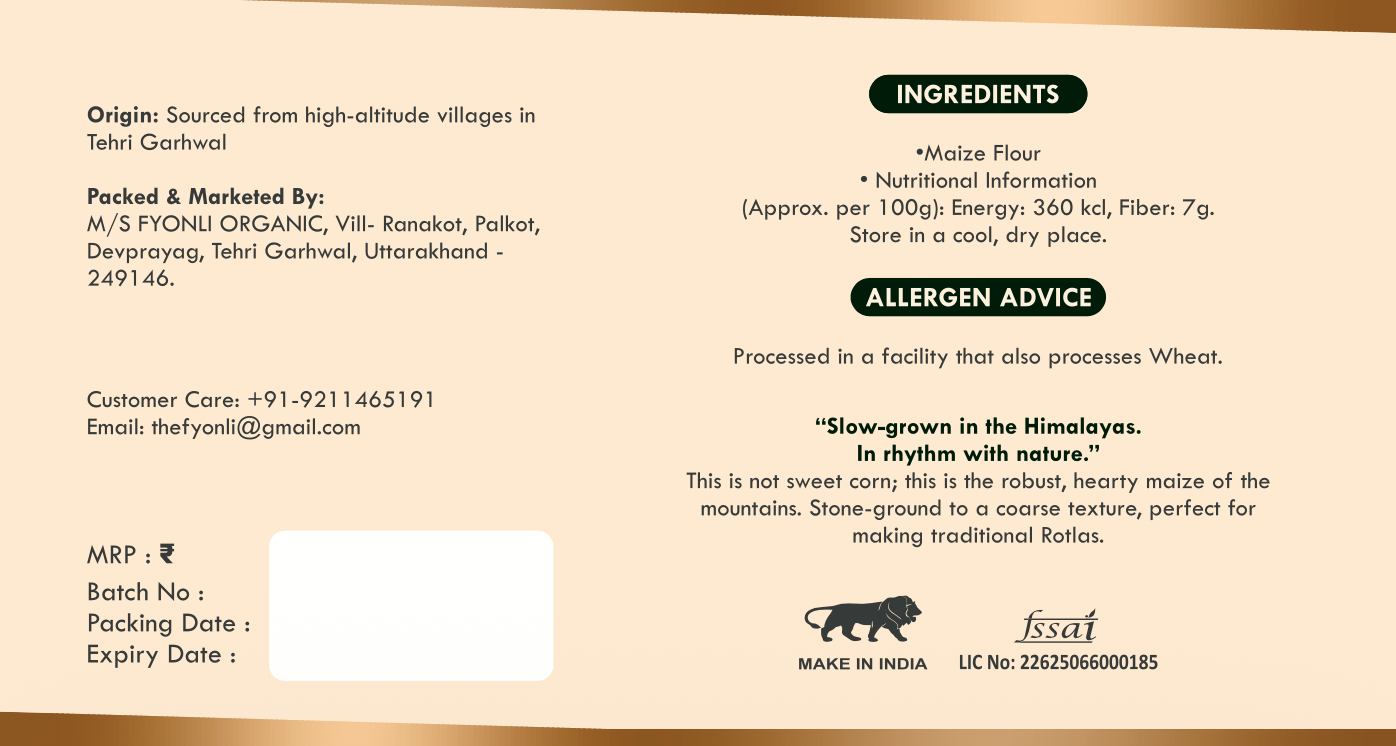
| Dietary Fibre | 7.3 g |
Ingredients & Allergens
Ingredients: Pahadi Makki Atta (stone-ground maize flour). Nothing else — no added salt, oil, or preservatives.
Allergens: Naturally gluten-free. Processed in a facility that also processes wheat.
How to Use
Knead with warm water and a pinch of salt into a firm dough. Shape into thick rotlas and cook on a hot tawa with ghee. Serve hot with sarson ka saag, mountain pickle, or just a generous spoon of butter. Best eaten fresh off the tawa.
Sourcing & Story
Maize has long been grown as a staple grain crop on Tehri Garhwal’s terraced hill farms, distinct from the sweet corn varieties bred for eating fresh. It’s a kharif crop, sown with the monsoon and harvested in autumn once the cobs dry on the stalk. Farming families here grow it specifically for grinding into flour, not fresh eating — which is why the flavour is robust and earthy rather than sweet. Fyonli buys the maize directly from those families and stone-grinds it in small batches close to packing.Storage & Shelf Life
Store in an airtight container in a cool, dry place, away from direct sunlight and moisture. Does not require refrigeration. Best used within 6 months of the packing date — whole-grain stone-ground flour has a shorter shelf life than refined flour, since the germ and bran are still intact.
Who It’s For
- Cooks who want an authentic rotla or makki di roti — the coarse texture and robust flavour are built for these traditional flatbreads
- Anyone avoiding gluten — a genuinely traditional gluten-free flour
- Households tired of bland commercial corn flour — this tastes distinctly of maize, not sweet or neutral
Frequently Asked Questions
What is Pahadi Makki Atta?
Pahadi Makki Atta is stone-ground flour from indigenous Himalayan maize, grown by small-holder farmers in the high-altitude villages of Tehri Garhwal, Uttarakhand. It’s a traditional grain-maize variety, not the sweet corn sold fresh, with a robust, earthy flavour and coarse texture.
Is Pahadi Makki Atta sweet like corn flour from the supermarket?
No. This is made from an indigenous maize variety grown specifically as a grain crop, not sweet eating corn. The flavour is earthy and robust, closer to traditional rotla flour than the milder, sometimes sweet corn flour found in most supermarkets.
Is Pahadi Makki Atta gluten-free?
Yes, maize is naturally gluten-free. This product is processed in a facility that also handles wheat, so anyone with celiac disease or severe gluten sensitivity should factor in that cross-contact risk.
How do I make rotla or makki di roti with this flour?
Knead with warm water and a pinch of salt into a firm dough. Shape into thick rotlas and cook on a hot tawa with ghee. Serve hot with sarson ka saag, mountain pickle, or a spoon of butter — best eaten fresh off the tawa.
What is the shelf life of Pahadi Makki Atta?
Up to 6 months from the packing date, stored in an airtight container in a cool, dry place. Because it’s stone-ground with the germ and bran intact, it has a shorter shelf life than refined, machine-milled corn flour.
Is this maize grown with pesticides or chemical fertiliser?
No. The farming families in Tehri Garhwal grow this maize without chemical pesticides or synthetic fertiliser, using traditional hill farming methods. It does not carry a formal organic certification, but the growing method has been chemical-free by practice for generations.
Looking for other traditional Himalayan grains? Try the calcium-rich Mandua Flour (Ragi), or the light, gluten-free Devprayag Jhangora.