
Description
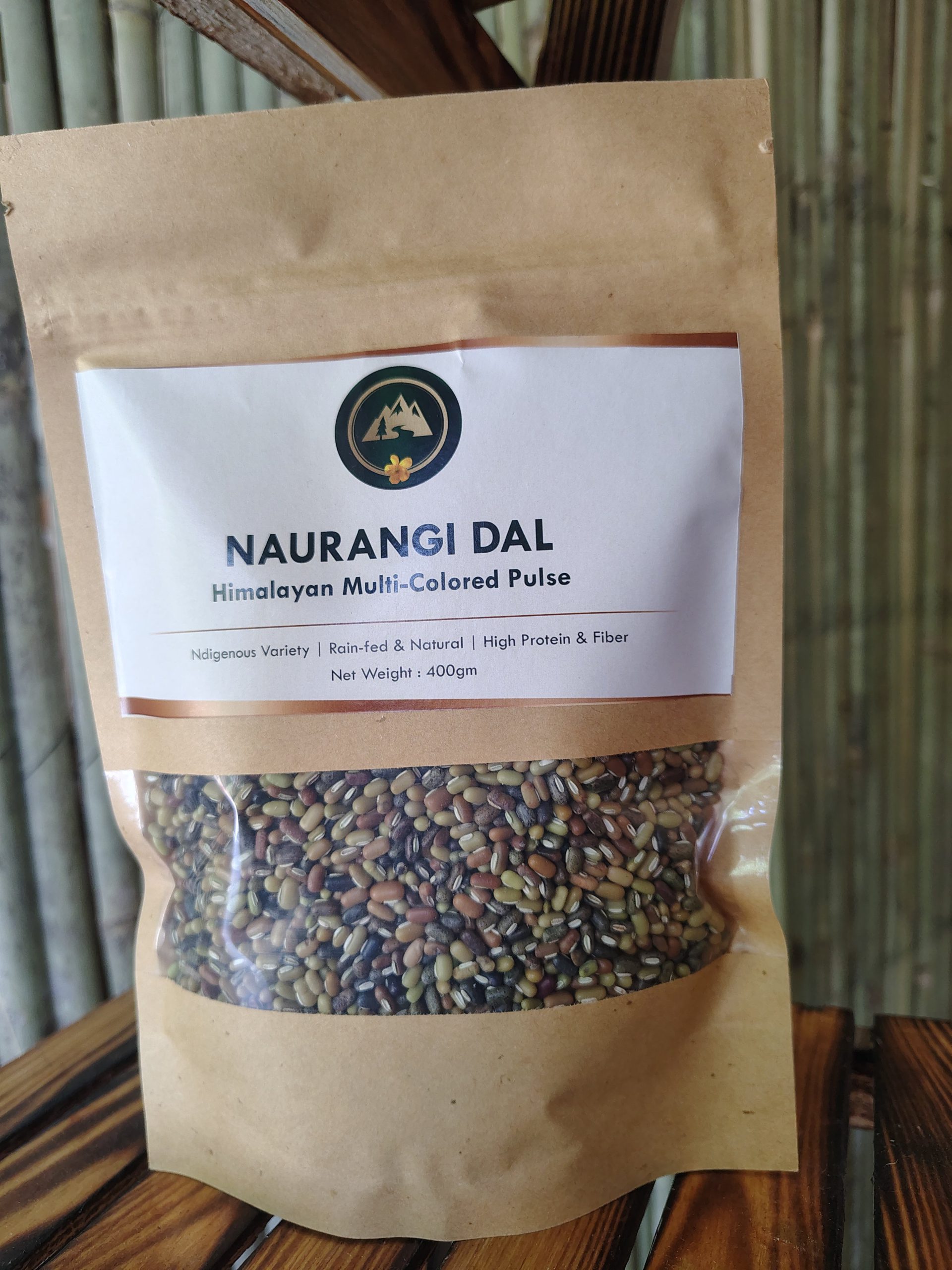
One dal. Nine natural colours. A pulse most Indian kitchens have never seen. “Naurangi” means nine colours — and this rare Himalayan pulse lives up to its name. It’s rice bean (Vigna umbellata), a traditional hill legume whose seeds naturally occur in a scatter of colours and patterns within the same harvest — mottled brown, black, red, cream, speckled — rather than being dyed or sorted for uniformity. Cultivated at altitude in rain-fed soil, free from chemical inputs, it’s one of the more distinctive pulses grown in the Himalayan hills, and one most supermarkets have never stocked.What Is Naurangi Dal?
Naurangi Dal is rice bean, botanically Vigna umbellata — a single traditional pulse species grown across Uttarakhand’s hill districts, prized for a naturally variable seed coat that produces up to nine distinct colours within one harvest. It’s traditionally grown as part of Barahnaja, the Central Himalaya’s centuries-old mixed-cropping system, where up to twelve crops are sown together in the same field for resilience against drought, flood and pest pressure — rice bean is one of the hardiest crops in that system, tolerating both extremes. Fyonli buys it directly from hill farming families and packs it exactly as harvested, without sorting the colours out.Why This One Is Different
- Naturally multi-coloured seed coat — up to nine distinct colours and patterns occur within the same rice bean harvest, not dyed or artificially sorted
- A genuinely underused crop — rice bean is recognised by agricultural researchers as a nutritionally rich but under-cultivated legume, rare outside Himalayan and Northeast Indian kitchens
- Exceptionally hardy — one of the few pulses that tolerates both drought and heavy monsoon rain, which is why it survives in Barahnaja’s mixed-cropping system
- Rain-fed, chemical-free cultivation — grown without irrigation or synthetic inputs on Himalayan hill farms
- Preserves agricultural heritage — every bag supports a traditional Himalayan crop that’s losing ground to higher-yield commercial pulses
Naurangi Dal vs. Common Supermarket Pulses
| What You’re Buying | Common Supermarket Dal | Fyonli Naurangi Dal |
|---|---|---|
| Species | Common pulses — chana, moong, toor, urad | Rice bean (Vigna umbellata) — a rare, underused Himalayan legume |
| Appearance | Sorted for uniform colour | Naturally multi-coloured, unsorted |
| Growing method | Irrigated monoculture | Rain-fed, grown within Barahnaja mixed-cropping |
| Availability | Widely available nationwide | Rare — most supermarkets don’t stock rice bean at all |
| Farmer relationship | Bought through mandi traders | Bought direct from hill farming families |
Nutritional Information (per 100g, uncooked)
| Nutrient | Amount |
|---|---|
| Energy | ~346 kcal |
| Protein | ~20–24 g |
| Dietary Fibre | ~12–16 g |
Ingredients & Allergens
Ingredients: Naurangi Dal (rice bean, Vigna umbellata). Nothing else — no added salt, oil, or preservatives.
Allergens: A natural legume. Contains no gluten, dairy, or nuts. Packed in a facility that also handles other pulses and legumes.
How to Use
Soak overnight (8–10 hours). Pressure cook for 5–6 whistles. Temper with ghee, cumin, and ginger for a simple, deeply nourishing dal. Pairs beautifully with steamed rice or fresh rotis.
Sourcing & Story
Rice bean has been grown in Uttarakhand’s hill districts for generations as part of Barahnaja — a traditional mixed-cropping system where farmers sow up to twelve different crops together in one field rather than a single commercial monoculture. The practice spreads risk across an unpredictable mountain growing season: if one crop fails to drought or a wet spell, another survives. Rice bean is one of the most resilient crops in that system, tolerating both dry spells and heavy monsoon rain better than most pulses. Like other Himalayan legumes, it’s a kharif crop, sown in early summer and harvested after the monsoon. Fyonli buys it directly from the hill farming families who still grow it.Storage & Shelf Life
Store in an airtight container in a cool, dry place, away from direct sunlight and moisture. Does not require refrigeration. Best used within 12 months of the packing date.
Who It’s For
- Cooks who want to try something genuinely different — rice bean is rare even within India, and most people have never cooked with it
- Anyone building a high-protein, high-fibre vegetarian plate — rice bean is well regarded among legumes for both
- Supporters of heritage and underused crops — buying it directly supports hill farmers still growing a traditional, non-commercial pulse
Frequently Asked Questions
What is Naurangi Dal exactly?
Naurangi Dal is rice bean (Vigna umbellata), a traditional Himalayan pulse whose name means “nine colours” — its seeds naturally occur in a range of colours and patterns within the same harvest. It’s a single legume species, not a blend of different pulses, grown in Uttarakhand’s hill districts as part of the Barahnaja mixed-cropping system.
Is Naurangi Dal a mix of different pulses?
No. Despite the name suggesting variety, Naurangi (or Navrangi) Dal is one pulse species — rice bean, Vigna umbellata — whose seed coat naturally varies in colour and pattern within a single harvest. The “nine colours” refers to this natural variation, not nine different types of dal blended together.
How much protein does Naurangi Dal contain?
Published research on rice bean grown in India shows protein content typically in the 20–24g per 100g range, varying naturally by accession — high for a legume, comparable to or exceeding most common Indian pulses.
What is the Barahnaja system?
Barahnaja is a traditional Central Himalayan mixed-cropping practice in which up to twelve different crops, including rice bean, rajma, finger millet and buckwheat, are sown together in the same field. It spreads risk across an unpredictable growing season and has supported hill farming communities for generations.
How do I cook Naurangi Dal?
Soak overnight for 8–10 hours, then pressure cook for 5–6 whistles. Temper with ghee, cumin and ginger for a simple, nourishing dal that pairs well with steamed rice or rotis.
What is the shelf life of Naurangi Dal?
Up to 12 months from the packing date when stored in an airtight container in a cool, dry place away from direct sunlight and moisture. Refrigeration isn’t required.
Is Naurangi Dal grown with pesticides or chemical fertiliser?
No. It’s grown rain-fed, without irrigation or chemical inputs, by hill farming families in Uttarakhand. It does not carry a formal organic certification, but the growing method has been chemical-free by practice for generations.
Curious about other Himalayan pulses? Explore the four-pulse Garhwal Traditional Dal Mix, or read what makes mountain-grown legumes different from commodity varieties.