
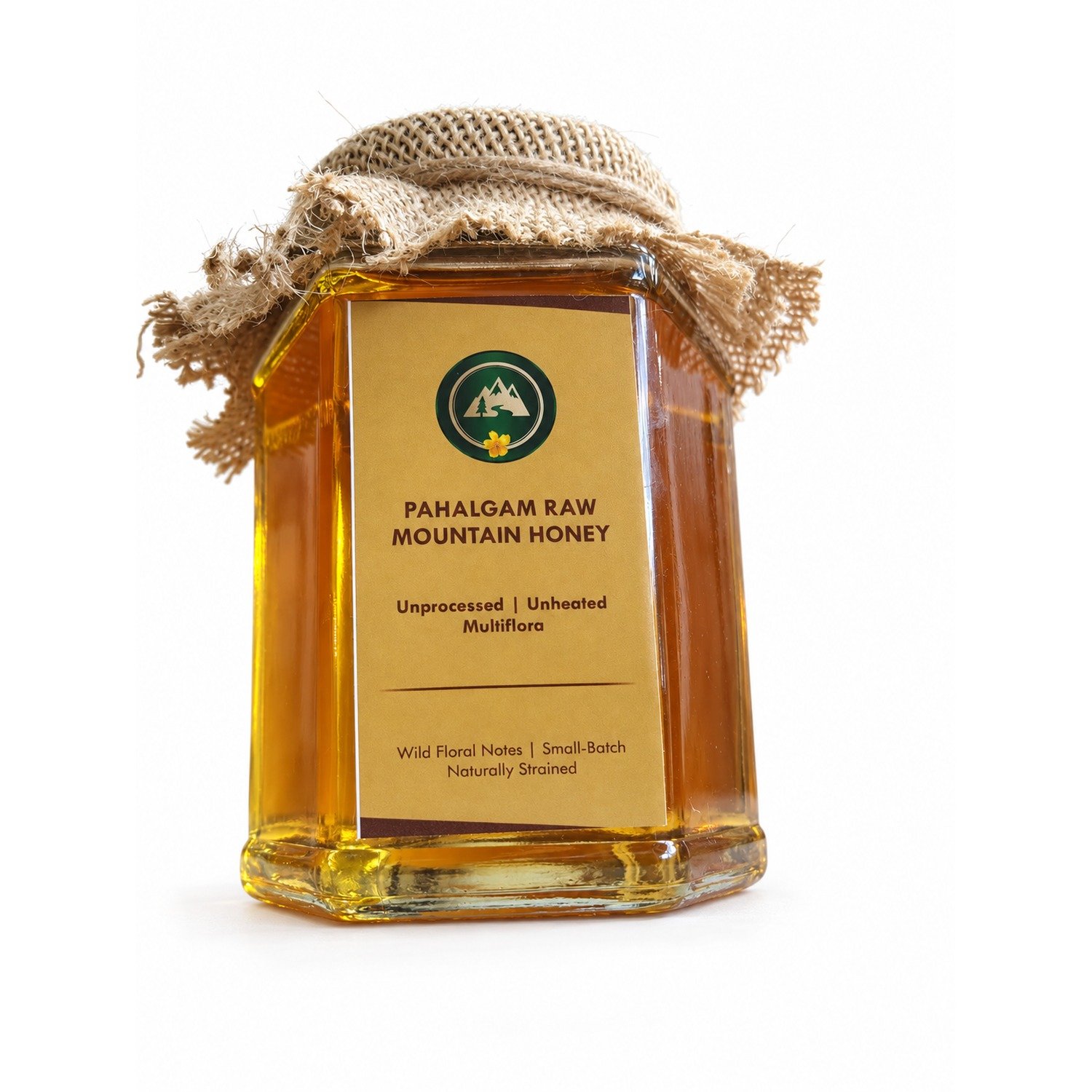
Description
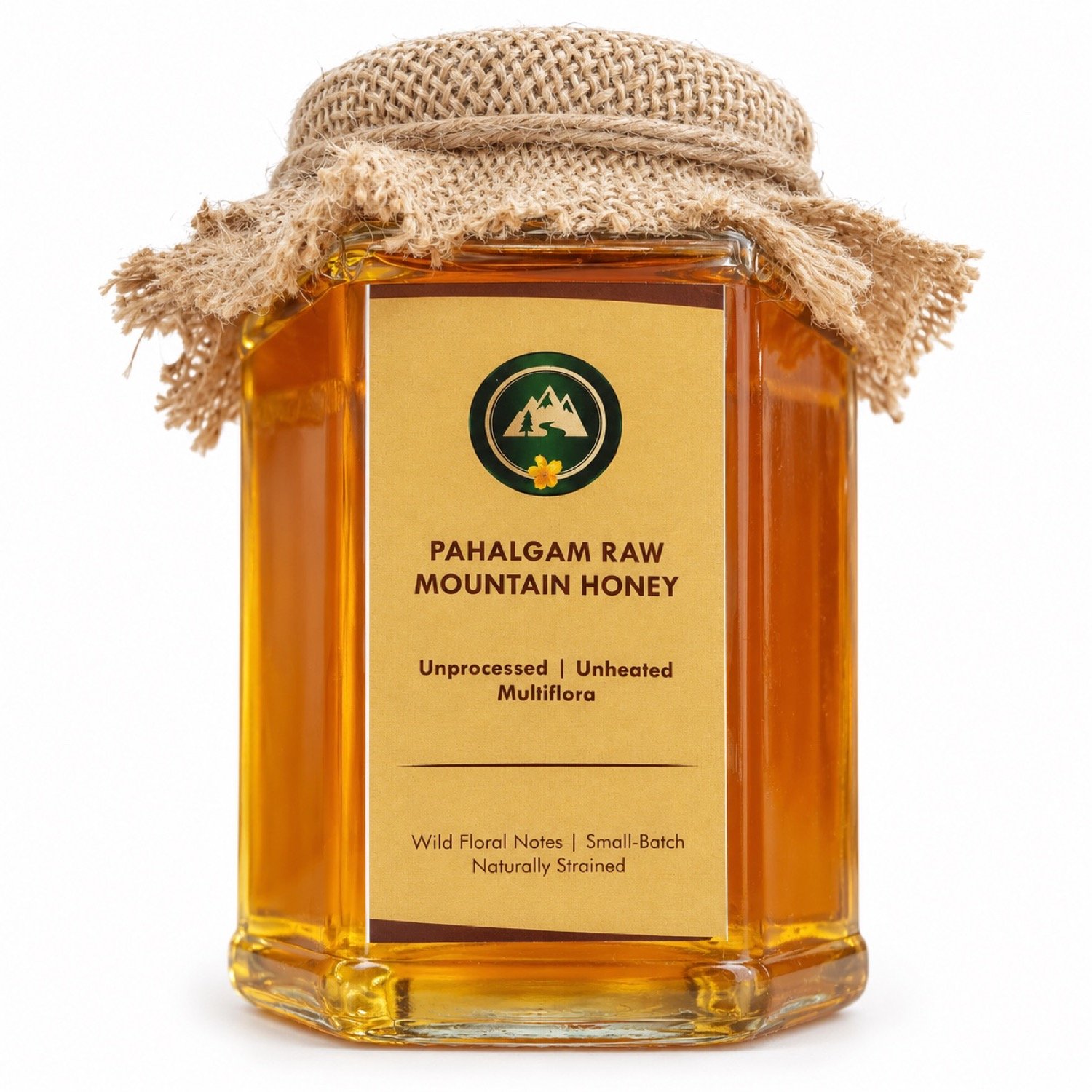
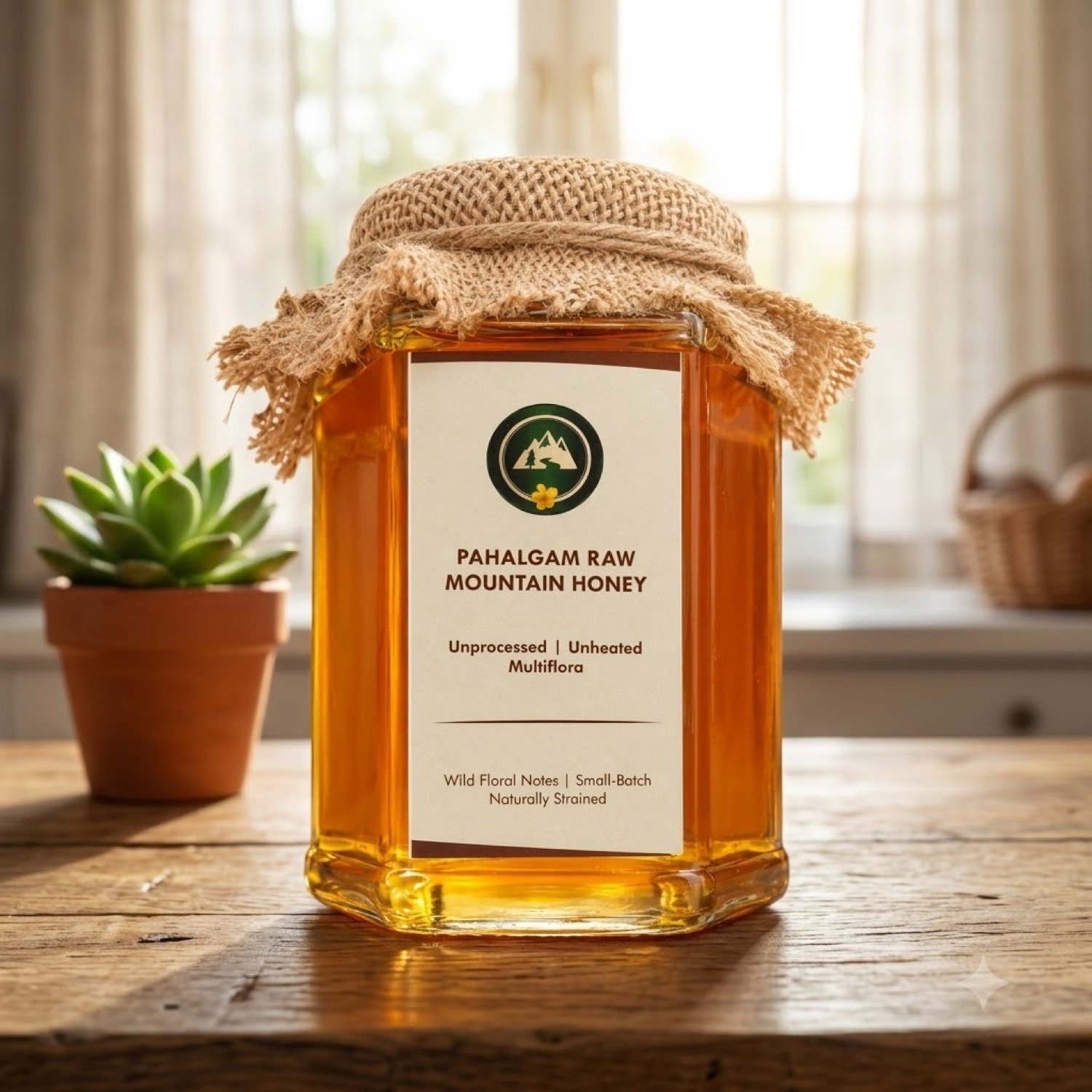
Pahalgam Raw Mountain Honey — Wild Kashmir Forest Honey
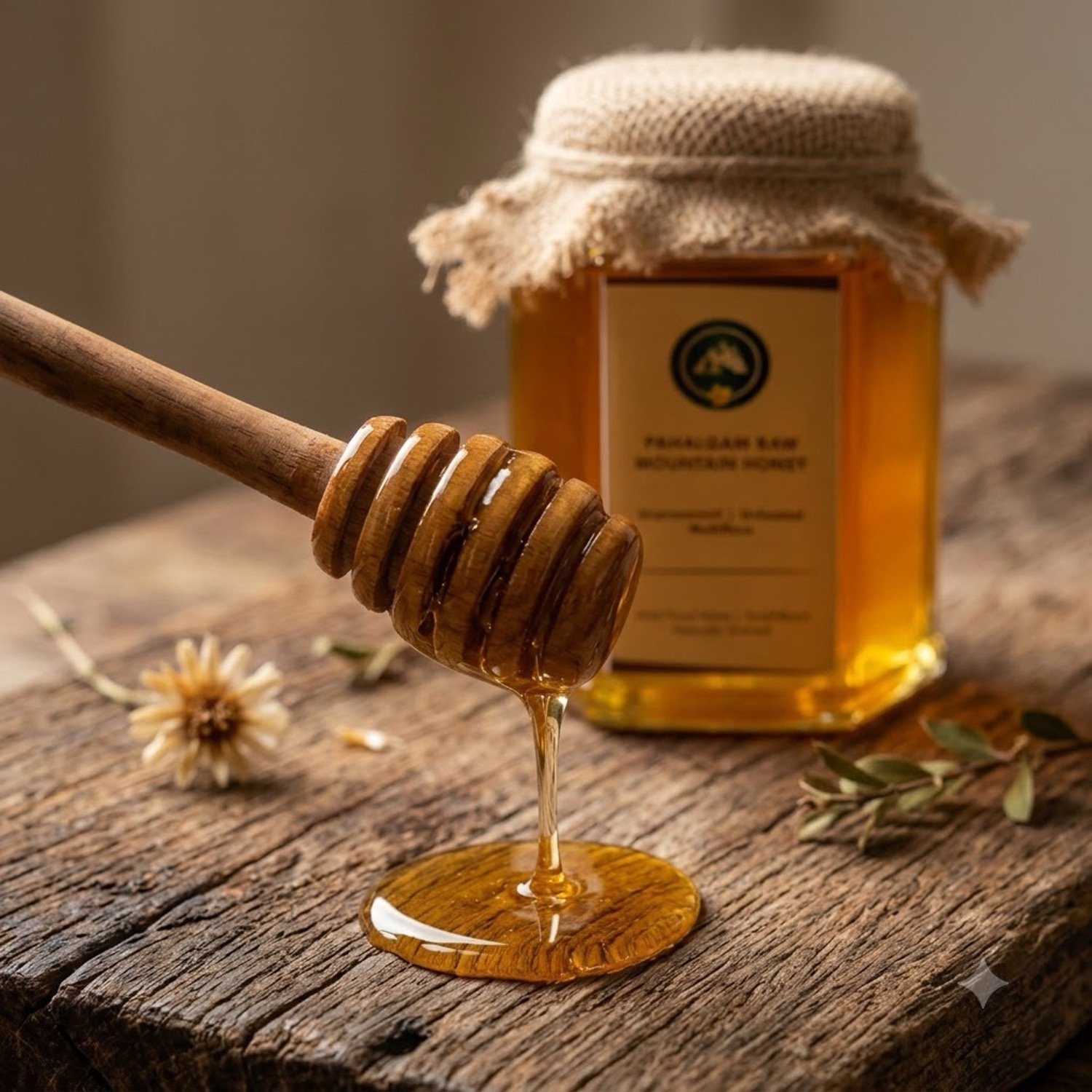
If your honey pours like water, it’s probably not really honey.
Real raw honey is thick, slow and full of natural character. Pahalgam Raw Mountain Honey is collected from small-batch hives in the alpine meadows and orchard belt around Pahalgam, Kashmir — a stretch of wild grassland, clean mountain air, and diverse spring flora. Unheated, unprocessed and naturally strained, it keeps its original texture, its wild floral character, and everything that makes raw honey genuinely different from the processed kind.
What Is Pahalgam Raw Mountain Honey?
This is multiflora honey — bees visiting many different blooms across a single foraging season rather than one crop. Ours comes from the high meadows and orchard slopes around Pahalgam, where colonies range across apple, apricot and cherry blossom, wild thyme, white clover and mountain rhododendron. It’s harvested raw and naturally strained, never heated or fine-filtered. Because the bees aren’t restricted to a single mono-crop, the flavour is more layered than single-source honeys — floral and orchard-fruit notes alongside the base sweetness, rather than one dominant note.
Why Fyonli Pahalgam Honey Is Different
- Unheated — natural enzymes and pollen fully preserved.
- Wild multiflora forage — orchard blossom, wild thyme, white clover and rhododendron, not a single mono-crop.
- Slow, silky pour — thick consistency from low moisture, not thinned or diluted.
- Small-batch collected from Pahalgam’s high meadows, never mass-produced.
- Stays smooth and pourable rather than setting solid — a result of its orchard-and-meadow sugar profile, not a purity marker.
Raw Honey vs. Supermarket Honey — What Actually Changes
| Supermarket Honey | Fyonli Pahalgam Raw Mountain Honey |
|---|---|
| Heated to 60–70°C for shelf stability | Never heated — bottled at room temperature |
| Micro-filtered — pollen and fine particles removed | Naturally strained only — pollen and enzymes intact |
| Often a blend of honey from multiple countries | Single-origin — one region, one spring harvest |
| No sourcing or harvest information on the label | Region, harvest season and FSSAI licence number disclosed |
Who Should Choose Pahalgam Raw Mountain Honey
- Anyone replacing refined sugar with a natural sweetener that still carries its original enzymes and pollen.
- Buyers who want a single-origin, traceable jar rather than a blended commercial one.
- Households already moving away from processed and adulterated pantry staples.
- Not intended as a substitute for medical treatment, and not suitable for infants under 12 months.
Nutrition (per 100 g)
| Nutrient | Per 100 g |
|---|---|
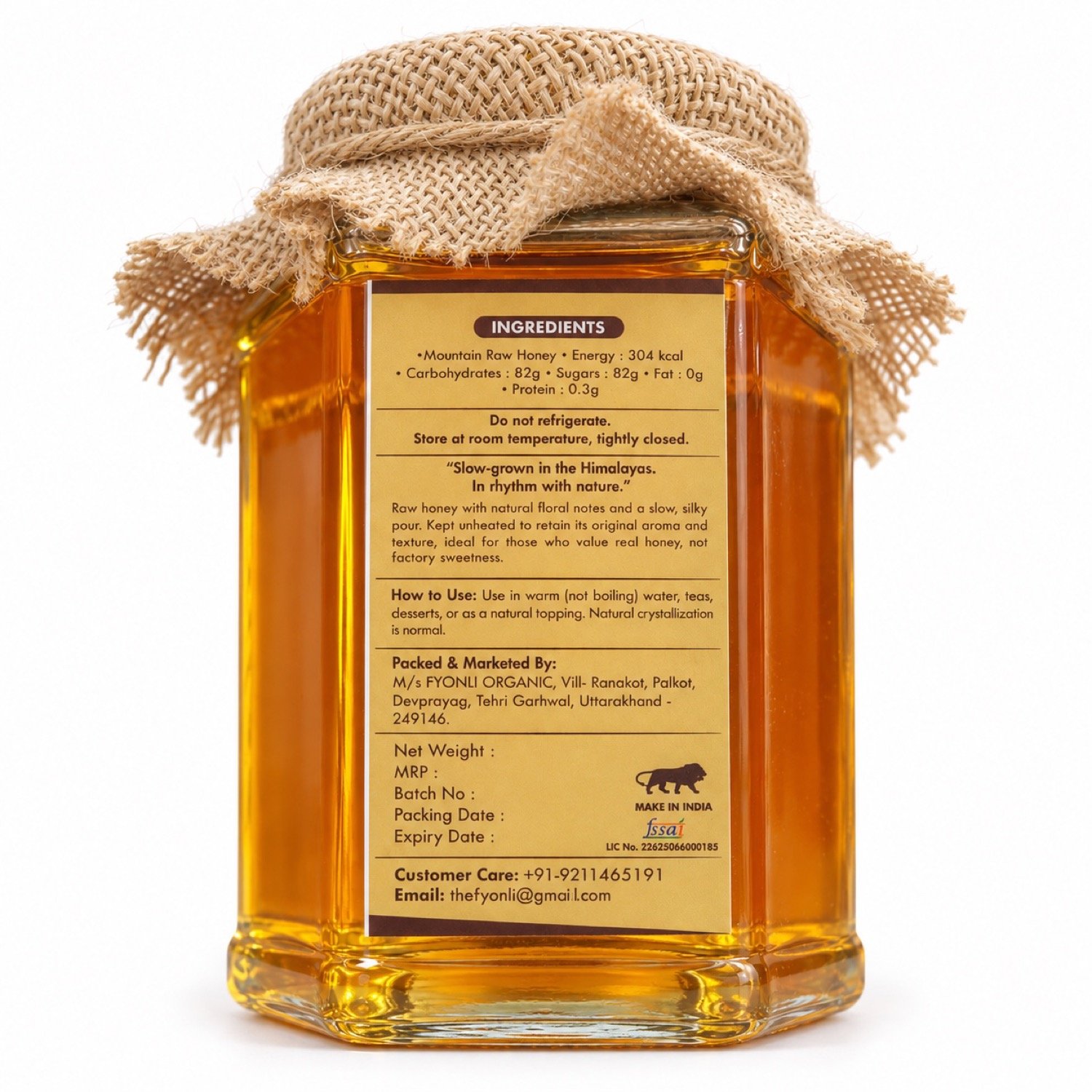
| Energy | 304 kcal |
| Protein | 0.3 g |
| Fat | 0 g |
| Fibre | 0.2 g |
| Net quantity | 300 g / 450 g |
| Harvest season | Spring, April–June |
| FSSAI Lic. No. | 22625066000185 |
Honey itself is mostly natural sugar and water, with only trace protein, fat and fibre — which is why a small serving carries real energy without adding much else nutritionally. What changes between honeys is everything downstream of the flowers: the exact sugar ratio, the trace minerals, and the aroma the bees pick up from that season’s bloom. That mix is also what decides whether a honey sets firm, stays runny, or sits somewhere in between.
How to Use
A spoon first thing in the morning for a natural start to the day. Drizzled over warm toast, yoghurt or seasonal fruit. It stays smooth and pourable rather than setting solid — simply how this particular floral mix behaves, not an indicator either way of purity.
Sourcing & Story
Collected from small-batch hives around Pahalgam, Kashmir, during the spring bloom (roughly April to June), when apple, apricot and cherry orchards flower alongside wild alpine meadow plants. This is the same window regional Kashmir apiaries traditionally harvest multiflora honey, before the flush of summer growth changes the forage mix. Because the orchard bloom is short, the harvest window is narrow too — this batch reflects one spring’s forage rather than a year-round blend, so the exact flavour balance of orchard blossom versus wildflower can shift slightly from one year’s harvest to the next. Produced under FSSAI Lic. No. 22625066000185.
Storage & Shelf Life
Store cool and dry, away from direct sunlight — no refrigeration required. This honey tends to remain liquid; that’s its floral sugar profile at work, not a purity signal. Not recommended for infants under 12 months.
Frequently Asked Questions
Is this honey pasteurised?
No — it’s raw, unheated and naturally strained, so pollen and enzymes stay intact.
What makes it “multiflora”?
Bees forage across many blooms in one season rather than a single crop — here that’s orchard blossom, wild thyme, white clover and rhododendron around Pahalgam.
Does this honey crystallise?
Not typically — its orchard-and-meadow floral mix gives it a sugar balance that tends to stay liquid. That’s composition, not a purity marker either way; genuinely raw honey can crystallise or stay liquid depending entirely on what the bees forage on.
Is it the same as Fyonli’s Garhwal Raw Mountain Honey?
No — this is a separate, single-origin batch from Pahalgam, Kashmir, harvested in spring; the Garhwal honey is a Uttarakhand forest batch harvested around December, with a different floral mix.
Is raw honey safe for diabetics?
It still contains natural sugars — consume in moderation and check with your doctor.
How do I know it’s genuinely raw?
It’s faintly cloudy from natural pollen and wax rather than perfectly clear, pours slowly rather than like water, and its flavour shifts subtly by batch and season — commercial honey is heated and filtered to stay uniform and clear year-round.
Can I give this to my child?
Not for infants under 12 months (standard honey safety guidance). Fine for older children and adults.
Curious what actually separates raw honey from the bottled stuff on supermarket shelves? Read Raw Mountain Honey from Garhwal: 5 Essential Differences From Every Jar on a Supermarket Shelf — the purity tests apply to any raw honey, not just the Garhwal batch.