Posted on Leave a comment

7 Traditional Himalayan Wellness Foods You Should Add to Your Daily Routine

Traditional Himalayan wellness foods by Fyonli — Kashmiri Kahwa, bilona ghee, wild nettle tea, hemp protein and more

Modern wellness has a short memory. Collagen powders, adaptogens, cold plunges — trends arrive fast and fade faster. But across the villages of Uttarakhand, Kashmir and Himachal Pradesh, the same foods have been part of daily life for centuries. Not as superfoods. Not as supplements. Just as food — grown slowly, prepared simply, eaten with intention.

What we’ve found is that many of the most powerful wellness foods aren’t new discoveries. They’re old habits that got forgotten somewhere along the way to convenience.

These are seven traditional Himalayan wellness foods that have been part of daily life in these villages for centuries — long before anyone called them superfoods.


1. Kashmiri Kahwa — The Morning Ritual That Does More Than Wake You Up

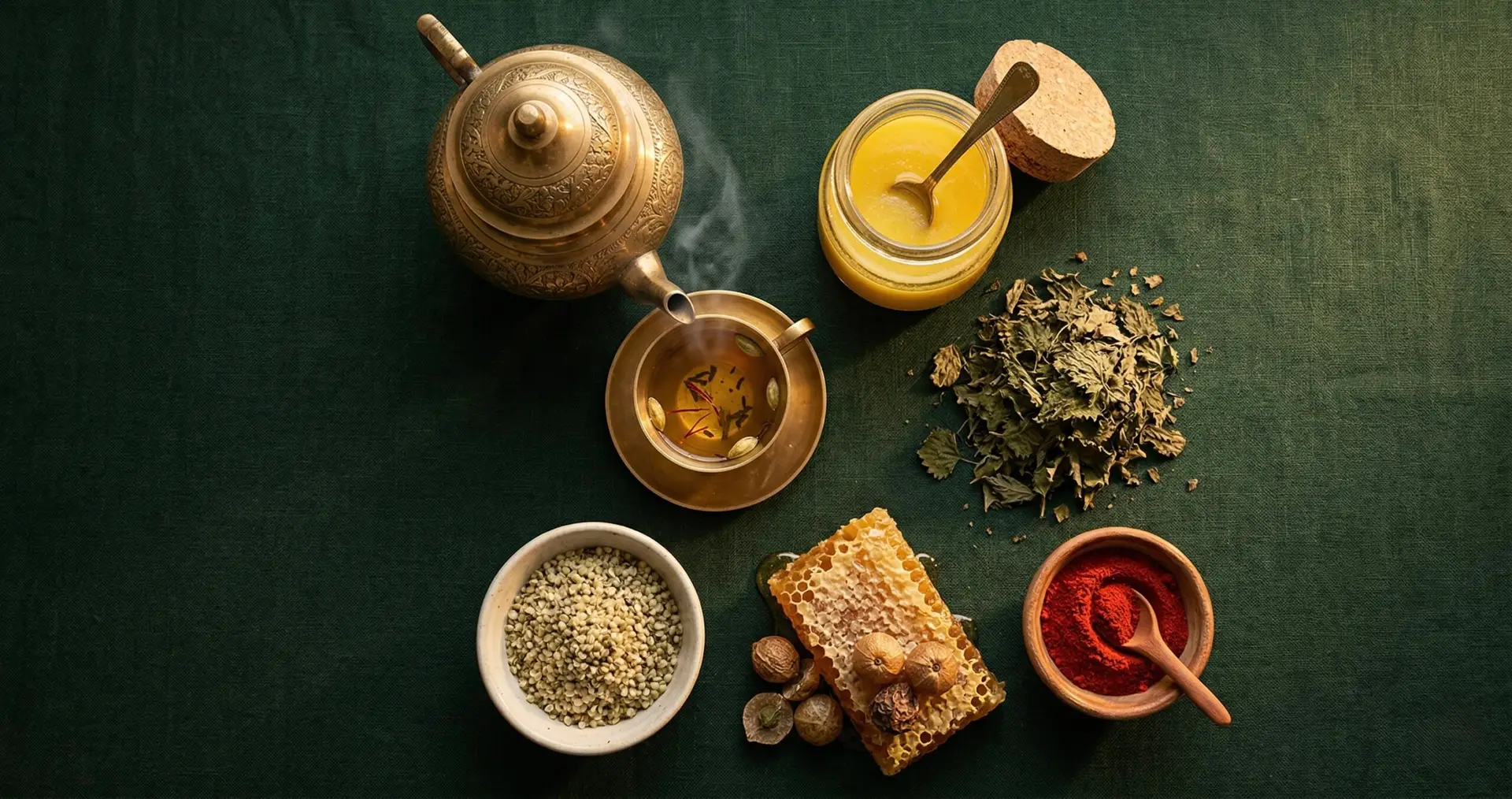
Kahwa has been served in Kashmiri homes for centuries — traditionally brewed in a brass samovar called a samovar, and offered to every guest as a gesture of warmth. It isn’t just tea. It’s a blend of green tea, saffron, cardamom, cinnamon, cloves and ginger — each ingredient earning its place not by flavour alone but by function.

Saffron is rich in antioxidants and has been associated with improved mood. Green tea provides polyphenols that support metabolism and fat oxidation. Cardamom and cinnamon have natural anti-inflammatory and digestive properties. Together, they make Kahwa a genuinely useful morning drink — warming in winter, calming in any season, and far more interesting than plain green tea.

How to use it: Stir a spoonful into hot water, steep for two minutes, and drink before or after meals.

👉 Fyonli Kashmiri Kahwa Premix →


2. Wild Himalayan Nettle Tea — The Mineral Infusion Your Body Has Been Missing

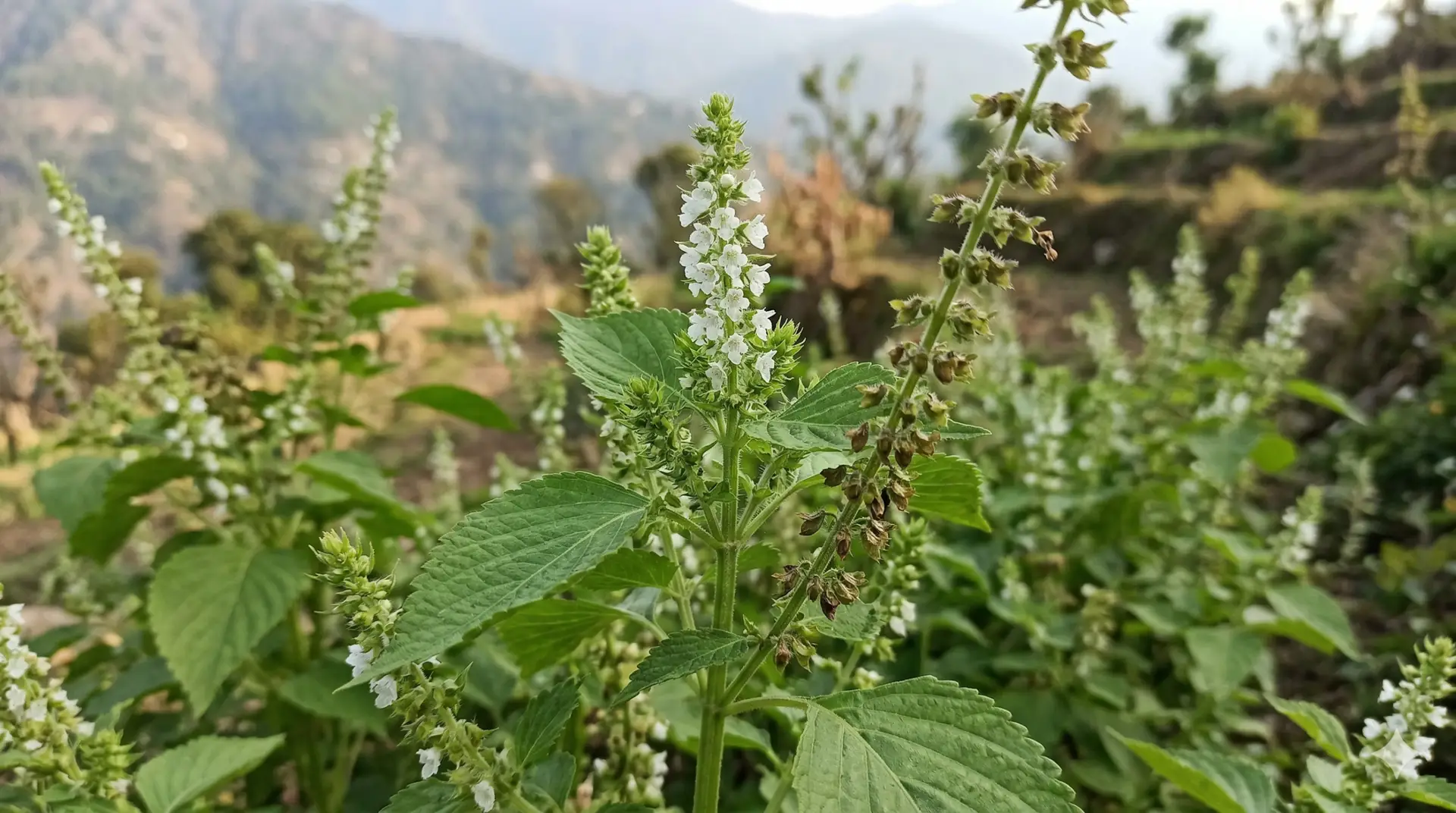
In the Garhwal hills, wild nettle — locally called bichhu ghaas (stinging nettle) — grows on untouched slopes, and has been used in traditional wellness for generations. It’s foraged by hand, shade-dried to preserve its natural mineral content, and brewed simply: one teaspoon, hot water, five minutes.

What you get is a clean, slightly earthy infusion that is genuinely mineral-dense — iron, calcium, magnesium — in a form your body recognises. For anyone who pays attention to gut health, inflammation or simply wants to reduce their supplement intake and eat more real food, nettle tea is one of the most underrated additions to a daily routine.

No flavouring, no blending, no additives. Just leaves from a wild Himalayan hillside.

How to use it: Add 1 tsp to hot water, steep 5–7 minutes, strain and drink. Works morning or evening.

👉 Fyonli Wild Himalayan Nettle Tea →


3. Raw Honey Amla Bites — After-Meal Digestive the Old Way

Every traditional Indian household had some version of a post-meal digestive. Mukhwas, paan, a piece of jaggery — something to signal the end of eating and help the body process what it just received. Raw Honey Amla Bites are Fyonli’s version of this tradition, made the way it was always made in the hills: fresh amla coated in raw mountain honey, then balanced with warming spices — black salt, roasted cumin, dry ginger, black pepper, ajwain, hing and cardamom.

Amla (Indian gooseberry) is one of the richest natural sources of Vitamin C. Raw honey adds enzymes. The spice blend is a textbook Ayurvedic digestive formula. And because there’s no refined sugar, no stabilisers and no preservatives, what you’re eating is just food — the kind your grandmother would have made without thinking twice.

How to use it: Eat 2–4 pieces after lunch or dinner. Consider it your dessert replacement.

👉 Fyonli Raw Honey Amla Bites →


4. Mountain Cow Bilona Ghee — The Kitchen Essential That Was Never Meant to Be Optional

Ghee fell out of fashion for a generation when fat was blamed for everything. It’s back now, but not all ghee is equal. What makes a real difference is the method: Bilona ghee is made by first culturing milk into curd, churning that curd into butter, and then slow-cooking the butter into ghee. It’s slower, costlier and produces less yield — but the result is a grainy, aromatic ghee with a depth of flavour that clarified-from-cream ghee simply doesn’t have.

Fyonli’s Mountain Cow Ghee is made from the milk of desi cows that graze freely on mountain grasses and medicinal herbs across Kashmir and Uttarakhand. The origin matters here — what the cow eats changes the fat profile of the milk, and therefore the ghee. 885 kcal and 98g fat per 100g, of which 62g is saturated — numbers that look alarming until you understand that traditional fat sources eaten in moderation are very different from refined oils eaten in volume.

How to use it: A teaspoon on dal, rotis or khichdi. Or stirred into warm milk before bed.

👉 Fyonli Mountain Cow Ghee →


5. Hemp Seed Chutney Premix — A Garhwali Condiment Worth Rediscovering

Hemp seeds (bhanga beej) have been part of Garhwali cooking for centuries — well before anyone called them a superfood. The traditional chutney made from roasted hemp seeds, sesame, perilla seeds (bhangjeera), dry red chilli, cumin, mustard and rock salt is a village kitchen staple in Devprayag. Rich, nutty, mildly spiced — it goes with everything.

Fyonli’s Hemp Seed Chutney Premix is crafted by women self-help groups using the same slow-roasting methods that have been passed down for generations. At 18g protein per 100g and a complete amino acid profile from the hemp seeds, it’s more nutritious than most condiments you’ll find. But more importantly, it tastes like something with a story — because it does.

How to use it: Mix with warm water for a quick chutney, or grind with garlic and lemon for a fuller, richer version. Excellent with rotis, rice or as a dip.

👉 Fyonli Hemp Seed Chutney Premix →


6. Pahadi Lyoon — The Herb Salt That Replaces Three Condiments at Once

Every pahadi kitchen has a version of lyoon — a blend of mountain garlic, ginger, chilli, cumin, ajwain and rock salt that goes on everything. It’s not a recipe so much as a habit: sprinkle it on dal-chawal, rotis, fresh fruit, raita, salads. It adds heat, depth and the particular warmth of mountain garlic (lahsun) that flat-land garlic doesn’t quite replicate.

Made in Tehri Garhwal by hand, Fyonli’s Pahadi Lyoon is artisanal in the original sense of the word — made by hand, in small batches, with no preservatives and no fillers. For anyone trying to reduce processed sauces and condiments, this is one of the simplest and most effective swaps.

How to use it: Sprinkle over any meal. Use a dry spoon to preserve shelf life.

👉 Fyonli Pahadi Lyoon →


7. Himalayan Hemp Protein — Plant Protein That Tastes Like Food, Not a Supplement

The plant protein market is full of products that require a lot of willpower to consume. Chalky textures, artificial sweeteners, flavour systems built in a lab. Himalayan Hemp Protein is a different kind of product: hemp seed powder, pumpkin seed powder, almond powder, date powder, cinnamon and cardamom. Six ingredients. No additives. No refined sugar. No preservatives.

At 22g protein per 100g, it holds its own nutritionally. But the point isn’t the number — it’s the fact that you can stir it into milk, blend it into a smoothie, or mix it into a breakfast bowl and it tastes like something you’d actually want to eat. Because the ingredients are real, the taste is real.

How to use it: 1–2 tablespoons (10–15g) in milk, water or a smoothie. Best in the morning or after a workout.

👉 Fyonli Himalayan Hemp Protein →


Why Traditional Himalayan Wellness Foods Belong in Your Daily Routine

None of these seven foods are recent inventions. They come from communities that didn’t have supermarkets, supplement aisles or nutritional labels. They ate what was available, prepared it with care, and were remarkably well-nourished as a result.

Each of these traditional Himalayan wellness foods carries a story of place, community and slow craft.

The Himalayan tradition isn’t about perfection or restriction. It’s about rhythm — eating foods that are close to their source, prepared with intention, and used consistently enough to actually make a difference.

That’s what Fyonli is about too. Slow-crafted in the Himalayas, in rhythm with nature.
Posted on Leave a comment

10 Himalayan Superfoods You Can Buy Online in India (And Why Each One Is Worth It)

himalayan superfoods buy online India

India has spent the last decade importing superfoods. Quinoa from Peru. Chia seeds from Mexico. Kale from Europe. Meanwhile, the Himalayan belt — one of the most nutritionally rich growing environments on the planet — has been quietly producing foods that outperform most imported superfoods in every measurable way.

The difference is that nobody marketed them.

That is changing. Here are ten genuinely extraordinary foods from the Uttarakhand and Kashmir Himalayas — what they are, why they matter nutritionally, and why most Indian kitchens do not have them yet.

1. Bhangjeera (Wild Perilla Seeds) — The Omega-3 Seed That Grows Wild in Himalayan Forests

Bhangjeera is wild-harvested perilla seeds from the slopes of Devprayag and surrounding Garhwal valleys. It is the same seed that has become fashionable in Korean and Japanese cooking under the name shiso — except Bhangjeera has been growing wild in the Himalayas and feeding Pahadi communities for centuries.

Why it is exceptional: Bhangjeera has one of the highest concentrations of alpha-linolenic acid (ALA) — a plant-based omega-3 — of any food source. For vegetarians who cannot get omega-3 from fish, it is one of the most accessible and potent alternatives available in India.

How to use it: Dry roast and grind with green chilli and garlic for the classic Bhangjeera chutney. Add whole seeds to hot ghee as a tempering for dal. Mix into yoghurt with salt for a quick raita.

Who should eat it: Anyone looking to increase omega-3 intake naturally, or anyone curious about traditional Pahadi cooking.

Shop Devprayag Bhangjeera →


2. Gahat Dal (Horse Gram) — The Pulse Ayurveda Recommends for Kidney Stones

Gahat — also called Kulthi or horse gram — is a small, dark brown legume grown across Tehri Garhwal and Kumaon at altitude. It has been a mountain staple for thousands of years and is one of the most nutritionally dense pulses available anywhere in India.

Why it is exceptional: Gahat contains compounds that inhibit the formation of calcium oxalate crystals — the most common type of kidney stone. Its diuretic properties are well-documented in both Ayurvedic literature and modern research. It also contains approximately 22–24g of protein per 100g — among the highest of any pulse. And it has a genuinely low glycaemic index, making it valuable for blood sugar management.

How to use it: Soak overnight, pressure cook for 5–6 whistles, temper with ghee, cumin, and plenty of garlic. Drink the soaking water on an empty stomach for its kidney health benefits — nothing is wasted.

Who should eat it: Anyone managing kidney stones, blood sugar, or simply looking for a high-protein dal with real nutritional depth.

Shop Tehri Garhwal Gahat Dal →


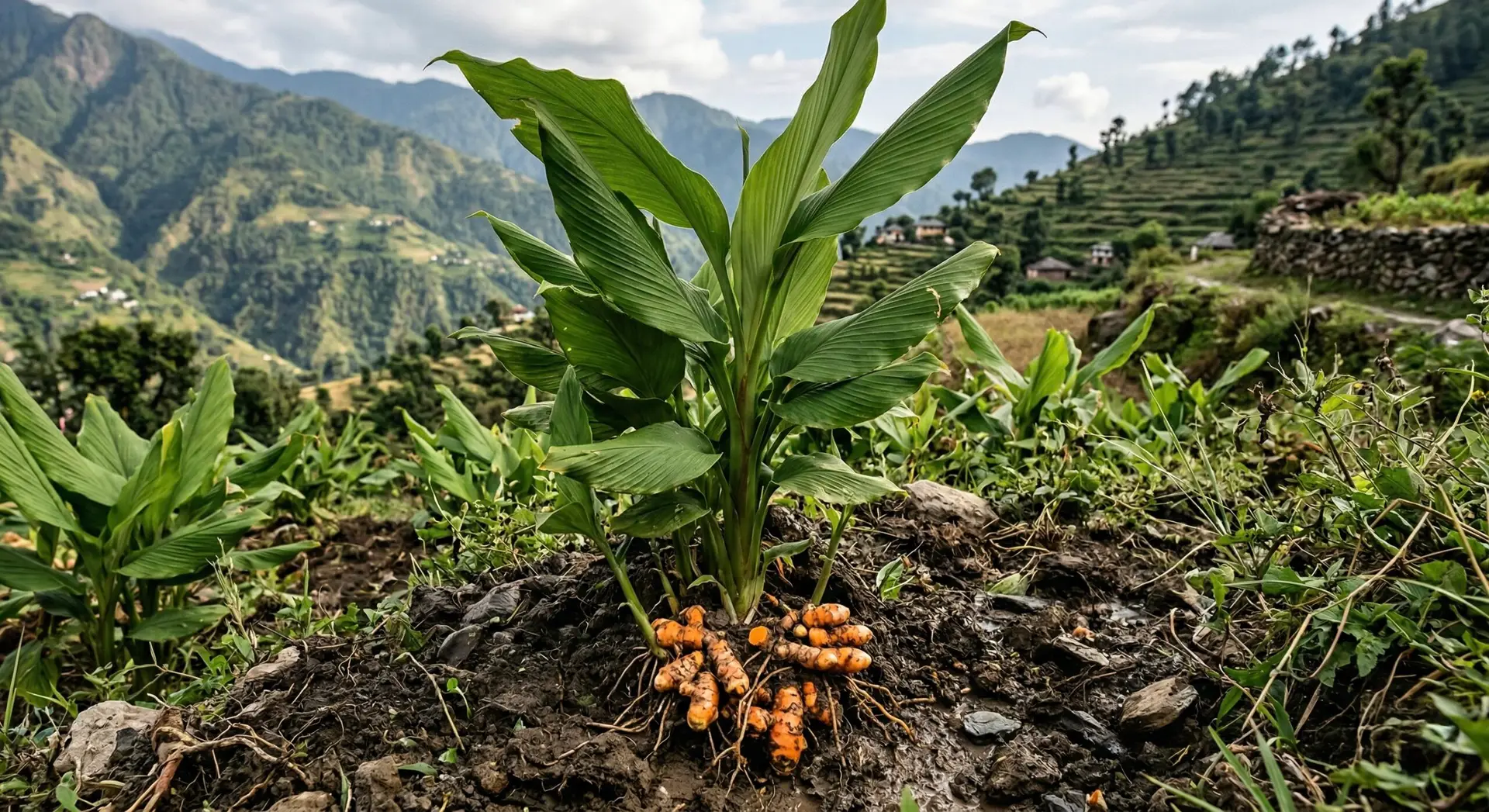
3. Pahadi Haldi (High Curcumin Himalayan Turmeric) — More Potent Than What Is in Your Kitchen Right Now

The turmeric in most Indian kitchens is commercial-grade powder blended from multiple low-curcumin sources. Pahadi Haldi from Uttarakhand is grown slowly at altitude — taking up to three years in the ground versus the six months of commercial varieties — in mineral-rich Himalayan soil that produces significantly higher curcumin content.

Why it is exceptional: Curcumin — turmeric’s active anti-inflammatory compound — is what makes turmeric medicinally valuable. Commercial turmeric often contains 1–2% curcumin. Pahadi Haldi consistently tests between 4–7%. The difference in flavour is also immediately noticeable — richer, warmer, more aromatic than anything from a supermarket.

How to use it: Always cook briefly in ghee or oil before adding water — this activates the curcumin and dramatically improves absorption. Add a pinch of black pepper to every preparation — piperine increases curcumin absorption by up to 2,000%.

Who should eat it: Anyone using turmeric daily for health benefits who wants to actually receive those benefits rather than consuming mostly starch.

Shop Pahadi Haldi →


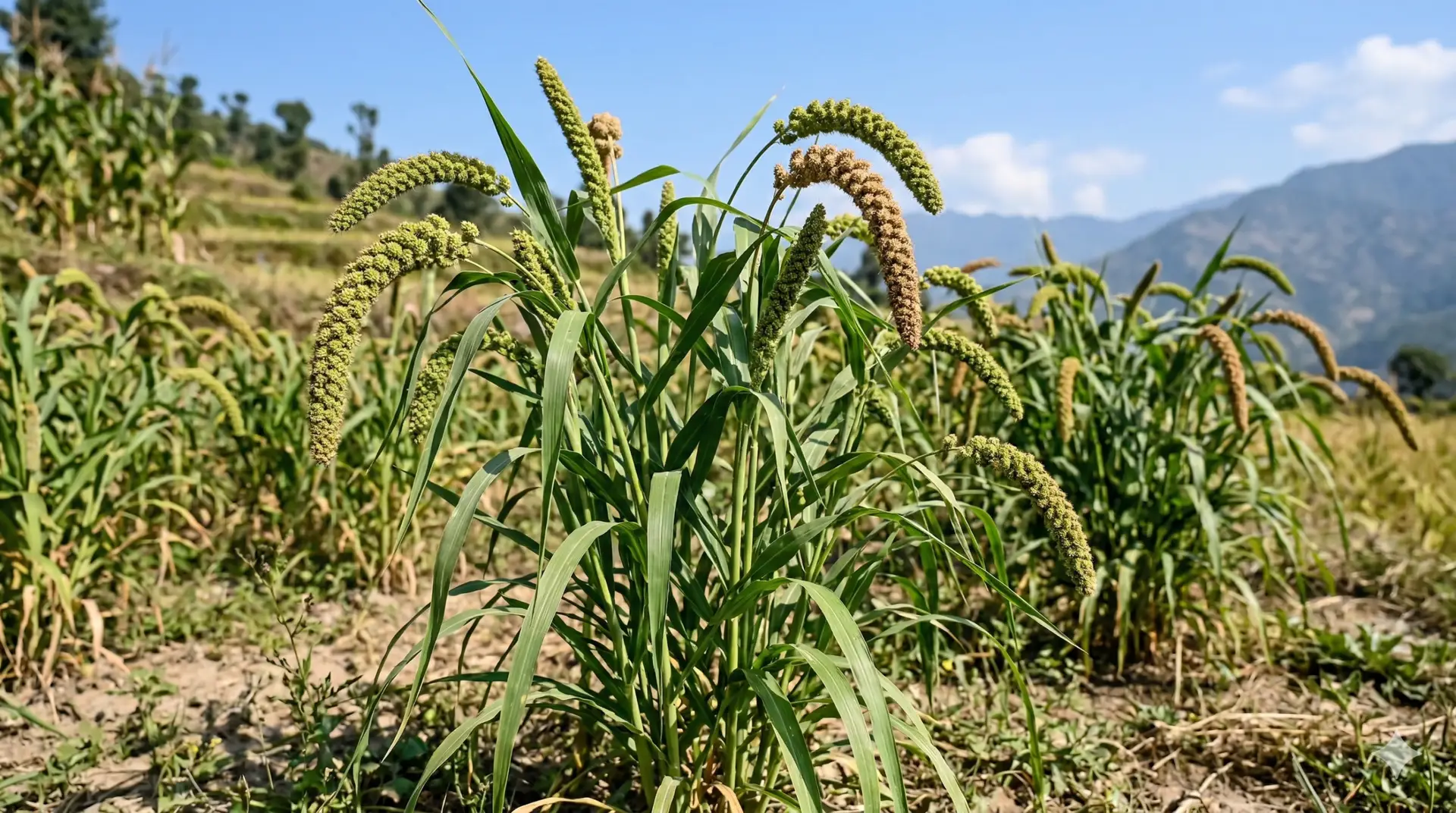
4. Jhangora (Barnyard Millet) — Uttarakhand’s Ancient Grain That Beats White Rice on Every Nutritional Measure

Jhangora is a small white grain grown on terraced Himalayan hillsides in Devprayag and surrounding Garhwal valleys. It has fed mountain communities for millennia and is only now being rediscovered by health-conscious urban India.

Why it is exceptional: Jhangora is gluten-free, has a significantly lower glycaemic index than white rice, contains more protein and fibre, and is mineral-rich from growing in Himalayan soil. For diabetics, those managing weight, or anyone simply looking to reduce rice consumption without sacrificing satisfaction, it is a direct rice substitute that is actually better in every nutritional category.

How to use it: Cook exactly like rice — 1 cup grain, 2 cups water, 15 minutes. The texture is slightly lighter than rice, mildly nutty. Serve with any dal. Also makes exceptional Jhangore ki Kheer — a traditional Pahadi dessert cooked slowly in full-fat milk with cardamom and dry fruits.

Who should eat it: Diabetics, anyone managing weight, anyone interested in ancient grains, and anyone who wants their rice-dal meal to be genuinely more nutritious.

Shop Devprayag Jhangora →


5. Raw Wild Mountain Honey — Nothing Like What Comes in a Supermarket Jar

Wild mountain honey from the Garhwal Himalayan belt is produced by bees foraging freely across alpine meadows, wild forests, and herb-covered hillsides at 1,500–2,000 metres elevation. It has never been heated, filtered, or processed. It is fundamentally a different product from supermarket honey — which is almost always heated, ultra-filtered, and often adulterated.

Why it is exceptional: Raw honey retains all of its natural enzymes, pollen, propolis traces, and antioxidants — none of which survive the pasteurisation process that commercial honey undergoes. The flavour is also incomparable — layered, complex, slightly floral, with an earthy depth that comes from the diversity of alpine nectar sources. Wild mountain honey at altitude is rarer still — the bees forage across flora that simply does not exist below 1,000 metres.

How to use it: A spoonful in warm (not boiling) water with lemon first thing in the morning. Drizzled over yoghurt or fresh fruit. Stirred into cooled chai. Never add to boiling water — above 40°C destroys the enzymes.

Who should eat it: Everyone. But particularly those who have been eating commercial honey thinking they are getting health benefits — and want to experience what honey actually tastes like.

Shop Raw Mountain Honey →


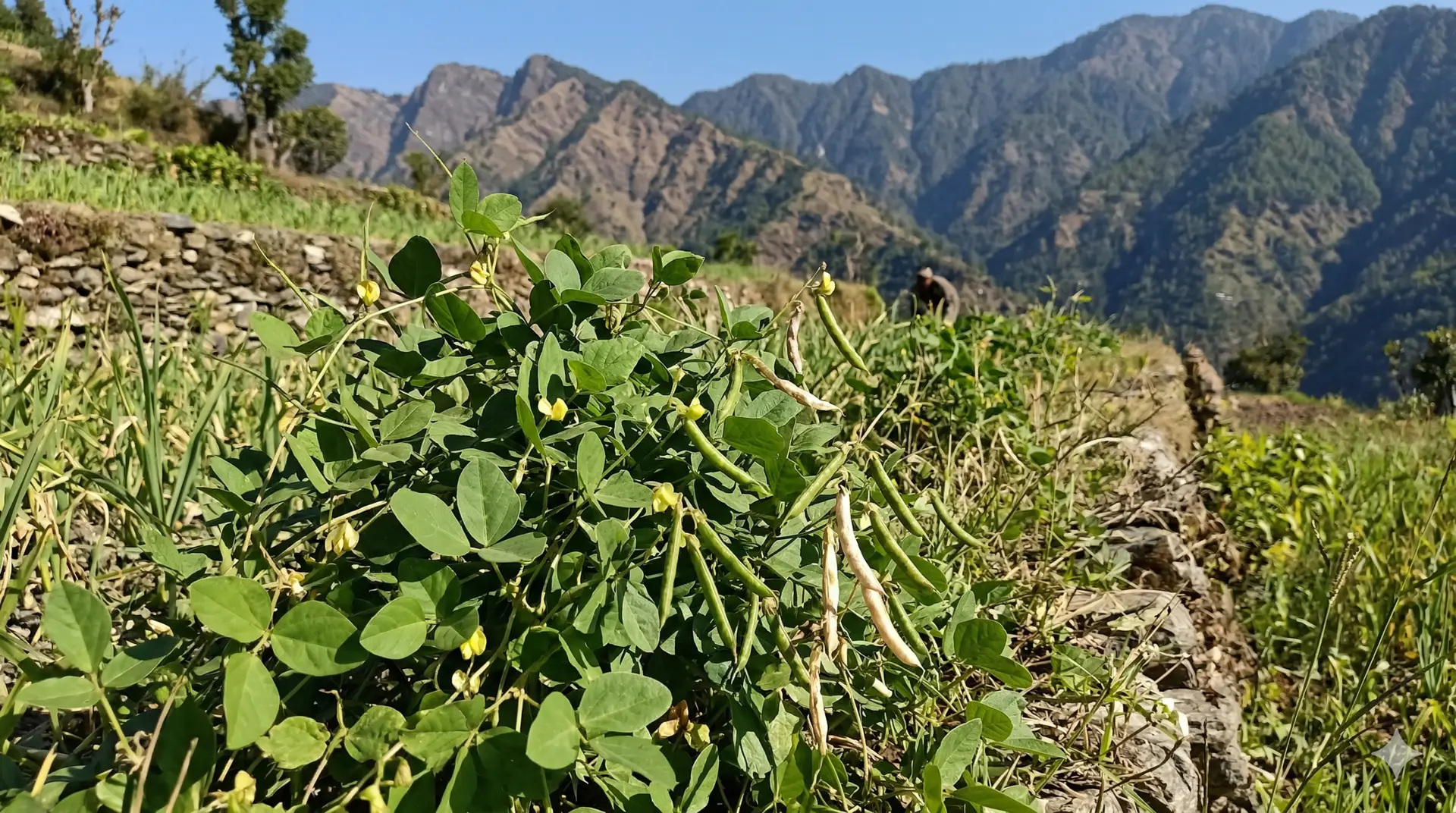
6. Himalayan Black Soyabean (Bhatt) — The Antioxidant Powerhouse Most Indians Have Never Encountered

Bhatt is a rare black soyabean variety grown at altitude across Uttarakhand. It is smaller and darker than commercial soyabean, with a dense, earthy flavour and a nutritional profile that makes most imported superfoods look ordinary.

Why it is exceptional: Bhatt is extraordinarily rich in anthocyanins — the same dark pigment antioxidants found in blueberries and acai berries that health enthusiasts pay premium prices to import. It is also high in protein, iron, and isoflavones. Yet it grows naturally in Himalayan villages and has been eaten here for generations without ever being marketed as a superfood.

How to use it: Cook like any bean — soak overnight, pressure cook until soft, temper with cumin and garlic. The flavour is deeper and more complex than white soyabean. Works exceptionally well in a simple dal preparation or mixed into rice dishes.

Who should eat it: Anyone interested in antioxidant-rich foods, or anyone curious to eat the Indian equivalent of expensive imported superberries — grown in their own country, supporting Indian farmers.

Shop Himalayan Black Soyabean Bhatt →


7. Chakrata Rajma — Why Single-Origin Mountain Kidney Beans Are Worth Seeking Out

Rajma is one of India’s most loved dishes. But most people have never tasted rajma grown at altitude in mineral-rich Himalayan soil, hand-picked at the right stage of ripeness, and traceable to a specific valley. Chakrata rajma from the Chakrata hills of Uttarakhand is that product.

Why it is exceptional: The thin skin means it cooks faster than commercial rajma, the altitude-grown beans develop a deeper, earthier flavour, and the creamy interior texture — holding its shape while melting when pressed — is simply not achievable with plains-grown varieties. Single-origin rajma from a named Himalayan region is to commercial supermarket rajma what fresh-ground coffee from a named estate is to instant powder.

How to use it: Soak for 4–6 hours, pressure cook for 3–4 whistles. Cook your masala separately and combine — the beans bring enough flavour that the gravy needs less work.

Who should eat it: Anyone who cooks rajma regularly and wants to understand what it can actually taste like.

Shop Chakrata Rajma →


8. Mandua Flour (Finger Millet / Ragi) — Stone-Ground Himalayan Ragi With Exceptional Calcium

Mandua is the Garhwali name for finger millet — a grain that has been grown on Himalayan terraces for generations and is now gaining recognition as one of the most calcium-rich plant foods available anywhere. Stone-ground Mandua flour from Uttarakhand retains all of its natural nutritional value in a way that factory-processed ragi flour cannot.

Why it is exceptional: Mandua contains more calcium than most dairy products — making it exceptionally valuable for vegetarians, lactose-intolerant individuals, and anyone concerned about bone health. It is also naturally gluten-free, has a low glycaemic index, and is rich in iron and essential amino acids. Stone-grinding at low temperature preserves these nutrients and the grain’s natural aroma in a way that industrial milling does not.

How to use it: Mix with wheat flour for rotis — start with a 30/70 Mandua-to-wheat ratio and adjust to taste. Use for porridge, pancakes, or dosas. The flavour is slightly nutty and earthy — distinctly different from plain wheat flour.

Who should eat it: Anyone looking to increase calcium intake naturally, anyone avoiding gluten, or anyone wanting to bring traditional mountain grains into their daily cooking.

Shop Mandua Flour →


9. Snow White Akhrot (Anantnag Walnuts) — The Rarest Grade of Kashmiri Walnut

Most walnuts sold in India are bitter, with dark, astringent kernels. Snow White Akhrot from Anantnag in Kashmir is the premium exception — pale cream kernels, zero bitterness, and a mild, buttery flavour that is in an entirely different category from standard walnuts.

Why it is exceptional: The Snow White grade is the rarest walnut kernel grade from Kashmir — selected for its pale colour, which indicates lower tannin content and consequently zero bitterness. Walnuts are already among the most nutritionally dense nuts available — rich in omega-3, antioxidants, and compounds that support brain and cardiovascular health. The Snow White variety delivers all of this without the bitterness that makes most people eat walnuts reluctantly rather than enthusiastically.

How to use it: Eat straight from the pack — the flavour needs no accompaniment. Add to oatmeal, salads, or yoghurt. Use in baking where you want walnut flavour without bitterness.

Who should eat it: Anyone who has been put off walnuts by bitterness, or anyone who wants to understand what Kashmiri walnuts actually taste like at their best.

Shop Anantnag Snow White Akhrot →


10. Wild Jakhya — Uttarakhand’s Secret Tempering Spice That No Other Cuisine Has

Jakhya is a wild seed foraged from Himalayan forests in Uttarakhand — used as a tempering spice the same way mustard seeds or cumin are used across the rest of India. Outside of Uttarakhand, almost nobody knows what it is. Inside it, nobody cooks dal without it.

Why it is exceptional: Jakhya has a unique crunchy, slightly bitter, intensely aromatic quality when fried in hot oil that no other spice replicates. It is not a substitute for any other tempering — it is its own thing entirely. The flavour it gives to a simple dal or sabzi is immediately recognisable as Pahadi food — an entire regional cuisine in one small wild seed.

How to use it: Add a teaspoon to hot ghee at the beginning of any dal preparation. The seeds will crackle and darken — the moment they smell nutty and fragrant, add your onions or proceed with the recipe. Use in place of or alongside mustard seeds and cumin.

Who should eat it: Anyone cooking Indian food who wants to explore regional spice traditions beyond the standard pantry. One use is enough to understand why this spice has anchored Pahadi cooking for generations.

Shop Wild Jakhya →


Why These Foods Are Not in Most Indian Kitchens Yet

The honest answer is distribution and marketing, not quality. Every food on this list has been eaten in the mountains for generations — in some cases for thousands of years. The farming communities that grow them have always known their value.

What was missing was a supply chain that could bring them to urban India with their provenance and quality intact — without the blending, the industrial processing, and the traceability loss that comes with mass commercial distribution.

That is what small-batch Himalayan food brands are beginning to build. And the window to discover these foods before they become mainstream is now.

Shop the Full Fyonli Collection →


Explore individual ingredients:

Note: These are traditional foods with well-known nutritional benefits. This is not medical advice. Please consult a healthcare professional for specific health conditions.

Posted on Leave a comment

Pahadi Haldi vs Lakadong Turmeric: An Honest Comparison of India’s Two Best Turmerics

pahadi haldi vs lakadong turmeric

If you have spent any time researching turmeric in the last two years, you have almost certainly come across Lakadong. The Meghalaya variety has dominated the high-curcumin turmeric conversation in India — and for good reason. Its curcumin content is genuinely exceptional, its farming story is compelling, and it is now stocked by most serious natural food brands.

But there is another high-curcumin turmeric growing in the mountains of Uttarakhand that almost nobody is talking about. Pahadi Haldi from the Himalayan belt has been used in mountain kitchens and Ayurvedic practice for centuries. It grows slower, at higher altitude, in different soil — and it tastes, smells, and performs differently from Lakadong in ways that matter depending on what you are using it for.

This is an honest comparison between the two. Not to declare a winner — both are genuinely excellent — but to help you understand which one belongs in your kitchen.

First — Why Curcumin Content Matters

Before comparing varieties, it is worth understanding why curcumin is the number that everyone quotes when talking about premium turmeric.

Curcumin is the primary active compound in turmeric — responsible for its deep golden colour, its anti-inflammatory properties, its antioxidant effects, and most of its documented health benefits. It is one of the most studied natural compounds in nutritional science, with research linking it to reduced inflammation, improved joint health, cardiovascular support, and cognitive protection.

The problem is that regular supermarket turmeric contains very little of it. Curcumin makes up only 2–8% of turmeric by weight, which is why the quality and source of your turmeric matters enormously. Commercial turmeric powders, which are often blended from multiple sources and processed under heat, tend to sit at the lower end of this range — sometimes as low as 1–2%.

High-curcumin varieties from specific growing regions — Lakadong from Meghalaya, Pahadi varieties from Uttarakhand — consistently test higher. That is the core reason they command a premium.

Lakadong Turmeric — What It Is and Why It Got Famous

Lakadong turmeric comes from the Jaintia Hills region of Meghalaya in Northeast India — a high-rainfall, mineral-rich growing environment that produces one of the most potent turmeric varieties in the world.

Unlike standard turmeric varieties containing only 2–3% curcumin, Lakadong turmeric boasts between 8–10% curcumin — making it genuinely one of the highest-curcumin turmeric varieties available anywhere.

It has a bold, intensely earthy flavour, a deep reddish-orange colour when ground, and a pungency that makes it noticeable even in small quantities. Farmers in Meghalaya have cultivated it traditionally for generations, and the Government of Meghalaya has actively promoted it as a regional agricultural identity.

In the last three to four years, it has become the go-to recommendation among Indian health-food enthusiasts, nutritionists, and natural food brands. If you have been following the turmeric conversation in India, Lakadong is what you have been hearing about.

Pahadi Haldi from Uttarakhand — The Older Mountain Story

Pahadi Haldi is a different variety entirely — grown across the mid-Himalayan belt of Uttarakhand in districts like Chamoli, Tehri Garhwal, Pauri, and Pithoragarh.

Unlike regular turmeric which is harvested after 6 months, Pahadi Haldi stays in the ground for up to 3 years. This extra time helps it absorb more nutrients and boosts its curcumin content. The slower growth cycle, combined with the mineral-rich Himalayan soil and high altitude growing conditions, produces a turmeric with significantly higher curcumin than commercial varieties — and a flavour profile that is distinctly different from both regular haldi and Lakadong.

Where Lakadong is bold and intensely pungent, Pahadi Haldi is warmer, more aromatic, and slightly earthier — a flavour that integrates more gently into food. Its colour is a deep, warm amber-gold rather than Lakadong’s more reddish hue.

It is hand-harvested, traditionally stone-ground, and has been a kitchen staple in Pahadi households for as long as anyone can trace. It has simply never had the marketing behind it that Lakadong has received.

The Direct Comparison

Here is how the two varieties compare across the factors that actually matter:

Curcumin content Lakadong leads here — its curcumin consistently tests between 7–10%, occasionally higher. Pahadi Haldi from good Himalayan sources tests between 4–7% — meaningfully higher than commercial turmeric, though typically below peak Lakadong figures. If raw curcumin concentration is your only metric, Lakadong wins on paper.

Flavour in cooking This is where Pahadi Haldi holds its own. Lakadong’s intensity can be overpowering if you are used to standard quantities — many cooks find they need to use significantly less to avoid the turmeric dominating the dish. Pahadi Haldi integrates more naturally into Indian cooking — its warmth and aroma complement rather than compete with other spices. For everyday dal, curry, and sabzi, most traditional Indian cooks find Pahadi Haldi more versatile.

Aroma Pahadi Haldi has a richer, more complex fragrance — deeper and more resinous, with a warmth that fills the kitchen. Lakadong is more sharply pungent. Both are excellent; which you prefer is genuinely a matter of personal preference.

Growing environment Both grow in mineral-rich mountain terrain at altitude. Lakadong benefits from Meghalaya’s extremely high rainfall and unique Northeast Indian soil profile. Pahadi Haldi benefits from Himalayan mineral deposits, glacial soil, and the slow growing cycles that altitude enforces. Neither has a meaningful advantage here — both are the product of exceptional natural growing conditions.

Processing Both good versions of each are hand-harvested and traditionally processed without industrial heat. The difference is in the grinding — Pahadi Haldi is often stone-ground, which preserves volatile oils and fragrance better than machine grinding. Look for this specifically when buying either variety.

Availability and price Lakadong has become significantly more commercially available and consequently more expensive as demand has risen. Pahadi Haldi remains less marketed, which means it is often more accessible at a slightly lower price point — though the gap is narrowing as more Himalayan food brands bring it to market.

Which One Should You Buy?

The honest answer depends on what you are using it for.

Choose Lakadong if:

  • You are taking turmeric primarily as a health supplement and want maximum curcumin per gram
  • You are making golden milk or turmeric shots where the turmeric is the featured ingredient
  • You are comfortable adjusting quantities downward to account for its intensity

Choose Pahadi Haldi if:

  • You cook with turmeric daily in Indian food and want something that integrates naturally
  • You value aroma and flavour complexity as much as curcumin content
  • You want to support Himalayan farming communities specifically
  • You prefer the flavour tradition that is part of North Indian and Pahadi cooking heritage

The case for having both: Several serious home cooks keep both — Lakadong for golden milk, supplements, and health-focused preparations; Pahadi Haldi for everyday cooking. The flavour profiles are different enough that they serve different purposes.

How to Get Maximum Benefit From Either Variety

High curcumin content is only useful if your body can absorb it. Curcumin on its own has low bioavailability — most of it passes through the digestive system without being absorbed. Two things dramatically improve this:

Black pepper — Piperine, the active compound in black pepper, increases curcumin absorption by up to 2,000%. Adding even a pinch of freshly ground black pepper to any turmeric preparation makes a significant difference. Traditional Indian cooking, which almost always combines these spices, has always known this.

Fat — Curcumin is fat-soluble, meaning it is absorbed much better when consumed with a fat source. Cooking turmeric in ghee or oil before adding water-based ingredients, or adding it to golden milk made with full-fat milk, dramatically improves absorption. Again, traditional Indian cooking practice has always been correct here.

A Note on Adulteration — Especially Relevant for Turmeric

Turmeric is one of the most commonly adulterated spices in India. Studies have found that commercially sold turmeric powder is frequently mixed with starch, sawdust, chalk powder, or artificial colouring agents — including, alarmingly, lead chromate, which is toxic.

This makes provenance and traceability particularly important for turmeric. Buying from a seller who can name the specific growing region, tell you how the turmeric was processed is not just about getting better flavour — it is genuinely a food safety issue.

Both Lakadong and Pahadi Haldi from reputable small-batch sources bypass this problem entirely. The supply chains are short, the producers are named, and the volumes are small enough that adulteration is neither economically attractive nor logistically possible.

Fyonli’s Pahadi Haldi

Our Pahadi Haldi is sourced from Uttarakhand hill farmers who grow it using traditional methods — slow-grown at altitude, hand-harvested, and stone-ground without industrial processing. It is packed in small batches without blending with commercial turmeric, additives, or artificial colour.

It is the turmeric that Pahadi kitchens have used for generations — and the one that belongs in yours.


You might also like:

Posted on Leave a comment

Gahat Dal (Horse Gram): Uttarakhand’s Ancient Pulse With 7 Proven Benefits Including Kidney Stone Relief

gahat dal horse gram

Gahat dal — known in English as horse gram — is one of the most nutritionally powerful pulses in the Himalayan diet, and one of the least known outside Uttarakhand. Grown across the terraced hillsides of Tehri Garhwal, Kumaon, and Chamoli for thousands of years, gahat dal horse gram has been both a daily food and a traditional medicine for mountain communities long before modern nutritional science began validating its properties.

This article covers everything — what gahat dal is in English, why it is recommended for kidney stones in Ayurveda, its full nutritional profile, and exactly how to cook and use it at home.

In This Article


What Is Gahat Dal? Horse Gram in English Explained

Gahat dal is horse gram in English — a small, dark brown legume from the species Macrotyloma uniflorum, native to tropical South Asia and widely grown across the Himalayan belt of India. In different parts of the country it is called Kulthi (Hindi), Kollu (Tamil), Ulavalu (Telugu), and Hurali (Kannada). In Uttarakhand’s Garhwal and Kumaon regions, it is universally known as Gahat.

Gahat dal horse gram is one of the hardiest pulse crops in existence. It thrives in poor, rocky soil, requires minimal rainfall, needs no chemical inputs, and produces reliably in adverse mountain conditions where other pulses fail. This resilience made it a staple crop for Himalayan farming communities for whom food security depended entirely on what could grow at altitude without irrigation.

The grain itself is small, flat, and knobbly — darker than most dals with a distinctly earthy, slightly astringent flavour that deepens significantly with slow cooking. It is nothing like the mild, creamy dals most urban Indian kitchens are used to. Gahat dal has a character entirely its own.


Gahat Dal for Kidney Stones — The Ayurvedic and Scientific Case

This is the most well-known property of gahat dal horse gram — and it deserves to be taken seriously rather than dismissed as folklore.

In the hilly regions of Garhwal and Kumaon, gahat dal has long been regarded as a remarkable cure for kidney stones. Ayurveda explains that gahat or horse gram is invaluable for getting rid of stones because it is a diuretic — a substance that increases urine flow. Down To Earth

The traditional Uttarakhand practice involves drinking the water in which gahat dal has been soaked overnight, or consuming a slow-cooked gahat broth twice daily for a sustained period. Gahat soup consumed twice a day for about a month is considered the most effective approach, with regular gahat dal consumption helping avoid the formation of new stones. Down To Earth

Modern research supports this traditional understanding. Due to its diuretic properties, horse gram is effective in assisting in the removal of kidney stones. Horse gram contains certain compounds that make kidney stones more soluble, and regular consumption aids in avoiding the formation of new stones. Isha Foundation

Specifically, gahat dal horse gram contains polyphenols and flavonoids that inhibit the formation of calcium oxalate crystals — the most common type of kidney stone. Its diuretic effect increases urine flow, which creates pressure on deposited stones and helps flush them from the urinary system.

Important note: Gahat dal horse gram is a traditional dietary support for kidney health — not a substitute for medical treatment. If you have kidney stones, consult a doctor alongside any dietary changes.

How to prepare gahat dal for kidney stone support:

  1. Soak 3–4 tablespoons of gahat dal in 500ml of water overnight
  2. In the morning, strain and drink the soaking water on an empty stomach
  3. Cook the soaked gahat dal normally for the day’s meal — nothing is wasted
  4. Continue consistently for best results

7 Proven Health Benefits of Gahat Dal Horse Gram

1. Kidney Stone Prevention and Management

As detailed above — gahat dal horse gram has the most credible traditional and scientific evidence of any pulse for kidney stone support.

2. Exceptional Protein Content

Gahat dal horse gram contains approximately 22–24g of protein per 100g — among the highest of any pulse available in India. For vegetarians relying on dal as their primary protein source, gahat is one of the most efficient options available.

3. Blood Sugar Management

Gahat dal has a low glycaemic index, meaning it releases energy slowly without causing blood sugar spikes. For weight reduction or diabetes control, gahat dal is particularly effective due to its low glycaemic effect. TrueMed The combination of high protein, high fibre, and slow-releasing carbohydrates makes it one of the most diabetes-friendly pulses available.

4. Weight Management

The high fibre and protein content of gahat dal horse gram promotes sustained fullness — reducing overall food intake naturally without calorie counting. Traditional Ayurvedic texts describe gahat as having Medohara properties — the ability to help reduce excess body fat.

5. Heart Health

Gahat dal contains compounds that reduce total cholesterol, LDL cholesterol, and triglyceride levels — all cardiovascular risk factors. Its high fibre content also supports healthy blood pressure management.

6. Iron-Rich — Valuable for Vegetarians

Gahat dal horse gram is one of the richest vegetarian sources of iron available in India. For women with high iron requirements and vegetarians managing anaemia, regular consumption of gahat dal provides meaningful iron alongside protein and fibre.

7. Digestive Health

The high dietary fibre in gahat dal supports gut health, prevents constipation, and promotes healthy bowel function. Its traditional use as a warming winter food in Uttarakhand also reflects its role in supporting digestion during cold seasons when digestive function can slow.


Gahat Dal Nutrition — Full Profile

Per 100g of gahat dal horse gram (raw):

  • Protein: 22–24g — among the highest of any Indian pulse
  • Dietary Fibre: 5–8g — supports digestion and fullness
  • Iron: 7mg — approximately 39% of daily recommended intake for men
  • Calcium: 287mg — among the highest calcium levels of any pulse
  • Carbohydrates: complex, slow-releasing
  • Fat: low
  • Glycaemic Index: low — suitable for diabetics
  • Polyphenols and Flavonoids: potent antioxidant compounds

How Gahat Dal Is Used in Traditional Uttarakhand Cooking

In Uttarakhand, gahat dal horse gram appears in several distinct preparations depending on region and season.

Gahat ki Dal — The Classic Preparation

The most common preparation across both Garhwal and Kumaon. Gahat pressure cooked until soft, then tempered with ghee, cumin seeds, whole dried red chilli, and generous amounts of garlic. The result is thick, earthy, and deeply warming — a dal that tastes like the mountains it comes from.

Served with steamed Jhangora millet or rice, this is the combination that has sustained Pahadi communities through winters for generations.

Phanu — Garhwal’s Slow-Cooked Speciality

A more elaborate Garhwali preparation where gahat dal is soaked overnight, roughly ground, and then slow-cooked for several hours until it becomes thick and porridge-like. Towards the end, finely chopped greens — spinach, radish leaves, or coriander — are stirred in. Served with rice, it is the ultimate cold-weather Pahadi comfort food.

Gahat Broth — The Medicinal Preparation

Gahat dal horse gram cooked slowly in water with minimal spicing, then the liquid strained and consumed as a warm, restorative broth. This is the preparation specifically used for its kidney stone properties — drunk twice daily, warm, as a sustained dietary intervention.


How to Cook Gahat Dal Horse Gram at Home

Gahat dal requires planning — it is not a pulse you can cook without soaking. But the method itself is straightforward.

Basic Gahat Dal — step by step:

  1. Soak overnight — essential, not optional. 8 hours minimum, 12 hours better. Gahat has a tough outer skin that needs extended soaking to soften and cook evenly
  2. Drain soaking water — save it and drink it in the morning if using for kidney health support
  3. Pressure cook — add fresh water (3:1 ratio water to dal) and pressure cook for 5–6 whistles on high, then 10 minutes on low. Gahat takes longer than most dals
  4. Check texture — dal should be soft and beginning to break down. Some whole grains remaining is fine and traditional
  5. Prepare the tempering — heat generous ghee, add cumin seeds, whole dried red chilli, and 4–5 cloves of sliced garlic. Let the garlic turn golden — gahat dal loves garlic more than almost any other dal
  6. Combine and simmer — pour the tempering over the cooked dal, add salt, and simmer together for 10 minutes
  7. Serve with rice, Jhangora millet, or roti — with bhang ki chutney if available

The soaking water: Do not discard the overnight soaking water. Strain it and drink a glass on an empty stomach in the morning. This is the traditional Uttarakhand practice for kidney health support — and it costs nothing extra since you are soaking the dal anyway.


Where to Buy Authentic Gahat Dal Online

Most gahat dal horse gram sold online does not specify a growing region and is sourced from commercial suppliers. The nutritional profile may be similar, but the story — and often the flavour — is not.

Authentic Pahadi gahat dal from Tehri Garhwal farming families, grown at altitude without chemical inputs, is a genuinely different product. It is unpolished, retaining its natural outer layer where much of the nutritional and medicinal value is concentrated.

At Fyonli, our gahat dal comes directly from Tehri Garhwal farming communities. It is unpolished, unsorted for cosmetic appearance, and packed in small seasonal batches without blending or additives. It looks exactly as gahat dal should — rustic, dark, and real.

Shop Tehri Garhwal Gahat Dal →


You might also like:

Posted on Leave a comment

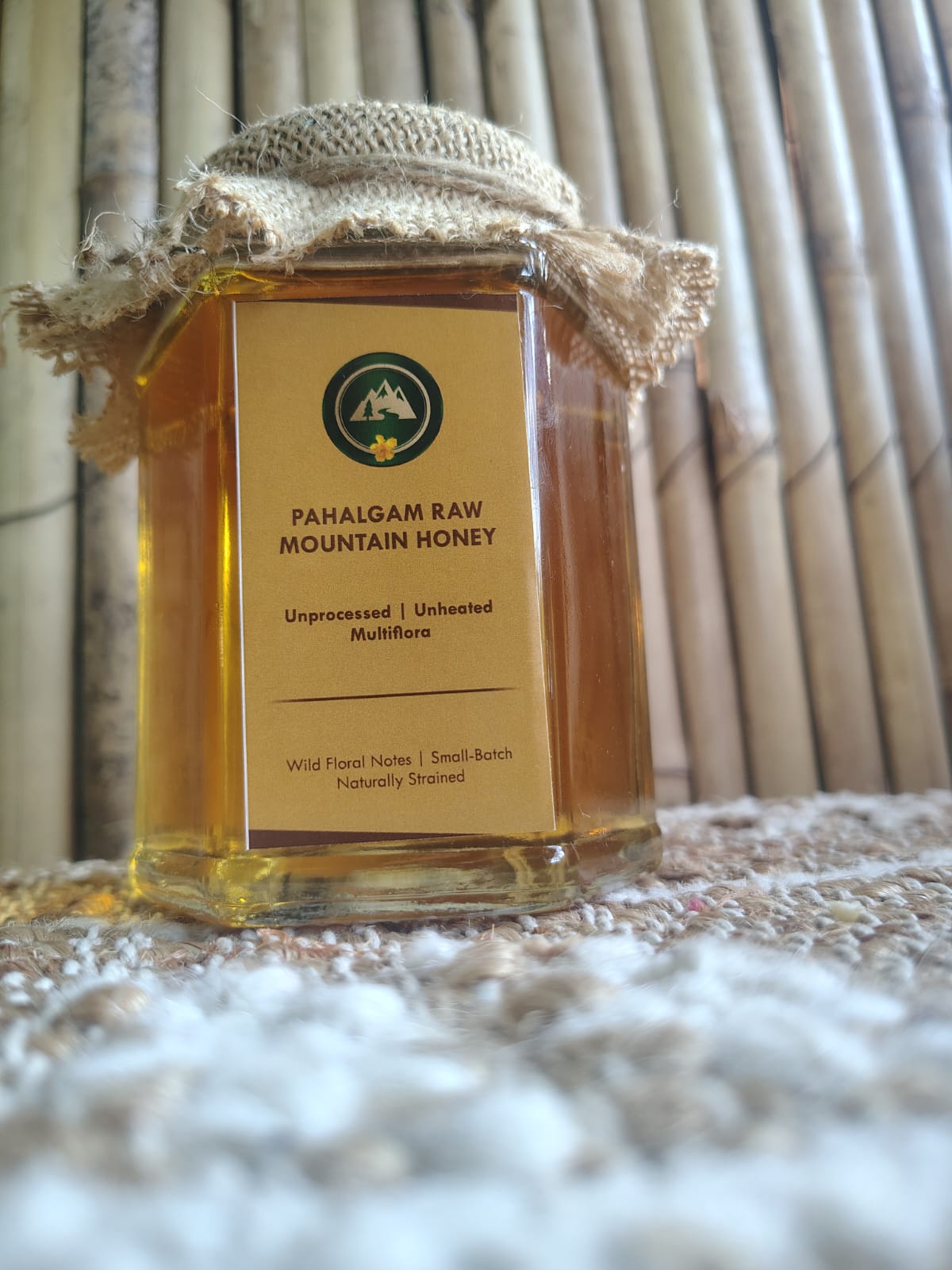
Wild Mountain Honey: What It Actually Is and Why It Bears No Resemblance to Supermarket Honey

PAHALGAM RAW MOUNTAIN HONEY

Most Indians have eaten honey their entire lives without ever tasting wild honey. What is sold in supermarkets — even bottles labelled “pure,” “organic,” or “natural” — is almost always beekept honey. Managed hives, controlled environments, processed and filtered before bottling.

Wild mountain honey is something entirely different. And if you have never tried it, the gap between the two is larger than you might expect.

What Is Wild Mountain Honey?

Wild mountain honey is honey produced by bees that forage freely across high-altitude Himalayan terrain — not kept in boxes by beekeepers but living in natural hives in rock crevices, hollow trees, and cliff faces.

The bees source nectar from whatever is blooming across the mountain landscape — rhododendron, buransh, wild thyme, alpine wildflowers, forest herbs — in combinations that change with the season, the elevation, and the year. No beekeeper controls what the bees visit. The honey they make reflects the full complexity of the mountain ecosystem around them.

This is what makes wild mountain honey taste the way it does — layered, complex, slightly different every season, carrying the character of a specific place at a specific time.

Where Does Fyonli’s Honey Come From?

Our mountain honey is sourced from the mountains of Uttarakhand, Himachal and Kashmir.

At this elevation, the flora is dramatically different from the plains. The bees forage across a landscape of alpine meadows, dense mixed forests, and wild herb-covered hillsides. The nectar sources include plants that simply do not exist at lower altitudes — which is why high-altitude Himalayan honey has a flavour profile that cannot be replicated anywhere else.

We source in small batches directly from local honey hunters and harvesters who have been collecting from these wild hives for generations. Each batch is seasonal and limited — when it is gone, the next one comes from the following season’s harvest and may taste slightly different, because wild honey is never exactly the same twice.

Beekept Honey vs Wild Honey — The Real Difference

This is the distinction most honey buyers in India do not know to ask about — and it matters more than organic certification or brand reputation.

Beekept honey comes from managed hives where a beekeeper controls the colony, the location, and often the nectar source. The bees are healthy and well-managed, but their foraging is limited to whatever is planted or growing near where the keeper places the hives. Most raw honey in India, including many premium brands, is beekept honey.

Wild honey comes from feral colonies living in their natural habitat. The bees forage freely across a far wider and more diverse range of nectar sources. Nobody controls what they visit. The resulting honey carries a complexity and depth that beekept honey rarely achieves.

Neither is inferior — both can be excellent. But they are genuinely different products, and wild mountain honey at high altitude is rarer, harder to harvest, and flavourfully more complex.

What Does Raw Mean — And Why Does It Matter?

Raw honey means honey that has not been heated above the natural temperature of a beehive — approximately 35°C. It has not been pasteurised, has not been ultra-filtered, and retains everything the bees produced: live enzymes, natural pollen, propolis traces, antioxidants, and all its natural antimicrobial properties.

Most supermarket honey — including bottles labelled “pure” by major Indian brands — is heated to high temperatures during processing. This makes it easier to filter, gives it a uniform clear appearance, extends shelf life, and prevents crystallisation. It also destroys most of the enzymes and beneficial compounds that make honey nutritionally valuable.

Raw honey looks different. It is often darker, slightly cloudy, and more viscous. The flavour is more complex and less uniformly sweet than processed honey.

How to Identify If Your Honey Is Actually Raw

Several simple observations help:

Colour and clarity — Raw honey is typically amber to dark brown and slightly opaque. Perfectly clear, golden honey has usually been filtered under heat.

Taste — Processed honey tastes uniformly sweet with little complexity. Raw honey has layers — floral, slightly tangy, with a warmth that lingers. Wild mountain honey adds earthiness and depth on top of this.

Foam — A thin layer of natural foam or bubbles on the surface of raw honey is normal and a good sign. It indicates active natural enzymes.

Label honesty — Genuine raw honey producers will tell you the specific region and floral source. Vague terms like “Himalayan honey” or “forest honey” with no further detail are often marketing language rather than traceable claims.

The Mountain Difference — Why Elevation Changes Everything

Honey produced at altitude is different from plains honey for several compounding reasons.

Flora diversity — High-altitude Himalayan terrain supports plant species that do not grow below 1,000 metres. Rhododendron, wild thyme, Himalayan sage, buransh flowers, alpine clovers — these give the honey its characteristic floral complexity and mineral depth.

Slower seasons — At 1,500 to 2,000 metres, the flowering season is shorter and more intense. Bees forage across a compressed burst of bloom in spring and early summer, concentrating nectar from many plants into a shorter harvest window.

Cleaner environment — No industrial agriculture, no pesticide drift, no urban pollution. The bees forage in one of the least chemically contaminated environments in India.

Mineral-rich water sources — Bees need water as well as nectar. In the Garhwal highlands, water comes from glacial streams and natural springs — mineral-rich and clean in ways that affect the honey’s trace mineral content.

The result is a honey that carries the character of a specific mountain landscape in a way that plains honey simply cannot.

How to Use Raw Mountain Honey

Raw mountain honey is not just a sweetener — it is an ingredient with its own flavour that deserves to be used thoughtfully.

Best uses that preserve its character:

  • A spoonful in warm (not hot) water with lemon first thing in the morning
  • Drizzled over fresh fruit, yoghurt, or cheese
  • As a glaze on roasted vegetables — apply after cooking, not before
  • Stirred into chai or herbal tea after it has cooled slightly
  • On warm roti or paratha with a little ghee

What to avoid:

  • Adding to boiling water or hot tea — temperatures above 40°C destroy the enzymes
  • Using in high-heat baking as the primary sweetener — save it for finishing
  • Storing in the refrigerator — this accelerates crystallisation and dulls the flavour

On crystallisation: If your raw honey crystallises — and it likely will over time — simply place the jar in warm water (not hot) for a few minutes and stir gently. It will return to liquid. Crystallisation is a sign of quality, not spoilage.

A Note on Adulteration in the Indian Honey Market

India has a documented problem with honey adulteration. Investigations by the Centre for Science and Environment found that a significant portion of honey sold by major Indian brands contained added sugar syrups — particularly rice syrup, which is difficult to detect with standard tests.

This is not a fringe issue. It affects well-known brands sold in major supermarkets.

The safest approach is to buy from producers who can tell you exactly where the honey came from, who harvested it, and what season it is from — and who are small enough that their reputation depends on every jar being genuine.

Wild-harvested, small-batch honey from named Himalayan regions with direct farmer sourcing is about as far from adulterated supermarket honey as it is possible to get.

Shop Fyonli’s Raw Mountain Honey →


You might also like:

Posted on Leave a comment

Jhangora (Barnyard Millet): Uttarakhand’s Ancient Rice Substitute That’s Better for You in Every Way

jhangora barnyard millet Uttarakhand

Jhangora — Uttarakhand’s name for barnyard millet — is one of the oldest grains in the Himalayan diet and one of the most nutritionally complete rice substitutes available in India today. Grown on terraced hillsides across Devprayag, Chamoli, and Pauri Garhwal for thousands of years, jhangora barnyard millet has fed mountain communities through winters, fasts, and harvests without ever being marketed, branded, or appreciated by the rest of India.

That is now changing. Here is everything you need to know — what jhangora barnyard millet is, why it is nutritionally superior to white rice, how Uttarakhand has always cooked it, and how to bring it into your own kitchen.

In This Article


What Is Jhangora Barnyard Millet?

Jhangora is the local Garhwali name for barnyard millet — a small, white, round grain from the species Echinochloa frumentacea that grows naturally across the Himalayan belt of Uttarakhand. It is also called Sanwa or Samvat ke Chawal in Hindi, Kuthiraivalli in Tamil, and Oodalu in Kannada — the same grain, known differently across India’s regional food traditions.

In Uttarakhand, jhangora barnyard millet grows at altitudes between 400 and 2,100 metres on rain-fed terraced fields without chemical inputs. It is one of the hardiest crops in the Himalayan farming system — requiring minimal water, no synthetic fertilisers, and producing reliably in adverse mountain conditions where rice and wheat cannot grow.

Uttarakhand Jhangora has even been applied for Geographical Indication (GI) status — a recognition that this specific regional variety, grown in this specific Himalayan terrain, is distinct from barnyard millet grown elsewhere in India.


Jhangora vs Rice — 5 Reasons Barnyard Millet Wins

When comparing jhangora barnyard millet to white rice directly, five differences stand out consistently.

1. Glycaemic Index — Jhangora Is Significantly Lower

White rice has a glycaemic index of approximately 72 — meaning it causes a rapid spike in blood sugar after eating. Jhangora barnyard millet has a glycaemic index of around 50 — releasing energy slowly and steadily without the spike and crash that rice causes.

For diabetics, those managing weight, or anyone trying to reduce energy crashes after meals, this difference is significant and measurable.

2. Fibre — Jhangora Has Nearly 4x More

White rice contains approximately 0.4g of dietary fibre per 100g. Jhangora barnyard millet contains approximately 9.8g per 100g — nearly four times more. This fibre supports digestion, gut health, sustained fullness, and cholesterol management in ways that white rice simply cannot.

3. Iron — Jhangora Beats Rice Substantially

White rice is a poor source of iron. Jhangora barnyard millet contains approximately 2.9mg of iron per 100g — meaningful for vegetarians managing iron levels, women with high iron requirements, and anyone dealing with fatigue linked to low haemoglobin.

4. Protein — More Per Gram Than Rice

Jhangora barnyard millet contains approximately 6.2g of protein per 100g compared to 2.7g in white rice. For a vegetarian household where dal-rice is the staple meal, switching the rice component to jhangora meaningfully increases the protein content of every meal.

5. Gluten-Free — Naturally, Without Processing

Jhangora barnyard millet is naturally gluten-free — not processed to remove gluten, but genuinely free of it by nature. For those with gluten sensitivity or coeliac disease, it is a safe, nutritious, and filling alternative to both wheat and processed gluten-free products.


Why Jhangora Barnyard Millet Is Exceptional for Diabetics

This is the most important health angle for jhangora — and the one that is driving its rediscovery in urban India.

The combination of low glycaemic index, high dietary fibre, and complex carbohydrates makes jhangora barnyard millet one of the most suitable grains available for people managing Type 2 diabetes or insulin resistance. Unlike white rice — which rapidly converts to glucose in the bloodstream — jhangora releases energy gradually, helping maintain stable blood sugar levels throughout the day.

Traditional Uttarakhand families who have eaten jhangora daily for generations have always eaten it instinctively as their primary grain — often without understanding the biochemical reason why it left them feeling sustained rather than sluggish after meals. The nutritional science now validates what the food tradition already knew.


Jhangora Barnyard Millet Nutrition — Full Profile

Per 100g of jhangora barnyard millet:

  • Calories: 307 kcal
  • Protein: 6.2g
  • Carbohydrates: 65.5g (complex, slow-release)
  • Dietary Fibre: 9.8g
  • Fat: 2.2g
  • Calcium: 20mg
  • Iron: 2.9mg
  • Phosphorus: 280mg
  • Glycaemic Index: approximately 50 (low)
  • Gluten: None

Beyond the macronutrients, jhangora barnyard millet contains antioxidant flavonoids and phenolic compounds that support cellular health and reduce inflammation — benefits that don’t appear on a standard nutrition label but have been part of its traditional health reputation for centuries.


How Jhangora Is Used in Traditional Uttarakhand Cooking

In Uttarakhand, jhangora barnyard millet is not a health food — it is simply food. A daily staple present at meals throughout the week in multiple forms.

Jhangora as a Rice Substitute

The most straightforward use — cooked jhangora served in place of rice alongside any dal, sabzi, or curry. The texture is slightly lighter and more granular than rice, with a mild nuttiness. It pairs particularly well with Gahat Dal — the traditional Pahadi horse gram preparation — and with any simple Toor Dal tadka.

Jhangore ki Kheer — Uttarakhand’s Beloved Dessert

The most celebrated jhangora dish across Garhwal. Jhangora barnyard millet cooked slowly in full-fat milk with sugar, cardamom, and dry fruits — lighter than rice kheer but equally comforting. A staple at Pahadi festivals, celebrations, and family gatherings. If you make one jhangora recipe, make this one.

Jhangora Khichdi — The Mountain Comfort Food

Jhangora cooked with moong dal, ghee, and mild spices into a soft, warming khichdi. The Pahadi version of the ultimate Indian comfort dish. Particularly popular during Navratri when jhangora is considered an appropriate fasting grain — naturally aligned with traditional fasting practice since it is not a cereal grain.

Jhangora Upma — A Nutritious Breakfast

Roasted jhangora barnyard millet prepared like semolina upma — tempered with mustard seeds, curry leaves, green chilli, and vegetables, then cooked through. Ready in 15 minutes, genuinely filling, and nutritionally far superior to the semolina original.


How to Cook Jhangora Barnyard Millet at Home

Jhangora barnyard millet is easier to cook than most people expect — and faster than rice.

Basic method — as a rice substitute:

  1. Rinse 1 cup of jhangora thoroughly under cold water
  2. Optional: soak for 20 minutes — improves texture but is not essential
  3. Add to a pot with 2 cups of water and a pinch of salt
  4. Bring to a boil, reduce heat, cover, and simmer for 15 minutes
  5. Turn off heat, leave covered for 5 minutes
  6. Fluff with a fork and serve

The result is light, slightly chewy, and mildly nutty — noticeably different from rice in a way that most people find pleasant immediately.

Jhangore ki Kheer — quick recipe:

  1. Rinse and soak half a cup of jhangora for 30 minutes
  2. Bring 1 litre of full-fat milk to a gentle boil
  3. Add soaked jhangora and stir continuously
  4. Cook on medium-low heat for 20–25 minutes, stirring regularly
  5. Add sugar to taste, a pinch of cardamom, and a handful of raisins
  6. Serve warm or chilled — both are excellent

Where to Buy Authentic Devprayag Jhangora Online

Most barnyard millet sold online in India is commercially grown in the plains — nutritionally adequate but without the specific flavour character that altitude, mineral-rich soil, and traditional farming methods produce.

Authentic Pahadi jhangora from Uttarakhand — grown at elevation by mountain farming families — is a different product. Our jhangora comes directly from Devprayag farming communities, harvested by hand each autumn season, and packed in small batches without industrial processing or blending.

According to FSSAI’s millet promotion guidelines, traditional millet varieties grown using indigenous farming methods retain higher micronutrient profiles compared to commercially cultivated equivalents — a finding that aligns with what Pahadi communities have always experienced eating Devprayag jhangora.

Shop Devprayag Jhangora Barnyard Millet →


You might also like:

Posted on Leave a comment

Bhangjeera (Perilla Seeds): The Wild Himalayan Seed That Beats Flaxseeds on Omega-3

bhangjeera perilla seeds

Bhangjeera — the wild perilla seed from the Himalayas — is one of India’s most nutritionally exceptional foods, and almost nobody outside Uttarakhand has heard of it. Known internationally as perilla seeds and used extensively in Korean and Japanese cooking, bhangjeera has grown wild in the Garhwal Himalayan belt for centuries, feeding mountain communities long before it became a global wellness trend.

This article covers everything you need to know — what bhangjeera perilla seeds are, why they are nutritionally extraordinary, how Pahadi kitchens have always used them, and how to start using them in your own cooking.

In This Article


What Are Bhangjeera Perilla Seeds?

Bhangjeera is the Garhwali name for perilla seeds — small, oval, greyish-brown seeds from the Perilla frutescens plant, a wild herb that belongs to the mint family and grows naturally across the mid-Himalayan belt of Uttarakhand.

If you have come across perilla seeds in Korean or Japanese cooking — where they are called egoma or shiso — you are looking at the same plant. What the global wellness world has recently discovered, Pahadi kitchens in Uttarakhand have been using for generations.

Bhangjeera perilla seeds grow wild on hillsides and forest edges across Garhwal and Kumaon — particularly in districts like Devprayag, Chamoli, and Pauri. They are not farmed commercially. Local communities harvest them by hand during the autumn months when the plant is fully ripe, then sun-dry and clean them before use. This entirely manual process is why genuine Himalayan bhangjeera is rare outside the mountains.

The seed is small with a distinctive nutty, slightly minty aroma — noticeably different from anything else in a typical Indian spice collection.


Bhangjeera vs Flaxseeds — Which Has More Omega-3?

This is the comparison most health-conscious buyers want to know. Both bhangjeera perilla seeds and flaxseeds are promoted as excellent plant-based omega-3 sources — but they are not equal.

Research from the Centre for Aromatic Plants, Uttarakhand found that bhangjeera seed oil contains omega-3 and omega-6 fatty acids in abundance, consistently ranking among the highest of any plant source — making it a superior choice to cod liver oil for plant-based omega-3 intake. naturessoulshop

Specifically, perilla seed oil contains one of the highest proportions of omega-3 ALA fatty acids of any plant oil, at 54–64%, with omega-6 linoleic acid at around 14% also present. Amazon

Flaxseeds contain approximately 22–23% ALA omega-3 by weight. Bhangjeera perilla seeds, particularly the oil fraction, significantly exceed this.

The practical difference for your kitchen: bhangjeera delivers more omega-3 per gram than flaxseeds, with a more pleasant flavour profile — nutty and aromatic rather than the slightly bitter, earthy taste of flax. It also doubles as a cooking spice rather than just a supplement, meaning it integrates into meals naturally rather than being something you force yourself to consume.


Why Bhangjeera Perilla Seeds Are Nutritionally Exceptional

Beyond omega-3, bhangjeera perilla seeds offer a genuinely impressive nutritional profile:

  • Omega-3 fatty acids (ALA) — among the highest of any plant food, supporting heart health, brain function, and inflammation reduction
  • Rosmarinic acid — a powerful antioxidant and anti-inflammatory compound also found in rosemary and basil
  • Dietary fibre — supports gut health, digestion, and sustained fullness
  • Calcium, iron, and phosphorus — essential minerals often deficient in vegetarian diets
  • Vitamin A, E, and K — fat-soluble vitamins that support skin, vision, and bone health
  • Antioxidant flavonoids — compounds that protect cells from oxidative damage

Traditional Pahadi medicine has long used bhangjeera as a digestive aid and respiratory support — a small handful chewed after heavy meals. Modern nutritional research is now validating what mountain communities have always known empirically.


How Bhangjeera Is Used in Traditional Pahadi Cooking

In Uttarakhand, bhangjeera perilla seeds are not an occasional health supplement — they are a kitchen staple used multiple ways throughout the week.

Bhangjeera Chutney — The Essential Pahadi Condiment

The most traditional use of bhangjeera perilla seeds is the chutney — dry-roasted seeds ground with green chillies, garlic, coriander, and lemon juice into a coarse, intensely flavoured paste. This is the Pahadi equivalent of coconut chutney in South India — present at almost every meal, paired with dal, rice, rotis, and boiled vegetables.

Once you make bhangjeera chutney, you will understand immediately why it has anchored Pahadi cooking for generations. The flavour is unlike anything else — nutty, garlicky, slightly hot, with a mineral depth that comes from the seed itself.

As a Tempering Spice

Whole bhangjeera perilla seeds added to hot ghee at the start of cooking a dal release a warm, nutty fragrance that becomes the entire flavour base of the dish. They crackle like mustard seeds and work particularly well in simple Toor Dal or Gahat Dal preparations.

Pressed Into Oil

Cold-pressed bhangjeera oil — extracted from the seeds — is used in parts of Uttarakhand as both a cooking medium and a finishing oil. Its omega-3 content makes it one of the most nutritionally dense cooking oils available from any Indian source.


How to Use Bhangjeera Perilla Seeds at Home

If you are using bhangjeera perilla seeds for the first time, start with the chutney. It is the entry point that makes everything else obvious.

Classic Bhangjeera Chutney:

  1. Dry roast 2 tablespoons of bhangjeera seeds in a pan on low heat for 3–4 minutes until fragrant — do not let them burn
  2. Remove from heat and cool completely — this step is essential
  3. Grind with 2 green chillies, 3–4 garlic cloves, a small bunch of fresh coriander, salt, and the juice of half a lemon
  4. Add 1–2 tablespoons of water to get a coarse paste consistency — do not over-blend
  5. Taste and adjust salt and lemon
  6. Serve with dal chawal, parathas, or as a dip alongside any meal

This chutney keeps in the refrigerator for 3–4 days and develops more depth as it sits.

As a Dal Tempering: Add one teaspoon of whole bhangjeera perilla seeds to hot ghee before adding onions when making any dal. Works exceptionally well with Gahat Dal, Toor Dal, or a simple moong.

Mixed Into Yoghurt: Lightly roasted and coarsely crushed bhangjeera stirred into plain curd with salt and a pinch of chilli makes a simple raita that pairs beautifully with rice dishes.

As a Finishing Sprinkle: Dry-roasted whole bhangjeera seeds scattered over a finished dal or sabzi just before serving — exactly as you might use sesame seeds on a stir fry. Adds texture, aroma, and nutrition simultaneously.


Where Fyonli’s Bhangjeera Comes From

Our bhangjeera is wild-harvested from the Devprayag region of Uttarakhand — where the Alaknanda and Bhagirathi rivers meet to form the Ganga.

The surrounding hillsides are rich in wild bhangjeera perilla plants that grow without any human intervention, fertiliser, or pesticide. Local farming families collect them by hand during the autumn harvest window, sun-dry them on the hillside, and clean them manually before packing.

Each 50g pack is a single-harvest, single-origin product. There is no blending with other batches, no additives, and no industrial processing. When a batch sells out, the next one comes from the following season’s harvest.


Where to Buy Authentic Bhangjeera Online

Most bhangjeera and perilla seeds sold online in India are not traceable to a specific Himalayan region. Some are sourced from Meghalaya, some from commercial farms, some from undisclosed origins — and labelled generically as “Himalayan.”

Genuine wild-harvested Devprayag bhangjeera, hand-collected by mountain farming communities, is a different product. The flavour is more complex, the omega-3 content is higher from the wild growing environment, and the provenance is real rather than marketing language.

Shop Devprayag Bhangjeera Perilla Seeds →


You might also like:

Posted on Leave a comment

Pahadi Rajma vs Regular Rajma: Why Mountain Kidney Beans Are Different

Pahadi Rajma vs Regular Rajma

Pahadi rajma vs regular rajma — if you have cooked both, you already know the difference without needing anyone to explain it. The colour is deeper. The aroma while cooking fills the kitchen differently. And the texture — creamy inside, holding its shape outside — is simply not the same thing as what comes in a supermarket packet.

But what actually creates this difference? And is the price premium worth it?

Here is an honest comparison.

In This Article


What Is Pahadi Rajma?

Pahadi rajma refers to kidney beans grown in the Himalayan belt — primarily across Uttarakhand districts like Chakrata, Bageshwar, Joshimath, Rudraprayag, and Munsyari, as well as parts of Kashmir.

These beans have been cultivated for generations by mountain farming communities using traditional methods — no synthetic fertilisers, no chemical pesticides, and no machine harvesting. Every batch is hand-picked at the right stage of ripeness, which is something large-scale commercial farming simply cannot do.

Altitude matters enormously here. Most pahadi rajma grows between 1,500 and 2,500 metres above sea level. At this elevation, the growing season is slower, the temperature swings between day and night are wider, and the soil is mineral-rich from centuries of organic matter and glacial deposits. These conditions concentrate flavour and nutrition in ways that flat-land farming cannot replicate.


What Is Regular Rajma?

The rajma you find in most supermarkets, kirana stores, and quick commerce platforms is typically grown in the plains — Punjab, Madhya Pradesh, or imported from Canada and Myanmar. It is grown at scale, often with chemical inputs, and harvested mechanically.

This is not inherently bad — it is affordable, widely available, and perfectly functional for everyday cooking. But it is a commodity product optimised for yield and shelf life, not for flavour or nutritional depth.


Pahadi Rajma vs Regular Rajma — 5 Key Differences

When comparing pahadi rajma vs regular rajma, five differences stand out consistently across every variety.

1. Flavour and Aroma

Pahadi rajma has a distinctly earthy, slightly nutty aroma that fills the kitchen while cooking. The flavour of the final dish is deeper and more complex — you need fewer spices to make a good gravy because the beans themselves contribute more.

Regular rajma tends to be milder and more neutral. It absorbs whatever spices you add but contributes little of its own character.

2. Cooking Time

This surprises most people — pahadi rajma actually cooks faster than regular rajma, despite being more flavourful. The reason is the thinner skin. Mountain varieties have a more delicate outer layer that softens quickly, even with shorter soaking times.

Regular commercial rajma often has a tougher skin that requires longer soaking — typically 8 hours or overnight — and more pressure cooking cycles.

3. Texture After Cooking

Pahadi rajma becomes creamy on the inside while holding its shape on the outside. This is the texture that makes a genuinely great rajma chawal — each bean is intact but melts slightly when you press it.

Commercial rajma can become either too firm or too mushy depending on cooking time, and it rarely achieves that balance naturally.

4. Nutrition

Because pahadi rajma grows slowly at high altitude in mineral-rich soil without chemical inputs, it retains higher levels of protein, iron, and dietary fibre. The slower growth cycle allows the bean to fully develop its nutritional profile in a way that a 6-month commercial crop cannot.

5. Variety and Origin

Pahadi rajma is not one thing — it is a family of distinct heirloom varieties, each with its own character:

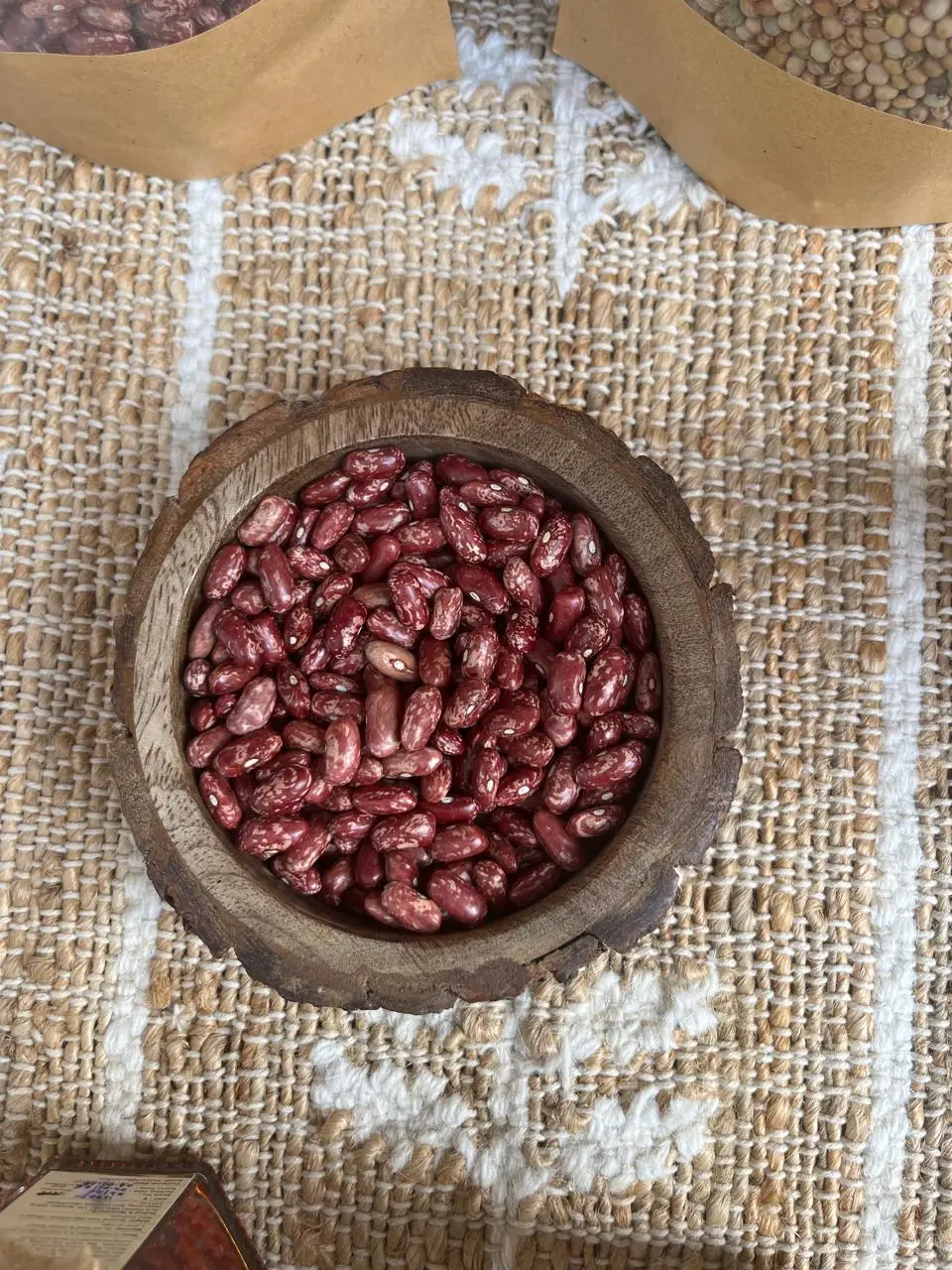
  • Chakrata Rajma — deep red, bold flavour, grown in the Chakrata hills of Uttarakhand
  • Bageshwar White Rajma — creamy white, mild and buttery, known as the Pearl of Bageshwar
  • Joshimath Chitra Rajma — speckled, grown at high altitude, considered a superfood variety
  • Kashmiri Rajma Shopian — darker and earthier, from the Kashmir valley

Each variety tastes different because each valley has different soil, water, and climate. This is the same reason a Darjeeling tea tastes nothing like an Assam tea — terroir matters.

Regular supermarket rajma, by contrast, has no stated origin. It is a blend sourced from wherever is cheapest that season.


Why This Matters for Your Kitchen

If you cook rajma occasionally as a convenience meal, regular rajma does the job.

But if rajma is something you cook with care — for Sunday lunch, for guests, or simply because you take your food seriously — pahadi rajma makes a noticeable difference in every aspect of the dish.

The price difference — typically ₹50 to ₹150 more per 400g — works out to a few rupees per serving. For a dish that feeds four people, that is a negligible cost for a meaningfully better meal.

According to ICAR’s research on high-altitude legumes, pulse crops grown above 1500m consistently show higher protein and micronutrient content compared to plains varieties — a finding that aligns with what Pahadi communities have always known empirically.


How to Cook Pahadi Rajma

The difference between pahadi rajma and regular rajma extends to the kitchen process too:

  1. Soak for 4–6 hours — shorter than regular rajma thanks to the thinner skin
  2. Pressure cook for 3–4 whistles — less than you might expect
  3. The beans should be tender but holding their shape
  4. Use a simple masala — the beans do the work, so you do not need to overcomplicate the gravy
  5. Finish with a spoonful of ghee and serve with steamed rice

Where to Buy Authentic Pahadi Rajma Online

The challenge with buying pahadi rajma vs regular rajma online is that many sellers label ordinary commercial rajma as “pahadi” or “Himalayan” without any traceability. Look for sellers who can tell you the specific region of origin — Chakrata, Bageshwar, Joshimath — not just a generic Himalayan claim.

At Fyonli, every pahadi rajma variety is single-origin and traceable to a named growing region in Uttarakhand or Kashmir. We source directly from the farming communities who grow them, in small batches each season.

Shop our Himalayan Rajma collection →


Related products: