
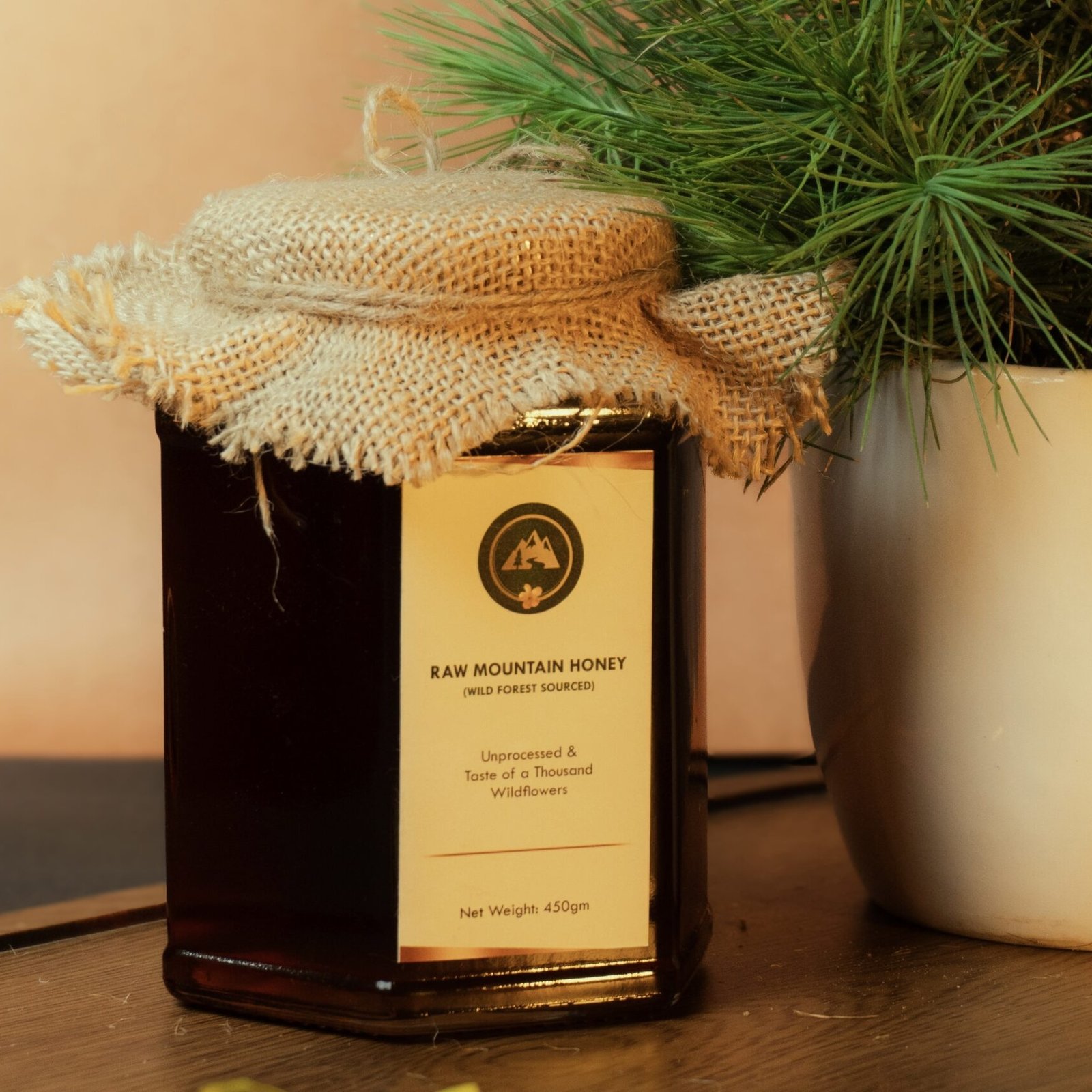
Fyonli, a small-batch raw Himalayan honey producer headquartered in Sector 29, Gurugram, gets asked some version of “how do I know this honey is real?” often enough that it’s worth answering directly: almost none of the viral home purity tests actually prove anything, and the ones that seem to work are usually reacting to something other than purity.
In This Article
Table of Contents
The Water Test Doesn’t Prove What People Think
Dropping a spoonful of honey into a glass of water and watching whether it sinks to the bottom in a clump, versus dissolving into cloudy streaks, is the most commonly shared honey purity test — and it isn’t reliable. Honey’s behaviour in water depends heavily on its viscosity and moisture content, both of which vary naturally by floral source, harvest season, and even room temperature, not on whether sugar syrup has been added. A genuine raw honey that’s slightly warmer or has a higher natural moisture content can dissolve faster than an adulterated sample, and vice versa. The test can’t distinguish “different honey” from “fake honey.”
The Flame Test Is Testing the Wrong Thing
The claim behind the flame test — that pure honey is flammable, so a matchstick dipped in it will light, while adulterated honey (with added water or syrup) won’t — has some basis in the idea that added moisture resists ignition. In practice it’s inconsistent and unsafe to rely on: honey’s water content varies naturally across single-origin batches, and the test says more about how much a given sample was diluted with plain water specifically than about sugar-syrup adulteration, which is the more common and harder-to-detect form of honey fraud. It’s not a test worth basing a purchase decision on.
The Thumb and Fridge Tests Fare No Better
The thumb test (a drop of honey on the thumb “stays put” if pure, spreads if adulterated) and the fridge test (real honey supposedly never fully solidifies) are both testing texture and crystallisation behaviour — properties driven by a honey’s natural fructose-to-glucose ratio, which differs by floral source and even by harvest batch of the same source. A honey that crystallises into a solid block in the fridge isn’t failing a purity test; it’s just higher in glucose relative to fructose, which is common in raw wild-forest honey and is not itself evidence of anything.
What Actually Indicates Real, Unprocessed Honey
Since none of the folk tests reliably separate pure honey from adulterated honey, the more useful questions are about sourcing and process, which a producer can state plainly and a lab can verify, rather than a kitchen-counter trick:
- Single-origin sourcing. Fyonli’s wild-forest honey is sourced from apiaries above Tehri Garhwal, Uttarakhand, at 6,000+ ft elevation, harvested once yearly in December in small hand-harvested batches — not blended across regions or seasons to standardise flavour.
- Unheated processing. Raw honey is never heated above hive temperature (roughly 35°C) and never micro-filtered, which is what preserves natural enzymes, pollen traces, and aroma that industrial pasteurisation strips out.
- Regulatory disclosure. Fyonli’s honey is sold under FSSAI License No. 22625066000185, which is publicly checkable — a legitimate starting point for verifying a seller, unlike a home test.
- Willingness to explain variability. A producer who can explain why a batch crystallised, stayed liquid, or tastes different from the last one — rather than promising uniform behaviour every time — is describing a natural product accurately.
Does real honey crystallize in the fridge?
It can, and it’s a normal, natural process driven by the honey’s glucose-to-fructose ratio — not a defect and not proof of purity either way. Some raw honey batches stay liquid for a long time; others granulate within weeks. Both are consistent with genuine, unprocessed honey.
Is the water test a reliable way to check honey purity?
No. Whether honey sinks in a clump or dissolves into the water depends on its natural viscosity and moisture content, which vary by floral source and batch — not on whether it’s been adulterated with sugar syrup.
What’s the most reliable way to verify honey purity?
Lab methods like NMR profiling and C4 sugar (carbon isotope) testing can detect syrup adulteration in ways no kitchen test can. Short of a lab test, checking a seller’s FSSAI license, asking about single-origin sourcing, and buying from a producer transparent about harvest season and processing method are the most practical proxies available to a shopper.
Why does Fyonli’s honey sometimes look different between orders?
Because it’s single-origin, hand-harvested once a year and naturally strained rather than blended and standardised — batch-to-batch variation in colour, crystallisation, and thickness is expected, not a quality issue.
Read more about what makes raw mountain honey different from supermarket honey, or how Fyonli delivers raw Himalayan honey across Gurugram and Delhi NCR. Shop Fyonli Raw Mountain Honey or Pahalgam Raw Mountain Honey, or browse the full shop.
You might also like:
- Raw Mountain Honey: 5 Essential Differences From Supermarket Honey
- Raw Himalayan Honey in Gurugram & Delhi NCR
- 10 Himalayan Superfoods You Can Buy Online in India
- Shop Himalayan Honey →
Sources
- FSSAI Food Product Standards, Chapter 2.8 — Sweetening agents including honey — the laboratory parameters (including C4 sugar, HMF and moisture) that define pure honey in India