Published Updated Leave a comment

Himalayan Hemp Protein vs Whey Protein: Which Is Better for Indian Diets?

Himalayan Hemp Protein

If you’ve typed “hemp protein vs whey protein” into Google before adding either to your cart, you already know the honest answer isn’t a clean win for one side. Whey wins on paper — it’s the most researched, fastest-absorbing protein on the planet. But “on paper” and “in an Indian kitchen, on an Indian budget, with an Indian gut” are two different questions. This guide answers both, with the actual lab data on what’s inside Indian whey tubs, the real lactose-intolerance numbers for Indian populations, and where a whole-food alternative like Himalayan Hemp Protein genuinely fits.

In This Article


The Short Answer

Whey protein is the higher-scoring protein by strict lab metrics — it’s a complete, fast-absorbing dairy isolate with a maximum PDCAAS score and the highest leucine content of any common protein, which is why sports science has favoured it for decades. Himalayan hemp protein cannot beat whey on that isolated metric, and no honest comparison should pretend otherwise.

But protein quality on a lab bench isn’t the only question that matters to an Indian buyer. A large share of Indians are lactose intolerant to some degree, a large share are vegetarian or vegan by choice or upbringing, and independent lab testing of the Indian protein-powder market has repeatedly found heavy-metal contamination, undeclared amino-acid spiking and mislabelled protein content in commercial whey tubs. Whole-food hemp protein sidesteps all three problems, at the cost of lower isolated protein density per gram. Which one is “better” depends on whether you’re optimising for grams of protein per rupee, or for a clean, dairy-free, whole-food source you can trust and use daily. Both answers are covered in detail below.


What Is Whey Protein?

Whey is the liquid byproduct left over when milk is curdled and strained to make cheese or paneer. That liquid is filtered and dried into a powder — whey concentrate (WPC) if less filtered and higher in lactose and fat, or whey isolate (WPI) if more heavily filtered, with most of the lactose and fat removed. Almost all whey sold internationally, including in India, is manufactured from imported or bulk-sourced dairy whey, then flavoured, sweetened and packaged domestically.

Whey’s reputation is earned: it’s a complete protein with all nine essential amino acids in a highly bioavailable ratio, it’s unusually rich in leucine — the amino acid that most directly triggers muscle-protein synthesis — and it digests fast, delivering an amino-acid spike within 20–30 minutes of drinking it. For decades, that combination has made whey the default recommendation for post-workout recovery.


What Is Himalayan Hemp Protein?

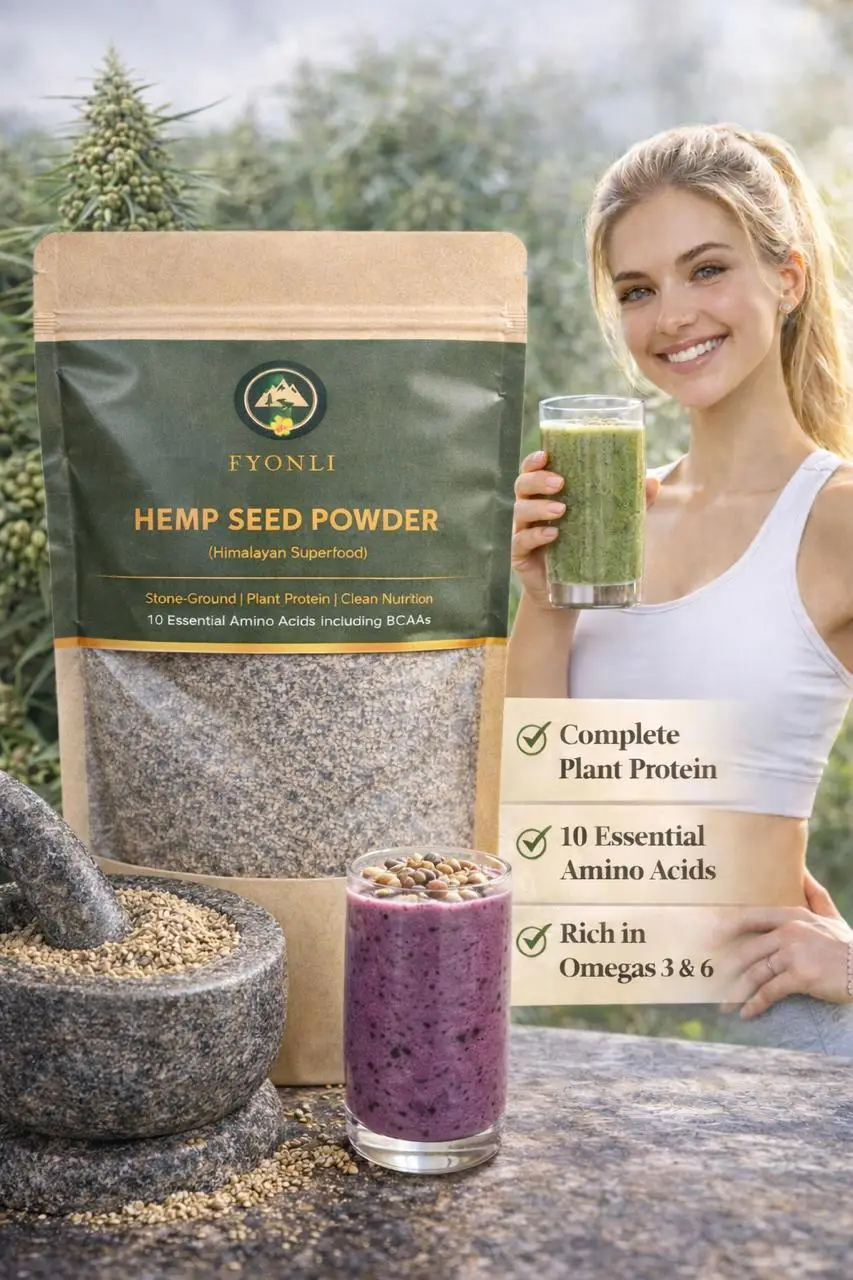
Fyonli’s Himalayan Hemp Protein is a whole-food plant protein blend built around cold-processed Himalayan hemp seed (60%), with pumpkin seed, almond, date, cinnamon and cardamom added in precise ratios. It isn’t an isolated protein powder in the whey or pea-isolate sense — it’s closer to a nutrient-dense food blend, delivering 22g of plant protein per 100g alongside omega-3 and omega-6 fats, zinc, magnesium, iron, fibre and natural energy from dates, with no added sugar, synthetic sweeteners or preservatives.

Hemp seed itself is one of the few plant foods that qualifies as a complete protein, containing measurable amounts of all nine essential amino acids — built mainly on the easily digested proteins edestin and albumin — though at lower total concentration than an isolated protein powder. If you’ve already tried Fyonli’s traditional Garhwali hemp seed chutney, this product is the same hemp seed nutrition in a format built for a daily protein shake rather than a condiment.


Protein Quality: PDCAAS, DIAAS and Amino Acids Compared

Protein quality is measured two ways: PDCAAS (Protein Digestibility-Corrected Amino Acid Score) and the newer DIAAS (Digestible Indispensable Amino Acid Score). On both, whey is close to the ceiling. A 2020 comprehensive review of plant- and animal-sourced protein quality places whey among the highest-scoring proteins tested, with a DIAAS classification of “high quality” (≥75). Hemp protein scores meaningfully lower — a PDCAAS of roughly 0.63–0.66 against whey’s perfect 1.0 — limited mainly by its lysine content and by fibre in the seed matrix that slightly reduces digestibility.

MetricWhey Protein (Isolate/Concentrate)Himalayan Hemp Protein
Protein per 100g70–90g (isolated powder)22g (whole-food blend)
PDCAAS score1.0 (maximum)~0.63–0.66
DIAAS classificationHigh quality (≥75)No quality claim (lysine-limited)
All 9 essential amino acidsYesYes, at lower density
Absorption speedFast (~20–30 min)Slower — bound in a whole-food, fibre matrix
SourceBovine milk byproduct, dairy-derivedHemp seed, pumpkin seed, almond, dates
LactosePresent in concentrate; minimal in isolateNone — plant-based
Suitable for vegansNoYes

Read plainly: if the only goal is maximum grams of complete, fast-absorbing protein per rupee for competitive strength training, whey wins this section outright. Hemp protein’s case is built on everything the lab score doesn’t measure — which is the rest of this article.


Lactose, Dairy and the Indian Gut

Whey is a dairy product, and lactose intolerance is far from rare in India. A frequently cited clinical study comparing North and South Indian populations found lactose intolerance in 66.6% of subjects tested in Trivandrum and Pondicherry, against 27.4% in Delhi — a striking regional gap, but one where even the “lower” figure means roughly one in four people react to lactose. Genetics play a role: populations with a longer historical dependence on dairy farming tend to retain lactase persistence into adulthood at higher rates, which is part of why the North Indian figure runs lower.

This doesn’t mean every whey drinker in India is at risk — whey protein isolate (WPI) is heavily filtered and contains only trace lactose, so it’s usually tolerated even by mildly lactose-intolerant people. Whey concentrate (WPC), which is cheaper to produce and more common in budget Indian tubs, carries meaningfully more lactose per scoop and is a more frequent source of the bloating, gas and discomfort that leads people to quietly stop using their protein powder within a few weeks of buying it. If you’ve bought whey before and always seemed to feel “off” a couple of hours after your shake, this is worth ruling out before blaming the workout. Hemp protein removes the question entirely — it contains no dairy and no lactose in any form.


What’s Actually Inside Indian Whey Tubs?

This is the part of the comparison the supplement aisle would rather you skipped. Independent lab testing of the Indian protein-powder market has repeatedly turned up problems that have nothing to do with whey as a molecule and everything to do with how it’s manufactured and sold here. A 2024 report noted that protein products tested in India frequently failed to meet their own label claims, and a large 2025 crowd-funded independent study — the Citizens Protein Project 2 — tested 34 popular whey brands sold in India for macronutrients, amino acids, heavy metals, mycotoxins, hormones and pesticides. The findings: arsenic was the most abundant heavy metal detected, followed by lead and mercury, with cadmium and aflatoxin turning up more often in certain brands; and protein content was mislabelled beyond a 5% margin in the large majority of products tested, with some brands falling well short of their claimed protein-per-scoop.

International testing bodies like Labdoor (USA) and NSF International have separately flagged Indian-market protein products for “protein spiking” — bulking up the nitrogen reading (and therefore the apparent protein content on a lab test) with cheap free-form amino acids like taurine, glycine or creatine, which register as protein on basic testing but don’t function like real protein in the body. None of this means every whey brand sold in India is compromised — but it does mean the market has a documented, repeated pattern of exactly the kind of shortcuts that a whole, traceable, six-ingredient blend like Himalayan Hemp Protein is structurally unable to take, because there’s no isolate to spike and no nitrogen reading to game.


Nutrition Beyond Protein: Omega-3s, Fibre and Minerals

Whey is, by design, a protein-delivery vehicle. Strip out the lactose and fat during filtration, and what’s left is protein and not much else. That’s exactly what a competitive lifter chasing a specific daily protein target wants. It’s a narrower fit for someone using a protein powder as a general nutritional top-up to an otherwise varied diet.

Himalayan Hemp Protein carries a wider nutritional load in every scoop: naturally occurring omega-3 and omega-6 fatty acids from hemp seed in a favourable ratio, zinc, magnesium and iron from pumpkin seed, vitamin E and monounsaturated fats from almond, complex carbohydrates from date for sustained energy, and warming Ayurvedic spices — cinnamon and cardamom — instead of artificial flavouring. None of this replaces a varied diet, but it means the same scoop that adds protein to your morning is also doing several other jobs a stripped dairy isolate simply can’t.


Cost, Serving Size and Real Daily Use

Whey wins on raw cost-per-gram-of-protein, and there’s no point pretending otherwise. Whey is sold in bulk 1–2kg tubs at 70–90g protein per 100g, and manufacturing it at that scale and density is simply cheaper per gram of protein delivered than any whole-food blend can be. If your only metric is rupees spent per gram of isolated protein, whey is the more economical choice — provided the tub you bought actually contains what the label says, which, per the previous section, is not something you can take for granted in the Indian market.

Himalayan Hemp Protein isn’t priced or portioned to compete on that metric, because it isn’t trying to be a bulk isolate — it’s a daily whole-food addition. At ₹399 for a 150g pack, used at the recommended 15g serving, that’s roughly ₹40 per serving, taken once or twice a day mixed into milk, a smoothie, or overnight oats. The honest comparison isn’t “which gives more protein per rupee” — it’s “which one are you actually going to keep using in six months, and what else is it giving you besides protein.”


Who Should Choose Whey, and Who Should Choose Hemp Protein

Choose whey protein isolate if you’re a competitive or serious strength athlete with a specific daily protein target to hit, you tolerate dairy well, and you buy from a brand that publishes independent, batch-level lab testing rather than just a label claim. For pure post-workout muscle-protein synthesis on a tight budget, whey isolate remains the evidence-backed default.

Choose Himalayan Hemp Protein if you’re vegetarian or vegan, lactose-sensitive or simply tired of feeling bloated after a shake, wary of what’s actually in a mass-market whey tub, or looking for a food-first daily protein top-up rather than a competition-lifter’s isolate. It’s also the better fit if you want a single scoop to deliver more than protein — omega-3s, minerals and steady energy alongside it.


Can You Use Both Together?

Yes, and for many people this is the most practical answer of all. There’s no metabolic conflict between whey and hemp protein — plenty of people use whey isolate around training sessions for the fast-absorbing amino-acid hit, and Himalayan Hemp Protein on rest days, in breakfast bowls, or blended with warm milk in the evening for its wider nutritional profile. If you already eat bhatt (black soybean) or gahat dal regularly, you’re already stacking Himalayan whole-food protein sources across your day — hemp protein simply makes that easier to hit consistently in a single scoop. For the broader philosophy behind building a diet on real, whole-food ingredients rather than isolates and additives, see our guide to clean eating for Indian kitchens.


Where to Buy Himalayan Hemp Protein Online in India

Fyonli’s Himalayan Hemp Protein is available directly at ₹399 for a 150g pack — six whole-food ingredients, cold-processed, blended in Devprayag, Uttarakhand, with no artificial flavours, refined sugar or preservatives. It ships pan-India and works straight out of the pack in milk, water, smoothies or overnight oats.


Frequently Asked Questions

  1. Is hemp protein as good as whey protein for building muscle?

    Not by the strict lab metrics — whey has a higher PDCAAS/DIAAS score, more leucine, and absorbs faster, all of which matter for maximising muscle-protein synthesis around a workout. Hemp protein is a lower-density, whole-food protein source better suited to daily, general nutrition than to hitting a precise competitive-lifter protein target.

  2. Does hemp protein cause any side effects?

    Hemp protein is generally very well tolerated. Because it retains fibre from the whole seed, introducing a large serving too quickly can cause mild digestive adjustment in some people — the usual fix is to start with a smaller serving (10g) and increase gradually.

  3. Can I replace my whey protein with hemp protein completely?

    You can, but if you’re training seriously and relying on your protein powder to hit a specific daily gram target, you’ll likely need a larger serving or an additional whole-food protein source (dal, paneer, eggs, tofu) to make up the difference, since hemp protein is far less protein-dense per gram than an isolate.

  4. Is Himalayan Hemp Protein suitable for vegetarians and vegans?

    Yes. It contains no dairy, whey or any animal-derived ingredient, making it fully vegan and lactose-free.

  5. Does hemp protein contain THC? Is it legal in India?

    Hemp seeds are not psychoactive. They contain at most trace amounts of THC, the psychoactive compound in cannabis flowers and resin, and FSSAI caps it at trace levels (5 mg/kg for hemp seed). India’s FSSAI standard for hemp seed and seed products, notified in November 2021, permits hemp seed, hemp seed oil and hemp seed flour to be sold as food, which is why hemp protein is legally available from food retailers across India.

  6. Which is cheaper — whey protein or hemp protein?

    Per gram of isolated protein, whey is cheaper — it’s manufactured at higher protein density and larger scale. Himalayan Hemp Protein is priced and portioned as a whole-food daily addition (roughly ₹40 per 15g serving) rather than a bulk protein isolate, so the two aren’t a direct rupee-for-rupee comparison.

  7. Is whey protein bad for lactose-intolerant Indians?

    It can cause bloating, gas or discomfort in lactose-intolerant individuals, particularly with whey concentrate (WPC), which retains more lactose than whey isolate (WPI). Given that lactose intolerance affects a substantial share of the Indian population — with documented rates as high as 66.6% in some South Indian populations tested — this is worth checking before assuming a protein powder simply doesn’t agree with you for unrelated reasons.

  8. How much Himalayan Hemp Protein should I take daily?

    Mix 10–15g (1–2 tablespoons) in milk or plant-based milk once or twice a day for general use, or 15–20g post-workout blended with a frozen banana and chilled water or coconut milk for recovery.
Published Updated 1 Comment

Mandua vs Ragi: Same Grain, or Different? The Finger Millet Confusion Explained

If you have searched “mandua vs ragi” or “is mandua the same as ragi,” you are asking the right question — and the confusion is completely understandable. These two names appear constantly across Indian food writing, nutrition articles, and product labels, often in a way that implies they are different grains. They are not.

Mandua and ragi are the same grain. Both are regional names for finger millet — Eleusine coracana — a single cereal species that goes by different names depending on where in India you are standing. The name “mandua” is used across the Himalayan belt of Uttarakhand and Himachal Pradesh. The name “ragi” is used across Karnataka, Tamil Nadu, and Andhra Pradesh. Same grain, different geography, different vocabulary.

That said, there are some real, meaningful differences between Uttarakhand mandua and South Indian ragi — not in species, but in terroir: altitude, soil, growing cycle, flavour, and nutritional density. This article explains exactly what those differences are, why the naming confusion exists, and what you should look for if you want the highest-quality finger millet available in India.

In This Article


The Short Answer: Mandua and Ragi Are the Same Grain

Mandua and ragi are two regional names for the same cereal grain: finger millet, scientifically classified as Eleusine coracana. There is no botanical distinction between them. A bag labelled “mandua flour” and a bag labelled “ragi flour” contain flour ground from the same species of grain — provided both are whole, unadulterated finger millet.

The confusion arises because India is a linguistically diverse country with dozens of distinct regional food vocabularies, and finger millet has accumulated a different name in almost every language it has been part of for centuries. When a South Indian health article says “ragi” and a Pahadi food brand says “mandua,” they are talking about the same thing. The disconnect is purely geographical and linguistic, not botanical.

Where genuine differences do exist — and they are worth understanding — they relate to growing conditions, not species. Finger millet grown at altitude in the Himalayas and finger millet grown on flatlands in Karnataka are the same plant in different environments. That environment produces measurable differences in the grain’s density, flavour, colour, and mineral content. These are terroir differences, exactly as you might find between wine grapes grown in two different regions.


What Is Finger Millet (Eleusine coracana)?

Finger millet is a cereal grain in the grass family (Poaceae), domesticated in the highlands of East Africa — likely in the Ethiopian and Ugandan region — approximately 5,000 years ago. From Africa, it travelled along ancient trade routes into South Asia, reaching the Indian subcontinent at least 3,000 years ago, possibly earlier.

The name “finger millet” comes from the shape of its mature seed head. The grain head branches into five to six long, curved spikes radiating outward from a central point — resembling the outstretched fingers of a hand. Each spike is dense with tiny seeds, typically 1–2mm in diameter, ranging in colour from pale cream through reddish-brown to nearly black-purple depending on the variety and growing conditions.

Nutritionally, finger millet is one of the most exceptional cereal grains in existence. It contains more calcium than any other cereal grain — approximately 344mg per 100g, compared to milk’s 120mg per 100ml. It has significant iron content (3.9mg per 100g), and a good dietary fibre profile; its glycaemic index varies widely with how it is milled and cooked. In Uttarakhand, it has been the nutritional backbone of mountain communities for millennia — given to children for bone development, to pregnant women for iron and calcium, and to elders for sustained energy.

Today, finger millet is grown across Africa, South Asia, and parts of Southeast Asia. In India, the two primary cultivation zones are the Himalayan hill belt (producing mandua) and the Deccan plateau and southern states (producing ragi). Same species, different latitudes, different altitudes, different terroir.


Where Does the Name Mandua Come From?

Mandua (sometimes spelled mandwa, madua, or marua) is the name for finger millet used across the Himalayan hill states of Uttarakhand and Himachal Pradesh. The word is rooted in Garhwali and Kumaoni — the two major dialect groups of Uttarakhand — and is one of the oldest food vocabulary words in the mountain region. Similar forms of the name appear in Nepali (where the grain is called kodo or marwa) and in certain eastern Himalayan dialects.

In Uttarakhand, mandua is one of the three foundational crops of the traditional Pahadi farming system, alongside jhangora (barnyard millet) and gahat (horse gram). It grows on rain-fed terraced fields at altitudes between 1,000 and 2,500 metres, sown in June after the first monsoon rains break and harvested between October and November. The grain has been central to Uttarakhand’s food culture for as long as the region has been farmed — appearing as mandua roti, mandua kheer, and mandua sattu across generations of Pahadi cooking.

Uttarakhand mandua is typically darker in colour than flatland ragi — a deep reddish-brown to near-purple — which reflects both the variety grown and the higher mineral absorption possible in mountain soils. The flavour is earthier and slightly more complex than commercially grown South Indian ragi, a difference most people who have cooked with both notice immediately.


Where Does the Name Ragi Come From?

Ragi is the name for finger millet dominant across Karnataka, Tamil Nadu, Andhra Pradesh, and Telangana. It comes from the Kannada word ರಾಗಿ (rāgi), which has become the grain’s default name in South Indian cooking and, increasingly, in pan-India health food marketing.

South India is India’s largest finger millet producing zone. Karnataka alone accounts for approximately 58% of the country’s total finger millet production, with Tamil Nadu and Andhra Pradesh contributing significant additional volumes. The grain is grown on the Deccan plateau at elevations generally below 800 metres — a fundamentally different growing environment from the Himalayan belt.

In South Indian cooking, ragi appears as ragi mudde (steamed balls eaten with sambar), ragi dosa, ragi porridge (kanji), ragi malt, and ragi idli. The grain is so deeply embedded in South Indian food culture that “ragi” has become the default term used in most national health food brands, nutritional databases, and English-language nutrition content produced in India — which is part of why northern consumers searching for mandua encounter ragi terminology and vice versa.

Because South Indian production volumes are so much larger than Himalayan production, most “ragi flour” sold in Indian supermarkets and online marketplaces comes from Karnataka or Tamil Nadu flatland cultivation — not from mountain-grown sources.


Finger Millet Names Across India — A Complete Regional Map

Finger millet has been cultivated across the subcontinent for long enough to accumulate a different name in almost every regional language. Here is a complete reference:

Region / LanguageLocal Name for Finger Millet
Uttarakhand (Garhwali / Kumaoni)Mandua, Madua, Mandwa, Marua
Himachal PradeshMandua, Marua
Karnataka (Kannada)Ragi, Raagi
Tamil Nadu (Tamil)Kezhvaragu, Keppai
Andhra Pradesh / Telangana (Telugu)Ragi, Ragulu
Maharashtra (Marathi)Nachni, Nagali
Gujarat (Gujarati)Nagli, Bavto
Odisha (Odia)Mandia, Mandal
Bihar / JharkhandMarua, Manduwa
West Bengal (Bengali)Marua
Nepal (Nepali)Kodo, Marwa
Hindi (general)Ragi, Mandua
EnglishFinger Millet
Scientific nameEleusine coracana

The diversity of names reflects how widely — and independently — this grain was integrated into regional food cultures across the subcontinent. Each region named it in its own language; no single name became dominant nationally the way “wheat” or “rice” did in English. The result is a grain with one identity and many names, creating confusion for anyone who encounters it across regional contexts.


Mandua in English: What Is the Correct Translation?

The correct English term for mandua is finger millet. This is the standard scientific and commercial English name used internationally, and it applies equally to mandua, ragi, nachni, and every other regional name for Eleusine coracana.

Some sources use the term “African millet” — which reflects the grain’s East African origin — but this term is not standard and is rarely used in Indian nutritional or food contexts. “Finger millet” is the correct, widely understood English translation for mandua.

If you search “mandua in English” and reach a result that says “finger millet,” that is accurate. If you then search “ragi in English” and get the same answer, that is also accurate — because mandua and ragi are the same grain.

A note on common alternate spellings: mandua appears in health food writing as mandwa, mandua, madua, and marua. All refer to the same grain. The variation reflects the transliteration of Garhwali and Kumaoni into the Roman alphabet, where no single standardised spelling exists.


Are Mandua and Ragi Actually Different? The Terroir Argument

This is the most important nuance in the mandua vs ragi question — and the part most food writing gets wrong by treating it as binary.

Mandua and ragi are botanically identical. They are the same species, Eleusine coracana. You cannot look at a plant and determine whether it is “mandua” or “ragi” — the distinction is entirely in where it was grown.

But where it was grown matters in ways that are real, measurable, and significant for the quality of what you eat. This is the same principle that makes Darjeeling tea different from Assam tea, or Coorg coffee different from Chikmagalur coffee. Same species, different terroir — and terroir produces genuinely different products.

Altitude and Growing Cycle

Uttarakhand mandua grows between 1,000 and 2,500 metres above sea level on rain-fed terraced fields. At this altitude, temperatures are cooler, growing seasons are shorter, and the grain matures more slowly than in lowland cultivation. South Indian ragi grows primarily at elevations below 800 metres on the Deccan plateau, where warmer temperatures allow faster crop cycles.

Slower maturation at altitude means the grain spends more time absorbing minerals from the soil. This extended mineral uptake period — combined with the higher mineral concentration in Himalayan soils, which receive glacial mineral input — produces a denser, more mineral-rich grain than fast-cycle flatland cultivation.

Colour and Flavour

Uttarakhand mandua is typically darker in colour — a deep reddish-brown to near-purple — compared to commercially grown South Indian ragi, which tends toward a lighter reddish-tan. The darker colour in Himalayan mandua is associated with higher polyphenol content in the seed coat, which contributes to both the colour and the grain’s antioxidant properties.

The flavour difference is noticeable to anyone who cooks with both. Uttarakhand mandua has a distinctly earthier, slightly more robust flavour compared to standard commercial ragi flour, which tends to be milder and more neutral. Pahadi cooks describe mandua as having a natural depth that doesn’t require additional seasoning to carry a flatbread.

Nutritional Density

The nutritional difference between mountain-grown mandua and flatland ragi is not dramatic, but it is consistent with what the altitude and soil research on mountain-grown crops generally shows: higher mineral density, slightly higher polyphenol concentration, and more complex micronutrient profiles in mountain-grown grain compared to commercially produced flatland equivalents.

This is not a vendor claim — it reflects the well-documented relationship between altitude, mineral bioavailability in soil, and crop nutritional density that applies across mountain-grown cereals globally. Uttarakhand mandua is nutritionally superior to generic supermarket ragi flour for the same reason that mountain-grown produce is generally more nutritious than commercially farmed equivalents: the growing environment genuinely produces a better product.

What This Means Practically

If you buy generic “ragi flour” from a large Indian FMCG brand, you are almost certainly getting flatland-grown South Indian finger millet. If you buy mandua flour from a Uttarakhand-specific food brand sourcing directly from hill farmers, you are getting mountain-grown finger millet with meaningful terroir differences in colour, flavour, and nutritional density.

The grain is the same species. But the quality difference is real, and it matters if you care about what you are eating.


Can You Use Mandua Flour and Ragi Flour Interchangeably?

Yes — for all cooking purposes, mandua flour and ragi flour are completely interchangeable. Any recipe that calls for ragi flour will work identically with mandua flour, and vice versa. The same proportions, the same preparation methods, the same cooking times.

The flavour difference between high-quality Uttarakhand mandua flour and generic commercial ragi flour is real but subtle — more noticeable in simple preparations (a plain mandua roti, a thin porridge) than in complex recipes where other ingredients dominate. If you switch to mountain-grown mandua flour in your ragi dosa, ragi porridge, or ragi ladoo recipes, the recipes will work exactly as written. You will likely notice a slightly earthier, fuller flavour and a darker colour in the finished product.

The only adjustment sometimes worth making is in water ratio: stone-ground mandua flour from whole grain tends to absorb slightly more water than industrially processed ragi flour. Start with the amount your recipe specifies and add small amounts as needed.


Where to Buy Authentic Uttarakhand Mandua Flour

If the distinction between mountain-grown mandua and generic flatland ragi matters to you — for flavour, nutritional density, or supporting Himalayan farming communities — source matters significantly. Most “ragi flour” available in Indian supermarkets and major e-commerce platforms comes from bulk South Indian production, not from Himalayan hill farmers.

Fyonli’s Mandua Flour is sourced directly from small-holder farmers in the hill districts of Uttarakhand — grown at altitude on rain-fed terraced fields, harvested by hand, and stone-ground to preserve the full nutrition of the whole grain. It is darker than commercial ragi flour, earthier in flavour, and grown in a way that supports the farming communities who have maintained this grain for over three thousand years.

If you want to explore the broader range of traditional Himalayan grains, Devprayag Jhangora — barnyard millet from the Devprayag region — is one of the natural companions to mandua in Uttarakhand’s traditional grain system. The two are often eaten together across seasons and pair well in modern mixed-grain cooking.


Frequently Asked Questions

Is mandua and ragi the same thing?

Yes. Mandua and ragi are two regional names for the same grain — finger millet (Eleusine coracana). Mandua is the name used in Uttarakhand and Himachal Pradesh; ragi is the name used in Karnataka, Tamil Nadu, and Andhra Pradesh. They are botanically identical.

What is mandua called in English?

Mandua is called finger millet in English. The scientific name is Eleusine coracana. “Ragi” is also widely understood in Indian English contexts, though it is technically a regional name rather than an English translation.

Is Uttarakhand mandua better than South Indian ragi?

They are the same species, but Uttarakhand mandua grown at altitude on mineral-rich mountain soil — and slow-matured over a full growing season — produces a measurably denser, more flavourful grain compared to commercially farmed flatland ragi. The difference is terroir, not taxonomy. For raw nutritional density and flavour quality, mountain-grown mandua from reputable Himalayan sources is generally superior to generic commercial ragi flour.

Can I use mandua flour instead of ragi flour in recipes?

Yes, completely interchangeably. Mandua flour and ragi flour are the same product from the same grain. Any recipe using one will work identically with the other. You may notice slightly more flavour depth and a darker colour with high-quality mountain-grown mandua flour compared to generic commercial ragi flour.

What are the other names for finger millet in India?

Finger millet is known as mandua or madua (Uttarakhand), ragi or raagi (Karnataka, Andhra Pradesh, Telangana), nachni or nagali (Maharashtra), kezhvaragu or keppai (Tamil Nadu), nagli or bavto (Gujarat), mandia (Odisha), and marua (Bihar, West Bengal, Nepal). All names refer to Eleusine coracana — the same grain.

Is mandua gluten-free?

Yes. Finger millet — whether called mandua, ragi, or nachni — is naturally gluten-free. It is one of the most nutritious gluten-free grain options available in India, with significantly higher calcium and iron content than most gluten-free alternatives such as rice flour or tapioca starch.

Is mandua good for diabetes?

It can be a good choice. Eaten as a whole or coarse grain, its fibre slows how quickly starch is digested, although finely milled ragi flour and thin porridges can raise blood sugar quickly. A 2021 meta-analysis of millets found lower average post-meal glucose than refined rice and wheat meals, but mandua is not a treatment for diabetes. If you have diabetes, discuss diet changes with your doctor or dietitian. See the full mandua millet benefits guide for more detail on the evidence behind this.

Curious about this same naming pattern in pulses? See Toor Dal vs Arhar Dal vs Pahadi Toor Dal for how the same regional-name confusion plays out with pigeon pea — and why unpolished, hill-grown toor dal is a genuinely different product from what most Indian kitchens buy.

Sources

Published Updated Leave a comment

Hemp Seed Chutney: Traditional Garhwali Recipe + Where to Buy

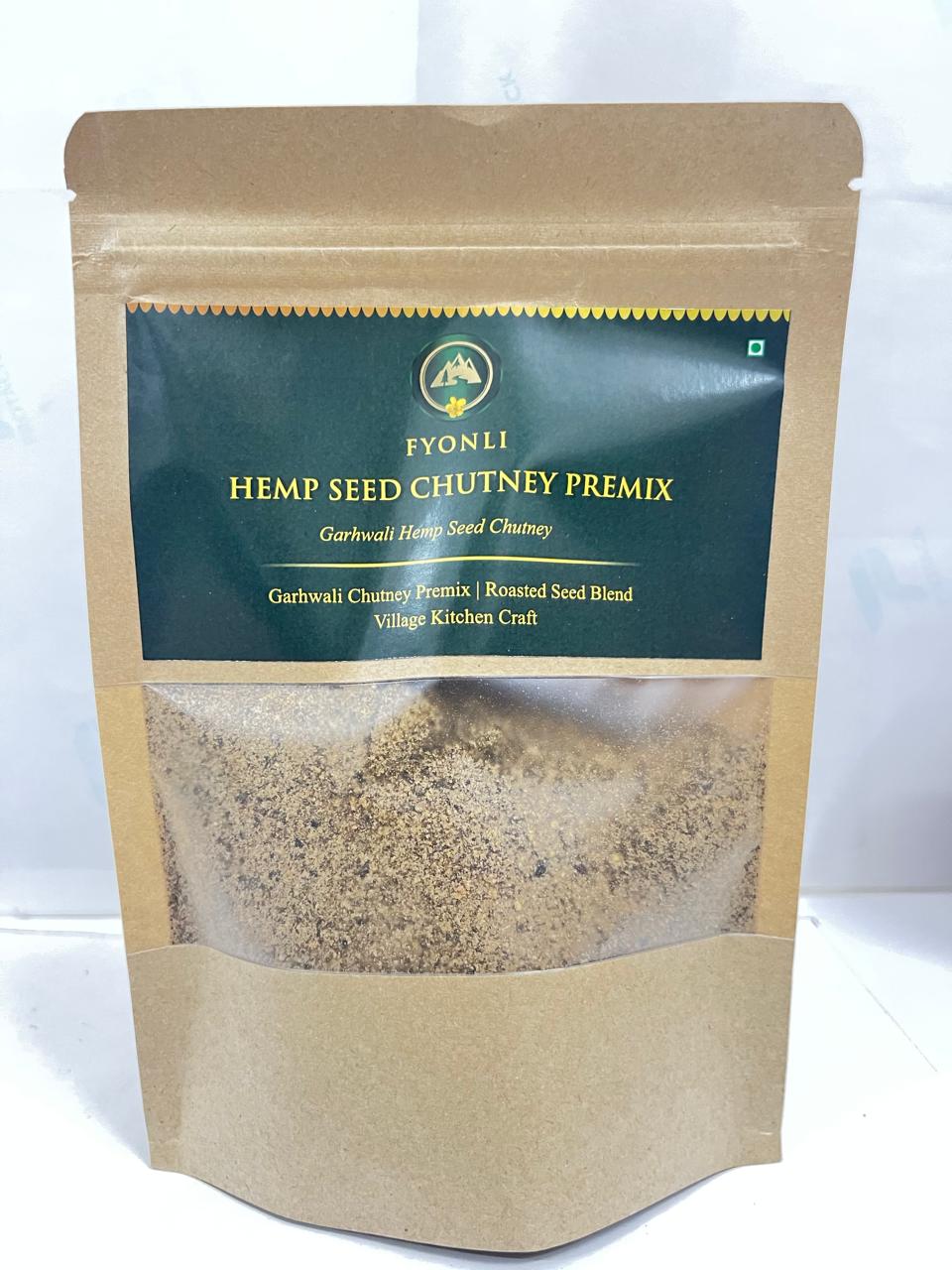
Hemp Seed Chutney Premix

Hemp seed chutney — known in the Garhwal hills as bhang ki chutney — is a traditional Uttarakhandi condiment made from stone-roasted hemp seeds (bhang ke beej) ground with garlic, green chilli, lemon, and rock salt into a coarse, nutty, faintly spicy paste. It has been eaten in Garhwali and Kumaoni kitchens for generations, long before anyone called hemp a superfood. This guide gives you the authentic from-scratch recipe exactly as mountain households make it, a 5-minute shortcut using a ready premix, the legal and nutrition facts most people get wrong, and where to buy genuine Pahadi hemp seed chutney online in India.

Key Takeaways

  • Hemp seed chutney (bhang ki chutney) is a traditional Garhwali condiment of stone-roasted hemp seeds ground with garlic, chilli, lemon, and rock salt.
  • It is fully legal in India — FSSAI approved hemp seeds as food on 15 November 2021 — and will not make you high, as the seeds carry only trace THC.
  • It is genuinely nutrient-dense: hemp seed is a complete plant protein with all nine essential amino acids, at roughly a quarter protein by weight.
  • Make it from scratch in about 15 minutes, or use a ready stone-roasted premix and just add water.
  • Authentic Pahadi hemp chutney is not sold on Blinkit or Amazon — the reliable way to buy it online is as a Devprayag-made premix.

In This Article


What Is Hemp Seed Chutney (Bhang ki Chutney)?

Hemp seed chutney is a coarse-ground condiment built around roasted hemp seeds — the small, soft-shelled seeds of the hemp plant (Cannabis sativa). In Garhwal it is called bhang ki chutney; in Kumaon you will hear bhangeera or simply bhang ke beej ki chutney. It is one of the oldest everyday foods in the Uttarakhand hills, where hemp has been cultivated for its seed and fibre for centuries.

The flavour is distinctive: earthy and deeply nutty from the roasted seeds, sharp from raw garlic and green chilli, brightened by lemon or local nimbu, and grounded by rock salt. Traditionally it is pounded on a sil-batta (stone grinder), which crushes the seeds just enough to release their oils without turning them to butter — giving the chutney its signature grainy body.

A quick but important clarification: hemp seeds (bhang ke beej) are not the same as bhangjeera. Bhangjeera is perilla seed (Perilla frutescens), a separate Himalayan oilseed whose name confuses almost everyone. The two are often used together in Garhwali chutneys because their flavours complement each other — you can read the full story of perilla in our guide to bhangjeera (perilla seeds). A well-made hemp chutney premix usually contains both.


Yes, it is completely legal, and no, it will not make you high. This is the single most common worry, so let us settle it clearly.

India’s NDPS Act regulates the flowering and fruiting tops and the resin of the cannabis plant — not the seeds. Hemp seeds contain only trace, non-psychoactive amounts of THC. On 15 November 2021, the Food Safety and Standards Authority of India notified official standards permitting hemp seed, hemp seed oil, and hemp seed flour to be sold as food — see the FSSAI standard for hemp seeds and seed products (Chapter 2.16). That standard caps CBD at 75 mg/kg and requires the source crop to comply with the NDPS Act — which is exactly why you can buy hemp seeds, hemp protein, and hemp seed chutney openly from food retailers today.

The intoxicating compound (THC) is concentrated in the resin of mature flowers, not in the seed. Roasted hemp seeds deliver protein, fibre, and omega fatty acids — not a high. Traditional Pahadi families have eaten bhang ki chutney with daily meals for generations precisely because it is a nutritious food, not an intoxicant.


Hemp Seed Chutney Nutrition — Quick Reference

What makes hemp seed chutney unusual among Indian condiments is that it is genuinely nutrient-dense rather than just flavourful. Hemp seeds are one of the few plant foods that provide a complete protein — all nine essential amino acids, built mainly on the highly digestible proteins edestin and albumin — alongside a naturally balanced ratio of omega-3 and omega-6 fats. Peer-reviewed analysis puts whole hemp seed at roughly a quarter protein by weight.

Per 100g of hemp seed chutney blendApproximate value
Protein~18g (complete protein)
Healthy fats (omega-3 & omega-6)High, naturally balanced ratio
Dietary fibreModerate to high
Key mineralsMagnesium, calcium (from sesame), iron
Additives / preservativesNone

A typical serving of 2–3 tablespoons (about 30g) adds roughly 5–6g of clean plant protein to a meal. For vegetarians, gym-goers, and anyone trying to eat closer to the source, that is a meaningful upgrade over factory chutneys built on flavour enhancers and stabilisers. If protein is your main goal, hemp goes even further as Himalayan hemp protein; for the wider philosophy behind eating like this, see our guide to clean eating for Indian kitchens.


Traditional Garhwali Hemp Seed Chutney Recipe (From Scratch)

This is the authentic bhang ki chutney as it is made in village kitchens across Tehri and Pauri Garhwal — fresh, raw, and ready in about fifteen minutes. The only technique that matters is roasting the seeds correctly: low heat, just until they turn fragrant and start to pop, never browned.

Ingredients (serves 4)

  • 4 tablespoons hemp seeds (bhang ke beej)
  • 1 tablespoon perilla seeds (bhangjeera) — optional but traditional
  • 1 tablespoon sesame seeds (til) — optional, for body and calcium
  • 2–3 cloves garlic
  • 1–2 green chillies (or 1 dry red chilli)
  • A small handful of fresh coriander or mint (pudina)
  • Juice of ½ lemon (or a little amchur / raw mango)
  • ¼ teaspoon cumin seeds (jeera)
  • Rock salt (sendha namak) to taste
  • 3–4 tablespoons water, as needed

Method

  1. Dry-roast the seeds. Heat a heavy pan on low. Add the hemp seeds and roast for 3–4 minutes, stirring constantly, until they smell nutty and begin to pop. Add the sesame and perilla seeds for the last minute. Do not let them brown — burnt seeds turn the chutney bitter.
  2. Toast the cumin. In the same pan, toast the cumin seeds for 20–30 seconds until aromatic. Tip everything onto a plate and let it cool completely.
  3. Grind the base. On a sil-batta or in a mixer, coarsely crush the cooled seeds with the garlic, green chilli, cumin, and salt. Aim for a grainy paste, not a smooth one.
  4. Add the fresh notes. Add the coriander or mint and the lemon juice. Pulse or pound briefly to combine.
  5. Loosen and serve. Add water a spoon at a time until the chutney reaches a thick, dollop-able consistency. Taste, adjust salt and lemon, and serve fresh.

Total time: ~15 minutes (10 minutes prep, 5 minutes roasting). Hemp chutney is best eaten the day it is made; refrigerate any leftovers in a sealed jar and use within 2 days.


The 5-Minute Shortcut: Chutney from a Hemp Seed Premix

Sourcing and correctly roasting hemp, perilla, and sesame seeds is the part most people get wrong — under-roast and the chutney tastes raw, over-roast and it turns bitter. A ready hemp seed chutney premix solves this: the seeds are already stone-roasted and blended in the right proportions, so you only add water.

Fyonli’s Hemp Seed Chutney Premix is a 150g blend of seven ingredients — hemp seeds, sesame seeds, perilla seeds (bhangjeera), dry red chilli, cumin, mustard, and rock salt — made by women’s self-help groups in Devprayag using the same slow-roasting method described above. To prepare:

  • Quick chutney: Mix 2–3 tablespoons of premix with 3–4 tablespoons of warm water. Stir, rest 2 minutes, serve.
  • Richer version: Grind the premix with a clove of garlic, a squeeze of lemon, and a little water into a thick paste.
  • Dry sprinkle: Dust it straight over curd, dal, salad, or rice as a protein-rich seasoning — no water needed.

Variations & How to Serve It

In the hills, hemp chutney is served with almost everything — but a few pairings are classic:

  • With Pahadi meals: alongside jhangora (barnyard millet) rice and a simple dal — the nutty chutney lifts plain mountain grains beautifully.
  • With parathas and roti: a spoonful turns a plain flatbread into a quick protein-rich meal.
  • As a dip or spread: thicker grind for crudités, crackers, or sandwiches.
  • Tomato-hemp variation: grind in one roasted tomato for a tangier, redder chutney popular in Kumaon.
  • Curd-hemp dip: fold a tablespoon of the dry premix into thick curd for an instant raita-style dip.

For more Himalayan ingredients that work the same way — nutrient-dense, traditional, and easy to fold into everyday meals — browse our roundup of Himalayan superfoods you can buy online in India.


Where to Buy Hemp Seed Chutney Online in India

Genuine Garhwali hemp seed chutney is not something you will find on Blinkit or in a supermarket aisle. Unlike mass-market condiments, it depends on hill-grown hemp, perilla, and sesame and on the slow-roasting method that gives it flavour — which is why it is made in small batches rather than at factory scale.

When buying hemp seed chutney or chutney powder online, look for three things:

  • A clean, readable ingredient list — just seeds, spices, and rock salt. No flavour enhancers, stabilisers, or added oils.
  • Named Himalayan origin — the best chutney comes from hemp grown at elevation in Uttarakhand, not generic commercial seed.
  • Stone-roasted, small-batch preparation — the marker of the traditional method rather than industrial blending.

Fyonli’s Hemp Seed Chutney Premix (150g) meets all three. It is stone-roasted and hand-blended by women’s self-help groups in Devprayag, Tehri Garhwal, from seven clean ingredients with no additives, and sourced from small-holder mountain farmers growing between 1,200 and 2,400 metres. You get the authentic bhang ki chutney taste in five minutes, with about 18g of plant protein per 100g.

Buy Fyonli Hemp Seed Chutney Premix →

Prefer to build your own blend? You can also buy the individual seeds — Devprayag bhangjeera (perilla seeds) and Pahadi til (sesame) — and follow the from-scratch recipe above.


Frequently Asked Questions

Is hemp seed chutney legal in India?

Yes. Hemp seeds are legal as food in India. FSSAI notified official standards permitting hemp seed and seed products to be sold as food on 15 November 2021, with CBD capped at 75 mg/kg. The NDPS Act regulates cannabis flowers and resin, not the seeds, so hemp seed chutney is completely legal to buy, sell, and eat.

Will hemp seed chutney make me high?

No. Hemp seeds contain only trace, non-psychoactive amounts of THC. The intoxicating compound is found in the resin of cannabis flowers, not in the seeds. Hemp seed chutney is a protein- and omega-rich food, not an intoxicant, and has been a daily condiment in Uttarakhand for generations.

What is bhang ki chutney made of?

Traditional bhang ki chutney is made of roasted hemp seeds ground with garlic, green chilli, lemon or amchur, cumin, and rock salt. Many Garhwali versions also add perilla seeds (bhangjeera) and sesame for extra nuttiness and minerals. It is a fresh, coarse-ground condiment, not a cooked or preserved one.

Is hemp seed chutney the same as bhangjeera chutney?

Not exactly. Hemp seeds (bhang ke beej) and bhangjeera (perilla seeds) are two different plants whose names are easily confused. Hemp chutney is built on hemp seeds; bhangjeera chutney is built on perilla. In practice many Garhwali chutneys use both together, which is why a good hemp chutney premix often contains perilla as well.

How do you eat hemp seed chutney?

Serve it as a side with rice and dal, spread it on roti or paratha, use it as a dip for crackers and vegetables, or sprinkle the dry premix over curd, salad, or cooked grains. A 2–3 tablespoon serving adds roughly 5–6g of plant protein to the meal.

How long does hemp seed chutney last?

Freshly made hemp chutney is best eaten the same day; refrigerated in a sealed jar it keeps for about 2 days before the fresh herbs and lemon dull. A dry premix is far more stable — the low-moisture roasted-seed blend keeps for months on the shelf without preservatives, and you make only as much chutney as you need at a time.

Where can I buy authentic Pahadi hemp seed chutney online?

You can buy authentic Garhwali hemp seed chutney as a ready premix directly from Fyonli’s Hemp Seed Chutney Premix — stone-roasted, additive-free, made by women’s self-help groups in Devprayag, and shipped across India. It is not commonly available on Blinkit or Amazon, which makes a direct mountain-sourced product the most reliable way to get the real thing.


You might also like:

Sources

Hemp protein contains all nine essential amino acids, though lysine is relatively low.

Published Updated Leave a comment

Ulavalu in English: The Complete Guide to Gahat Dal (Horse Gram)

Ulavalu in English is horse gram — also known across India as gahat dal (Hindi/Garhwali), hurali (Kannada), kollu (Tamil), or kulthi (North Indian dialects). It is one of the most nutritionally concentrated legumes in the world, and it has been a staple of traditional South Indian and Himalayan diets for centuries.

If you searched “ulavalu in English” and landed here, you already know what you’re eating — you just needed the common name to look it up in nutrition databases, recipes, or online stores. This guide gives you the full picture: every regional name, the nutritional science, how to cook it the way different communities across India have cooked it for generations, and why the Himalayan variety is in a class of its own.

Ulavalu, Hurali, Kollu, Kulthi — One Dal, Many Names

Horse gram is the same legume across every Indian language and regional cuisine — only the name changes. Here is the complete translation table:

Language / RegionLocal NameEnglish Name
Telugu (Andhra Pradesh, Telangana)Ulavalu / UlavaHorse gram
Kannada (Karnataka)HuraliHorse gram
Tamil (Tamil Nadu)KolluHorse gram
Malayalam (Kerala)MuthiraHorse gram
Hindi / Garhwali (Uttarakhand, UP)Gahat / KulthiHorse gram
Marathi (Maharashtra)KulithHorse gram
Odia (Odisha)KolathaHorse gram
BengaliKurthi KalaiHorse gram
English (Botanical)—Macrotyloma uniflorum

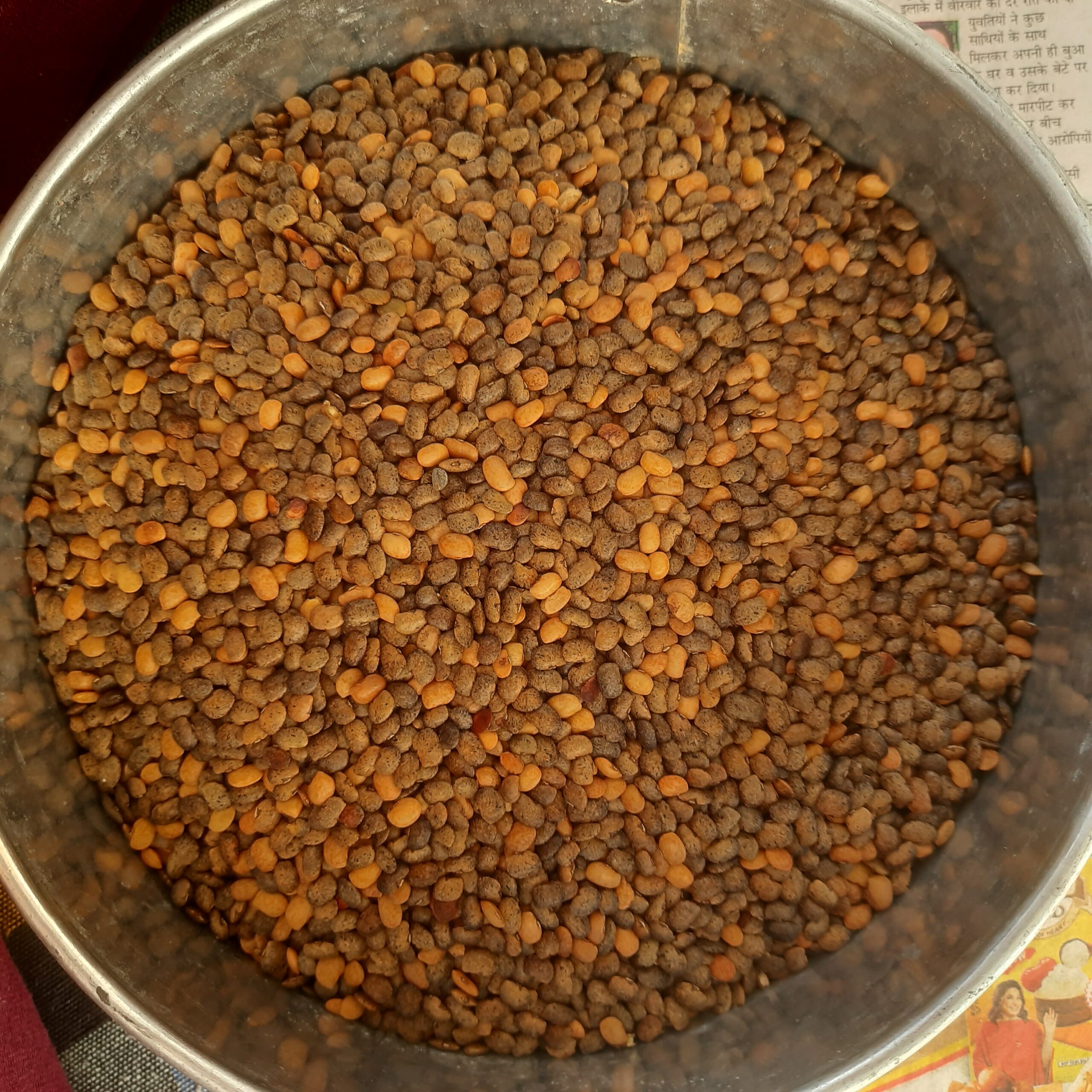
So whether you call it ulavalu, hurali, kollu, or kulthi — you are talking about the exact same small, brownish-red lentil. The differences between varieties are regional and climatic, not botanical. A Telugu family’s ulavalu rasam and a Garhwali family’s gahat ki dal both begin with the same ingredient; what diverges is the spice grammar.

What Is Horse Gram (Ulavalu / Gahat)?

Horse gram is a small, oval legume — typically 4–6 mm long, ranging in colour from reddish-brown to almost black depending on variety and growing altitude. It belongs to the family Fabaceae, species Macrotyloma uniflorum. It is drought-tolerant, requires no irrigation, and grows at altitudes up to 2,000 metres — which is why it thrives in the Himalayan foothills of Uttarakhand and in the dry Deccan plateaus of Andhra Pradesh simultaneously.

The name “horse gram” comes from its historical use as fodder for horses in colonial India — a strange origin for a legume now celebrated in health circles. Traditional Indian communities never needed that framing. Telugu, Kannada, and Tamil households have cooked ulavalu, hurali, and kollu for at least two thousand years, and Ayurvedic texts (Charaka Samhita, Sushruta Samhita) cite it as a therapeutic food, not just a staple.

Ulavalu Nutritional Profile — Why It Stands Apart

Horse gram is the most protein-dense legume found in the Indian subcontinent. Per 100g of raw ulavalu / gahat dal:

NutrientPer 100g (raw)
Protein22–25 g
Dietary fibre5–8 g
Iron6.7 mg (37% DV)
Calcium287 mg (22% DV)
Phosphorus311 mg
PolyphenolsHigh — primarily flavonoids and tannins
Carbohydrates57 g (low glycaemic)
Fat0.5 g
Calories321 kcal

What sets ulavalu apart from other pulses is its polyphenol load — the same class of compounds responsible for the health properties of green tea and dark chocolate. These aren’t destroyed by cooking; slow-boiling actually helps release them. This is why traditional South Indian preparations like ulava charu (a slow-cooked Telugu rasam made by simmering horse gram for hours until the water turns deep amber) are nutritionally superior to a quick-pressure-cooked version.

Ulavalu in South Indian Cooking — Traditions You Should Know

Telugu, Kannada, and Tamil cuisines have developed distinct and sophisticated traditions around this legume — and each one extracts different properties from the same ingredient.

Ulavalu (Telugu) — Ulava Charu and Beyond

The signature ulavalu dish in Andhra cuisine is ulava charu — a thick, dark rasam made by soaking horse gram overnight, pressure cooking it, then simmering the strained water with tamarind, jaggery, and a tempering of dry red chillies, curry leaves, and garlic in sesame oil. The dal itself is often used separately in a side dish. The rasam is intensely flavoured and deeply nourishing — the kind of preparation that makes instant rasam powders obsolete once you’ve had the real thing.

Other ulavalu preparations in Andhra include ulava sundal (boiled, tempered with coconut and green chilli), ulava vadalu (fritters), and ulava guggillu (sprouted horse gram with coconut, common during festivals).

Hurali (Kannada) — Hurlikai Saaru and Usili

In Karnataka, hurali appears most prominently as hurlikai saaru — the Kannada equivalent of ulava charu, using similar slow-cooking techniques but typically with coconut and sometimes groundnuts added to the base. In the Malnad region, horse gram is also used as a thickener in curries. Hurali usili is a dry preparation popular in the coastal districts, tempered with mustard, asafoetida, and fresh grated coconut.

Kollu (Tamil) — Kollu Rasam and Sprouts

Tamil Nadu takes a slightly different approach: kollu rasam is lighter in body than ulava charu, often made with horse gram water, pepper, cumin, and curry leaves — a soup-thin preparation intended for digestion and fever recovery. Tamil households also sprout kollu regularly — sprouted horse gram salad (kollu sundal) is a festival staple, especially during Navratri, and provides significantly higher bioavailability of nutrients than the cooked form.

If you’re searching “kollu in English” for a health reason, know that sprouted kollu is one of the highest plant-based sources of digestible iron and protein you can prepare at home in 48 hours with no equipment beyond a bowl and a cloth.

Gahat Dal in the Himalayas — Where the Altitude Changes Everything

North of the Deccan, horse gram grows as gahat or kulthi — and the Himalayan variant grown in Uttarakhand’s high-altitude districts is the product that earned this legume a quiet reputation among people who know their pulses.

Altitude matters for legumes the same way it matters for coffee or wine. Above 1,200 metres, the combination of slow growth (due to colder temperatures), glacial mineral-rich water, and unimproved soil forces the plant to develop denser seeds with higher protein concentration and a richer, earthier flavour than lowland varieties. Garhwali farmers have grown gahat for generations as a winter crop — it does not need fertiliser, it fixes nitrogen into the soil, and it tolerates the dry cold that would kill most other pulses.

Uttarakhand’s gahat has a distinctly different flavour profile from the horse gram you might find in a supermarket bin. It is darker in colour, slightly smaller, and has a depth of flavour that makes the broth almost meaty after long cooking — the reason it features in the traditional Garhwali preparation gahat ki dal (a slow-cooked, whole-spice-tempered lentil preparation eaten with roti or rice), and in fana (a soup made from horse gram water with dried chillies and ghee, traditionally taken for kidney health in Pahadi households).

Health Benefits of Ulavalu / Horse Gram

Rather than make blanket health claims, here is what the science and traditional use actually support:

  • Blood sugar management. Horse gram has a low glycaemic index. Horse gram is high in fibre and protein, so it is digested slowly. That makes it a sensible part of a balanced diet, including for people with diabetes following their doctor’s advice.
  • Weight management. High fibre, high protein, and low fat make it one of the most satiating legumes per calorie. It slows digestion and reduces appetite without suppressing energy.
  • Iron and calcium without supplements. At 6.7 mg iron per 100g, it delivers more iron than most red meats per serving, entirely from plant sources. Pairing with vitamin C (tamarind in rasam, lemon in salads) significantly improves absorption.
  • Traditional use for kidney health. This is perhaps horse gram’s most specific traditional application. The Pahadi preparation “fana” and Ayurvedic texts both describe gahat / kulthi as a diuretic food for kidney stones; laboratory and animal studies are encouraging, but there are no good-quality human trials. Modern research is limited but directionally consistent.
  • Polyphenols and antioxidants. The dark colour is a signal: the same flavonoids that give red wine and dark chocolate their antioxidant properties are present in high concentrations in horse gram’s seed coat. Slow boiling the whole gram extracts these into the water — another reason the broth (ulava charu, kollu rasam) is as valuable as the dal itself.

How to Cook Ulavalu / Gahat Dal at Home

Horse gram requires a different approach from soft lentils like masoor or moong. It is a hard grain that benefits from soaking and slow cooking — which is also what develops its flavour.

Basic Method (Works for Ulavalu, Hurali, Kollu, and Gahat)

  1. Soak overnight (8–12 hours) in 3× the volume of water. This reduces cooking time by half and significantly improves digestibility.
  2. Pressure cook for 4–5 whistles, or simmer in a heavy-bottomed pot for 60–75 minutes until the dal is fully soft but still holds its shape.
  3. Reserve the cooking water. It is the most nutritionally active part. Use it as the base for rasam, dal, or simply drink it as a broth with salt, pepper, and a squeeze of lemon.
  4. Temper separately. Heat ghee or sesame oil. Add cumin, dry red chillies, garlic, and curry leaves. Pour over the dal. Do not add tempering before cooking — it closes the surface of the grain and prevents the broth from developing depth.

Garhwali Gahat Ki Dal

Soak overnight. Drain and cook in fresh water with turmeric and salt until very soft (almost dissolving at the edges). In a separate pan, heat mustard oil until smoking, reduce heat, add a pinch of asafoetida, two dry red chillies, and minced ginger. Add the cooked dal, stir, adjust salt, and finish with a squeeze of lemon. Serve with mandua (finger millet) roti or steamed rice.

Ulava Charu (Telugu)

Soak and pressure cook ulavalu until very soft. Strain, reserving all the water. To the water, add soaked tamarind (extract), jaggery, salt, and a pinch of turmeric. Simmer for 20 minutes. Temper with ghee, mustard seeds, dry red chillies, curry leaves, and crushed garlic. The finished rasam should be thin, dark, and intensely savoury-sour. Drink it as a soup or serve as an accompaniment to rice.

Tehri Garhwal Gahat Dal — The Himalayan Variant Worth Seeking Out

Not all gahat is the same. The horse gram grown in Tehri Garhwal — a high-altitude district in Uttarakhand at elevations between 1,000 and 2,000 metres — is among the finest in the country. It is grown as a traditional winter crop by smallholder farming families using no chemical inputs: the terrain and climate make large-scale industrial agriculture impossible, which means the crop is, by necessity, exactly as it has always been.

The seeds are darker and smaller than commercial horse gram. The broth they produce is denser and more flavourful. And the supply chain is short — from a specific farmer in a specific village to your kitchen, without the months-long storage in commodity warehouses that robs most pulses of their character.

If you’re a South Indian household that has always known ulavalu, hurali, or kollu — this is the same ingredient, grown differently, in a completely different ecosystem, and the result is noticeable in the cup.


Frequently Asked Questions

What is ulavalu in English?

Ulavalu in English is horse gram. It is also known by its botanical name Macrotyloma uniflorum. Ulavalu is the Telugu name used across Andhra Pradesh and Telangana; the same legume is called gahat or kulthi in Hindi and Garhwali, hurali in Kannada, and kollu in Tamil.

What is hurali in English?

Hurali in English is horse gram. Hurali is the Kannada name for the same legume called ulavalu in Telugu and kollu in Tamil. It is widely used in Karnataka cuisine in preparations like hurlikai saaru and hurali usili.

What is kollu in English?

Kollu in English is horse gram. Kollu is the Tamil name, used across Tamil Nadu and among Tamil communities worldwide. In Tamil cuisine, kollu is most commonly prepared as kollu rasam (a light, peppery broth) or as kollu sundal (boiled and tempered horse gram, eaten during festivals).

What is kulthi in English?

Kulthi in English is horse gram. Kulthi is the name used in North India, particularly in Uttarakhand, Himachal Pradesh, and parts of Uttar Pradesh. It is also called gahat in the Garhwali dialect of Uttarakhand. The Himalayan-grown kulthi / gahat is traditionally used for kidney health and as a winter warming dal.

Is ulavalu the same as gahat dal?

Yes. Ulavalu (Telugu) and gahat (Hindi/Garhwali) are regional names for the same legume: horse gram (Macrotyloma uniflorum). The difference is geographic and culinary — the preparation styles and spice profiles differ, but the base ingredient is identical. The flavour of the cooked dal can vary somewhat depending on the altitude and soil where it was grown.

Can I use gahat dal in ulavalu recipes?

Yes, completely interchangeable. Tehri Garhwal Gahat Dal works perfectly in ulava charu, hurali saaru, kollu rasam, or any South Indian horse gram preparation. The Himalayan variety tends to have a slightly earthier, deeper flavour — many people find it produces a richer broth than lowland commercial horse gram.

Is horse gram good for weight loss?

Horse gram is high in fibre and protein and very low in fat, which keeps you full. Traditional use across South India and the Himalayas treated it as a food for endurance and hard work, not specifically weight loss. Modern research is consistent with these traditional properties, but horse gram is a food, not a supplement — the effect is dietary and cumulative over time.

Where can I buy gahat dal online in India?

Fyonli sources Tehri Garhwal Gahat Dal directly from small-batch farming families in Uttarakhand. It is grown without chemicals, processed without polishing, and shipped directly to customers. Buy Tehri Garhwal Gahat Dal here.


Further Reading

If you came to this article searching for the Hindi name, see our companion guide: Gahat Dal in English — Everything You Need to Know About Horse Gram.

Horse gram is one ingredient called by many names. Every community that has cooked it for generations — Telugu, Kannada, Tamil, Garhwali — arrived at the same conclusion independently: that this small, hard, brownish-red dal is worth the slow cooking it demands. The broth alone is reason enough.

Sources

Figures per 100 g of raw horse gram. Values differ between datasets: the older NIN tables give 22 g protein, 287 mg calcium and 6.8 mg iron; IFCT 2017 gives 21.7 g protein, 269 mg calcium and 8.8 mg iron.

  • Nutritive Value of Indian Foods, ICMR–National Institute of Nutrition (Gopalan et al.; print edition)
  • Indian Food Composition Tables 2017, ICMR–National Institute of Nutrition (Longvah et al.) — horse gram, whole
Published Updated Leave a comment

What Is Clean Eating? A No-Nonsense Beginner’s Guide for Indian Kitchens

What is Clean Eating

Clean eating is not a diet. It has no rules about carbohydrates, no banned food groups, and no requirement to eat anything that does not grow in India. At its simplest, clean eating means choosing food that is as close to its natural state as possible — minimally processed, without unnecessary additives, and grown or made in ways that do not leave a chemical residue on your plate. By that definition, a bowl of dal and rice with ghee is clean eating. Most of what your grandmother cooked every day was clean eating. The concept is not new. The name is.

In This Article


What “Clean Eating” Actually Means (Without the Western Wellness Jargon)

The Western wellness world has made clean eating more complicated than it needs to be. You will find definitions that require organic certification, that ban entire food groups, that insist on raw food or specific macronutrient ratios. Ignore all of that for the Indian context.

A practical working definition for an Indian kitchen:

  • Clean food is food with a short, recognisable ingredient list — ideally ingredients you could buy separately and combine yourself
  • Clean food is food that has not been stripped of its natural nutrition through heavy processing (refining, bleaching, extracting)
  • Clean food is food grown or produced without excessive chemical inputs — pesticides, synthetic preservatives, artificial colours, flavour enhancers
  • Clean food is food that comes from a supply chain short enough that it does not need wax coatings, extended cold storage, or artificial ripening agents to reach you looking fresh

This is not a radical or difficult standard. It simply describes how most Indian households ate before the mass arrival of packaged convenience food. The shift required is not towards a new way of eating — it is a return to a more deliberate version of the old one.


Indian Foods That Are Already Clean

Before focusing on what to change, it helps to recognise what is already working. If you are eating any of the following regularly, you are already practising clean eating without calling it that.

Whole Pulses and Dals

Whole masoor, moong, toor, chana, rajma, and regional dals cooked from scratch at home are clean foods. One ingredient. High protein, high fibre, no processing. Gahat dal (horse gram) from Uttarakhand, with its 22–24g of protein per 100g and traditional Ayurvedic history, is one of the cleanest and most nutritionally dense pulses available — here is a complete guide to gahat dal if you have not cooked with it before.

Whole Grains Cooked from Scratch

Brown rice, whole wheat roti, bajra roti, jowar bhakri, and millets like ragi, foxtail, and jhangora (barnyard millet) are clean grains. Jhangora in particular — Uttarakhand’s ancient barnyard millet with the highest dietary fibre of any commonly eaten millet — is a clean grain that most Indian households have simply never encountered because it never made it to the supermarket shelf.

Fresh Sabzi Cooked with Whole Spices

A simple sabzi made with vegetables, mustard seeds, cumin, turmeric, and coriander powder is clean food. Whole spices, a small amount of cold-pressed oil or ghee, and a fresh vegetable. No additives, no preservatives, no hidden ingredients. This is how most Indian home cooking already works — and it is nutritionally sophisticated in ways that Western clean eating guides have only recently begun to articulate.

Curd Made at Home

Home-set curd from whole milk contains billions of live probiotic bacteria, no thickeners, no added sugar, no preservatives. Two ingredients: milk and a spoonful of previous curd as a starter. It is one of the most nutritionally complete fermented foods in any cuisine. The commercial “dahi” in foil containers from the supermarket fridge is a distant, thickener-laden cousin of the real thing.

Khichdi

Khichdi — rice and dal cooked together with minimal spices — is regularly cited by nutritionists as one of the most nutritionally balanced single-dish meals in existence. It is a complete protein (rice amino acids complement dal amino acids), easy to digest, warming, and made from two whole ingredients. India’s ancient food science got this right long before modern nutrition had the vocabulary to explain why.


The 5 Biggest Sources of Unclean Food in an Indian Diet

1. Packaged Snacks and Namkeen

Biscuits, chakli, bhujia, instant noodles, packaged chips, and ready-to-eat snacks form a significant portion of the unclean food in most Indian households. A typical biscuit ingredient list includes refined flour (maida), hydrogenated vegetable fat, high-fructose corn syrup or invert syrup, artificial flavouring, and multiple E-number emulsifiers. Each ingredient individually is considered safe at regulatory limits; consumed daily across years, the cumulative additives profile of a biscuit-heavy diet is meaningfully different from food made from whole ingredients.

2. Refined Grains — Maida and Polished White Rice

Maida (refined wheat flour) has had the bran and germ stripped away — removing most of the fibre, B-vitamins, iron, and the slow-release carbohydrate structure that makes whole wheat a clean food. What remains is a high-GI starchy white powder that raises blood sugar rapidly. Heavily polished white rice has a similar profile. Neither is a poison — but neither is clean food. Replacing maida with whole wheat atta and switching from heavily polished white rice to hand-pounded or semi-processed varieties is one of the highest-impact single changes you can make.

3. Refined Cooking Oils and Vanaspati

Refined vegetable oils — soybean, sunflower, palm, cotton seed — undergo extraction with chemical solvents, deodorisation at high temperatures, and bleaching before reaching your kitchen. The refining process removes natural antioxidants and creates minor quantities of oxidised fatty acids. Vanaspati (partially hydrogenated vegetable fat, still widely used in commercial cooking and pastry) contains trans fats at levels that are associated with cardiovascular risk. Cold-pressed oils (groundnut, sesame, mustard, coconut) and ghee from quality milk retain their natural fatty acid profiles and antioxidants without the refining treatment.

4. Pesticide Residues in Fresh Produce

This is the unclean food source that most people do not think of when they hear “clean eating” — because the food looks fresh and natural. National monitoring finds pesticide residues in a share of tested fruit and vegetables, and about 3% of samples exceeded FSSAI’s legal limits in 2023–26. Okra (bhindi), brinjal, chilli, tomato, grapes, and leafy greens are the highest-risk categories. We have covered this in detail in our piece on India’s Dirty Dozen — the highest-residue fruits and vegetables. Cleaning up this part of your diet requires either sourcing differently or washing more effectively — and cold water rinsing is not enough.

5. “Healthy” Packaged Products With Hidden Ingredients

This category is the most deceptive. Products marketed as healthy — packaged fruit juices, flavoured yoghurt, commercial protein bars, granola, multigrain biscuits, fortified breakfast cereals — often have ingredient lists that include high levels of added sugar, maltodextrin (a fast-digesting refined starch), artificial flavouring, and synthetic vitamins to compensate for the natural nutrition destroyed during processing. A carton of packaged fruit juice has more sugar and less fibre than the whole fruit. A flavoured yoghurt has more added sugar than a small dessert. Reading the ingredient list — not the marketing claim on the front of the pack — is the only way to assess what you are actually buying.


Simple Swaps: From Processed to Clean Without Overhauling Your Kitchen

Instead of thisChoose thisWhat you gain
Maida-based biscuits / namkeenRoasted makhana, peanuts, handful of dried fruit and nutsNo additives; natural fats, protein, fibre
Refined sunflower or soybean oilCold-pressed groundnut, mustard, or sesame oil; gheeNatural antioxidants, unaltered fatty acid profile
Polished white rice dailyHand-pounded rice 3–4 days/week + millet 1–2 days/weekHigher fibre, slower blood sugar release, more micronutrients
Packaged dal powder or instant dalWhole dal soaked and cooked from scratchFull nutrition intact; no preservatives or added starch
Commercial fruit juice in a cartonWhole fruit, or fresh-squeezed juice with no added sugarFibre retained; no sugar spike; no preservatives
Flavoured commercial yoghurtHome-set curd with fresh fruit or a drop of honeyLive probiotics; no thickeners; no added sugar
Store-bought supermarket apple (waxed)Local orchard variety in season; or wash properly with baking sodaNo wax coating; no post-harvest fungicide treatment
Instant breakfast cerealWhole grain porridge: daliya, ragi kanji, jhangora, or oatsNo added sugar; natural fibre and micronutrients

None of these swaps require a dramatically different cooking approach. They require a slightly different shopping list and the habit of reading ingredient labels. Most of them also cost less than the processed versions they replace.


How to Read an Indian Food Label for Clean Eating

FSSAI-regulated food labels in India contain a surprising amount of useful information once you know what to look for. Here is a practical filter for clean eating decisions at the supermarket:

Step 1 — Count the Ingredients

A clean food typically has 5 or fewer ingredients. A packaged biscuit might have 20. This is not an absolute rule — a good quality pickle might have 10 ingredients that are all whole and recognisable — but ingredient count is a useful quick filter. If the list requires two lines of small print, investigate further.

Step 2 — Identify Any Hidden Sugar

Added sugar on Indian food labels appears under many names: sucrose, invert syrup, glucose syrup, high-fructose corn syrup, maltose, dextrose, maltodextrin. If any of these appear in the first five ingredients, the product has a significant sugar load regardless of what the front-of-pack claim says. “No added sugar” on a product that contains invert syrup means exactly nothing.

Step 3 — Check for Refined Flour and Starch Bases

“Refined wheat flour” (maida) as the first ingredient means the product is built on a high-GI refined starch base regardless of any nutritional claims on the label. “Modified starch”, “corn starch”, and “maltodextrin” serve the same function — they are cheap, fast-digesting carbohydrates that extend shelf life and add texture without nutritional value.

Step 4 — Look for E-Numbers You Cannot Identify

Not all E-numbers are problematic — E300 is vitamin C; E330 is citric acid. But a label with multiple E-numbers you cannot identify or pronounce is a signal that the product requires significant chemistry to hold together, stay stable, or taste the way it does. Clean food does not need this. If you are buying something with E621 (monosodium glutamate), E110 (sunset yellow dye), or E102 (tartrazine), those are ingredients worth being aware of regardless of their regulatory status.


Why Traditional Himalayan Ingredients Are Some of India’s Cleanest Foods

There is a category of Indian ingredients that does not appear in supermarkets, does not require processing, does not need certification, and has been clean by default for thousands of years: traditional Himalayan mountain foods.

The grains, pulses, and spices grown on the terraced hillside farms of Uttarakhand are clean foods by structural necessity. Steep mountain terrain, rain-fed irrigation, and traditional farming knowledge have produced agricultural systems where synthetic chemical inputs were never the norm. The result is food with a different nutritional profile — denser, more mineral-rich, more slowly grown — and a different residue profile: close to none.

As we explain in detail in our piece on how altitude affects nutrition, the mountain growing conditions produce demonstrably different food at a biochemical level — higher in antioxidants, more mineral-dense, lower in the inflammatory compounds that accumulate in intensively farmed crops.

A few of the most nutritionally significant:

  • Gahat Dal (Horse Gram) — 22–24g protein per 100g; used in Ayurveda for kidney stones and blood sugar; grown in Uttarakhand without synthetic inputs for over 2,000 years
  • Jhangora (Barnyard Millet) — highest dietary fibre of any commonly eaten millet; low glycaemic index; gluten-free; fasting-approved; a natural rice substitute with a better nutritional profile
  • Bhatt (Black Soybean) — about 36g of plant protein per 100g; one of the highest plant protein sources available in India; nearly unknown outside the Himalayan hills
  • Mandua (Finger Millet) — 344mg of calcium per 100g, the most calcium-dense grain in the Indian diet; a direct, natural alternative to dairy for calcium supplementation
  • Pahadi Haldi — mountain-grown turmeric with higher curcumin content than plains-grown commercial varieties; no processing, no adulterants

These are not specialty foods for people with unusual dietary needs. They are the everyday staples of Himalayan farming communities — foods that have nourished mountain villages for centuries. Their absence from modern urban Indian diets is a supply chain gap, not a cultural one.


Frequently Asked Questions

Is Indian food clean eating?

Traditional Indian home cooking is already clean eating by any reasonable definition. Dal, sabzi, roti, khichdi, curd, whole spices, ghee — these are whole, minimally processed ingredients with no additives. The problem is not Indian food. The problem is the modern Indian diet, which has incorporated significant packaged convenience food, refined flour products, and commercially processed snacks that sit well outside the tradition. Returning to home-cooked Indian food made from whole ingredients is one of the most effective clean eating approaches available.

What to avoid in clean eating for an Indian diet?

The five highest-impact things to reduce: refined wheat flour (maida) products; packaged snacks and biscuits with long ingredient lists; refined vegetable oils and vanaspati; packaged fruit juice and flavoured dairy products; and fresh produce from the high-residue categories — bhindi, brinjal, chilli, tomato, grapes (see our guide to India’s highest-pesticide produce). None of these require eating differently — they require buying differently.

Is ghee allowed in clean eating?

Yes — good quality ghee is a clean food. Made from a single ingredient (butter, clarified by slow heating), ghee contains no additives, no preservatives, and a stable fatty acid profile that does not degrade at Indian cooking temperatures the way refined polyunsaturated oils do. The concern about ghee in Indian diets is about quantity, not quality. Moderate use of real ghee in traditional cooking is nutritionally sound. The problem was never the ghee — it was the refined vegetable oils and vanaspati that displaced it.

Do I need to buy organic to eat clean in India?

Not necessarily. A more practical approach: use the Dirty Dozen list to identify the specific produce where organic or sourcing differently makes the most difference, and buy the Clean Fifteen conventionally. For staple grains and pulses, traditionally farmed mountain varieties from short supply chains offer a practical alternative to supermarket organic certification at a much lower cost.

Is clean eating expensive in India?

Clean eating from whole ingredients is almost always cheaper than the packaged convenience food it replaces. A kilogram of whole masoor dal cooked from scratch costs a fraction of the packaged “protein supplement” or flavoured dal mix that supermarkets sell. A bottle of cold-pressed groundnut oil costs more per litre than refined soybean oil, but most households use far less because its flavour is richer. The misconception that clean eating is expensive comes from conflating it with premium organic certification and Western superfoods — neither of which is necessary for an Indian kitchen.

Where to Start — Whole Himalayan Staples, Sourced Directly

The fastest way to eat clean without overhauling your kitchen is to replace one processed staple at a time with a whole, traceable equivalent. Fyonli sources dals, millets, and pulses directly from small-holder farming communities in Uttarakhand — single-ingredient, unpolished, and free of the additives and blending that packaged versions rely on.

Shop Whole Himalayan Staples →


Related: Ajwa Dates vs Medjool Dates: Which Is Actually Better for Daily Eating in India

Sources

Published Updated Leave a comment

Wax Coating on Fruits: What It Is, Is It Harmful, and How to Remove It

Shiny red apple with applied wax coating — the gloss is artificial wax, not the fruit’s natural surface

The shiny coating on commercially sold apples, cucumbers, and citrus fruits is real — and it is not the fruit’s natural shine. It is an applied wax coating, added after harvest to replace the fruit’s natural surface protection that gets stripped during washing and processing. Whether it is harmful depends entirely on which wax was used and what was added to it — and that answer is more nuanced than most articles on this topic suggest.

In This Article


Why Are Fruits Coated with Wax in the First Place?

Fruits naturally produce their own protective wax. Apples, for instance, have a thin layer of natural wax called the “bloom” — a waxy coating secreted by the fruit itself that slows moisture loss, prevents microbial entry, and gives the fruit its natural matte surface. You can see this on freshly picked apples from an orchard: a slight dusty-white haze rather than a high-gloss shine.

Artificial wax is then applied — sprayed or dipped — to replace the natural protection that was removed. It serves three commercial functions:

  • Moisture retention — slows water loss, extending shelf life by days to weeks
  • Physical protection — reduces bruising and surface damage during packing and transport
  • Appearance — creates the high-gloss shine that signals “fresh” to the consumer, even when the fruit has been stored for months

In India, FSSAI permits the use of specific approved wax coatings on fruits and vegetables. The regulation exists; the compliance and the type of wax actually used on produce in Indian markets is where the gaps appear.


Natural Wax vs. Synthetic Wax — The Key Difference

Not all wax coatings are the same. The type of wax matters significantly for both safety and digestibility.

Wax TypeSourceFSSAI CodeSafety ProfileCommon Use in India
Carnauba waxCarnauba palm leaves (Brazil)E903Safe — used in food, medicines, cosmeticsPremium imported fruit, some domestic
ShellacLac insect secretionE904Safe but not vegan; some people are sensitiveApples, citrus — very common in India
BeeswaxHoneybee combsE901Safe; not veganLess common; some organic alternatives
Candelilla waxCandelilla shrub (Mexico)E902Safe; vegan alternative to beeswaxRare in India
Paraffin waxPetroleum refining by-productE905Generally recognised as safe at low doses; concerns at high exposureCommon on cucumbers, some apples in India

The real concern is not the wax type itself — it is what gets added to it.

Commercial fruit wax formulations regularly contain two categories of additives that are more problematic than the wax base:

1. Fungicide Additives

Wax is an ideal delivery vehicle for post-harvest fungicides. Thiabendazole (TBZ) and imazalil are the two most commonly added — they prevent mould and extend the effective shelf life of the fruit. The US EPA classifies imazalil as likely to be carcinogenic in humans based on rodent studies (while judging dietary risk from its citrus use to be below its level of concern), and thiabendazole as a concern only at high doses. Both remain authorised as post-harvest fungicides in the EU within residue limits, which EU regulators have tightened for imazalil. In India, their presence in fruit wax is not routinely disclosed to consumers. The wax on that supermarket apple may contain antifungal agents that were never listed on any label you saw.

2. Trapped Pesticide Residues

This is the less-discussed but more significant issue. Pesticide residues that remain on the fruit surface after field spraying get sealed in when wax is applied on top. Washing the surface of a waxed apple with water removes the wax partially — but the pesticides trapped beneath the wax seal are largely inaccessible to surface washing alone. The wax, in effect, locks in whatever residue profile the fruit carried from the farm. This is why food safety experts increasingly say that for Dirty Dozen produce (see our guide to India’s highest-residue fruits and vegetables), peeling or sourcing differently matters more than washing technique.


Which Fruits Are Most Commonly Waxed in India?

In the Indian market, the following produce items are most likely to carry applied wax coatings:

  • Apples — the most heavily waxed fruit in India; both domestic Himachal Pradesh apples and imported Washington/Fuji varieties carry significant wax coatings; shellac is most common domestically, petroleum-based wax common on imported varieties
  • Cucumbers — virtually all commercially sold cucumbers in Indian supermarkets are coated with petroleum-based paraffin wax to prevent the moisture loss that makes cucumber go soft quickly
  • Capsicum / Bell Pepper — the glossy shine on supermarket capsicum is almost always applied wax, particularly on imported or premium varieties
  • Citrus (Orange, Mosambi, Lemon) — commercial citrus is routinely waxed; the wax on citrus often contains antifungal additives, which is relevant if you use the zest in cooking
  • Mangoes — post-harvest waxing is applied to premium export-grade and supermarket mangoes; street-market mangoes and local varieties are less likely to be treated
  • Brinjal (Eggplant) — the distinctive high gloss of supermarket brinjal is typically applied wax; local market brinjal usually has a more matte surface
  • Tomatoes — some commercial tomato varieties, particularly the large round imported or hothouse types, are lightly waxed

A quick visual test: Run your fingernail lightly across the surface of the fruit. If you see a faint white streak or can feel a slightly waxy resistance, the fruit has an applied coating. Naturally shiny fruits — like some fresh plums or cherries — will not produce this streak.


Is the Wax on Fruits Actually Harmful to Health?

The honest answer: the approved food-grade waxes themselves are not significantly harmful at normal consumption levels. Carnauba wax (E903), shellac (E904), beeswax (E901), and candelilla wax (E902) are all approved food additives used not just in fruit coatings but in medicines, confectionery, and chocolates. You consume small amounts of these regularly without harm.

The concerns that are legitimate fall into three categories:

Petroleum-Based Paraffin Wax (E905)

Paraffin wax is a by-product of petroleum refining. Food-grade paraffin is allowed for some food uses in other countries, but FSSAI’s rules do not permit paraffin or mineral-oil coatings on fresh produce in India. However, paraffin wax formulations of lower purity used in cheaper fruit coatings may contain polycyclic aromatic hydrocarbon (PAH) contaminants. If you are eating the skin of waxed cucumbers daily — the produce most commonly coated with petroleum-based wax in Indian markets — this is a reasonable concern over time.

Fungicide Additives in the Wax

As discussed above, thiabendazole and imazalil in fruit wax are the most credible health concern in the wax coating system. These are pesticide-class chemicals embedded in the coating for preservation purposes. Chronic low-level exposure to these compounds over years of daily fruit consumption is an open question in food safety research. The EU banned their use in post-harvest applications on organic produce and has tightened limits on conventional produce. FSSAI’s fruit-coating rule names only the three permitted waxes; it does not separately address fungicides added to wax.

Shellac and Non-Vegan Concerns

Shellac (E904) is produced from the secretions of the lac insect. It is not toxic, but it is not vegan and not acceptable to some vegetarians. Given that shellac is the most commonly used wax on apples in India, this is worth knowing if you are strictly plant-based. The wax coating on an Indian supermarket apple almost certainly contains animal-derived shellac unless it is certified organic.


How to Remove Wax from Fruits at Home (What Actually Works)

Cold water rinsing alone does not remove wax. Wax is hydrophobic — it repels water by design. Here is what actually works, in order of effectiveness:

Method 1 — Warm Water + Scrub Brush

Warm water (40–50°C — hot but comfortable on your hands) softens the wax coating enough for mechanical scrubbing to remove it. Use a soft-bristled vegetable brush — but no soap or detergent, which can be absorbed by produce. Scrub the entire surface of the fruit for 20–30 seconds under running warm water. Rinse thoroughly. Rinsing under running water and scrubbing firm produce with a brush, without soap or produce wash, is what the US FDA recommends. It removes surface wax and the residues on top of it — but not systemic pesticides absorbed into the fruit flesh.

Method 2 — Baking Soda Scrub

Mix 1 teaspoon of baking soda with enough water to make a loose paste. Apply to the fruit surface and scrub with your hands or a soft brush for 20 seconds, then rinse under running water. A 2017 study published in the Journal of Agricultural and Food Chemistry found that baking soda solution (1% concentration) was more effective than plain water at removing certain surface pesticide residues from apples. It is particularly useful for apples and cucumbers where you want to eat the skin.

Method 3 — Vinegar Soak (15 Minutes)

Fill a bowl with 1 part white vinegar and 3 parts water. Soak the fruit for 15 minutes, then rinse under running water and scrub briefly with a brush. The acidity of the vinegar helps dissolve the wax coating and some surface pesticide residues. Note that soaking in vinegar longer than 20 minutes can begin to affect the texture and flavour of thin-skinned fruit like grapes.

Method 4 — Salt + Lemon Juice Scrub

A mixture of coarse salt, lemon juice, and a small amount of water creates a mildly abrasive, acidic paste that is effective for harder-skinned fruit like apples and citrus. Apply, scrub for 20–30 seconds, and rinse. This is a practical option when you do not have baking soda or a brush to hand.

Method 5 — Peeling

Peeling removes all wax and surface residues completely. The trade-off: the skin of apples, cucumbers, and mangoes contains a significant portion of the fruit’s fibre, vitamins, and antioxidants. If you are consistently peeling produce to avoid wax, you are also consistently removing nutrients. The better solution is sourcing — produce that was never waxed does not require the peeling trade-off.

What does NOT work: rinsing briefly under cold water, wiping with a dry cloth, or rubbing with your hands. These remove loose surface dirt but do not penetrate or dissolve a wax coating.


Why Locally Sourced and Farm-Fresh Fruit Often Doesn’t Need Waxing

Wax is applied to solve a supply chain problem, not a food quality problem. The need for wax arises from the gap between where food is grown and where it is sold — and the time it takes to travel between those two points.

A Himachal Pradesh apple harvested in September and sold in a Mumbai supermarket in December has spent three months in cold storage. It needs wax to survive that journey and remain visually sellable. A locally grown apple sold at a farm gate market or direct-from-orchard mandi within a week of harvest has its natural wax intact, has not passed through industrial washing and processing, and does not need replacement coating. The natural bloom on a freshly harvested apple is all it ever needed.

The same logic applies to every piece of waxed produce: the wax is there because the supply chain is long. Shortening the supply chain removes the need for it. This is why produce from Himalayan farms sold through short, direct supply chains — traditional hill grains, mountain pulses, fresh produce from high-altitude villages — does not carry the same wax and treatment burden as supermarket fruit that has crossed half the country. The altitude itself, which produces denser and more nutritious crops as we explain in our piece on how altitude affects nutrition, also means these crops are grown in conditions where long-distance storage treatment was simply never part of the agricultural tradition.

Practically: if you can identify a local, short-supply-chain source for produce you eat daily — a farmer’s market, a known organic supplier, a trusted mandi vendor with direct farm relationships — you eliminate the wax problem at the source rather than managing it fruit by fruit at your kitchen sink.


Frequently Asked Questions About Fruit Wax Coating

Is fruit wax digestible?

The approved food-grade waxes — carnauba (E903), shellac (E904), beeswax (E901), and candelilla (E902) — are not digestible in the conventional sense. They pass through the digestive system largely intact without being broken down or absorbed. At the tiny quantities present on a coated fruit, this is not a health concern. Paraffin wax (E905) is similarly indigestible and passes through without absorption. The digestibility concern is a secondary issue; the primary concerns are the additives within the wax, not the wax base itself.

Which wax is used on apples in India?

Shellac (E904, lac resin) is one of the three waxes FSSAI permits on fresh fruit and is widely used on apples. Shellac produces a very high gloss and is effective at moisture retention. Imported apples (particularly Washington State varieties from the US) may use carnauba wax or petroleum-based coatings. Identifying which specific wax was used on produce bought in an Indian market is practically impossible without lab testing, as FSSAI requires waxed fruit to carry a label naming the wax, but loose fruit at markets rarely shows one.

Does washing remove fruit wax?

Cold water rinsing does not remove fruit wax. Wax is hydrophobic and repels water. To effectively remove wax, you need: warm water (40–50°C) combined with scrubbing, or an alkaline solution like baking soda paste, or an acidic soak like diluted vinegar. Plain cold water washing removes surface dirt and loose residues but leaves the wax coating and the pesticide residues trapped beneath it largely intact. This is one of the reasons sourcing matters more than washing technique for produce at the high end of India’s pesticide residue risk list.

Is the wax on cucumbers harmful?

Paraffin (E905) is used on cucumbers in some countries, but FSSAI’s rules do not permit wax or mineral-oil coatings on fresh vegetables in India. If a cucumber looks unnaturally glossy, peeling it is the simplest option. The concern is long-term daily exposure, particularly if the paraffin is of lower purity. Since cucumbers are often eaten with the skin, washing with warm water and dish soap, or peeling, is the most practical risk-reduction approach.

Can organic fruits have wax coating?

Yes, but with restrictions. Certified organic produce in India follows NPOP (National Programme for Organic Production) rules, which restrict synthetic inputs; FSSAI’s general rule already limits fruit coatings to beeswax, carnauba and shellac. Fungicide additives like thiabendazole and imazalil are not permitted in organic wax formulations. If you are buying certified organic fruit in India, the wax type is more constrained — but the certification depends on the supply chain being properly verified.


A Wax-Free Alternative — Dried Fruit With No Coating to Worry About

If wax coatings and residue on fresh fruit are a recurring worry, naturally dried fruit sidesteps the issue entirely — there is no glossy skin to coat because the moisture that wax is meant to lock in is already gone. Fyonli’s dates, dried figs, apricots, and kiwi are sun-dried and processed without any wax, glazing, or preservative coating.

Shop Dry Fruits & Nuts →

Sources

Published Updated 1 Comment

India’s Dirty Dozen: Which Fruits and Vegetables Have the Most Pesticide Residue

Colourful fresh vegetables at a Mumbai market — capsicum, broccoli and mixed produce

India used about 52,000 tonnes of chemical pesticides (technical grade) across all crops in 2022–23, down from about 63,000 tonnes the year before, according to the Directorate of Plant Protection, Quarantine & Storage. Government monitoring finds pesticide residues in a share of the fresh fruit and vegetables it tests, and a small but real fraction above India’s legal limits: of 70,652 fruit and vegetable samples analysed under the national residue monitoring scheme (MPRNL) in 2023–26, 3.15% exceeded FSSAI’s Maximum Residue Limits (MRL). The problem is real, it is measurable, and it affects the produce on your plate today. This article tells you which crops carry the highest risk, which are the safest to buy, and what you can practically do about it.

In This Article


What Is India’s Dirty Dozen?

The “Dirty Dozen” concept originated with the US Environmental Working Group (EWG), which annually ranks American produce by pesticide residue levels. India does not have an equivalent official list — but it does have the data to build one.

India’s Dirty Dozen is compiled here from three primary sources:

  • FSSAI Food Safety Surveillance Reports (Food Safety and Standards Authority of India) — the government body that monitors MRL violations in food sold in Indian markets
  • CSE (Centre for Science and Environment, New Delhi) — India’s most rigorous independent pesticide residue monitoring body, whose laboratory studies have repeatedly found violations across Indian cities
  • ICAR (Indian Council of Agricultural Research) — research data on pesticide use patterns across Indian crop categories

The ranking reflects frequency of MRL violation, number of different pesticide types detected, and persistence of residues after washing — not just raw chemical application rates.


India’s Dirty Dozen — The 12 Highest-Residue Crops

1. Okra (Bhindi) — The Worst Offender

Bhindi is consistently flagged in Indian surveillance studies as one of the most pesticide-contaminated vegetables available. Indian monitoring studies of okra have repeatedly found residues of several insecticide classes, sometimes in the same sample, with a minority of samples above the MRL. The thin, edible skin of bhindi retains residues that washing cannot fully remove.

2. Brinjal (Baingan / Eggplant)

Brinjal is sprayed heavily throughout its growing cycle because it is extremely susceptible to the brinjal fruit and shoot borer — a pest that leads some farmers to spray every few days during fruiting, far more often than recommended. Residue monitoring in northern and western India has detected multiple different pesticides in brinjal samples. The thin, dark skin absorbs residues; peeling helps but does not eliminate the problem entirely.

3. Chilli Pepper (Mirchi / Capsicum)

Chillies are one of India’s most heavily exported crops — and Indian chilli consignments have repeatedly been flagged for pesticide residues at export border checks. Domestically, the same varieties sold for export are sold without the residue testing that export markets require.

4. Tomato

Tomatoes are sprayed throughout their growing cycle for multiple fungal, bacterial, and insect threats. Monitoring studies have found insecticide residues in Indian tomato samples, occasionally above permissible limits. The thin skin and high water content of tomatoes allow pesticides to penetrate into the flesh — meaning washing the surface addresses only a portion of the residue load.

5. Grapes

Commercial grape cultivation in India — particularly in Maharashtra and Karnataka — involves one of the most intensive pesticide programmes of any Indian crop. Fungicides are applied repeatedly to prevent powdery mildew and downy mildew; insecticides follow. Multiple studies have detected residues of carbendazim, chlorpyrifos, and in older studies monocrotophos in Indian market grapes. Grapes have thin, permeable skin and are eaten whole — making residue exposure direct and unavoidable without washing.

6. Spinach and Leafy Greens (Palak, Methi, Sarson)

Leafy vegetables have the largest surface area-to-mass ratio of any produce category — meaning more pesticide contact per gram of edible food. Spinach, fenugreek (methi), and mustard greens (sarson) are also fast-growing crops harvested frequently with short intervals between spraying and harvest. Systemic pesticides — those absorbed into the plant tissue rather than sitting on the surface — cannot be removed by washing at all.

7. Cauliflower

Cauliflower is susceptible to a wide range of pests and diseases and is sprayed repeatedly through the season. Monitoring studies have reported chlorpyrifos and cypermethrin residues in cauliflower. The dense, curled structure of the cauliflower head traps residues between the florets in a way that simple rinsing cannot fully address.

8. Strawberry

9. Apple (Particularly Himachal Pradesh Commercial Varieties)

Commercial apple orchards in Himachal Pradesh and Jammu & Kashmir use intensive pesticide programmes for codling moth, apple scab, and fire blight. The apple skin, which contains the highest concentration of nutrients, also carries the highest concentration of residues. Post-harvest chemical treatment (wax coating with fungicide additives) adds a second layer of residue to commercially sold apples. Imported apples carry additional post-harvest chemical loads.

10. Mango

Mangoes are subject to both pre-harvest and post-harvest chemical treatment. Pre-harvest sprays target fruit flies, anthracnose, and powdery mildew; post-harvest treatment includes carbide for artificial ripening (illegal but widespread) and fungicide dips for extended shelf life. The skin of mangoes carries most of the residue load — peeling before eating significantly reduces exposure, though systemic pesticides absorbed during growth are not removed this way.

11. Cabbage

Cabbage is heavily treated for diamond-back moth — a pest that has developed resistance to many common insecticides, prompting farmers to use higher doses and more frequent applications. The layered structure of cabbage heads traps residues between the outer leaves; removing the outer two or three layers before eating is the most effective risk-reduction strategy for commercially grown cabbage.

12. Cucumber and Bottle Gourd (Kheera and Lauki)

Cucurbit vegetables — the gourd family including cucumber, bottle gourd, bitter gourd, and ridge gourd — are grown intensively across India with heavy pesticide use for aphids, whiteflies, and fruit flies. The thin skin of cucumbers is typically eaten, providing direct residue exposure. Monitoring studies of cucurbits such as cucumber and lauki have also detected insecticide residues.


India’s Clean Fifteen — Safer Produce to Prioritise

These are the fruits and vegetables that consistently show the lowest pesticide residue in Indian monitoring data — either because their thick skins provide a natural barrier, because they are naturally pest-resistant, or because they are underground crops where the edible part is protected from spraying.

#ProduceWhy It’s Lower Risk
1OnionMultiple papery layers act as a barrier; sulfur compounds naturally repel pests
2BananaThick peel, not eaten; peel is the primary residue carrier
3PapayaThick skin + natural latex compounds deter insects
4PineappleVery thick, spiny inedible skin protects inner flesh completely
5AvocadoThick, leathery skin; one of the lowest-residue fruits globally
6JackfruitExtremely thick outer skin; inner flesh minimally exposed
7CoconutHard shell provides complete protection for the inner flesh and water
8Drumstick (Moringa)Naturally pest-resistant; minimal chemical treatment required
9WatermelonThick rind; inner flesh largely protected from surface residues
10Sweet PotatoUnderground crop; peeling removes most surface residues
11GingerUnderground + strong natural antimicrobial properties reduce pest pressure
12Turmeric (whole)Underground crop; processed before consumption reduces residue load
13GarlicUnderground, multilayered, pungent compounds naturally resist pests
14Sweet Corn (with husk)Husk provides physical barrier; inner kernels largely protected
15Lentils and Pulses (dried)Dry storage, washing, and cooking together reduce residues significantly

Why Does India Have a Pesticide Residue Problem?

Understanding the problem means understanding the system that creates it. Three structural factors explain India’s pesticide residue situation.

Banned Chemicals Still in Use

Several pesticides that are banned or severely restricted in the European Union, UK, and United States remain legally permitted for use in India. Chlorpyrifos — linked to neurodevelopmental harm in children and banned in the EU since 2020 — remains among the most widely used insecticides in Indian vegetable farming. Monocrotophos, banned for use on vegetables in India since 2005 but legally available for other crops, is routinely misapplied. Endosulfan, banned in India in 2011, is still detected in residue surveys years after the ban.

No Pre-Harvest Interval Compliance

Every registered pesticide has a “pre-harvest interval” (PHI) — the minimum number of days that must elapse between the last pesticide application and harvest. This interval allows the chemical to break down to safe levels. In Indian vegetable farming, where market prices fluctuate daily and farmers are under constant financial pressure, PHI compliance is inconsistent. Vegetables sprayed today are sold in the mandi tomorrow.

Monitoring Gaps

Residue monitoring samples only a small fraction of produce: India has around 7,000 regulated agricultural markets, and most produce is never tested at the point of sale. The result: testing catches violations after the fact, not before produce reaches consumers. The burden of risk management falls on the buyer, not the system.


What “MRL” Means and Why Exceeding It Matters

MRL stands for Maximum Residue Limit — the highest level of pesticide residue that is legally permitted in food intended for human consumption. MRLs are set by FSSAI in India, based on what level of residue is considered safe for a person eating a standard quantity of that food daily over a lifetime.

Two things are important to understand about MRLs:

  • MRLs are not zero. The presence of a pesticide residue below the MRL is considered acceptable by regulatory standards. The concern begins when residues exceed the MRL.
  • Multiple chemicals below MRL can add up. If a vegetable carries residues of 5 different pesticides, each individually below its MRL, the combined (cocktail) effect is not currently assessed in India’s regulatory framework. Emerging research suggests that combinations of low-level pesticide residues may have greater health effects than single-chemical exposure at the same dose.

This is why the Dirty Dozen list above is built not just on MRL violations but also on the number of different pesticide types detected in the same sample — a metric that captures cocktail risk.


5 Practical Steps to Reduce Your Exposure Right Now

1. Prioritise Organic or Farm-Traceable Sources for Dirty Dozen Items

You do not need to buy everything organic. The Dirty Dozen list exists precisely so you can make targeted decisions. If you eat bhindi, brinjal, and chillies regularly — as most Indian households do — these are the items where switching to a verified organic or directly-sourced farmer supply makes the most measurable difference to your pesticide exposure.

2. Soak Vegetables in 2% Salt Water for 15 Minutes

Soaking produce in 2% salt water (about 20 g of salt per litre) for 15 minutes before rinsing removes more surface pesticide residue than plain water alone, according to the Centre for Science and Environment. This does not remove systemic pesticides absorbed into plant tissue, but it addresses a meaningful portion of the surface residue load.

3. Peel Where Possible

For tomatoes, cucumbers, apples, and mangoes, peeling removes the majority of surface and sub-surface residues. Yes, you lose some fibre and skin nutrients by peeling — but if the alternative is unpeeled commercially grown produce with measurable residues, the trade-off is clear. For produce where peeling is not practical (leafy greens, bhindi, grapes), the priority is sourcing.

4. Remove the Outer Leaves of Cabbage and Cauliflower

The outermost leaves of cabbage carry the highest concentration of residues because they receive the most direct spray contact. Removing two or three outer leaves before washing the head significantly reduces the total residue load. For cauliflower, remove the leaves entirely and rinse the florets in running water before soaking.

5. Choose Mountain-Grown and Traditionally Farmed Produce

Produce grown at high altitude on traditional rain-fed farms — like the mountain grains, pulses, and spices from Uttarakhand — sits in a structurally different supply chain from commercial plains-grown vegetables. Himalayan terraced farming, by its geography alone, precludes the intensive mechanised chemical application that creates the residue levels seen in commercial flat-land production. This is not marketing language — it is the practical consequence of farming on steep, rain-fed, non-irrigated hillside terrain where spray equipment cannot be deployed the same way.

Grains like jhangora, pulses like gahat, and spices like Pahadi haldi are grown in conditions where synthetic chemical inputs have never been the norm — not because of certification, but because of geography and tradition.


Frequently Asked Questions

What vegetables have the most pesticide residue in India?

Based on published Indian residue monitoring, the vegetables most often reported with pesticide residues include okra (bhindi), brinjal, chilli/capsicum, tomato, cauliflower, spinach and leafy greens, and cabbage. Thin-skinned fruits eaten whole, such as grapes, are a sensible priority for careful washing.

Does washing vegetables remove pesticides?

Washing removes some pesticide residues — specifically surface residues that have not been absorbed into the plant tissue. Plain water washing reduces surface residues by approximately 25–50%. Soaking in 2% salt water for 15 minutes is more effective than rinsing alone. However, systemic pesticides — those absorbed into the plant during growth — cannot be removed by any washing method. Peeling and sourcing from lower-residue supply chains are the only ways to address systemic residues.

Is organic produce available across India?

Certified organic produce is available in most Indian cities through organic specialty stores, select supermarket chains (Nature’s Basket, Organic India retail outlets), and increasingly through direct-to-consumer farm delivery services. Certification under India’s NPOP (National Programme for Organic Production) or PGS-India (Participatory Guarantee System) provides some assurance — though PGS certification is less rigorous than NPOP. For traditional mountain-grown produce from tribal and hill farming communities, the absence of chemicals is often a structural reality of the farming system rather than a certified claim.

Are the pesticides found in Indian vegetables harmful?

The chemicals most commonly detected in Indian surveillance studies — chlorpyrifos, endosulfan, monocrotophos, carbendazim, and organophosphate compounds — are associated with a range of health concerns including neurotoxicity, hormonal disruption, and developmental effects in children. The risk level depends on dose and duration of exposure. Occasional exposure below MRL is considered acceptable by current regulatory science; chronic daily exposure to multiple low-level residues is an area of active research concern, particularly for children and pregnant women.

Which Indian states have the worst pesticide residue problems?

In the latest national monitoring (2023–26), the highest shares of samples above MRL were recorded in Haryana (6.4%), Andhra Pradesh (6.4%) and Telangana (5.9%) — states with intensive commercial vegetable and fruit cultivation. This does not mean all produce from these states is unsafe, but it contextualises where monitoring needs to be strongest. Northeastern states and hill farming regions (Uttarakhand, Himachal Pradesh traditional farms, Nagaland, Sikkim) generally show lower commercial pesticide intensity due to their farming structure.


Mountain-Grown and Traditionally Farmed — Our Approach to This List

Tip 5 above is the principle Fyonli is built on. Our dals, millets, spices, and salts come directly from hill-farming communities in Uttarakhand and Kashmir, grown on rain-fed terraced land without synthetic pesticides or fertiliser — not certified-organic-on-paper, but chemical-free as a structural fact of how these farms have always operated.

Shop Traceable Himalayan Staples →

Sources

This “Dirty Dozen” is Fyonli’s editorial summary of published Indian residue monitoring, not an official ranking.

Published Updated Leave a comment

Jhangora: What Is It, Health Benefits, and How It Compares to Other Millets

Jhangora barnyard millet (Echinochloa frumentacea) — the ancient Himalayan grain grown in Uttarakhand

Jhangora is barnyard millet — the local Garhwali name for Echinochloa frumentacea, a small, white, gluten-free grain grown on the terraced hillside farms of Uttarakhand for over 2,000 years. Also called Sanwa in Hindi and Sama in fasting traditions, jhangora is one of the most nutritionally complete millets available in India — with the highest dietary fibre of any commonly eaten millet, a low glycaemic index, and a Himalayan origin that makes its variety genuinely distinct.

If you are new to millets, or specifically trying to understand where jhangora sits in the millet category and how it compares to ragi, bajra, jowar, and foxtail millet — this guide covers exactly that.

In This Article


What Is Jhangora? The Quick Answer

Jhangora is the Uttarakhand name for barnyard millet, one of the eight millets recognised and promoted by the Indian government under its Millet Mission. Its scientific name is Echinochloa frumentacea. It is called Sanwa or Samak in Hindi, Kuthiraivalli in Tamil, and Oodalu in Kannada — the same grain, known by different names across India’s regional food traditions.

In Uttarakhand’s Garhwal and Kumaon hills, jhangora has been a daily staple grain for thousands of years — eaten as a rice substitute, cooked into kheer, made into khichdi, and used as a fasting-approved grain during Navratri and Ekadashi. It grows naturally at altitudes between 400 and 2,100 metres on rain-fed terraced farms with no irrigation and no synthetic fertiliser.

Uttarakhand jhangora has a pending Geographical Indication (GI) tag — a formal recognition that this specific Himalayan variety, grown in this specific terrain, is distinct from barnyard millet grown in the plains.


Where Jhangora Fits in the Millet Family

India grows and eats eight major millets. Understanding where jhangora sits in that family helps clarify what makes it different and who should prioritise it.

  • Ragi (Finger Millet) — the calcium king; best for bone health and growing children
  • Bajra (Pearl Millet) — highest protein and iron; widely eaten across Rajasthan and Gujarat
  • Jowar (Sorghum) — mild, versatile; good for chapatis and rotis
  • Foxtail Millet (Kangni) — high protein, high fibre; popular in South India
  • Little Millet (Kutki) — high iron; used extensively in tribal food traditions
  • Kodo Millet — high in fibre; used in Chhattisgarh and Madhya Pradesh
  • Proso Millet — fast-growing; relatively mild nutritional profile
  • Jhangora / Barnyard Millet — highest fibre of any millet; lowest glycaemic index; fasting-approved; Himalayan origin

Each millet has a specific nutritional strength. Jhangora’s position is clear: it is the fibre champion of the millet family, and a natural fit for fasting traditions.


Jhangora vs Other Millets — Head-to-Head

This is where the numbers tell the story. All values are per 100g raw grain (source: ICMR-NIN National Food Composition Tables).

MilletCaloriesProteinDietary FibreIronGIGluten-Free
Jhangora (Barnyard)307 kcal6.2g9.8g~5mg~50 (Low)Yes
Ragi (Finger Millet)336 kcal7.3g3.6g3.9mg~65Yes
Bajra (Pearl Millet)361 kcal11.6g1.2g16.9mg~55Yes
Jowar (Sorghum)349 kcal10.4g1.8g4.1mg~55Yes
Foxtail Millet351 kcal12.3g8.0g2.8mg~50Yes
Little Millet341 kcal7.7g7.6g9.3mg~50Yes

What the table shows: Jhangora has the highest dietary fibre (9.8g) of any millet in the comparison — more than double the fibre of ragi, jowar, and bajra. Its glycaemic index (~50) is among the lowest. The trade-off: its protein (6.2g) is lower than bajra, jowar, or foxtail millet. If your priority is fibre, jhangora is the clear choice. If your priority is maximum protein, foxtail millet or bajra serves better.

One thing the table cannot show: origin and growing conditions. Jhangora from Uttarakhand’s Himalayan farms is a genuinely different product from commercially grown barnyard millet. Altitude, soil mineralogy, and traditional seed varieties all affect the final grain — a difference you taste and feel.


5 Key Health Benefits of Jhangora

1. The Highest Fibre of Any Commonly Eaten Millet

At 9.8g of dietary fibre per 100g, jhangora delivers more fibre than ragi, bajra, jowar, and most other millets. This matters for three reasons: gut health and regular digestion; sustained fullness after meals (meaning you eat less overall); and a more varied whole-grain diet. A single serving of jhangora provides a substantial contribution to the 25–30g daily fibre target that most Indians do not reach.

2. Low Glycaemic Index — Stable Energy Throughout the Day

Jhangora’s glycaemic index of approximately 50 puts it in the low-GI category. This means it releases glucose slowly into the bloodstream rather than causing a sharp spike and subsequent energy crash. If you want to avoid the 3pm slump after a heavy rice lunch, swapping white rice for jhangora at one meal a day is an easy change. Our deeper guide on Jhangora Barnyard Millet covers cooking it in full.

3. Genuine Support for Weight Management

The combination of high fibre, low GI, and moderate calories (307 kcal per 100g — lower than ragi, bajra, jowar, or foxtail millet) makes jhangora one of the most weight-management-appropriate grains available. Fibre creates fullness, and the slightly lower calorie density means a satisfying portion carries fewer calories. Replacing white rice with jhangora at one meal per day is a single dietary change with a measurable calorie and fibre impact.

4. Antioxidants and Phenolic Compounds Not Found in Refined Grains

Jhangora barnyard millet contains phenolic acids and flavonoids — plant antioxidants that reduce oxidative stress, support cellular health, and help manage chronic low-grade inflammation. These compounds are present in the outer bran layer of the grain, which is retained in minimally processed jhangora. They do not appear on a nutrition label but form a significant part of the grain’s traditional health reputation across Himalayan food medicine.

5. Naturally Gluten-Free and Easy to Digest

Like all millets, jhangora is naturally gluten-free — not processed to remove gluten but genuinely free of it by nature. For those with gluten sensitivity, coeliac disease, or wheat intolerance, jhangora is a safe, filling, and nutritionally complete alternative. It is also generally well-tolerated by people with sensitive digestion — lighter on the stomach than wheat and with none of the digestive heaviness that refined grains often cause.


Jhangora for Navratri and Ekadashi Fasting

One of the most important traditional uses of jhangora — and one that explains its enduring place in North Indian kitchens — is as a fasting grain.

During Navratri, Ekadashi, and Maha Shivratri, Hindu fasting traditions prohibit the consumption of cereals — wheat, rice, barley, oats, and regular corn. Millets, however, are not classified as cereals under these fasting rules. Jhangora (barnyard millet) is specifically listed as an acceptable fasting grain in most North Indian fasting traditions, alongside Sama rice (which is actually a different millet — little millet / Proso millet), singhara atta, and kuttu (buckwheat).

This makes jhangora uniquely useful: it provides complex carbohydrates, sustained energy, and genuine fullness during fasting periods — and is less heavy than sugar-based fasting snacks like fruits, dairy sweets, or sabudana prepared with lots of ghee and potato.

Common jhangora fasting preparations:

  • Jhangora khichdi — cooked with sendha namak (rock salt), ghee, and cumin; no onion, no garlic
  • Jhangore ki kheer — cooked in full-fat milk with sugar and cardamom; a Pahadi festival dessert
  • Jhangora upma — tempered with ghee, green chilli, and mild spices permitted during fasting

Pahadi families in Uttarakhand have eaten jhangora through every fast and festival for centuries — long before “fasting superfoods” became a marketing category.


Jhangora in Ayurveda

Ayurvedic texts classify jhangora (referred to as Shyamaka in Sanskrit) as a light, easy-to-digest grain with cooling, balancing properties. It is recommended in Ayurveda for:

  • Digestive disorders — its lightness makes it suitable for people with sluggish digestion, bloating, or IBS
  • Fever and convalescence — jhangora gruel (kanji) was traditionally prescribed during illness for its easy digestibility and hydrating properties
  • Pitta and Kapha imbalance — its cooling nature helps pacify excess heat (Pitta) and its fibre content helps clear Kapha accumulation
  • Weight management — Ayurveda classifies it as Laghu (light) and Grahi (absorbent), properties associated with healthy weight maintenance

The Ayurvedic view of jhangora aligns closely with what modern nutritional science confirms: a grain that is easy on the digestive system, slow to release energy, and supportive of healthy weight and stable metabolism.


The Uttarakhand Altitude Advantage

Not all jhangora is the same. The barnyard millet grown on the terraced hillside farms of Uttarakhand — in districts like Tehri Garhwal, Devprayag, Chamoli, and Pauri Garhwal — is a different product from commercially grown barnyard millet cultivated in flat, irrigated plains.

Three factors explain why altitude matters:

Slower Maturation = Denser Grain

At altitudes above 1,000 metres, cooler temperatures slow the growth cycle of the jhangora plant. A slower maturation allows more time for the grain to accumulate nutrients, develop flavour compounds, and build denser cellular structure. Plains-grown jhangora matures faster under warmer conditions — producing a larger but nutritionally thinner grain.

Himalayan Soil Mineralogy

Uttarakhand’s terraced farms sit on weathered Himalayan rock — rich in trace minerals including zinc, magnesium, and silica that are often depleted in intensively farmed plains soil. Crops absorb minerals from soil; mineral-rich soil produces mineral-rich grain. This is the biochemical basis for why mountain-grown grains and pulses have different nutritional profiles from their plains-grown equivalents.

No Synthetic Inputs

Pahadi mountain farming is inherently low-input — steep terrain, lack of irrigation infrastructure, and the traditional farming knowledge of Garhwali and Kumaoni communities means these farms have never relied on chemical fertilisers or pesticides. It is grown without synthetic chemicals by long practice, though it is not certified organic.


Where to Buy Authentic Jhangora Online

Most jhangora sold online is not identified by growing region, and much of it comes from intensively farmed plains sources rather than the Himalayan hill farms where the grain traditionally grows. Our jhangora comes directly from Devprayag farming communities in Tehri Garhwal, harvested by hand each autumn season and packed in small batches without industrial processing or blending.

Shop Devprayag Jhangora Barnyard Millet →


Frequently Asked Questions About Jhangora

What is jhangora in English?

Jhangora is called barnyard millet in English. Its scientific name is Echinochloa frumentacea. In Hindi it is known as Sanwa; in Tamil as Kuthiraivalli; in Kannada as Oodalu. It is one of the eight millets promoted under India’s national Millet Mission.

Is jhangora the same as Sama rice?

No. Jhangora (barnyard millet, Echinochloa frumentacea) and Sama (little millet / Proso millet, Panicum sumatrense) are different plants. Both are used as fasting grains and both are called “Sama ke chawal” or similar names in different regions — which creates confusion. In Uttarakhand, jhangora is the primary fasting millet. In Maharashtra and Gujarat, Sama (little millet) fills that role. They have similar uses but are nutritionally and botanically distinct.

Is jhangora better than ragi?

It depends on what you need. Ragi wins on calcium — at 344mg per 100g, it is the best plant source of calcium available in grain form. Jhangora wins on fibre — at 9.8g per 100g vs ragi’s 3.6g, nearly three times more. Jhangora also has a lower glycaemic index than ragi. If your priority is bone health and calcium: ragi. If your priority is fibre and digestion: jhangora. Ideally, eat both.

Can jhangora be eaten during Navratri fasting?

Yes. Jhangora is a traditionally accepted fasting grain for Navratri and Ekadashi in North Indian Hindu fasting practice. It is not classified as a cereal grain under fasting rules and can be eaten during both Navratri and Ekadashi. The most common fasting preparations are jhangora khichdi (made with rock salt and ghee) and jhangore ki kheer (milk-based dessert).

Is jhangora good for weight loss?

It can help as part of a balanced diet: its 9.8g of dietary fibre per 100g keeps you full, and at 307 kcal per 100g it is lower in calories than most other millets. No single grain causes weight loss on its own. It does not “burn fat” — no food does — but as a grain replacement in your daily diet, it consistently produces better fullness and lower total calorie intake than white rice or wheat rotis.


Related reading:


Want recipes? See How to Cook Jhangora — 4 Traditional Recipes + Jhangora vs Rice for step-by-step methods, water ratios, and a detailed rice comparison.

Sources

Millet fibre figures in the comparison table are crude fibre from the older NIN tables; IFCT 2017 reports total dietary fibre, which is higher for every millet (e.g. ragi 11.2 g).

Published Updated Leave a comment

Gahat Dal in English: What It Is, What It Does, and Why You Should Eat It

Gahat dal (horse gram) cooked as traditional Himalayan kulath dal from Uttarakhand

This article is the complete guide to gahat dal in English — what the plant is, where it comes from, why it is nutritionally exceptional, how Ayurveda has used it for centuries, and how to cook it simply at home.

In This Article


What Is Gahat Dal Called in English?

Gahat dal is called horse gram in English. The name “horse gram” comes from its historical use as livestock fodder across the Indian subcontinent — but do not let that mislead you. Horse gram is an exceptional human food with a nutritional profile that most widely consumed pulses cannot match.

Its full scientific name is Macrotyloma uniflorum. It belongs to the legume family (Fabaceae) and is one of the few pulses that grows reliably in poor, rocky, rain-fed soil — including the terraced hillside farms of the Himalayan belt where few other crops survive without irrigation.

It is known by different names across India:

  • Gahat — Garhwal and Kumaon, Uttarakhand
  • Kulthi — North India (general Hindi)
  • Kollu — Tamil Nadu
  • Ulavalu — Andhra Pradesh and Telangana
  • Hurali — Karnataka
  • Horse gram — English (the universal reference)

Same pulse, many names — but gahat from Uttarakhand carries a specific identity: grown at altitude, in Himalayan mineral-rich soil, by Pahadi farmers who have tended these hillside fields without synthetic inputs for generations.


How Gahat Dal Compares to Other Common Dals

Most Indian kitchens rotate through 4 or 5 dals — masoor, moong, arhar, chana, rajma. Gahat dal sits outside this rotation for most urban households. That is a nutritional gap worth closing. Here is how it compares:

DalProtein (per 100g)IronFibreGlycaemic Index
Gahat Dal (Horse Gram)22–24g~7mg~5gLow
Masoor Dal~25g~7mg~11gLow–Med
Moong Dal~24g~6mg~16gLow
Arhar (Toor) Dal~22g~5mg~15gMedium
Chana Dal~20g~5mg~17gLow

Where gahat dal truly stands apart is not just in its numbers — it is in its specific therapeutic properties. Few Indian dals have as strong a traditional reputation for kidney health, though the modern evidence is still mostly from laboratory and animal studies. That combination is unique to horse gram.


5 Reasons You Should Add Gahat Dal to Your Diet

1. It Is Ayurveda’s Best-Known Pulse for Kidney Stones

This is gahat dal’s best-known traditional use, and the one modern researchers have looked at most. In laboratory and animal studies, horse gram extracts slowed the formation of calcium oxalate crystals (the most common kidney stone type) and increased urine output. There are no good-quality human trials yet. The traditional Uttarakhand practice of drinking gahat’s overnight soaking water each morning is a folk remedy, not a proven treatment; drinking plenty of water and following your doctor’s advice matter most.

2. It Gives Slow, Steady Energy

Gahat dal is high in fibre and protein, so it is digested slowly and keeps you full for longer after meals. The combination of high protein, dietary fibre, and complex carbohydrates makes the post-meal glucose response from gahat significantly more stable than from most other pulses. That makes it a good fit for a balanced diet, including for people with diabetes following their doctor’s advice.

3. It Delivers 22–24g of Protein Per 100g

At 22–24g of protein per 100g, gahat dal horse gram is among the highest-protein pulses available in India. For vegetarians relying on dal as their primary protein source, this is meaningful — you get more protein per gram from gahat than from many of the dals currently in your kitchen.

4. It Is One of the Richest Vegetarian Sources of Iron

Gahat dal contains approximately 7mg of iron per 100g — among the highest iron values of any commonly available Indian pulse. For women with high iron requirements, vegetarians managing low haemoglobin, or anyone experiencing fatigue linked to iron deficiency, gahat is a genuinely useful food rather than just an interesting regional ingredient.

5. It Supports Weight Management Through Sustained Fullness

The high fibre and protein in gahat dal creates prolonged satiety — you feel full for longer without eating more. Ayurvedic texts describe gahat as having Medohara properties — the ability to help reduce excess body fat. In practical terms, replacing a lighter dal with gahat in your weekly rotation is a simple way to reduce hunger between meals without any other dietary change.

For the complete breakdown of all 7 health benefits and the full Ayurvedic case for kidney stone support, see: Gahat Dal for Kidney Stones: What Ayurveda and the Evidence Say.


Gahat Dal Nutrition — What 100g Actually Gives You

Per 100g of raw gahat dal (horse gram):

  • Calories: 321 kcal
  • Protein: 22–24g
  • Carbohydrates: 57g (complex, slow-release)
  • Dietary Fibre: ~5g
  • Fat: 0.5g
  • Iron: ~7mg (approximately 39% of daily requirement)
  • Calcium: ~287mg
  • Phosphorus: ~311mg
  • Vitamin C: present (rare for a dried pulse)
  • Glycaemic Index: Low

Three things stand out: protein is among the highest of any Indian dal; iron at ~7mg per 100g puts it above most other pulses; and calcium at ~287mg per 100g is exceptionally high for a dried legume. You get all three in one food — which is uncommon in the plant world.


Where Gahat Dal Comes From — The Uttarakhand Story

Gahat has been grown in Uttarakhand for over 2,000 years. In the hill districts of Tehri Garhwal, Chamoli, Pauri Garhwal, and across Kumaon, it grows on rain-fed terraced farms at altitudes between 600 and 2,000 metres — without irrigation, without synthetic fertiliser, and often without any external inputs at all.

This growing environment matters. Crops grown at altitude in cold, rocky Himalayan soil develop differently from the same crop grown on flat, irrigated plains. Lower temperatures, higher UV exposure, mineral-rich mountain soil, and slow maturation produce a denser grain with a more concentrated nutritional profile. The mountain conditions are not incidental to the nutrition — they are the reason for it.

In traditional Pahadi households, gahat dal was the winter pulse — cooked into thick, slow-simmered curries during the coldest months when warming, sustaining food was the priority. The thick gravy of gahat dal served with rice or roti was not a dish of poverty. It was Himalayan food intelligence: a pulse that thrives in the hardest conditions and rewards the people who eat it.


How to Cook Gahat Dal at Home (Simple and Digestible)

The most common thing people say about gahat dal the first time they cook it: it needs proper soaking. That is true. But done correctly, it produces one of the most flavourful, hearty dals you will make.

Step 1 — Soak Overnight (This Step Is Not Optional)

Soak gahat dal in plenty of cold water for 8–12 hours. The grains will absorb water and soften significantly. If you have been told gahat is difficult to cook, insufficient soaking is almost certainly the reason. A properly soaked gahat dal cooks as easily as rajma.

Step 2 — Pressure Cook

Drain and rinse the soaked dal. Add to a pressure cooker with fresh water (1:3 ratio). Cook on medium heat for 4–5 whistles. The dal is ready when the grains are fully soft and the liquid has thickened slightly.

Step 3 — Make the Tadka

Heat ghee in a heavy pan. Add cumin seeds, dried red chillies, crushed garlic, and thinly sliced onion. Fry until golden. Add a tomato and cook until it breaks down. Add turmeric, coriander powder, and a pinch of asafoetida (hing). Combine with the cooked dal, salt to taste, and simmer on low heat for 10–12 minutes. Finish with garam masala and fresh coriander.

The result is a thick, earthy, deeply satisfying dal — nothing like the mild, watery versions that come from lighter pulses. This is a dal with real character.

Traditional Uttarakhand variation: Pahadi cooking uses minimal water, generous ghee, and slow cooking over low heat. The tadka uses jakhiya seeds — often called wild Himalayan mustard seeds, though botanically unrelated to mustard — alongside or instead of cumin, giving the finished dish its distinctly Garhwali flavour and aroma.


Who Should Be Eating Gahat Dal?

  • Anyone with a history of kidney stones — the most evidence-backed dietary support from a pulse, used in Uttarakhand for this purpose for centuries
  • People managing Type 2 diabetes — low-glycaemic, high-protein, high-fibre; one of the most diabetes-appropriate dals in the Indian pantry
  • Vegetarians looking for high protein — 22–24g per 100g, among the highest of any Indian pulse
  • Women and anyone managing low iron — approximately 7mg iron per 100g, one of the richest plant sources available
  • Those managing weight — high fibre and protein sustain fullness; Ayurveda identifies Medohara (fat-reducing) properties
  • Anyone eating for long-term health — a 2,000-year-old food with an unbroken track record of nourishing Himalayan communities

Frequently Asked Questions About Gahat Dal

What is gahat dal called in English?

Gahat dal is called horse gram in English. Its scientific name is Macrotyloma uniflorum. It is the same pulse known as Kulthi in Hindi, Kollu in Tamil, Ulavalu in Telugu, and Hurali in Kannada.

Is gahat dal the same as kulthi?

Yes. Gahat and Kulthi are the same pulse — horse gram. Gahat is the name used in Uttarakhand’s Garhwali and Kumaoni dialects; Kulthi is the general Hindi name. The grain, its nutritional properties, and its Ayurvedic uses are identical.

Does gahat dal really help with kidney stones?

It has the strongest traditional reputation of any pulse for kidney stones, and laboratory and animal studies are encouraging, but it hasn’t been shown to treat stones in people. Use it as part of your diet, not instead of medical care. Its diuretic properties increase urine flow; its polyphenols inhibit calcium oxalate crystal formation. The traditional practice of drinking overnight soaking water on an empty stomach is well-documented in Ayurvedic texts and supported by modern research. It is a dietary support, not a substitute for medical treatment.

How long should I soak gahat dal before cooking?

Soak gahat dal for 8–12 hours before cooking — overnight is the standard. It is a dense grain that does not soften adequately without sufficient soaking. After soaking, it cooks in a pressure cooker in 4–5 whistles. Do not try to cook it without soaking first.

Who should avoid gahat dal?

Gahat dal is safe for most people. It is relatively high in purines — a consideration for people with gout. It is iron-rich, so those with haemochromatosis (iron overload) should monitor intake. People with advanced chronic kidney disease (as distinct from kidney stones) should consult a doctor before significantly increasing their pulse intake.

Want the kidney stone deep-dive? See Gahat Dal for Kidney Stones — What Ayurveda and the Evidence Say for the traditional broth preparation, proposed mechanisms, and safety guidance.

Looking for the same guide on another Himalayan pulse? See Toor Dal vs Arhar Dal vs Pahadi Toor Dal for the naming confusion around pigeon pea, and what actually separates hill-grown, unpolished toor dal from standard commercial dal.

Curious about the tadka itself? See Jakhya vs Rai (Mustard Seeds) for why Garhwali kitchens temper their dal with jakhiya instead of mustard seeds — and why the two are not the same spice at all, despite the name.

Sources

Figures per 100 g of raw horse gram. Values differ between datasets: the older NIN tables give 22 g protein, 287 mg calcium and 6.8 mg iron; IFCT 2017 gives 21.7 g protein, 269 mg calcium and 8.8 mg iron.

Published Updated Leave a comment

How Altitude Affects Nutrition: The Science Behind Why Himalayan Food Is More Nutritious

how altitude affects nutrition — terraced farming fields in the Himalayan mountains

Ask any Pahadi farmer why mountain food tastes different from what you buy in the city, and they will not give you a scientific answer. They will just shrug and say: “Yahan ki mitti alag hai.” The soil here is different. They are not wrong — but the full story goes well beyond soil. How altitude affects nutrition is now one of the more studied areas in food and agricultural science, and the findings consistently support what mountain communities have always known instinctively: crops grown higher up are chemically richer, more complex, and more nutritious than the same crops grown at sea level.

This matters for Fyonli because every ingredient we source — bhatt black soybean, mandua finger millet, jhangora barnyard millet, bhangjeera perilla seeds, raw mountain honey — comes from farms between 1,000 and 2,400 metres above sea level in Tehri Garhwal and the surrounding hill districts. The altitude is not incidental. It is the mechanism. This article explains the five ways how altitude affects nutrition in the crops that grow there, what the research actually shows, and why provenance is not just a marketing word — it is a nutritional fact.

In This Article


The Science: What Changes at High Altitude

To understand how altitude affects nutrition, you first need to understand what changes in the environment as you climb. The answer is: almost everything that matters to a plant.

  • UV-B radiation increases by approximately 4–10% for every 1,000 metres of altitude gained
  • Temperature drops by roughly 6°C per 1,000 metres on average — but the swing between day and night temperatures widens dramatically
  • Growing seasons shorten — crops take longer to mature and do so under more intense environmental stress
  • Atmospheric pressure falls — reducing available carbon dioxide and increasing the plant’s metabolic workload
  • Soil composition changes — mountain soils shaped by glacial erosion carry a different mineral profile than alluvial plains soils
  • Pest pressure drops sharply — cold temperatures suppress insect populations and fungal pathogens

Each of these factors influences what a plant produces inside its cells — not just its size or yield, but its actual biochemical composition. How altitude affects nutrition operates through each of these five pathways simultaneously. The result is not a small marginal difference. In some cases — anthocyanin content, mineral density, protein concentration — the difference between altitude-grown and plains-grown versions of the same crop is 30–100%.


UV Radiation: More Stress, More Antioxidants

This is the most directly documented mechanism through which how altitude affects nutrition becomes a measurable advantage. Plants cannot move away from intense UV light. Instead, they produce UV-absorbing compounds in their leaves, skin and seeds — essentially a biological sunscreen. These compounds include flavonoids, anthocyanins, polyphenols and carotenoids: the same families of plant compounds that nutrition researchers study for their antioxidant activity.

The higher the altitude, the more UV-B the plant is exposed to. The more UV-B, the more of these protective compounds the plant produces. This is not a conjecture — it is a well-replicated finding across dozens of crop types. Several studies on individual crops have found higher polyphenol levels in plants grown at higher altitude, though results vary by crop and growing conditions.

The clearest commercial example of how altitude affects nutrition through UV exposure is tea. Darjeeling tea — grown at 600–2,000 metres in the Himalayan foothills — is consistently higher in catechins and polyphenols than Assam tea grown near sea level. The same plant, the same species, grown in the same country — but the flavour, the antioxidant profile and the biochemical complexity are measurably different. Altitude is the single variable that best explains the difference.

The same principle applies to every crop grown at altitude in Uttarakhand. The black skin of bhatt black soybean — rich in anthocyanins — is a direct response to UV stress. The dark colour of Himalayan mandua (finger millet) compared to plains-grown ragi reflects the same mechanism. Plants under UV stress are, nutritionally speaking, trying to protect themselves. And in doing so, they produce exactly the compounds that protect us.


Slow Growth and Nutrient Concentration

How altitude affects nutrition through growth rate is less dramatic to look at but equally significant. At 2,000 metres, average growing temperatures are 10–12°C lower than at sea level. Photosynthesis and cell division slow down. A crop that takes 90 days to mature on the plains takes 120–130 days in the hills. This extended growth period changes the internal chemistry of the seed or grain in a specific and important way: nutrients accumulate over a longer period, producing a denser final product.

Think of it as slow cooking versus fast cooking. A dal simmered for three hours has deeper flavour than one pressure-cooked in fifteen minutes — the longer process allows more complex reactions to complete. Mountain crops undergo something analogous at the cellular level. Mineral uptake from the soil continues over a longer period. Secondary metabolite synthesis — the plant’s production of protective compounds — has more time to run. The result is a grain, seed or pulse that contains more per gram than its faster-grown lowland equivalent.

This is why jhangora barnyard millet grown in Devprayag has a noticeably different nutritional profile and flavour depth compared to commercially grown sanwa millet from the plains — even though they are the same botanical species. The grain grown slowly in cold mountain conditions simply has more time to become what it is meant to be.


Glacial Soil — Minerals at the Source

A significant part of how altitude affects nutrition operates through the soil itself. Mountain soils in the Garhwal and Kumaon Himalayas are formed from the physical weathering of ancient rock — a process accelerated by glaciers, freeze-thaw cycles and the mechanical action of glacier-fed rivers. This glacial weathering produces very fine rock particles with high surface area, releasing minerals that have been locked inside bedrock for millions of years.

The result is a soil composition measurably higher in minerals like calcium, magnesium, zinc, iron and phosphorus than the alluvial plains soils that most of India’s commercial agriculture depends on. When crops are grown in mineral-rich mountain soil without chemical inputs that disrupt microbial activity, those minerals move up through the food chain — into the plant, into the seed, and eventually into you.

This is a direct explanation for why Uttarakhand mandua (finger millet) has a calcium content of 344mg per 100g — roughly three times the calcium in whole milk. Mandua grown in the same latitude at lower altitude does not consistently achieve this mineral density. The mountain soil is doing real nutritional work that flatland soil simply cannot replicate.

How much this translates into measurably higher minerals in food depends on the crop and the soil, and broad comparisons between mountain and lowland foods are still limited.


Diurnal Temperature Range — Cold Nights, Warm Days

Another mechanism through which how altitude affects nutrition plays out is the diurnal temperature range — the difference between the highest and lowest temperature within a single 24-hour period. At sea level in India’s agricultural belt, this swing might be 8–12°C. At 2,000 metres in Uttarakhand, it is typically 18–25°C — sometimes more.

This matters because of how plants manage sugars. During warm days, photosynthesis runs at full speed, producing glucose and complex carbohydrates. During cold nights, the plant’s respiration — the process of consuming those sugars for energy — slows dramatically. The net result is that more sugars and complex metabolites accumulate in the plant tissue over time. This explains several well-known quality differences in mountain produce:

  • Mountain honey is sweeter and more aromatic than plains honey — partly because mountain flowers themselves are richer in nectar compounds produced in response to temperature stress
  • Himalayan apples (Himachal Pradesh, Kashmir) are crunchier, denser and higher in sugar than lowland apples — wide diurnal swings are the primary reason
  • High-altitude grains tend to have harder, denser seed coats — which means more fibre, more protective outer layer, and more concentrated nutrition per gram
  • Mountain spices — Himalayan turmeric, for example — consistently test higher in active compounds (curcumin) than plains-grown equivalents, with some varieties from Meghalaya and Uttarakhand reaching 5–7% curcumin versus the commercial average of 2–3%

Wide diurnal temperature range is also a key factor in why wine grapes grown at altitude produce more complex, higher-quality wine — a connection the global wine industry has understood for decades. How altitude affects nutrition through temperature swings is not unique to the Himalayas. It is a consistent pattern across mountain food systems worldwide.


Fewer Pests, Cleaner Chemistry

Cold mountain temperatures suppress insect pest populations dramatically. At 1,500–2,400 metres, the range of pests, fungi and pathogens that devastate lowland crops simply cannot survive consistently. This has two important consequences for how altitude affects nutrition in the food chain.

First, it means mountain farmers can — and traditionally do — grow their crops without pesticides. Not because they are following an organic certification programme, but because pests are not there in the same numbers. This is a structural feature of mountain agriculture, not a practice choice. The result is food that carries no synthetic pesticide residues — a benefit that no amount of washing or processing can replicate in a plains-grown crop that has been repeatedly sprayed.

Second, reduced pest pressure means the plant produces its own protective chemistry differently. When a plant is under constant attack from insects, it produces large amounts of certain anti-nutritional compounds as a defence mechanism. Mountain crops face less of this pressure. Their chemistry is cleaner, less defensive, and often more bioavailable — the nutrients are less locked up behind defensive plant structures.

India’s CSIR Institute of Himalayan Bioresource Technology studies Himalayan plants, including how altitude affects their chemistry; findings differ from plant to plant.


The Himalayan Evidence: Five Crops and What the Data Shows

The clearest way to see how altitude affects nutrition is to look at specific crops grown in Uttarakhand’s hill districts and compare them with their commercial lowland equivalents. Here are five examples from Fyonli’s own ingredient range where the altitude advantage is backed by data:

1. Mandua (Finger Millet) — 344mg Calcium per 100g

Mandua grown in Uttarakhand’s hill districts at 1,000–2,500 metres is the same species as South Indian ragi. Finger millet is listed at 344mg of calcium per 100g in the older NIN tables and 364mg in IFCT 2017 — roughly three times the calcium in whole milk. These are national reference values; published data comparing hill-grown and plains-grown ragi calcium is limited.

2. Bhatt Black Soybean — Anthocyanins and ~36g Protein

Bhatt, Uttarakhand’s traditional black soybean, contains about 36g of protein per 100g, similar to commercial yellow soybean. More importantly, its black skin is rich in anthocyanins: compounds entirely absent from yellow soybean. This anthocyanin production is a direct response to high UV exposure at altitude. That pigment is what gives bhatt its distinctive black skin.

3. Bhangjeera (Perilla Seeds) — Omega-3 in the Wild

Bhangjeera (wild perilla seeds) grow naturally on the hillsides of Garhwal and Kumaon at altitudes between 1,200 and 2,200 metres. Wild mountain-growing perilla consistently tests higher in alpha-linolenic acid (ALA omega-3) than cultivated lowland perilla — a finding consistent with the general principle that stress-grown plants produce more protective lipid compounds. The wild-growing Himalayan variety delivers a higher omega-3 density per gram than commercially cultivated versions.

4. Raw Mountain Honey — Enzyme Richness and Polyphenol Diversity

Mountain honey from Garhwal draws nectar from dozens of wild mountain flowers, many of which produce nectar unusually rich in polyphenols and aromatic compounds — precisely because those flowers are themselves growing under UV stress at altitude. The diversity of altitude-adapted flowering plants available to mountain bees creates a honey with a far more complex polyphenol profile than monofloral or plains honey. How altitude affects nutrition is not limited to field crops — it runs through the entire mountain food ecosystem.

5. Gahat Dal (Horse Gram) — Protein and Phytochemical Density

Gahat (Himalayan horse gram) grown in Uttarakhand’s hill districts delivers approximately 22–24g of protein per 100g along with a range of phytochemicals — including flavonoids and tannins — at concentrations higher than plains-grown horse gram. Ayurveda’s traditional use of horse gram for urinary health is sometimes linked to these compounds, though that connection hasn’t been tested in people.


A Balanced View: When Altitude Helps and When It Does Not

It is worth being honest about what the science does and does not say about how altitude affects nutrition, because the picture is not uniformly positive for every crop and every situation.

Where altitude clearly helps: Polyphenol and antioxidant content (via UV response), mineral density (via glacial soil and slower growth), essential oil and aromatic compound concentration (via temperature stress), protein density (via slower nitrogen metabolism), and pesticide-free production (via natural pest suppression).

Where the picture is more nuanced: At very high altitudes, thin soils and short growing seasons can reduce yield and even reduce certain macronutrient levels if growing conditions are extreme. Altitude alone is not sufficient — soil health, farming practice and crop variety also matter. A mountain farm that has been degraded by overuse or chemical inputs will not automatically produce nutritionally superior food just because it sits at 2,000 metres.

The key variable is therefore not altitude alone, but altitude in combination with traditional low-input farming on healthy mountain soil. This is why sourcing matters — and why understanding how altitude affects nutrition only tells half the story. The other half is how the land has been treated over time. Small-holder mountain farmers who have worked the same terraces for generations, with minimal external inputs, represent the best combination of these factors.


What This Means When You Choose Food

Understanding how altitude affects nutrition changes the framework for how to think about food provenance — not just for Himalayan products, but for food sourcing in general. Origin is not a premium marketing story layered on top of nutritional facts. In many cases, origin is the nutritional fact.

When you choose between supermarket ragi and Uttarakhand mandua, you are not choosing between two versions of the same product at different prices. You may be choosing between a product with 200mg of calcium per 100g and one with 344mg. When you choose between commercial yellow soybean and pahadi bhatt, you are choosing between a crop with no anthocyanins and one with a measurable black-skin antioxidant load. These differences are not claims — they are verifiable through standard laboratory analysis.

None of this means that lowland-grown food is valueless — it clearly is not. But it does mean that when a brand makes specific nutritional claims based on where their food comes from, that claim has a scientific basis. How altitude affects nutrition is not a vague wellness idea. It is a set of documented biochemical mechanisms that operate consistently and measurably in mountain food systems around the world.

If this is the food philosophy you want to shop by, Fyonli’s full range of mountain-sourced ingredients is available online — sourced directly from small-holder farmers in Tehri Garhwal and the surrounding Himalayan hill districts.

The same mineral-rich mountain sourcing applies to what we put in the salt shaker, too — see how Himalayan nettle salt compares to regular refined table salt for a closer look at what altitude and wild foraging change in a seasoning, not just a crop.


Frequently Asked Questions

Does altitude actually affect the nutritional content of food?

Yes — and the effect is measurable, not just theoretical. How altitude affects nutrition operates through five primary mechanisms: increased UV radiation driving antioxidant production, slower growth concentrating nutrients, glacial mineral soil enriching mineral content, wide diurnal temperature swings building flavour and chemical complexity, and reduced pest pressure keeping the plant’s chemistry clean. These are well-documented in plant science and food research literature, and the effects show up in laboratory analysis of altitude-grown versus lowland-grown versions of the same crops.

Why do mountain crops have more antioxidants?

Because UV-B radiation increases by approximately 4–10% per 1,000 metres of altitude, and plants respond to UV stress by producing UV-absorbing compounds — anthocyanins, flavonoids, polyphenols. These are precisely the compounds that function as antioxidants in the human body. Mountain plants produce more of them because they need more protection from intense high-altitude UV. When you eat those plants, you get that antioxidant protection too.

Is Himalayan food really more nutritious, or is that just marketing?

The science supports the claim for specific nutrients in specific crops — particularly antioxidant compounds (anthocyanins, polyphenols, flavonoids), mineral content (calcium, iron, magnesium, zinc), and essential oil / aromatic compound concentration. The mechanisms behind how altitude affects nutrition are real and documented. That said, altitude alone is not a guarantee — soil health, farming practice and crop variety also matter. Mountain food from well-maintained, low-input traditional farms is where the combination of these factors is most likely to deliver measurable nutritional advantage.

Which Himalayan foods benefit most from altitude?

Foods with coloured skins or pigments benefit most directly from the UV-antioxidant mechanism — dark grains, black-skinned pulses (bhatt), coloured spices and wild-growing seeds. Foods with high mineral content (mandua finger millet, gahat horse gram) benefit from the glacial soil effect. Aromatic foods — mountain honey, Himalayan herbs, altitude-grown spices — benefit from both the UV stress response and the diurnal temperature effect. In general, any traditionally grown crop from Uttarakhand’s hill districts at 1,000–2,400 metres benefits from some combination of these altitude mechanisms.

Can the same crops be grown at sea level with the same nutrition?

Not easily, no. You can grow the same botanical species at sea level, but you cannot replicate the UV exposure, temperature swing, mineral soil composition and slow cold-season growth that altitude provides. These are environmental conditions, not techniques. Some of the differences — antioxidant content, mineral density — are directly tied to environmental stressors that only occur naturally at altitude. How altitude affects nutrition is not something that can be reproduced by adding minerals to plains soil or growing under UV lamps. The mountain environment is the origin of the nutritional advantage, and it cannot be separated from the food without losing what makes it different.

Sources

Statements about altitude and plant chemistry describe general research trends, not measurements of Fyonli’s own produce.